3 Lessons I Learned from My Special Needs Son

Before I share these lessons, let’s be clear about something. We are ALL special needs people.

First, we are special, as unique as the whorls on our fingertips. It may be a worn adage, but it’s divinely true: there has never been another person just like you or me. Think back on the many people you’ve met in your life as a testament to this miracle.

Second, whether we are the Pope or a panhandler, have all have needs. We require food, water, shelter. We need human touch, love, and acceptance. On a more actualized plane, we have a need to exercise our deepest gifts and passions.

But obviously, there are those among us those whose needs are greater. Born with mental and/or physical limitations, they require specialized attention. My son, Kristoffer, is one of them. What the geneticists call a “chromosomal translocation” has capped his mental abilities and limited the horizons many of us take for granted. His mother and I will be his guardians until we die.

As father to a special-needs son, I often reflect on the lessons Kristoffer teaches me. Here are three that have changed me forever.

1) “Every Person Matters” is a lifestyle, not a slogan: I spent a 30-year career advocating for the marginalized, but my most pressing and immediate ministry was always at home. I have daily challenges to go beyond abstractions to concrete acts of compassion. This has benefited me as much as Kristoffer. As I invest my life in him, it humbles me, showing me the trivialities of my ego. I see more clearly our culture’s idolatry of success and notoriety. Kristoffer has taught me the path of downward mobility, the descent into humility’s wisdom. By celebrating how much his life matters, I have found new freedom.

2) Gentleness is everything: I reject any stereotypes of special needs people blithely living Edenic states of innocence. Kristoffer, like all human beings, has his moods, his ups and downs. He can be downright surly at times. And, at levels I may never fully realize, he’s aware of his condition. He sees how he compares to others. Because of this, gentleness is crucial. Even when I discipline, I try to temper it with mildness. Without that temperance, I undermine his fragile esteem. Recently he returned from a visit with his older brother. It had been a week when my tongue was sharper than usual. Kristoffer looked at me and said, “Keenan is so patient with me, Dad.” My heart melted. This world needs gentleness in all our relationships.

3) There is always a pathway through difficulty: Cynics will say this is a superficial meme that withers under scrutiny. How many people have experienced inexplicable tragedies that ended only in sorrow? Surely, I see this, yet my experience with Kristoffer has been different. His initial diagnosis was dismal. Doctors and specialists told us he might never communicate. From that ground zero, we have gone forward with prayer and trust, finding that our son defied the odds. He graduated from his version of high school, found a job for a while, and now volunteers at a place he loves. He has taken on his role in helping us maintain our household. We still dream that one day he will meet someone to be his partner in life outside our nuclear family. If I ever start to doubt that vision, I think of how far we have come, and I resolutely turn towards the future.

I believe these lessons are valuable for ALL of us, not just this thick-skulled father.

Namaste!

Poked by a Radio Preacher

I’m no fan of country music or radio preachers (blasphemy to some), and when I’m on the road in Texas, they hijack large spans of the FM bandwidth.

But life is full of surprises, eh?

A couple days ago, I was driving up the I35 corridor from San Antonio to Arlington. It’s been a week of family crises. Real ones. Painful ones. A stroke; a near fatal car crash. My trip was a mission of mercy. I was amped with more stress than I realized.

Flipping through the channels, I came upon a radio evangelist. The first words I heard were, “No one escapes the pressures and trials of life!”radio-dial

Poke

OK. I peeled my finger away from the seek button.

Too much American Christianity, said the preacher, is cloaked in a false garb of abundance, as if belief is a magical flak jacket deflecting life’s difficulties.

I said a quiet amen.

This lie, he continued, tells us that somehow we’re more acceptable to God and others when we “have it all together.” It spawns a cosmetic religion, one content to deal with surface issues rather than core elements of life.

Another quiet amen.

Then he unpacked a few verses from the Epistle of James: Consider it pure joy, my brothers and sisters, whenever you face trials of many kinds, because you know that the testing of your faith produces perseverance.

Joy comes from knowing a truth. We place our mercurial emotions – our fears and panics of the moment – under guidance of an overriding wisdom.

That truth is this – even the worst hardships can strengthen us. Too often we see this in retrospect, a blurry memory through the rearview mirrors of our frantic lives. But what if we embraced every trial – in the present – with knowledge that it hides a treasure?

I don’t know about you, but I value inner fortitude. I desire faith that can face life exactly as it is without running, hiding, or medicating. I cherish steadfastness of character.

And so on a Texas highway, I brought all the griefs of my week into sharp focus. I asked myself; “Krin, do you know, really know, not only that our Creator will help you find a way forward, but that this experience – right here, right now – will fortify your faith AND your value to others in this conflicted world?”

My answer was a heartfelt yes.

It was an open stretch of road. I hit cruise control and settled back in my seat. A few clouds fleeced the hot August sky. A vast expanse of sun- bleached pasture passed on my right, cattle browsing the stubble. I took a deep breath, one of those inhalations that descends to your soles.

Pure joy? No. But the weight of my circumstances began to lift, replaced by a growing sense of something else. I would call it peace gilded with a measure of happiness.

It wasn’t easy to maintain. I had to return to deep breathing, one mile marker after another.

But still…poked by a radio preacher, his theological bandwidth so narrow I would never consider tuning in on a regular basis…

Perfect.

We Hold the Key

The Sirius soundtrack for my gym workouts is a dizzying clash of styles and eras. The other day I heard OMI, Taylor Swift and Maroon Five, followed by a switch to Robin Trower, Jethro Tull, and Led Zeppelin.

In the middle of this time travel mix was the classic Youngbloods song, Get Together, with some of my all-time favorite lyrics: If you hear the song I sing, you will understand…listen. You hold the key to love and fear, all in your trembling hand. Just one key unlocks them both. It’s there at your command.

Depending on the focus of our faith, we may describe this key differently. For me, its name could surely be ACCEPTANCE.

I don’t mean passive submission. I mean the peaceful letting go that happens when we accept life on life’s terms, not as we would mold it. I mean the pressure we release when we “live and let live.” It is admirable to work for change, but our expectations of the way things SHOULD BE can lead to discontent, and ultimately, resentment.

There’s a saying in 12 Step groups that sums this up beautifully: expectations are resentments under construction. A passage in AA’s Big Book speaks to many of us.

When I am disturbed, it is because I find some person, place, thing, situation — some fact of my life — unacceptable to me, and I can find no serenity until I accept that person, place, thing, or situation as being exactly the way it is supposed to be at this moment…Unless I accept life completely on life’s terms, I cannot be happy. I need to concentrate not so much on what needs to be changed in the world as on what needs to be changed in me and in my attitudes.

What expectations are constructing resentments within you this moment?

• Do you expect your parents, your spouse, or your children to change their habits according to your pattern?
• Do you expect more recognition from others?
• Do you expect God to answer a prayer according to your demands and timeline?
• Do you think life owes you something?
• Have you not accepted yourself, or are you still brooding on what you are not, or what you don’t have?
• Are you mired in the longstanding grief that stems from not accepting a sorrowful event in your life?

Learning to curb our expectations does not mean depressive resignation. As the parent of a special needs son I must stay centered every day in the grace of acceptance. It’s not easy. I find help in the full version of this famous prayer by Reinhold Niebuhr.

God grant me the serenity
to accept the things I cannot change;
courage to change the things I can;
and wisdom to know the difference.
Living one day at a time;
Enjoying one moment at a time;
Accepting hardships as the pathway to peace;
Taking, as He did, this sinful world
as it is, not as I would have it;
Trusting that He will make all things right
if I surrender to His will;
That I may be reasonably happy in this life
and supremely happy with Him
Forever in the next.

When Do the Dead Die?

AIDS faceLast week I immersed myself in New Orleans’s French Quarter. Both the dead and living are palpable in the Crescent City. Decay and color exist side by side, even more evident 10 years after Katrina. Vestiges of that storm’s devastation still scar many neighborhoods.

I was walking down Frenchmen, a street marred with graffiti. Music and the odor of stale beer spilled from open bars. Tourists and locals strolled the sidewalk. One crew, covered in tattoos, included a young woman dressed only in shorts and pasties made from electrical tape. Her taunting smile spoke volumes.

We came to Washington Square Park. Originally named Founders Park, it sprang to life in the heart of its Creole neighborhood in the early 1800s. Now it bears the name of the Washington 141st Artillery Regiment, an active unit since the Mexican American War.

Tall oak trees lined the park’s perimeter. The humidity was smothering, no breeze lifting branches or drying my sweat. A young Latina mother sat on a bench, her toddler freed from his stroller, feeding bread chunks to strutting pigeons.

Ten yards from her, sprawled in shade near the wrought iron fence, was one of the homeless that frequent the park. He was stretched out like a corpse at the beginning of a TV crime drama. He didn’t seem to be breathing. A brother down? Concerned, I walked over and tapped his shoulder.

“Are you all right, man?”

Slowly he stirred, emerging not only from the fumes of booze, but from what we alcoholics call the “incomprehensible demoralization” of our disease when it’s active. He turned his face upwards.

“What?” he slurred.

“Are you OK?”

“Yeah, yeah. Thanks,” he said, rolling back to his sodden dreams.

A bit saddened, I moved further into the park. At its northern end is a unique art piece known simply as the New Orleans AIDS Memorial, a glass and steel sculpture by Tim Tate, dedicated in 2008. It features the cast faces of individuals affected by this disease that transformed our planet. Granite pavers leading up to it bear the names of loved ones lost

It’s haunting. The faces seem to be straining, still trying to break through to life and healing, their pain and struggle frozen in time. On a bronze pedestal at the base is a quote from Mexican writer Laura Esquivel: When do the dead die? When they are forgotten.

My mind panned through grave markers I’d just seen in Metairie Cemetery, one of New Orleans’ “cities of the dead.” More personally, I thought of departed friends and loved ones who graced my life too briefly: my schizophrenic uncle, Jerry; Tony, a neighborhood delinquent who died in a freak accident shortly after I baptized him; dear Henry who succumbed to alcohol; baby Laura, stricken by encephalitis before her third birthday. Others who died of cancer, heart attacks, overdoses, suicide, gang violence.

These precious people, and scores of others, press their faces against the glass membrane of my memory. I will not let their visages dissolve as long as I live.

When do the dead die? When they are forgotten.

Who do you remember today?

Standing on the Threshold

“Every new beginning comes from some other beginning’s end.” – Closing Time, by SemisonicJanus_fmt

One of the more engaging deities in the Roman pantheon was Janus. He was god of many things, primarily “beginnings” and “endings.” Depicted with two faces, he eternally gazed both backwards and forwards, reflecting on the past, envisioning the future. He was the patron of transitional portals – gates, doorways, passages.

We are always in the midst of life and death, openings and closings, hellos and goodbyes. As a pastor, there were times when I performed a holy trifecta: a baptism, a wedding, a funeral – all within 24 hours. The only word to describe it is “poignant.”

My parents got married on New Year’s Eve, 1950. On each anniversary, they share a practice. They review the previous year, celebrating successes, gleaning lessons from mistakes. Then they look ahead, dreaming new dreams, shaping a common vision. Finally, they share a prayer, another drink, and watch the televised ball drop on Times Square. This year, God willing, they will engage in this ritual for the 65th time.

The real lesson of this rite came in these words from my father. They caught me off guard, spoken by a man I had often viewed as preoccupied and absent.

“Our anniversary seems timeless, Krin. There will always be the past and there will always be the future. But standing firmly on the threshold is where life really happens. This is the moment we have.”

Is there a relationship you recently said goodbye to? Have you made a job transition or retired? Did you just graduate? Did you lose a loved one, that emptiness so painful in your heart?

Conversely, was there a birth in your family? Did you move to a new locale? Have you started a new business? Have you begun a new regimen to increase your health or spiritual wellbeing?

The mantra again…We are always in the midst of life and death, openings and closings, hellos and goodbyes. Imagine it this way: standing firmly on the threshold, one hand letting go of what has been, the other receiving what is to come. Take a deep, life-giving breath full of both release and anticipation.

Author C. JoyBell C. captures this sense of anticipation. “This is not the beginning of a new chapter in my life; this is the beginning of a new book! That first book is already closed, ended, and tossed into the seas; this new book is newly opened, has just begun! Look, it is the first page! And it is a beautiful one!”

Every new beginning comes from some other beginning’s end…

Grateful for the Rock in My Boot

If you sit in an AA or NA meeting, you’ll hear a common phrase: Hi, I’m ___________, and I’m a grateful addict/alcoholic.alpine-meadow

Gratitude is an admirable trait. Within the context of a 12 Step gathering, it has a potent highlight.

You hear dark stories of this disease called addiction. Blackouts, tragic accidents, broken relationships, imprisonment, fortunes gained and lost. A respected college professor who awakened in a piss-stained alleyway. A mother of three who lost her children for years. A young woman in a coma, struggling back to the light.

Grateful? Why? Surely because the disease is at bay, the downhill descent arrested by a new way of being. But the gratitude is more than a celebration of this miracle. It’s a bold statement, a candle held against the darkness, a sweet melody flung into the abyss.

I am free from regrets and bitterness! I am grateful for every trial, even this disease, because it awakened me to abundant life!

Katherine Mansfield, modernist writer, friend of D.H. Lawrence and Virginia Woolf, died of tuberculosis at age 34. She said, “Make it a rule to never regret. Regret is an appalling waste of energy; you can’t build on it; it’s only for wallowing.”

Many of us continue to unearth our regrets. These caustic, unreleased wounds, are self-fulfilling prophecies. They cause the same squandering of the present moment as their mental ancestors.

I digest the texts of many world religions. In Jewish scripture, I have always loved these words from the Prophet Habakkuk: Though the fig tree does not blossom, and no fruit is on the vines; though the produce of the olive fails, and the fields yield no food; though the flock is cut off from the fold, and there is no herd in the stalls, yet I will rejoice in the Lord…

No regrets.

I remember a simple moment.

I was hiking above the timber line in an alpine meadow. Like many “peak baggers,” I was myopically intent on my objective, one of Colorado’s summits. I was moving at a quick pace, determined to ascend and descend on a tight time schedule.

That’s when I became aware of a small rock that had wiggled its way into my boot. Slightly irritating at first, it quickly became painful. What a nuisance! I stopped, exasperated by the pause, and sat on a boulder to untie my laces.

In my peripheral vision, I sensed movement. I lifted my eyes. I saw a soft breeze rippling across the meadow, stirring a riot of wildflowers, butterflies dancing above them. And then, from the tree line on the right, a small herd of elk emerged, led by a majestic buck.

I sat absolutely still, immersed in the present, the Shekinah. The elk began to lope across the landscape, poetry of motion, glossy flanks reflecting the sunlight, until they entered trees on the far side.

Thank God for that rock in my boot.

Third Eye Opening

ThirdEyeTwo recent movies focused on the untapped potential of the brain: Limitless and Lucy. Aided by drugs, protagonists unleashed the full power of their cerebrums.

Scientists have long debunked the notion that we only access 10 or 20 percent of our brains. We employ much wider portions on a daily basis. Still, numerous studies show that when we learn new skills or process novel thoughts, we make connections hitherto unformed.

Lately, I’ve been thinking about our corpus callosum. Here’s the Wikipedia definition: a wide bundle of neural fibers…at the longitudinal fissure. It connects the left and right cerebral hemispheres and facilitates inter-hemispheric communication

Most of us know the simplistic definitions of right brain/left brain. If we are “right brain dominant,” we are intuitive, creative, emotional. If we are “left brain dominant,” we are rational, focused on logic rather than spontaneity.

Dualism is not only part of our cerebral make up. It permeates the world around us, and can ultimately be destructive. Liberal vs. Conservative, Environmentalist vs. Capitalist, Faith vs. Skepticism, Christian vs. Humanist, Creationist vs. Evolutionist, East vs. West…I could go on.

The recent furor over gay marriage exposed the underbelly of either/or thinking. This is why I love a quote from Margaret Fuller: Male and female represent two sides of the great radical dualism. But in fact they are perpetually passing into one another. Fluid hardens to solid, solid rushes to fluid. There is no wholly masculine man, no purely feminine woman.

What if more of us learned to be “middle brain” dominant? What if we found ways to energize our corpus callosums, enabling inter-hemispheric communication until it dances from us in harmonizing ripple effects?

We wouldn’t be so quick to judge. We would build bridges rather than dig moats. We would listen compassionately to the familial and cultural origins of other people’s world views. We would discover more of what unites us. We would refrain from smugness on Facebook. We would draw lines of connection rather than lines in the sand.

Some Eastern traditions believe we have vestigial remnants of a third eye once attached to the pineal gland, which Descartes called “the principle seat of the soul.” There are meditations to enhance “third eye sight,” opening new levels of consciousness.

This notion isn’t confined to the East. Christian writer Richard Rohr has written about a “third way of seeing” as we develop “the mind of Christ.”

A few years ago, I wandered the streets of Munnar in Kerala, India. It’s a unique village where Christians, Muslims and Hindus live in harmony. Near an open air market I encountered a beautiful Hindu girl. Between her eyes was the bindi, that cosmetic red circle signifying the third eye.

Someone – perhaps her mother – had embellished it with lids and a pupil. Perhaps it was a maternal blessing: May my daughter see life in its totality. May she bring harmony to the lives of others.

In ways that still spur me on, all three of that girl’s eyes still haunt me.

Meet the Personal Guru(s) You Already Have!

incan woman newestOther people teach us who we are. Their attitudes to us are the mirror in which we learn to see ourselves…Alan Watts

I have a guru living under my roof. He’s seventeen years old, his intellectual and emotional growth forever diminished by a glitch in his chromosomes.

We use the term “special needs” for people who don’t match our developmental norms. Kristoffer definitely fits this category. He requires a lot of reassurance. He calls for frequent re-directing when he becomes stubborn and obstinate. Obvious tasks need to be spelled out in painstaking detail.

And this is why he’s my guru.  He teaches me patience and tolerance on a daily basis. He affirms the worth of every human being according to God, not the hierarchical delusion of our society. Without knowing it, he requires me to live much more fully in the present than I ever have before.

Do you know that you have at least one guru already present in your life? It can be…

  •  A friend or lover whose habits and character traits don’t ever seem to change, no matter how many times you point them out. He or she is teaching you to desist from the insanity of trying to alter someone else’s behavior.
  • An ex-spouse who continues to “play games” around issues of money, child rearing, etc. He or she is teaching you how to take the high road as a role model, to be the change you want to see.
  • Children whose Meyers-Briggs types are radically different from your own, grating on your nerves and view of reality. They are teaching you tolerance and how to bridge the gap to “otherness.”
  • Parents who will never “get” how they affected your life in the past, or continue to do so now. They are teaching you the liberation of forgiveness. They are helping you break generational curses.
  • Acquaintances whose “fundamentalist” views are  like scraping fingernails on your mental chalkboard. They are teaching you how to rid your own faith or philosophy of narrowness and rigidity.
  • Fill in the name of your own guru _________________________.

In these blogs, I’ve been honest about my own recovery in working The 12 Steps. There’s a basic truth to this program: when we are angry, resentful, or fearful in ANY relationship, it’s a reflection of what WE need to change, not them. People who irritate us the most are often mirror reflections of the defects that need pruning in our own lives. It is so freeing to realize this. It allows us to move from blame to affirmation, victimhood to freedom, self-centeredness to self-awareness. It makes every day an adventure towards wholeness, love, and unity.

Sure, sometimes we need to say goodbye to people. Sometime we need to set boundaries. It does us no good to stay in relationships that perpetually tear us down.

Meanwhile, many gurus remain in our lives. I’m sure you have at least one. Will we embrace the lessons they have to teach us?

My Son by a Different Mother

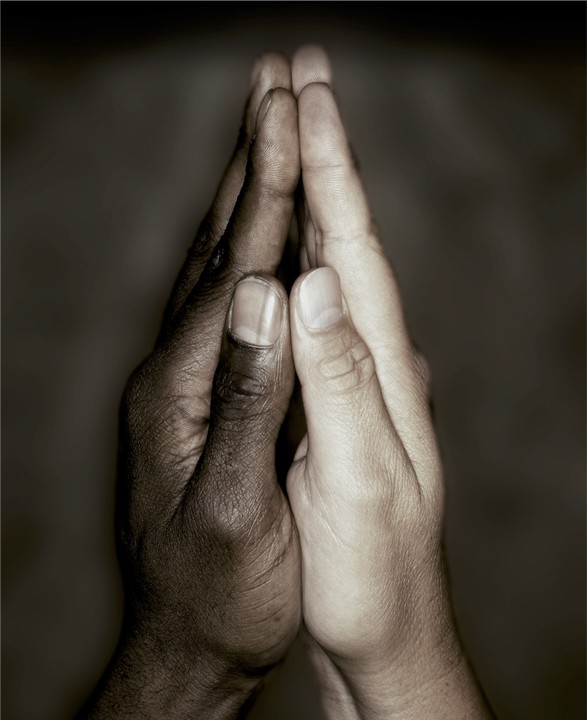
I was visiting an orphanage in Africa, a place where children afflicted with AIDS had found sanctuary from their troubled circumstances. They now partook of food, shelter, medicine, and most all, love. From toddlers to teens, they welcomed me black-hand-white-hand-prayingwith smiles and physical warmth. I’m an indiscriminate hugger, one who enjoys embracing others. These little ambassadors gave me my fill.

As the facility’s director and I shared lunch, we discovered a serendipitous truth: we were born the same year of radically different tribes, but on opposite sides of the globe. Our paths couldn’t have been more divergent. I grew up in relative privilege; she struggled in poverty. But the Creator of both our races led us to serve others.

Our conversation grew more vulnerable. We discussed our families, our triumphs and losses. We talked of our current trials. Inevitably, I shared my long struggle with alcoholism. It turned out that she, too, had suffered seismic effects from this reality. Both her husband and her youngest son were actively addicted.

She looked at me and said, “Would you be willing to talk to my boy?”

“Of course,” I said, humbled by the open door.

I met him the next day. He was in his 20s – the same age as one of my sons – and the disease was already trouncing him. His desperation stirred my heartfelt empathy.

Since he still understood alcoholism as a weakness of will, I asked basic questions. Had he developed tolerance? Yes. Once he started, did he find it nearly impossible to stop? Yes. Had he progressed to the point of blackouts? Yes, he answered, instinctively rubbing a scar on his head, evidence of a lost night that ended in violence.

I shared my journey. I urged him to seek treatment. I found an AA meeting in that city, which he attended the following day.

In the Gospel of Luke, we read “The Healing of the 10 Lepers” (17:11-19). Jesus is traveling along the border of Samaria, like walking the fault line between Palestine and Israel. He encounters a group of lepers that includes both Samaritans and Israelites. The classic scholar, William Barclay, said a beautiful thing about this scene.

If flood water surges over a piece of country and the wild animals gather for safety on some little bit of higher ground, you will find standing peacefully together animals who are natural enemies who at any other time would do their best to kill each other. Shouldn’t it be the same for all of us in our common need for God, seeking the high ground of his presence?

12 Step participants realize a fundamental truth. The condition that brings us to our knees is no respecter of race, creed, or educational level. We share a common adversity, common dreams, and we find strength in our fellowship with God and others.

Great Creator, help us ALL learn this truth about our human condition! Strip away overlays of color, caste and culture, and every one of us craves meaning in this short life. We long for love, we face death and deal with tragedy. Amnesia over our underlying unity is the bitterest root of conflict.

The day I left, I stood on the airport tarmac as jet engines idled. My new friend was there to say goodbye.

“I wish you didn’t have to leave,” he said.

We embraced, holding each other for a long time. I whispered, “We can both get better with the help of God and others.”

As my plane rolled away, I waved through the window at my son by a different mother.

Longing for a New Blockbuster

My brother talked me into seeing Jurassic World. It was a lavish waste of time and money, a theme park ride to banality. Even more annoying were the trailers for summer blockbusters, most of them raucous with explosions, guns, the trademark struggle191093412_3ac766a9ea between villains and heroes.

Good vs. evil, rehashed ad nauseam. A friend summed it up perfectly after viewing Jackson’s final installment of the Hobbit trilogy. “I’m battle weary,” was his numb response.

Will human beings evolve beyond war as our defining narrative? Can we imagine a time when our species is not pitted against itself? Can we tell new stories of peace?

In my opinion: not as long as our spiritual myths describe conflict as the very nature of reality.

A Facebook acquaintance posted these words recently: The ancient battle between the Prince of Darkness and Yahweh is won one soul at a time.

Really? THIS is reality? An endless battlefield? A deadly chess match with opposing sides defined not only by “religion,” but nationalism, race, ideology, tribal and gang affiliation?

Any student of history or current events might cynically answer “Yup, that’s about right. Welcome to the nature of humanity – past, present, and for any foreseeable future.”

OK. Maybe it’s like Jesus once said: “The poor you will always have with you.” A variation: “War will always be a reality.”

I know there are times when we must defend ourselves. Meanwhile, I value new narratives, no matter how quickly scoffers dismiss them. There are powerful examples in Buddhist and Christian teachings.

In Buddhism, outward evil is no objective reality. It’s a projection of our internal struggles, our clinging to egoism and control. These self and culture-centered values are as ubiquitous as the air we breathe. They are extremely difficult to unlearn. But it’s possible. And until we let go of our false selves, we overlay our inner “demons” onto the world around us.

Christianity unmistakably describes evil as a real force, separate from our Creator. But it lifts up a radical way to overcome. It is the non-violence of Jesus on the cross, what Gandhi called satyagraha, the inner rhythm that drove Martin Luther, King Jr.’s campaigns.

One of the tragic ironies of history is Christian nations that glorify their military. How can they forget John’s feverish vision recorded in Revelation? At the end of time, what do we find on the throne? Not an eagle or lion, not a hydrogen bomb or weaponized robot. No…a slain lamb, an eternal symbol of nonviolence most Christians will never truly claim.

In Hebrew scripture, we find the longing for a new narrative in lofty words from Isaiah: They will beat their swords into plowshares, and their spears into pruning hooks; nation will not lift up sword against nation, neither will they learn war anymore.

Believing this would never happen, poet Robinson Jeffers wrote these lines.

I remember the farther
Future, and the last man dying
Without succession under the confident eyes of the stars.
It was only a moment’s accident,
The race that plagued us, the world resumes the old lonely immortal
Splendor…

Which future will we choose? I’m longing for a new narrative, a new blockbuster…