Build an Altar for Dia de los Muertos

Our family has a tradition on Dia de los Muertos. We drive to the festival in downtown San Antonio – a celebration of life through music, food, dance and, of course, death. Especially memorable are the elaborate altars.

Last year, fresh on the heels of Robin Williams’ suicide, local art students assembled a memorial to him. The colorful elements were stunning. You could stand Dia de los Muertosthere and recall the many ways Williams’ comic genius enriched our lives.

Day of the Dead altars transcend mere tombstones inscribed with epitaphs. The art of these paeans is found in the juxtaposition of exquisite details. One woman honored her grandfather, a luchador in Mexico. Alongside intimate family items and photos were antique posters announcing his fights.

As you stand before these tributes, your eyes linger over artifacts and images lovingly arranged. Then it happens: they conjure the presence of ancestors as Day of the Dead resurrects its ghosts.

I was once the senior pastor of a large congregation. On All Saints Sunday, we honored those who had passed into the “communion of saints” during the previous year. Someone slowly read their names. At regular intervals, our tower bell rang out, evoking both the presence of those loved ones and John Donne’s immortal words:

Each man’s death diminishes me,
For I am involved in mankind.
Therefore, send not to know
For whom the bell tolls,
It tolls for thee.

Here’s a suggestion. This Dia de los Muertos, build an altar to a loved one. If you want to make a physical shrine, more power to you. It can be just as meaningful to share detailed memories around the dinner table or over coffee.

I’m building an emotional/spiritual memorial to my paternal grandfather, Kryne Van Tatenhove. My children never knew him, so I want them to hear these memories.

  • Voyaging with his mother from the Netherlands to the U.S., arriving by ship at Ellis Island in 1902.
  • His prowess as a fastball pitcher. But since many games occurred on Sundays, his Dutch Reformed parents forbade his involvement, holding him back from agrandpa possible professional career.
  • His marriage to my grandmother, their wedding photo showing his tall, handsome countenance, complete with a Clark Gable moustache. (Photo of Golden Anniversary to right).
  • His sixth grade education.
  • His struggles to provide for a wife, six boys, one daughter (lost in infancy) during the Depression. This included a failed dairy farm, the herd tragically lost to brucellosis.
  • His late-life move from Wisconsin to California, where he labored as a gardener, hauling tools in a trailer behind his truck.
  • His tearful conversion at a Billy Graham Crusade in the mid-1950s, an experience that forever changed him.
  • His tall, raw-boned stature. When we shook, my hand disappeared into his as if enfolded in a catcher’s mitt.
  • His retirement to a mobile home park outside Palm Springs. There, he built a rock fence surrounding their double-wide. He crowned it with a heart-shaped stone hauled out of the desert, a tribute to my Grandma.
  • His quiet, stoic demeanor. He NEVER complained about his lot in life.
  • His death on Christmas Eve, 1978.

To my Grandpa, and to your loved ones, I lift these simple words found in the Roman catacombs: Mayst thou live eternally among the saints!

And…may you also live in our memories!

Four Questions to Ask Every Pastor/Elder/Spiritual Leader

In any organization, the beliefs and actions of its leaders influence the mission immeasurably. Our world is evolving spiritually in a powerful and positive way. In order to embrace the fullness of this journey, here are some questions we should ALL ask the leaders of our faith communities.

question-everything

1) Do you think our truth/tradition is the only pathway to God? How can religious faith ever present itself as exclusive? There is no greater red flag! It speaks of a narrow, anthropomorphic vision of God. More arrogantly, it assumes that we human beings – with our finite minds – can understand and categorize the full purposes of our Creator. It’s like pinning the butterfly of faith beneath glass. Make sure your faith community is not only open to the truths of other people, but is willing to embrace their images and stories through authentic dialogue. Remember this quote from Karen Armstrong: We can either emphasize those aspects of our traditions, religious or secular, that speak of hatred, exclusion, and suspicion or work with those that stress the interdependence and equality of all human beings. The choice is ours.

2) Is leadership at the highest levels open to ALL people? So many churches describe themselves as “welcoming” on their website or brochures, but here’s the painful truth. Some of us can only enter part way before we hit a wall that excludes the full exploration and offering of our gifts. Women, the LGBTQ community, people of color, addicts, divorcees, those with physical and mental limitations – many of us can tell heart-rending stories of exclusion. This must not be!

3) Is the selection of leaders a democratic or autocratic process? There’s a fancy word – polity – used to describe how decisions are made within a community of faith. Make sure this process isn’t limited to a handful of oligarchs. Make sure your community of faith elects its leaders democratically with a full voice for every member. I once pastored a congregation in a large metropolitan setting. A nearby Megachurch was growing exponentially, applauded for its vibrant worship, youth outreach, even its community involvement. Yet I asked people to look behind the curtains. Who called the shots? They found a close-knit cadre of men – all of them white – appointed by pastors and making every decision. No!

4) What portion of our budget is spent on healing the world beyond our walls? Many a church highlights its expensive building program, the addition of new staff, or investment in cutting-edge technology. Meanwhile, in their community, the poorest of the poor struggle to make ends meet. Nearby prisons are filled, immigrants languish, and the homeless lack adequate services. In the Christian tradition, we frequently pray The Lord’s Prayer, reciting these words by rote: Thy Kingdom come, on earth as it is in heaven. Make sure your church is helping bring God’s justice and mercy to the streets. Make sure it is pouring itself out to the world at large. Make sure it goes far beyond tithing in its mission giving.

Socrates famously said: the unexamined life isn’t worth living. It’s the same with an unexamined church life. Question everything!

Learning to Feel More Fully

“Even the deepest pain eventually loses its edge in the more vivid reality of the present; then, what once was unbearable becomes strangely familiar. And after much familiarity, it assumes themanwomandifferences insignificance of just another milestone, ever marking the journey to higher ground.” – N. Maria Kwami

A popular picture circled the Internet a few years ago. It shows two versions of a radio receiver. One is labelled “the man” and has a single on/off switch. The other, labeled “the woman,” is covered with a complexity of colored dials.

If you disregard the innuendo about the one thing on masculine minds (smile) – there’s another message. We men too often learn to repress or deny our feelings. Our emotional palettes are limited, while many of the women in our lives can paint with rainbows of subtle shades.

We could debate nature vs. nurture. I’m not interested in that. I simply want to share a message of hope and healing. It comes from the process of my recovery from addiction and, more importantly, from patterns of thinking ingrained in me through our culture.

Recently, this evolution became clear as I viewed a single photograph.

It’s from a family reunion a few years ago. My two brothers and I stand with my father on the porch of his home in southern California. We are smiling, arms draped over each other’s shoulders. On the surface, it’s an image of joyous fellowship. But it set off a complex set of emotions that were almost overpowering, and this time I could actually identify them.

Love based on a richness of memories. Sadness at the infrequency of our contact. Melancholy about the passage of time. Resentment at the estranging actions of one brother; compassion for the struggles of another. A longing to make things right that will never be rectified, especially with my father. Tinges of regret and grief. A touch of resignation reaching for peace, like a sprout through soil.

This fusion of feelings hurt. For so many years I would have denied, avoided, or numbed them. I would have rededicated myself to masculine action based on resolution, the rallying cry of good codependents everywhere.

Instead, I simply sat and let these reactions wash over and through me. I absorbed them like wind and sunlight on a day in an open field. They slowly morphed into something else. An awareness of vivid, gracious Presence.

If you’ve ever had an injury that included nerve damage, you know that when dendrites begin to heal, there is pain involved. The same is often true when we let new emotions entwine themselves with others and emerge.

The women (or more advanced men) reading this might chuckle, but I’m finally able to feel more fully. It is making me increasingly sensitive to others. It is deepening my appreciation for the way God created us. It continues to teach me the truth of these words in Niebhur’s extended version of The Serenity Prayer.

Living one day at a time,
Enjoying one moment at a time,
Accepting hardship as the pathway to peace…

Go back to the beginning of this post and read, once again, the words by Ghanaian author N. Maria Kwami.

Higher ground. Truth….

Long Live the TWO (R)evolutions!

There’s a pointed story in the Christian Gospels. Jesus is on the eve of his Passion. He’s having dinner at the home of a man called Simon the Leper when a woman enters with an expensive alabaster jar of Fistperfume. She anoints Jesus’ head with the costly ointment, a lavish gesture of gratitude and love. The disciples at the table are outraged. The balm could have been sold and the money used for charity! Jesus says, “Why criticize this woman for doing such a good thing to me? You will always have the poor among you, but you will not always have me.” (Matthew 26:10-11)

Clearly, Jesus wasn’t telling us to neglect the poor. Just hours later he would deliver his sharpest parable about the future, warning that we will be judged on whether we helped “the least” in our midst.

No, this story is about something else. It’s about balance. It dissolves a false duality expressed in many ways: navel gazing vs. activism, personal vs. social gospel, the monastery vs. the streets.

I believe the revolution necessary for our spiritual journey happens on both fronts. I believe we should ask ourselves some fundamental questions. Does my religion/philosophy challenge me to be engaged in both the development of my character AND the causes of the oppressed? Do I see the need for both inner and outer (r)evolution?

I have friends so consumed with their prophetic zeal to confront injustice that they no longer hear the bitter edge in their voices. I know others so cloistered in community, so insulated from the “madding crowds,” that they have become culturally illiterate.

We need to embed in our DNA a basic praxis – a discipline – that keeps us sane.

When we let righteous anger fill us with resent, it’s time to retreat into meditation. There we can remind ourselves that though we have chosen a “walk-on part” in the age-old struggle for justice, this labor will continue long after our brief existence. Meanwhile, are we enjoying the love of others, the beauty of creation, and the daily miracles of life?

When we get too absorbed in personal change, armed with a battery of “self-help” books, it’s time to lift our heads. We look beyond ourselves and see the suffering of others, especially those ground under the boot of a military/corporate culture in which we are complicit.

This is the rhythm – seeking inward transformation through grace and peace, but never shirking our communal responsibility to serve.

For Christians, there’s an aftermath to the story of the woman with the alabaster jar. We believe that through spiritual reflection – through the life of the Spirit – Jesus is always with us. We can, like that woman, feel gratitude for the totality of his teachings. Confront injustice, but remember to love our enemies. Keep an eye to the coming age, but relish the present as deeply as the lilies of the field. Follow our “religion,” but always recognize when it needs reformation.

I have often said viva la lucha, meaning solidarity with those who struggle to shake off tyranny. More and more, I am now saying viva las dos luchas!

Long live the TWO (r)evolutions!

Be blessed, my friends.

A Song for All Ages

Even if you’re skeptical, please don’t close your mind to the power of sacred writings. Eastern or Western, pragmatic or mystical, they arise from seekers of truth in all times and places. timeTheir wisdom sings across the centuries.

Consider Psalm 84 from Hebrew scripture, a song for all ages. Even a few of its verses can guide our paths.

Blessed are those whose strength is in you, whose hearts are set on pilgrimage. As they pass through the Valley of Baka, they make it a place of springs; the autumn rains also cover it with pools. They go from strength to strength, till each appears before God in Zion. (Verses 5-7)

No matter how you conceive of the “you” in these verses, or envision your final destination, this underlying truth reverberates.

Life can be a journey of ever-freeing epiphanies. As we embrace these changes with a pilgrim’s heart, even our desert experiences transform into oases of learning. We gain strength from each tutelage until we reach our final step.

I recently made two new acquaintances – one younger, one older. The young one is 73, the old one 32. What do I mean? The young man has adopted a political/religious mindset nearly impervious to new revelation or mystery. The older woman is child-like, not childish, gleaning daily instructions about love, grace, and freedom. Her heart is set on pilgrimage!

For a day in your courts is better than a thousand elsewhere. (Verse 10)

In context, the author of Psalm 84 is longing for Jerusalem’s ancient temple, axis mundi of the Israelites. But another devout Jew, Paul of Tarsus, would say this to a group of Athenian elders thousands of years later: “The God who made the world and everything in it…does not live in shrines made by human hands…” (Acts 17:24)

Think of the present moment in all its beauty. This is the “temple” in which we experience God – sky above, earth below. When we open our arms to creation without regrets or anxious preoccupations – when we simply enter the splendid courts of NOW – time transforms.

Some of you will understand this confession. For too many years, I allowed my conditioned mind to rob me of daily joy. I was driven by fears, control issues, preoccupations, and ambitions. Without a personal spiritual awakening, Ben Franklin’s famous words would have been my headstone epitaph: “Life’s tragedy is that we get old too soon and wise too late.”

Instead, in my pilgrim’s heart and mind, I have discovered a deeper, unfolding truth. It is contained in verse 10 of Psalm 84.

God can redeem our time! No matter how we have squandered our previous days, the present can open up with stunning density and richness. A thousand to one ratio is hyperbole, but I can tell you this. The more I learn to practice mindfulness, the more each day carries a weight far beyond its 24-hour limits. There is so much living to savor!

So…across millennia, Psalm 84 sings these truths to all of us. Set your hearts on the joy and strength of this journey. Let God redeem your time with a vibrancy beyond imagination.

Be blessed!


The Biggest Table in the World

Where are the symbols of unity in our world? Where are the leaders and movements that bring us together rather than dividing us over issues of politics, religion, race, class, and sexual preference?

I am no longer a Christian in any traditional sense. However, in my 32 years as a pastor, an event called World Communion Sunday was always special to me. It resonated because I had served this agape meal in such far-flung places as India, Africa, Mexico, hospitals, homes, prisons, even open fields under the Milky Way. It was an annual chance to celebrate unity, at least for one segment of humanity. To Christians, the communion table represents the biggest table on our planet, still expanding in all directions of the compass. It symbolizes an eschatological feast at the end of time, an image Jesus borrowed from the faith of his people: “They will come from the east and the west, from the north and the south, and sit down in the kingdom of God.” (Luke 13:29)

Despite its sentiments, World Communion Sunday can also be seen as sentimental window dressing. Any student of religion knows the divisive interpretations of this sacrament. Consubstantiation, transubstantiation, symbolic presence – theologies as fractured as the denominational tribes that populate our globe. For critics of religion, communion is a ritual with barbaric icons – eating flesh and drinking blood, a glorification of sacrifice. Others see it as a throwback to mystery cults like Mithraism.

Still, for a moment, isn’t it powerful to envision a feast of love? A banquet of reconciliation in a world torn by civil wars, racial unrest, mass shootings! It’s an undying dream of unity, where the lion lies down with the lamb, and all God’s children gather from the corners of the earth to sup in divine fellowship.

In my years of pastoring, I described it in a practical way, trying to have my humble influence on the landscapes of faith around me.

There will forever be differences among us. Issues of conscience, seemingly intractable in daily life, divide us along countless fault lines. What can we do? Seek a community of faith that is not just “like-minded.” Find one that stretches your love muscles, challenging you to practice unity in the midst of our diversity!

What is the point of a communion table that offers its gifts only to homogeneous groups of cookie-cutter disciples? How is this a healing force in our fractured world? If we see the sacrificial love of Christ as a model for loving others as much (or even more!) than ourselves, communion can transform its adherents. In the Christian New Testament, the book of Ephesians says that Christ’s willingness to die rather than retaliate can, by example, break down dividing walls of hostility. It has the potential to dissolve the eye-for-an-eye retaliation so prevalent in human society.

Where do you experience diversity in your life? Choosing to love at those moments can work miracles. As we look around us and see those that differ from us, the truth of The Lord’s Prayer becomes incarnational. Thy Kingdom come, thy will be done, on EARTH as it is in heaven.

Today, I ask you to envision this feast of the “now and yet to come.” I will always recall thses words I spoke countless times in SO many places, for as often as we eat this bread and drink this cup, we show forth to the world the reconciling love of God demonstrated in Jesus Christ.

From Ambition to Meaning: Reviewing Wayne Dyer’s “The Shift”

Years ago, if you tuned into a PBS pledge drive, you might have seen bestselling writer and lecturer Wayne Dyer sharing his teachings. His “Forever Wisdom of Wayne Dyer” became a popular series on that network.

Wayne died on August 30, 2015, at age 75. Personally, I admired him. Not all his thinking resonated with me, but he seemed sincere, trying to practice what he preached. So, when a friend suggested that I watch The Shift, a movie featuring Dyer and his teachings, I streamed it online.

The setting for the film is the beautiful Asilomar Conference Grounds on the northern California coast, a place I have had the good fortune to visit. The story follows various individuals as they near a turning point, or shift, in their lives: a young mother selflessly attending to the needs of her family, a filmmaker driven by his need for success, a wealthy couple at a dead-end in their relationship.

As a backdrop paradigm for the film, Dyer gives a simple outline for our human journeys that makes great sense.

Born as tabula rasas, we face immediate programming. The dominant forces of family, society, and religion teach our egos to evaluate our lives in three basic ways: 1) We are what we do; 2) We are we have; 3) We are what others think of us.

Who can deny that in both subtle and blatant ways, these are overriding themes in our culture?

Some of us, as we begin to see the hollow futility of these definitions, intuitively move towards a shift from ambition to meaning. This is found in our passions, our deepest desires, our true rather than false selves. Dyer called it a return to our divine identity, releasing ourselves more fully into the Tao of the present. He exhorts us to make the shift, adding some urgency by saying, “Don’t die with your music still in you.”

This shift isn’t contingent on our age. It comes earlier for some, later for others. And it’s not universal. Many will resist the freedom their spirits long for, going to their graves with their songs unsung. During my years as a pastor, I presided at hundreds of memorial services, and I can say this with certainty: the unexamined life often ends in regret.

The characters of the film (yes, it’s a bit Hallmark), embrace the shift in different ways. The harried mother who had always neglected her own needs, resurrects her passion for painting; the filmmaker, after facing rejection, begins to use his art for service rather than self-promotion; the couple, originally committed to having no children, welcomes pregnancy with a new sense of hope.

My wife, whose reading habits vary widely from mine, has said, “Self-help books and movies are a dime a dozen.” OK. I agree. And Dyer is a clearly an example of the syncretism we find in the human potential movement. He borrows from a variety of writers, psychologists, religious traditions, pasting them together and stamping them with his own tag lines.

So what? Superhero movies, crime dramas, pop singers, sports stars – these are all a dime a dozen and, in my estimation, far less meaningful.

If I’m going to read a novel by Robert Crais, George Pelecanos, or William Kent Krueger, I balance it with a book on self-exploration. If I’m going to watch Bosch, Breaking Bad or Longmire, I put a film like The Shift in my queue.

Why? It’s simple. I don’t want to die with my music still in me.

The ONE THING I Learned in Church

Before he earned his Oscar in the sequel, Curly (Jack Palance) lifted his finger in City Slickers and told Mitch, “One thing. Just one thing. You stick to that and everything else don’t mean shit.”curly

I imagine him saying to me, “Krin, what is the one thing you learned from decades of being in church?”

It wasn’t the existence of God. I found this in other faiths. My own spiritual experiments helped me intuit the all-encompassing presence of an “otherness.”

It wasn’t the importance of worship. I found this hiking at alpine heights, gazing into the Milky Way, opening my soul to sunrise at the ocean’s edge.

It wasn’t the story of Jesus; I found this in films and books on comparative religion.

It wasn’t a Golden Rule, the common sense of every human culture.

It wasn’t living in community. I found this in other civic organizations.

It wasn’t the Fruit of the Spirit, those admirable traits of character. I found them in the wisdom of many writers, artists, organizers, even the tenets of human potential movements.

It wasn’t love, since love springs from even the most depraved hearts.

No, it was something far more powerful. It was love with an earth-shattering twist. It was GRACE, a gift of love to the undeserving. Even now, I can track its presence in my life like a golden thread.

I remember sitting next to my parents in the Lutheran church of my childhood. It was a Good Friday service, shrouded in shadow. I was 12 years old. We saw Jesus kneeling in Gethsemane, crying out “Take this bitter cup!” We cringed at the bloody injustice meted out by powers of state and religion. We read of his mercy to a condemned criminal. And then, those immortal words rang out, uttered with his last breath, “Forgive them, for they know not what they do.”

And it struck my young mind like a bolt that he was willing to accept this sacrifice on my behalf. MY BEHALF. By that time, I was aware of my baser motives. I was struggling with my identity, filled with self-doubt and a sense of inadequacy.

And yet, on my behalf…

I don’t believe in substitutionary atonement. Jesus wasn’t a ransom paid, as if God required blood to balance some great Levitical scale of justice. To me, the cross cries out “Grace!” It’s a scandalous, counter-culture glimpse into the nature of Divine love. It is on our behalf because it is meant to be the Star of Bethlehem, ever guiding, ever instructing.

It led me to a calling and vocation. It compelled me to serve the unloved, those living not just in physical poverty, but in the impoverished notions of their worth based on society’s lies.

And when I stumbled, wrestling with self-centeredness, my demons and addictions, I heard the words Christ spoke to Paul during his own dark night, “My grace is sufficient for you. Because my power is made perfect in weakness.”

Grace. Often untested. Unpracticed. Impractical in a world of pyramids, politicians, and powder kegs.

But you know what? If all of us could live more fully by this one thing – GRACE – I’d agree with Curly. Nothing else would seem as important.

A Night in India I’ll Never Forget

As a visiting pastor, I was treated like royalty on a hectic itinerary. In the mountains surrounding Munnar, Kerala, we toured missions, homes, and congregations of the Church of South India.

This meant racing at breakneck speed, careening around corners while blasting our horn. It meant politely eating food prepared at each stop. Like a goose being stuffed for foie gras, I felt my body ballooning. I smiled with each swallow of curried delicacy.

I have NEVER experienced as much gracious hospitality as I did on that trip. Still, by the end of that day I was worn out physically, emotionally, mentally.

“Pastor,” my hosts announced, “we have a treat tonight! We will visit a home church for worship. They have prepared much food!”

Could I respectfully decline? Ravaged by jet lag, dizzy from our ride, food level dipsticked to my corneas, I just needed to sleep.

“Sounds wonderful,” I said. I’m so glad I did.

The church was in a poorer neighborhood of Munnar called The Colony, home to laborers who tend surrounding tea plantations. They traverse verdant hillsides, picking leaves for less than subsistence wages. Others haul rocks in baskets on their heads, repairing roads eroded by annual monsoons. Long hours under the blazing India sun.

We arrived at our destination – one room for a family of six. No lights, just dozens of flickering candles. Seated on straw mats were more people than I imagined could fit in that space. Their lustrous eyes and broad smiles welcomed me. My guide/interpreter was a younger pastor fluent in both English and Malayalam. We sat in spots at the head of the room.

After beautiful singing that lifted my soul, there was a Q&A time.

One woman asked why I had come. I replied, “To make new friends and see God’s love at work in the world.”

Another asked if I had ever experienced a miracle. I nodded and described my journey with a special needs son. I told them how doctors predicted he would never speak, and yet today he carries on conversations.

The room suddenly erupted in Malayalam, a Pentecostal torrent. People raised their hands and shook. It lasted a good five minutes. Finally, like an orchestra conductor, an older man stood and gestured for silence. They all settled down and gazed at me in the flickering candlelight.

“What was that about?” I whispered to my guide.

“Simple,” he said. “They were praising God that you have come to be with us, and that God has blessed your son.”

Tears filled my eyes. I pressed my hands together and said, “Namaste. Thank you so much for your hospitality.”

A woman sitting near me gently grasped my forearm, saying something in her native tongue. She was probably in her 30s, but her face, etched by hard labor, looked far older.

“She wants to know,” said my guide, “if you will carry their burdens with you when you return to the U.S.”

Had Peter felt that way when Jesus found him along the Sea of Galilee, saying, “Follow me.”

I swallowed and answered, “Yes.”

To this day, I struggle with my vow. Every time I serve someone hurting, or seek to remember the least, or advocate for justice rather than my own comfort, it all comes back to me…

…a night in India I will never forget.

NOLA Through the Lens of a Newbie

Years ago, I briefly passed through New Orleans on a cross country road trip. My first REAL visit was a couple months ago, smack dab in this 10th year after Katrina. I tried to absorb as much as possible; time was scarce. I will definitely return to this place Tennessee Williams smugly described: “America has only three cities: New York, San Francisco, and New Orleans. Everywhere else is Cleveland.”

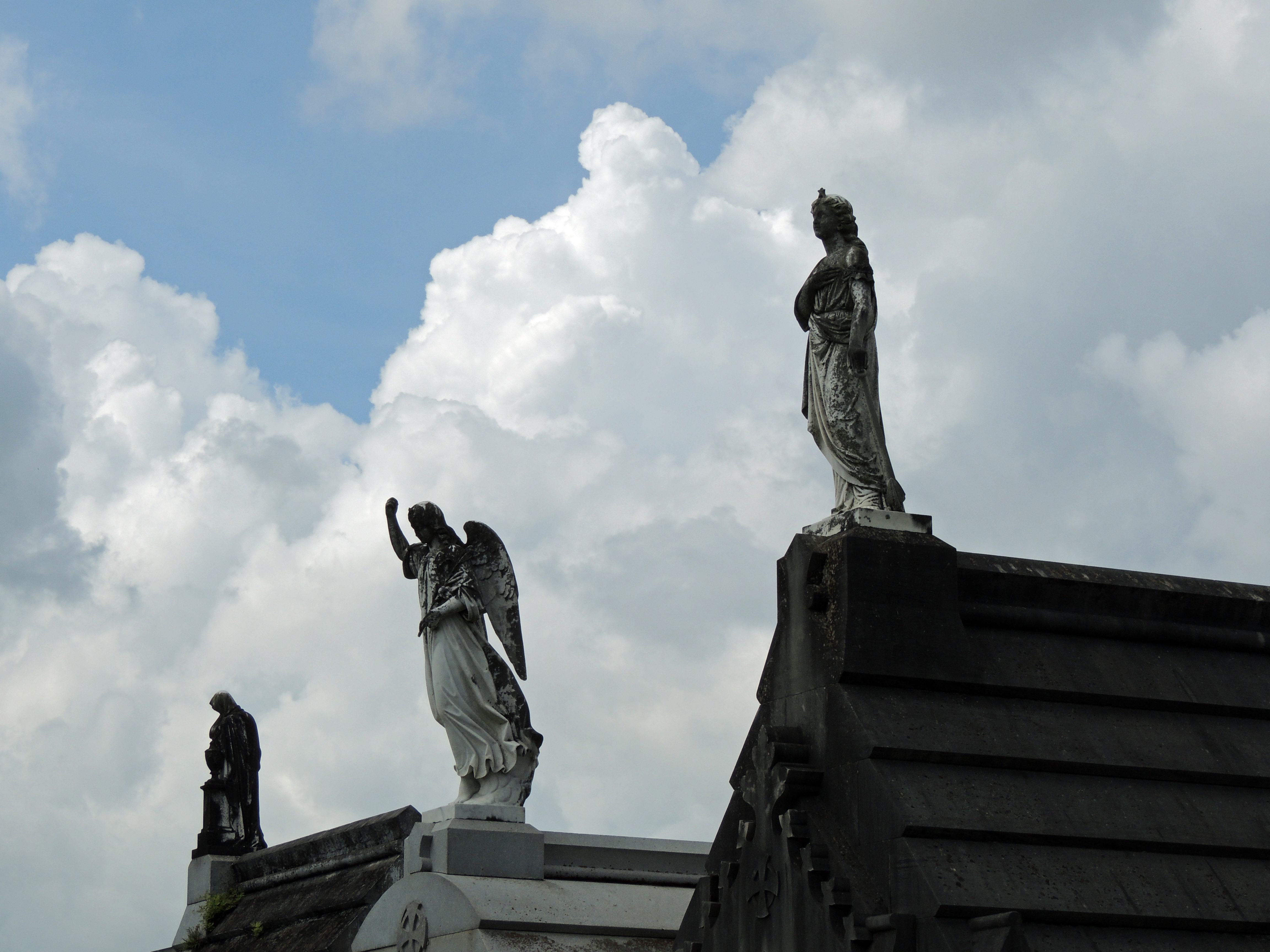
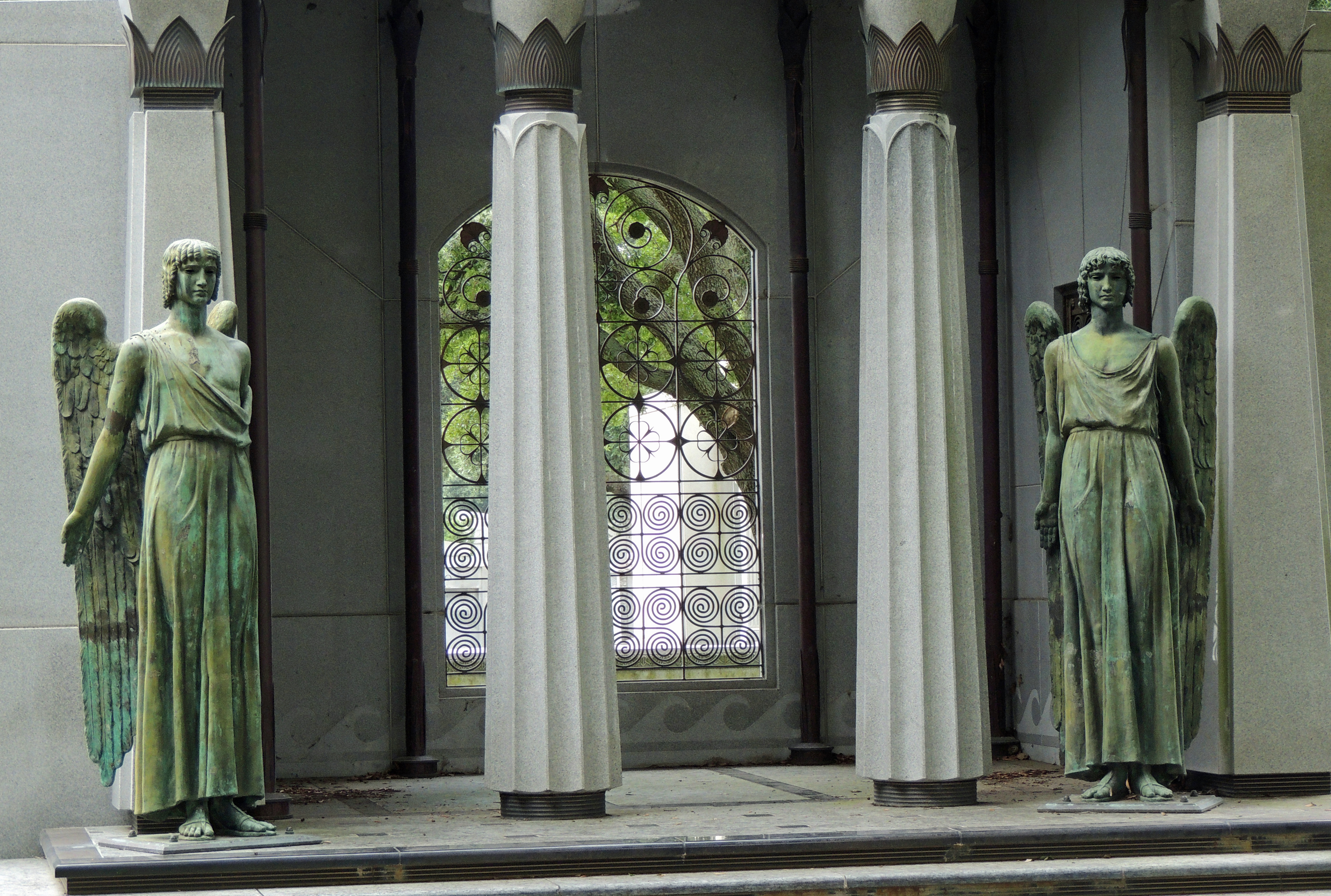
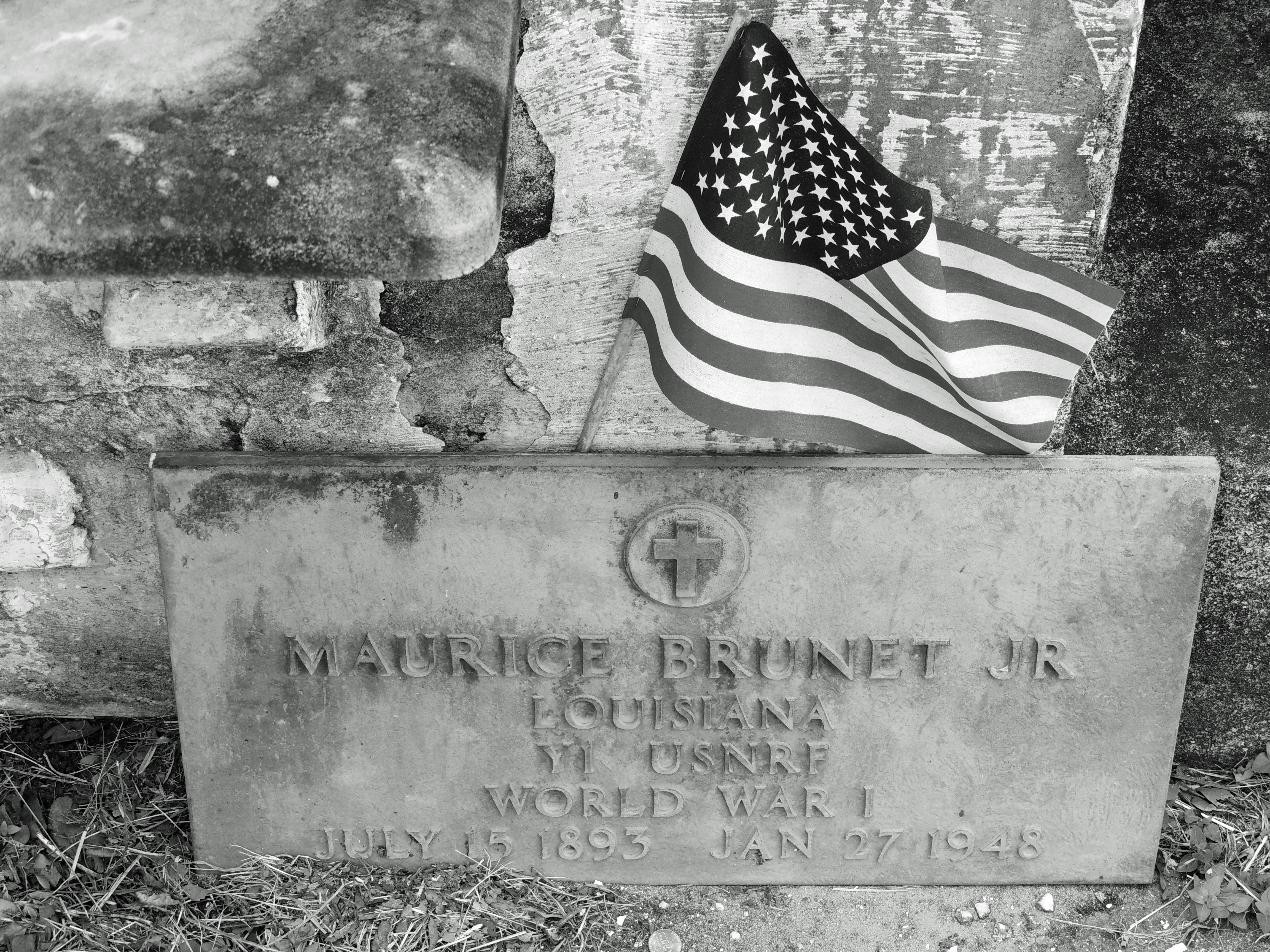
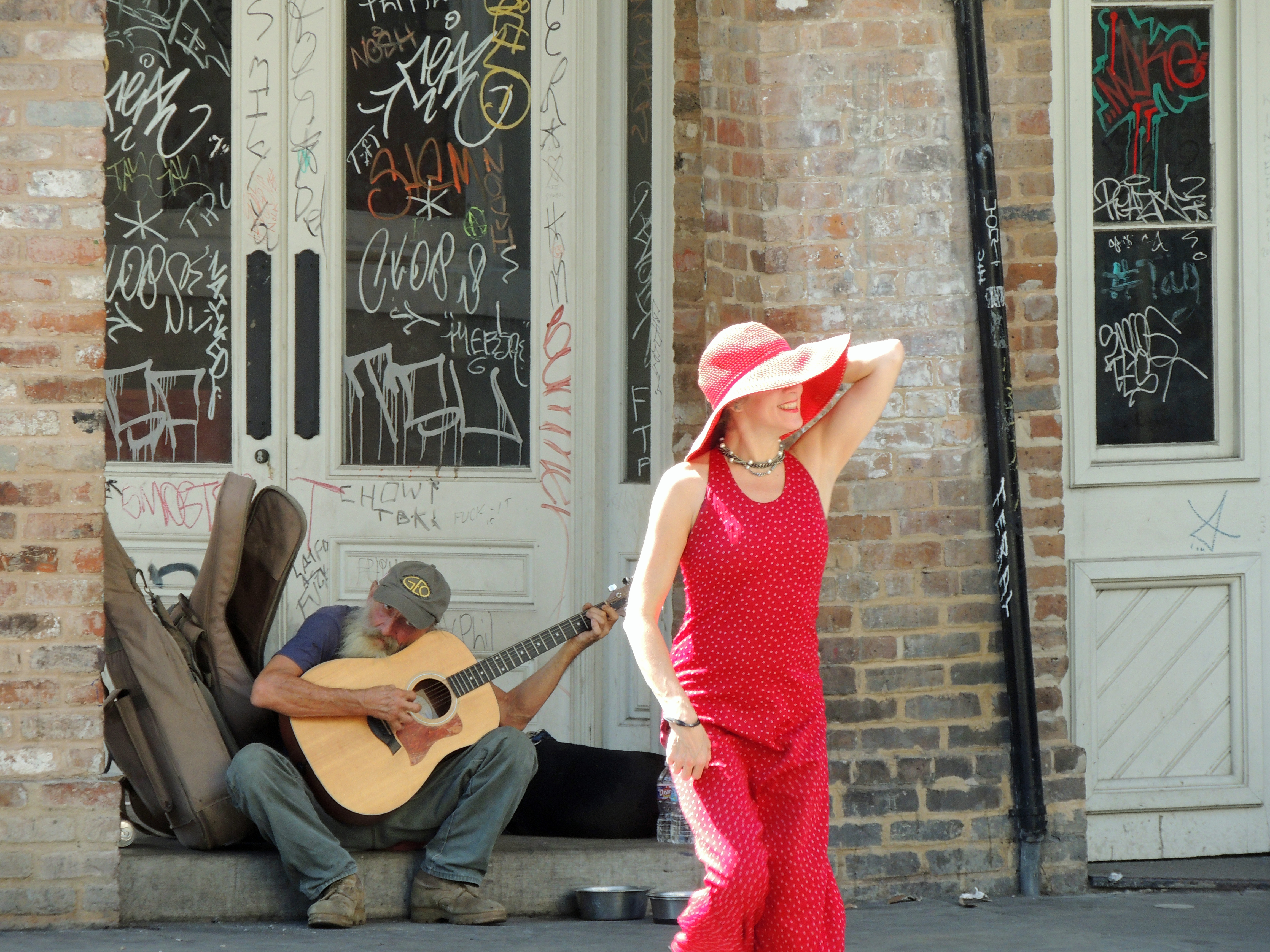
Still, a newbie to NOLA has fresh eyes. Here are share some photos from my trip. They are grouped in three batches.

  1. Metairie Cemetery and Lafayette Cemetery 1
  2. Images from the French Quarter
  3. Scenes from surrounding bayous, including Jean Lafitte National Historical Park

All images copyright 2015.

Metairie and Lafayette Cemetery 1

“The first thing you notice about New Orleans are the burying grounds – the cemeteries – and they’re a cold proposition, one of the best things there are here. Going by, you try to be as quiet as possible, better to let them sleep. Greek, Roman, sepulchres- palatial mausoleums made to order, phantomesque, signs and symbols of hidden decay – ghosts of women and men who have sinned and who’ve died and are now living in tombs. The past doesn’t pass away so quickly here. You could be dead for a long time” – Bob Dylan

 NOLA Dead 1

NOLA Dead 2

NOLA Dead 3

NOLA Dead 4

NOLA Dead 5

The French Quarter

“Enormous oak trees towered over the boulevard, which boasted homes with fine woodwork, wraparound porches, and moss on the sidewalks. “There’s nothing like a house in New Orleans. Would you look at those balconies and columns?” He rolled his window down to take in the sounds of life in New Orleans.” ― Hunter Murphy, Imogene in New Orleans

FQ 1

FQ 2

FQ 3

FQ 4

FQ 5

FQ 6

FQ 7

FQ 8

Surrounding Wetlands

“I don’t like coming over here at night,” the girl said. “The bayou is scary in the dark, all manner of things running wild out there.”
― Samuel Snoek-Brown, Hagridden

NOLA Nature 1

NOLA Nature 6

NOLA Nature 3

NOLA Nature 4

NOLA Nature 2

NOLA Nature 5