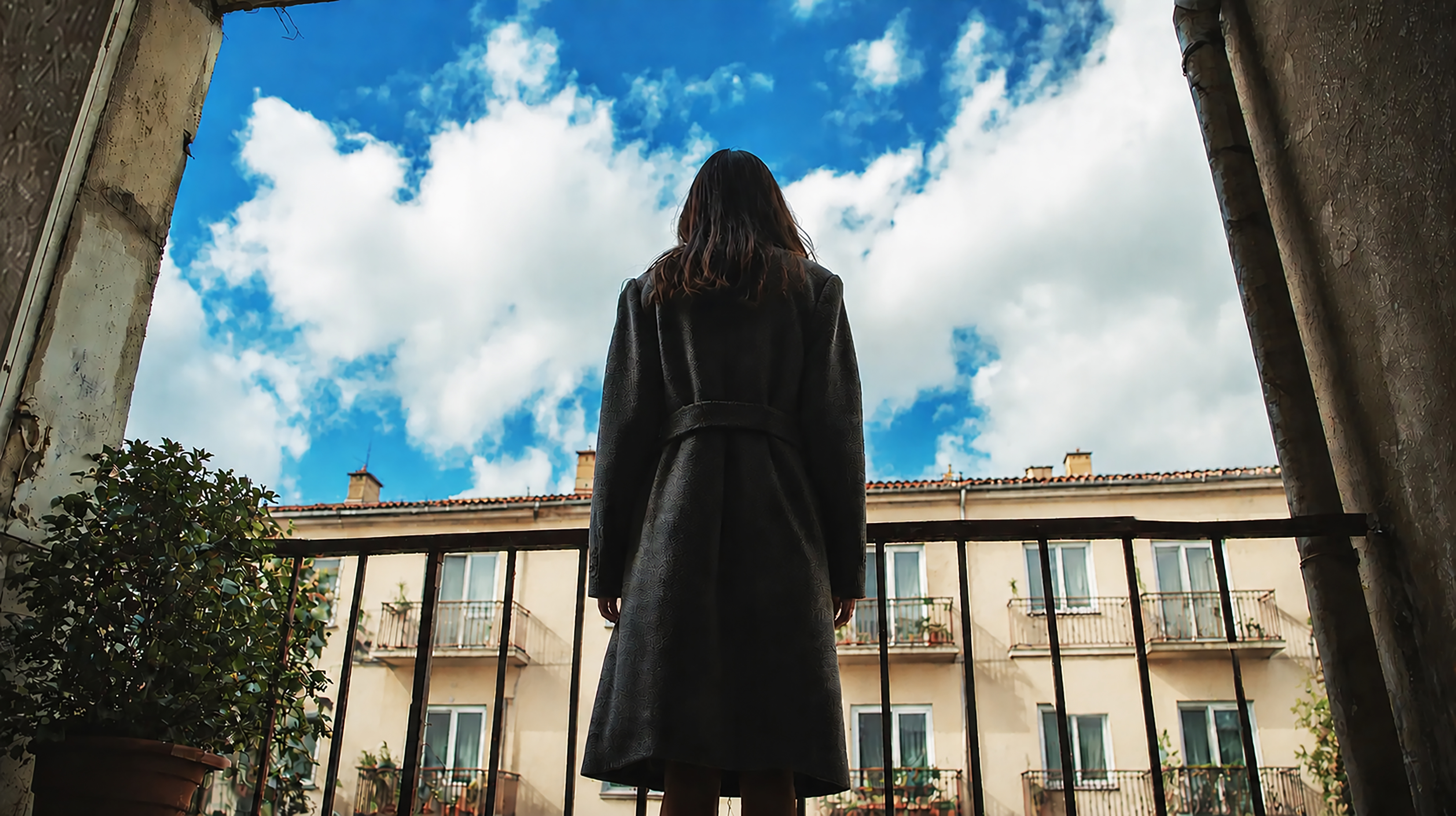
No one remembered exactly when Yasmin appeared in the building, which should have been the first warning.
It was a faded, four story complex tucked into a side street of Los Angeles, where ceiling fans clicked through the heat and distant traffic hummed at all hours. Each apartment had a small balcony overlooking the courtyard with its dry grass and rusty park benches. Most of the tenants had been there for years, and certain patterns were like clockwork. Maria in 3B watered her plants at seven each morning. Darla in 1C played the same Coltrane record every evening after dinner. Daniel returned from his nightshift, slamming his door too early in the wee hours. The landlord, Mr. Alvarez, collected rent on the first Monday of the month, never making direct eye contact.
Then one day, without ceremony, apartment 4C was no longer empty. There had been no moving truck and no hauling of furniture up the exterior stairwell. Just a name penciled onto the row of mailboxes.
Yasmin.
The first person to notice her was Maria. Yasmin was standing very still on the exterior staircase, late afternoon sun highlighting her long dark hair. She wore a knee-length charcoal coat despite the heat, and her pale eyes shifted over the courtyard, then the hazy L.A. sky, never settling on one thing for too long.
“Oh,” Maria said, startled into politeness. “You must be new. Did you move in recently?”
When Yasmin turned, she seemed to look through Maria, not just at her.
“I suppose I’m new,” she said, “but I’ve been here long enough.”
Her voice was neither warm nor cold, a bit unnerving.
“Well, let me welcome you,” Maria said. “We’re a close knit group of neighbors.”
“Yes, I know,” said Yasmin.
That answer stayed with Maria long after they parted.
The second person to notice her was Daniel in 3B, though he didn’t realize it until later. A struggling screenwriter by day, he worked swing shifts for UPS, sleeping late and awakening around noon to confront his persistent writer’s block. One day, after a cup of strong coffee, he noticed minute details out of place in his apartment: a book shifted slightly on a shelf, a chair angled a few degrees differently, his notebook open to a page he didn’t recall writing. It wasn’t enough to report a break in; the police would think he was batty.
He told himself he was only tired, but then he read the line in the notebook. It was undeniably his handwriting.
“You keep treating the future like a possibility instead of a memory.”
Daniel stared at the sentence for a long time. Not only was he sure he hadn’t written it; he couldn’t even remember thinking it. And its meaning was so cryptic that he couldn’t wrap his mind around it.
That same evening, he came upon Yasmin for the first time. They were in the courtyard near the mailboxes, where Yasmin flipped slowly through a stack of letters. She was still wearing her charcoal coat, and Daniel wondered how someone who had recently arrived could receive so much mail.
“You’re new here?” Daniel asked, trying to sound casual.
Yasmin swung her gaze to him.
“By some definitions of new,” she said.
Daniel frowned a bit. “Right.”
They stood there a beat too long, staring at each other. Daniel was intrigued by Yasmin’s pale eyes.
“You write,” Yasmin said, breaking the silence.
It wasn’t a question.
Daniel blinked as a slight chill ran up his spine. “I try.”
“You doubt yourself,” she said. “That’s the part that always slows you down.”
Daniel felt a flicker of irritation. “Do I know you?”
Yasmin considered that, as if weighing her answer.
“Not yet,” she said.
Then she slipped past him and ascended the exterior stairs, leaving him with a feeling he could only describe as queasy
By the end of the week, everyone in the building had a story. The college student in 4D swore that Yasmin quoted a line from her private journal. A struggling actor on the second floor insisted that Yasmin quietly muttered lines from an audition scene he had only practiced alone. An older woman near the back stairwell said Yasmin asked her whether she planned to visit her son in Sacramento again, even though she’d told no one of their estrangement. Mr. Alvarez insisted he had no record of a lease for 4C, though he remembered collecting rent from someone. One tenant claimed that Yasmin congratulated him on a promotion before he even applied for the position. Another said she passed Yasmin in the hallway and heard her softly humming a song played at her husband’s funeral twenty years earlier. The young couple in 1A had been arguing in the hallway when Yasmin passed them and casually remarked, “You already know which one of you leaves first.”
The stories overlapped in an unsettling way that was clear to all of them. Yasmin seemed to know things she shouldn’t, and she never seemed surprised.
Maria tried to ignore it. She had lived in the building long enough to understand that people were strange in their own ways. But one morning, as she watered her plants, she noticed something that made her pause. Across the courtyard, through the window of 4C, she saw Yasmin sitting at a desk. A pen rested in her hand, and she was working on something. That wasn’t strange by itself. What was unusual was Yasmin’s rhythm. She would jot down a few lines, pause, then look up as if listening to some source Maria couldn’t see. Then she would nod, put down a few more words, and repeat the pattern.
Maria had always been bold to the point of meddling, a trait that had gotten her into trouble over the years. The next morning, she decided to visit Yasmin and get to the bottom of things.
She knocked on the door of 4C and it opened immediately. “Yes?” Yasmin said.
Maria hesitated. “I hope I’m not bothering you. I just wanted to ask you something.”
“Of course,” Yasmin said.
Maria glanced past her with no attempt to hide her nosiness. The studio apartment was sparsely furnished with a desk, a chair, and a bed. No unpacked boxes or signs of settling in.
“What do you do?”
Yasmin tilted her head slightly, her lips curling as if she was slightly amused.
“I pay attention,” she said.
“That’s not really an answer.”
“It is the only one that matters.”
Maria crossed her arms. “People are saying things about you.”
“I’m not surprised. They usually do.”
“That you know things,” Maria pressed on. “Private things you shouldn’t. Things you would have no way of knowing.”
Yasmin studied her for a few seconds, then stepped aside.
“Would you like to come in?” she asked.
Maria should have said no. Instead, she crossed the threshold. The air in the apartment was still, and on the desk was the open notebook she had seen through the window. Maria’s eyes fixed on it longer than she intended.
“Go ahead and read it,” said Yasmin with her cool, neutral tone.
Maria hesitated. “That feels invasive.”
“It’s only invasive if it’s not already yours,” Yasmin said.
Something about that answer unsettled Maria more than if Yasmin had simply refused. Slowly, she approached the desk. The open page was filled with neat, deliberate handwriting, and as she started to read, her breath caught. The words were about her. Not just vague or general observations, but specific details. The way she counted steps without realizing it. The way she avoided calling her sister because she didn’t want to admit how distant they had become. The way she watered her plants at seven each morning because it gave her a small sense of control. The way she sometimes replayed old conversations in the shower, changing what she should have said years earlier.
Maria stepped back, feeling a mix of curiosity and anger.
“How do you know this?” she demanded.
Yasmin didn’t move.
“You told me,” she said.
“No, I didn’t.”
“Not in words.”
“That doesn’t make sense.”
“It does,” Yasmin said gently, “if you have the right way of observing.”
Maria shook her head. “This isn’t normal.”
“No,” Yasmin agreed. “Unfortunately, it isn’t.”
Maria shook her head, growing angrier by the second. “But why are you writing about us?”
Yasmin looked at the notebook for a long moment before answering.
“Because people reveal themselves long before they understand what they’re doing,” she said quietly. “Because they rarely notice the full spectrum, just like they can’t see the full spectrum of light.”
Maria frowned with anger “What the hell does that mean?”
Yasmin’s eyes bore into hers.
“It means most people only register one surface of things.”
“And you’re somehow able to recognize all this?”
Yasmin sighed as if she was burdened.
“I’m just catching up,” she said.
___
Maria was the primary gossip in the building, so she quickly told the other residents what had happened in Yasmin’s apartment. That was the exact moment that fear began to take root. It spread quietly at first. A shared glance in the hallway, a conversation cut short when Yasmin came near, and doors that closed more quickly.
Other things happened as well.
Daniel started writing again, feeling a compulsion he hadn’t known for years. The sentences came faster, sharper, and more precise, flowing as if an internal dam had busted. One night, he wrote a line that made his hands go still on his keyboard.
“She sees people the way we usually see memories and unfinished thoughts.”
Daniel stared at the words.
Then he heard slow and measured footsteps outside his door. He got up and cautiously opened it to find Yasmin standing there. He wasn’t surprised.
“You’re getting closer,” she said.
“To what?”
Her expression was almost sympathetic. “To the part where your plot lines stop feeling like coincidence.”
Daniel swallowed. “Who are you, really? Or should I ask, what are you?”
Yasmin considered the question. “Someone who stopped pretending moments arrive one at a time.”
“That’s not an answer.”
“It is the only one that will make sense later.”
Like Maria, Daniel felt a surge of frustration and anger. “Later when?”
Yasmin met his eyes.
“Soon,” she said, then walked away.
___
People had trouble sleeping. The building seemed claustrophobic, as if the walls had shifted slightly inward. Maria lay awake, staring at the ceiling, replaying the words she had read in Yasmin’s notebook. She couldn’t shake the feeling that something had already been decided and that she was moving through moments that had been written long before she ever reached them.
In his apartment, Daniel sat at his desk, staring at a blank screen. He knew what he was supposed to write. He didn’t want to, but his hands moved across the keyboard anyway to form a short sentence.
“She never seemed surprised.”
At that instant, sounds erupted through the building: doors, footsteps, and echoing voices. One by one, all the tenants felt the need to exit their apartments and gather in the courtyard, compelled by a something they couldn’t name. Daniel got up for the same reason and joined them.
They looked at each other in the wan light, uncertain what was happening. Then they looked up. The sliding glass door to the balcony of 4C was open, its drapes blowing even though there was no wind.
Daniel glanced around the circle of onlookers. “What the fuck? Maria and I will go up and check to see if Yasmin’s okay. We’ll be right back.”
Maria needed no further prodding. She and Daniel quickly ascended the exterior stairwell, entered the hallway on the fourth floor, and proceed to 4C. The door was open so they stepped inside.
“Yasmin!” called Daniel. No answer. The apartment was empty, but the desk was still there with Yasmin’s open notebook on top.
Daniel approached it hesitantly, then he looked down and read the words aloud.
“The moment you realize you were never standing outside it is the moment you begin writing the story that matters most.”
Maria stepped closer. “What the hell does that mean?”
Daniel turned the page as his face went pale.
“What?” Maria asked. “Tell me.”
He swallowed. “There’s no more. Just blank pages.”
A faint breeze moved through the room through the open sliding glass door.
___
The next day, apartment 4C was empty again. No name on the mailbox. No record with Mr. Alvarez. Not a trace.
The tenants tried to move on, acting as if the whole interlude with Yasmin had been some kind of collective hallucination. The routines of the building resumed. Maria watered her plants at seven. Darla bopped to Coltrane after dinner. The actor rehearsed in front of his mirror. Mr. Alvarez collected rent with his usual stiff silence.
But the familiar patterns no longer felt unconscious.
People hesitated before speaking, as if listening for words before choosing them. Several tenants began anticipating knocks on their doors before they occurred. Others found themselves thinking of people they hadn’t spoken to in years, only for the phone to ring hours later. A woman on the third floor burst into tears; she had smelled her late mother’s perfume in the laundry room just moments before she learned that her childhood home had been sold. The actor began having strange intuitions during conversations where he already knew the next sentence the other person was about to say, along with the exact expression that would cross their face. A young mother on the first floor began setting an extra plate at dinner without understanding why, only to receive unexpected visits from relatives later that evening.
Daniel kept writing, a story about an apartment building filled with a diverse cast of characters and a stranger that came into their midst. He changed the names and altered circumstances, but it was all there. His writing continued to flow freely, unnervingly precise, and he told himself that Yasmin had merely shaken something loose creatively.
One evening he froze after typing a particular sentence that seemed to come from nowhere. “Maria stood at her kitchen sink for almost ten minutes, rehearsing her first sentence before she finally called her sister at 9:14 p.m.”
Daniel stared at the screen.
That night, shortly after 9:00 p.m., he quietly watched Maria’s apartment through a gap in his curtains. Her shades were open, so he could see her clearly. At 9:04 p.m., she stood at her kitchen counter, and ten minutes later she slowly lifted her phone.
Daniel backed away from the window as though burned.
___
No one spoke openly about Yasmin anymore. That was the strangest part. It was as though they had a silent pact to never name what had happened.
Weeks later, Daniel felt the urge to return to 4C. It was still vacant, so he asked Mr. Alvarez for permission, using the subterfuge that he wanted to take pictures for a friend who needed new lodging. Mr. Alvarez shrugged and gave him the key.
Inside, dust had coated the bare floor and the air smelled musty. The room was silent except for that distant traffic hum that seemed to penetrate the entire building. He stood there for a long time before noticing something propped against the sliding glass door on the balcony outside.
A notebook. His stomach tightened because it wasn’t Yasmin’s, it was his.
He opened the door and picked it up. Inside, once again, was a sentence in his handwriting that he had never seen before.
“She was never staying here. She was just teaching you how to see.”
He flipped through the rest of the notebook. It was blank except for a final line waiting on the very last page. It read: “You were noticing long before you understood what you were seeing.”
Daniel slowly lowered the notebook. Across the courtyard, lights glowed behind apartment windows, and for one strange instant the entire building felt conscious of itself.
Then, somewhere in the courtyard four floors beneath him, he heard a woman’s voice drift upwards.
“You must be new here.”