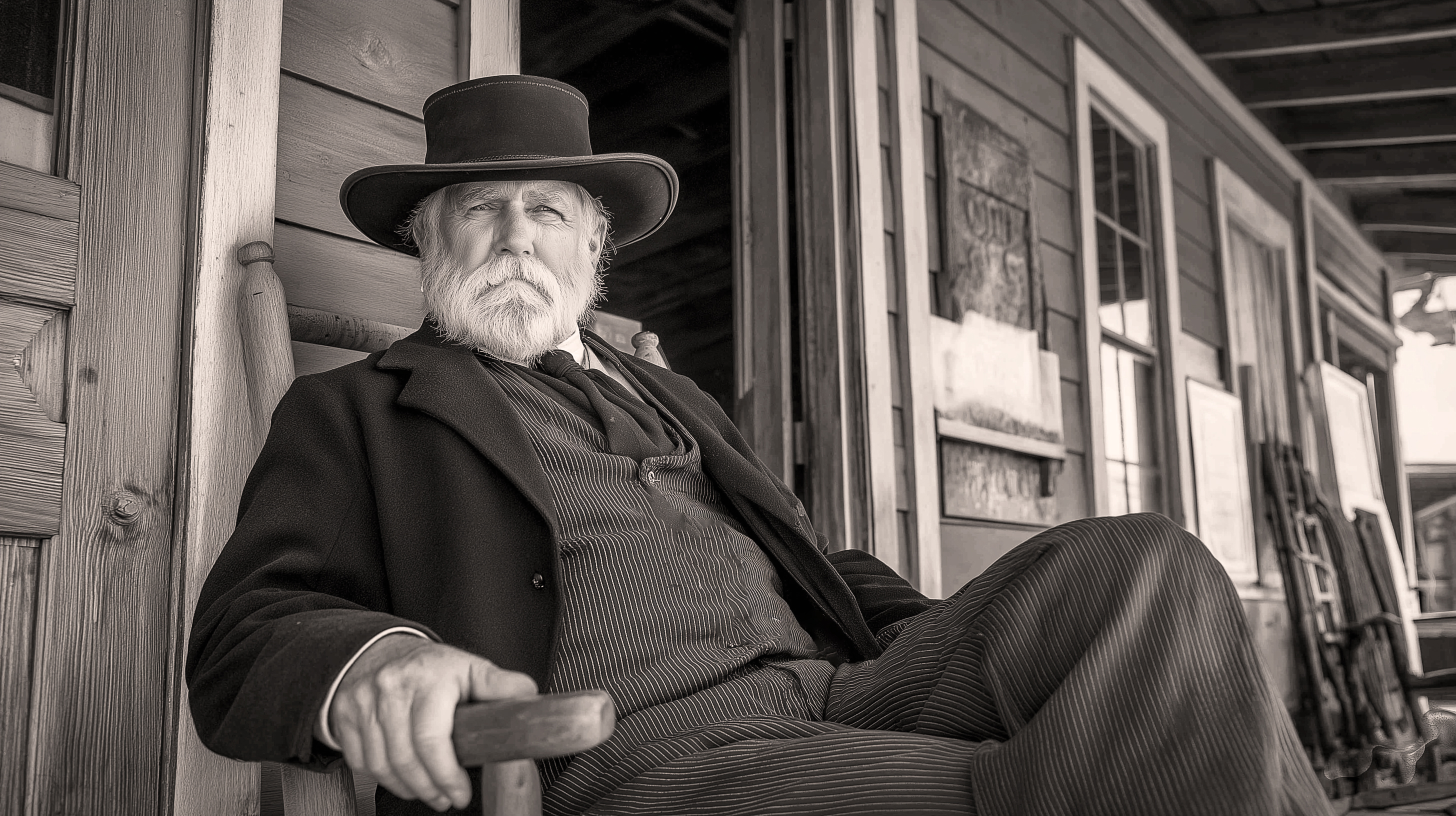
The Duel at St. Anthony’s Garden

New Orleans, April 2, 1848

Tendrils of morning fog drifted through the live oaks of St. Anthony’s Garden. Nestled behind St. Louis Cathedral’s towering spires, the garden was an Old-World masterpiece transplanted to the New World. Brick pathways formed a cross that met at a gurgling fountain filled with water lilies. Manicured hedges of boxwood created intimate alcoves. Magnolia trees joined the oaks overhead, their white blossoms hanging like faint ornaments in the pre-dawn light. The air carried a perfume of jasmine mingled with damp soil and the muddy overlay of the nearby Mississippi River.

The aristocracy of New Orleans often gathered here, not for solitude or prayer, but for that peculiar form of justice settled with powder and lead. Duels were good theater, and this morning’s contest pitted two successful cotton merchants against each other—Joseph Armand and Nicholas LeDoux. Their story had spilled into the gossip pages of The Times-Picayune, alleging that LeDoux made an unwanted advance towards Armand’s wife, Camille.

Fueled by gossip and bloodlust, the morning’s crowd was unusually large. Somewhere in the foliage, a mockingbird began its repertoire, oblivious to the human drama about to unfold.

“Here he comes!” a woman’s voice sounded from the spectators.

Jospeh Armand’s carriage rattled to a stop on Royal Street just as the cathedral bells tolled six a.m. He emerged wearing a rich burgundy coat cut in French fashion. Strikingly handsome, he was tall and broad-chested, his curly black hair professionally coiffed. A vain man, he arrogantly displayed his wealth and social standing, but he also had the reputation of being fair in his business practice. That is, if you had the guts to stand up to him.

As he walked past the spectators lining the pathways, he tried to hide the trembling of his hand that held the .50 caliber flintlock dueling pistol, its walnut stock gleaming with brass fittings.          

Nicholas LeDoux appeared from the opposite direction, announced by murmurs in the crowd. He was leaner, his features sharper, his dark hair streaked with gray. He carried himself with easy grace, his deep blue coat longer than Joseph’s, suggesting his merchant dealings in British territories. A devout Catholic, he worshipped every Sunday with his family in the cathedral. and unlike Armand, he used his wealth to support local charities. He had recently donated large sums to Sisters of the Holy Family, the first Catholic order for women of African descent. That association was slowly eroding his views on slavery. The fact that his whole enterprise was built on the backs of enslaved people had begun to weigh on his conscience.

As he strode towards Armand, LeDoux’s face was pale but steady, his jaw set in with a determination that masked his own fear.

The rivals halted and locked eyes beneath two trees nicknamed “the dueling oaks.”

“Joseph,” said LeDoux with a nod of his head.

Armand answered only with a sneer.

Another man stepped up behind them—Monsieur Beauregard, chosen as the sole referee in lieu of traditional seconds. He was a portly merchant in his sixties dressed in black, his white hair tied back with a ribbon. The Bishop himself had asked him to assume a larger role in these conflicts. “Dueling,” said the cleric, “has gotten woefully out of hand. I trust you can be a modifying influence to avert some of this bloodshed.” Beauregard had reluctantly agreed, but he took no pleasure in the task. He had presided over eleven duels, and three men had died under his supervision. But he had also deescalated a half dozen others, so he persisted.

He knew Armand and LeDoux, having shared drinks and merriment with them at high society parties. He also knew the backstory of this moment, and he found it dubious that LeDoux would have done such a thing. Nonetheless, it was not his place to second guess.

“Gentlemen,” Beauregard’s baritone voice silenced both the crowd and the mockingbird. “Before we proceed, is there no possibility of reconciliation? Is there no way we can avoid the untimely fate that might await one of you this morning?”

Joseph’s response was sharp and immediate. “The insult to my wife’s virtue cannot be reconciled with words. Only blood will answer.”

Nicholas’s jaw tightened. “I maintain my innocence, but if Monsieur Armand demands satisfaction, I will give it. My honor is as dear to me as his.”

The crowd shifted, drawing their collective breath. There would be no turning back.

Beauregard sighed heavily. “Then let me examine your weapons.”

They presented their pistols, and after inspecting them thoroughly, Beauregard handed them back.

“Here are the terms. Stand back-to-back. At my count, take fifteen paces. Then, at my command, turn and fire at will. No second shots. May God have mercy on both of you.”

The men pressed their backs together. Joseph felt Nicholas’s warmth through their coats, and sensed a rapid breathing that matched his own. The pistol felt like ice in his hand.

“One!” Beauregard’s voice rang out.

Joseph stepped forward, crushing a small flower.

“Two!”

The crowd fell utterly silent.

“Three!”

Somewhere in the crowd, a woman sobbed softly. Joseph thought of Camille, of her tears three nights ago as she had described Nicholas’s hand upon her arm and his suggestion that they meet privately. His rage rekindled with each step.

“Ten!”

Nicholas’s heart hammered against his ribs. He had shot targets and had once killed a cottonmouth that threatened his daughter, but he had never aimed at a man. He thought of his wife, Jeanette, pleading with him that very morning to reject this rash and foolish challenge.

“Fifteen! Turn and fire!”

Joseph spun, raising his pistol. Across wet grass and mist, Nicholas did the same. For one seemingly eternal instant, they stood frozen.

Then they fired their pistols fired as one. Thunderous cracks echoed off the cathedral’s stones and sent birds exploding from the trees. White smoke bloomed, obscuring everything.

When it cleared, both men lay on the ground.

___

The room in Charity Hospital smelled of carbolic acid and blood. It was just after sunset, the glow of a kerosene lantern casting a dim yellow light. Joseph Armand had been conscious for about an hour. His chest was wrapped in bandages that made each breath painful. The ball had entered just below his right collarbone, missing his lung by an inch. Dr. Mercier called it miraculous.

A heavy canvas curtain divided the room into two parts, each holding a bed. Beyond it, Joseph heard another man’s raspy breathing and occasional moans. A nurse moved between the patients, pausing on the other side of the curtain.

“Monsieur LeDoux, you must drink this broth.”

Joseph’s eyes flew open. LeDoux? Nicholas LeDoux?

The irony struck like a blow. They had tried to murder each other at dawn, but now shared the same room, too weak to stand.

“Nicholas?” Armand called in a weak voice. “Is that you?”

The response from beyond the curtain was also weak but unmistakable. “Joseph?”

“Yes, it’s me, Nicholas.” He paused, trying to collect his thoughts and feelings. “It seems we are both poor shots.”

Long silence followed. Then, from LeDoux: “I thought I killed you. When I saw you fall…”

“I thought the same. I suppose we’re both fortunate, or unfortunate, depending on your perspective.”

Another silence. “I never touched your wife, Joseph. Not in the way she suggested.”

Joseph closed his eyes, weary to his bones. “Then why accept the challenge?”

“What choice did I have? To refuse would admit guilt and brand me a coward. My business, my reputation, and my children’s futures—all of it would be ruined. So I came prepared to die for honor, even though I was falsely impugned.”

Joseph felt something shift in his chest. “Tell me exactly what happened at the Deveraux ball.”

“I was near the terrace. Camille approached me. She approached me, Joseph. She laid her hand upon my arm and said you’d been neglecting her, caring more for your cotton than your wife. She asked if I might call upon her to discuss how to invest her household allowance. Frankly, I thought it was odd, and I quickly told her that such a conversation should rightfully include you. That was all. The next day, you sent your second to my house with the challenge.”

Joseph lay in the dim light. Perhaps his injury had weakened his defenses, but he suddenly felt the full weight of truth. He knew his wife–her moods, her need for attention, her talent for dramatic embellishment. He had leapt to defend her honor without questioning her account. He could blame her, but he knew it was his own damned pride that had almost cost a human life. And she was certainly right about his work draining attention from her.

“I nearly killed you,” Joseph whispered.

“We nearly killed each other. I aimed for your heart. I meant to leave your wife a widow. For what? Vanity and an antiquated notion of honor?”

Absurdity overwhelmed Joseph. A laugh escaped his lips, painful but genuine. “I am an idiot, Nicholas. And you, too, for accepting my challenge. Absolute idiots.”

Nicholas laughed too, dissolving into painful coughs. “Complete fools. They should write an opera about our epic stupidity.”

When their chuckling subsided, a new silence fell.

“Your cotton exports,” Nicholas said eventually. “You ship primarily to Manchester?”

“Liverpool. Though I’m making some headway in establishing Manchester contacts. And you?”

“Manchester and Leeds. But Liverpool has eluded me. The established houses refuse newcomers.”

Joseph’s mind began working. “I have three ships in rotation. But British tariffs cut margins. I’ve been seeking ways to increase the volume on each passage.”

“I have prime warehousing on Tchoupitoulas Street,” said LeDoux, “holding three times what I can adequately ship. Last season I left two hundred bales waiting, and the prices dropped.”

“If you had guaranteed shipping…”

“And if you had better storage facilities and wider British contacts…”

Possibilities bloomed between them like the magnolias in St. Anthony’s Garden. Combined resources, shared costs, expanded markets. They both knew that their competition had cost them both.

“We could,” Joseph said slowly, “in theory, form a partnership.”

“Armand and LeDoux. Or LeDoux and Armand?”

“Does it matter?”

“Not in the slightest.”

Over the following hour, two wounded men discussed tonnage and tariffs, credit and contracts. They spoke of the growing British demand and how a unified operation could be formidable.

Dr. Mercier arrived, making his last rounds of the day. He pulled back the curtain briefly—the first time they saw each other, pale and bandaged.

“Look upon your handiwork, gentleman. You’ll both live, though you’ll carry scars. You were fortunate.”

“Perhaps more than we had imagined,” said Nicholas.

The doctor looked at both of them again, then shook his head with a sigh. “I don’t understand this world,” he said, then turned and left.

After he’d gone, Joseph spoke softly. “Nicholas, when we recover, we should draw up partnership papers.”

“Equal shares in everything?”

“Equal shares, equal voice, equal responsibility.”

“Just one more thing,” said LeDoux. “I would insist that we give a percentage of our profit to those who are less fortunate. After all, Joseph, we have been blessed with so much.”

“I will accommodate your charitable nature,” said Armand. “I’m sure your God, if he even exists, knows that I need more tolerance.” He paused. “And Nicholas? I am truly sorry. For doubting you, for the challenge, for all of it.”

“And I apologize as well for accepting rather than insisting on truth. Perhaps we both needed to learn about pride and trust.”

As evening fell over Charity Hospital and the city of New Orleans, two former enemies planned their future as partners. Armand and LeDoux would become one of the South’s most successful cotton operations, weathering the Civil War, passing through generations, a legacy of prosperity born from near-tragedy.

But none of that was visible yet. For now, they were simply two foolish men who had learned that honor without wisdom is foolhardy, and that the greatest victories sometimes come from the duels we survive rather than win.

Outside, the city prepared for another sultry night. In St. Anthony’s Garden, the magnolias continued their eternal blooming, indifferent to both human folly and human grace.

An Unforgettable Night at the Lighthouse

(According to the U.S. Coast Guard Historian’s Office, 122 women
were appointed as official lighthouse keepers from 1845 to 1912)

Port Isabel, Texas — November 15, 1860

The night air tasted like salt and iron. It pressed in through the cracks of the lighthouse keeper’s cottage, carrying the murmur of the Gulf of Mexico, a sound Hannah Harn had come to know as well as her own breathing. Outside, the beacon atop the Port Isabel Lighthouse shone steady, its beam sweeping toward the Brazos Santiago Pass. Hannah had lit it promptly at 5:00 p.m., ensuring its operation through another night.

Feeling restless, she left the cottage, walked the stone pathway to the lighthouse, and climbed its spiral staircase. The sleeves of her dark wool dress were rolled neatly to her elbows, revealing forearms strong from years of polishing brass and trimming wicks. When she got to the lantern room, she checked her pocket watch. 12:13 a.m.

She gazed out at the sea, its surface ink-black under the stars. As the beam from the great Fresnel lens swept back and forth, she allowed herself a satisfied smile. It felt good to be responsible for such a marvel of engineering, its concentric rings of glass magnifying the flame until its light could be seen for twenty miles. Her late husband, John, had been so proud when the lens arrived from France and they installed it, replacing the old whale oil lamps they’d tended since the lighthouse opened in 1852.

“It’s like holding a star in your hands,” he said, his weathered face illuminated by wonder as he lit the new apparatus. “Just think, Hannah, our light reaching out so far. All those sailors find their way home because of what we do here.”

Hannah’s throat tightened. For almost a year now, she’d kept the light alone, ever since John died of a sudden heart attack. They had just finished breakfast and he’d been laughing at something she’d said about gulls defecating on the observation deck. Suddenly, he slumped to the floor and went silent. She tried to revive him to no avail. She ran out of their cottage and into town, knocking frantically on the local doctor’s door, but by the time they got back, it was no use. The doctor told her it was the Lord’s will, a phrase she has always despised.

The very next day, despite her grief, she told the Harbormaster that she would take over John’s duties. He stared at her, first in disbelief, then in mild amusement.

“It’s highly irregular,” he said, avoiding her eyes and shuffling papers on his desk. “A woman keeper…”

But Hannah persisted. John had taught her everything, she explained. How to trim the wick, how to calculate the right amount of whale oil, how to read the weather in the colors of the sunset and direction of the wind. Then she told the Harbormaster of another Hannah—Hannah Thomas—the first woman lighthouse keeper in America, a story she had learned in Massachusetts before moving to Texas. After her husband died in the Revolutionary War, Thomas tended the strategic Gurnet Light on Plymouth Bay for ten years, an inspiration to other women in a patriarchal era.

“I’m perfectly qualified,” Hannah concluded. “And who better? I learned from the man himself. Is it more irregular to appoint me, or let the lighthouse go dark while you search for someone to learn what I already know?”

He’d given her the appointment. Conditional, temporary, subject to review. That had been nearly a year ago, and the light had burned every night without fail. Ships laden with Texas cotton—bales upon bales of white gold bound for New Orleans and beyond—passed safely through the channel under her watch. She’d earned her place as the only female lighthouse keeper on the Texas coast.

__

Tonight, the air seemed preternaturally still, the sea smooth as glass. Stars shone clear and bright in a crystalline sky, undimmed by the occasional fog of the Gulf. On the horizon, a faint flicker marked the last departing ship of the day. The town of Port Isabel glimmered with a few lights, and beyond it to the southwest, mainland Mexico stretched into the distance.

She checked her pocket watch again, 1:15 AM, then sat at a small table she and John had always used. On top of it was a folded copy of the Galveston Daily News, delivered yesterday. She had read it that afternoon. It spoke of Abraham Lincoln’s election just two weeks earlier, as well as the growing talk of secession rippling through the South, including Texas. If conflict broke out between the states, she wondered what would happen to Port Isabel and the status of the lighthouse. It concerned her, but on this night – with the Gulf so peaceful beneath the stars – rumors of war seemed far away.

She pulled out her knitting from a drawer, clicking the needles in a rhythm that matched the lens’s rotation. This had been her evening routine, a meditative cycle of work and watch. During the day, she could walk to town and speak with merchants or sailors’ wives, feeling part of the bustling port community. But at night, she was encased in solitude, alone with the light and her memories.

Her thoughts turned to John. His voice, his laugh, and the rough warmth of his hands. He used to call her “my treasure.” He’d said it the very first day he brought her to Port Isabel as his new bride in the summer of ’52, when the lighthouse was barely finished.

“This is my post,” he’d said, gazing up at the white tower. “And you’re my treasure at the top of it.” After that, he often used that affectionate name for her, saying “Good morning, my treasure” or “What did you read in the paper, my treasure?”

Their marriage wasn’t perfect. They argued like other couples. But Hannah knew that in his heart, John adored her. And unlike most of the other men she observed in South Texas, her treated her as a true equal. It was still so strange to think that she had outlived him and assumed his post.

__

Another hour passed and Hannah stayed in the lantern room, not tired enough to retreat to the cottage. The constellations of the Northwestern Hemisphere wheeled overhead, including her favorite, Pegasus. She and John often pored over a lithograph star chart, a prized possession, testing each other’s knowledge of the heavens.

She sighed, lifted her gaze beyond the windows, and that’s when she saw it, a brightness on the horizon.

At first she thought it was a ship, its running lights unusually brilliant. But the light grew too bright, too fast, dazzling against the calm darkness of the sea. It shimmered, swelled, and seemed to move not along the water but above it.

She blinked and rubbed her eyes. As it got closer, she realized it wasn’t a ship. It had no mast, no hull, no motion on the waves. It seemed to be a self-contained ball of molten silver gliding over the water. It pulsed faintly as it drew nearer, casting an eerie radiance.

A shiver ran down her spine. “What on earth…” she murmured.

She opened the door that led to the observation deck and walked out to the railing, the night air heavy with the smell of ocean brine. The light was still coming, faster and brighter, until it hurt to look at.

It reached the shallows, then lifted up from the sea, tall enough that the beam from the Fresnel lens shone straight through it, breaking into a thousand shimmering fragments like sunlight through mist.

It wasn’t lightning. It wasn’t fire. It wasn’t anything she had ever seen. Then, as she stared, it began to move toward the lighthouse and her heart started pounding.

She turned and rushed down the spiral stairs, skirts clutched in one hand, the heavy ring of keys in the other. Every instinct told her to make sure the tower was locked up tightly. When she reached the thick oaken door, the seams around it glowed faintly as the light approached. She bolted it, her fingers trembling, then pressed her ear to the wood.

At first, only silence. Then footsteps, faint at first, approaching along the stone pathway, growing more distinct. Filled with fear, she quickly retreated up the spiral stairs, making sure the door to the lantern room was equally secure. But now, somehow, the footsteps were inside the tower. How could that be? She gripped the brass handle of the lantern room door, making sure it was locked tight.

Still, the footsteps drew closer, echoing on the iron stairs, until they stopped on the other side of the door. She could feel a presence there, could sense it waiting. The silence was broken only by her ragged breathing and the steady tick of the clockwork that turned the lens.

“Who goes there?” she finally called in a sharp voice.

 No answer.

 “Who’s there?” she demanded again, mustering more courage than she felt.

 A pause.

 Then, softly—heartbreakingly familiar—came a voice.

 “It’s alright, my treasure,” it said. “I will always be near.”

 Hannah froze. Her throat closed, and she pressed her hand to her chest.

 “John?” she whispered.

 But the voice said nothing more.

For long seconds, the world held still. Then the air seemed to exhale. Through the crack beneath the door, she saw the light dimming, softening from white to gold, then to nothing. When she finally dared to open it, the stairwell was empty. But something had changed. The brass railings gleamed brighter than before, as though freshly polished. Behind her, the great Fresnel lens turned in its slow, majestic rhythm, clearer than she had ever seen it.

She stood there for a long time at the top of stairs, one hand resting on the railing as tears blurred her vision.

“My treasure,” he had said. The exact words, his voice as unique as his fingerprints.

__

In the morning, the sky dawned cloudless. The wind had picked up from the east, rattling the shutters and carrying the cry of gulls. Hannah went about her duties as usual, though she moved through the day in a quiet daze.

She had convinced herself that, given the late hour, she had fallen asleep at the table and dreamed the whole incident. But outside the cottage, she saw footprints in the sand that led to the stone walkway. They were clearly a man’s. She followed them to the shoreline where they vanished into the surf.

She knelt and touched one, feeling the damp impression under her fingers, and for the first time since John’s death, she wept openly.

__

Days passed. Then weeks. A story spread through the small settlement of Port Isabel about a ghostly light seen offshore. Sailors drinking in the local pub said they’d observed a second beacon burning above the lighthouse, even brighter than the Fresnel lens.

Many townsfolk asked Hannah what she thought of the phenomenon. She didn’t deny it had happened but merely agreed with them that it was strange and unprecedented. She never revealed what had happened in those moments. She just kept her routines of tending the lamp and filling the logbook in her neat script. But occasionally, late at night when the wind was low and the sea calm, she swore she could hear footsteps again on the stairs. Never threatening. Never materializing into something she could see. And instead of fear, she felt only comfort and peace.

Sometimes she would speak softly into the silence: “John, if that’s you…” And though she never heard his voice again, the flame of the lens would seem to brighten for a moment, as if in answer.

The River Between: Recollections of Samuel Cranston, Recorded in 1907

(Editor’s note: The most heavily traveled route from slavery to freedom involved crossing the Ohio River from Northern Kentucky into Cincinnati. Enslaved people called it “The River Jordan,” symbolizing a perilous but hopeful journey. Cincinnati was a critical hub for the Underground Railroad, with numerous supporters, safe houses, and abolitionist organizations operating there.) 

Well, sir, I can tell you about the Ohio River. It was the line between a man’s bondage and his freedom. I reckon I know it better than most. I crossed it more times than I could count, though I didn’t do it for myself till much later.

You ever stand by the water on a moonless night? You can’t see but ten feet ahead. That’s what it was like most nights I went down there. The cold air bit through my shirt, and sometimes the fog was thicker than smoke. You could hear the current whisperin’, as if it was sayin’ Come on, come on—if you dare.

I was still a young man then and belonged to the Clapp family in Boone County, Kentucky. Their property bordered the river. My mistress, Miss Ellie, she was a strange one. She was kind-hearted, I’ll give her that, but troubled in her soul. She read her Bible every night and said she believed God made all men equal, but her husband surely didn’t share that view. He was a harsh man who doled out his punishments without mercy. I recall seeing him tie one of our workers, Jake, to a tree and whip him without battin’ an eye. I did my chores quietly around him, never lookin’ him straight in the face, lest he see what I really thought of him,

One evening, Miss Ellie knocked on the door of my room in the slave quarters, unusual for her to be out after dark. Standing in the doorway, she looked over her shoulder then back at me. “Samuel,” she said, “The Lord’s put something on my heart. There are folks who need help crossing that river into freedom, and you could be the one to do it. I can help make it possible and no one will suspect you.”

I knew the risk she took in sayin’ that to me. And I knew the far greater risk of what she was askin’ me to do. But her words were a challenge that went straight to my heart. And she was right about no one suspectin’ me. Like most slaves, I was invisible to white folks. I could be standing right in front of them and they would look through me like I was part of the scenery, like the fence posts or the smokehouse.

So I decided to accept Miss Ellie’s challenge, though I was half-sure it would cost me my life.

__

First time I went, Mister Clapp was away on business and Miss Ellie made the arrangements. I used an old wooden rowboat stored in the barn, patched so many times it looked like a quilt. I took a young woman that night, and I thought my knees would give out from fear. Her name was Sarah, and she was holdin’ on to a little sack like it contained her whole world.

“Are you sure you wanna go?” I whispered to her.

“Yessir. More sure than I ever been.”

“Well, OK then.”

I got her on board and pushed us off. There was no moon, the river runnin’ its southwesterly course, the current softly ripplin’. I knew I had to row strong to the north to keep the right direction, then look for a signal on the far shore. It wasn’t easy, my back strainin’ with every pull of the oars.

I could hear Sarah mutterin’ quietly. I strained my ears and could finally make out those familiar words from Psalm 23, “Yea though I walk through the valley of the shadow of death, I will fear no evil.” She just kept sayin’ it over and over. I’ll be honest. I’m a believer, but that scripture didn’t make my fear go away.

Finally, I saw the lantern light Miss Ellie had promised. Three short swings. That was the sign. When we reached the bank, two men jumped from the dark and my heart leapt in my chest cuz I thought we’d been caught. Instead, they helped us out of the boat.

One of ‘em, an older man with a gray beard, caught my arm and said, “You did good, son. You want something to eat?”

He handed me a piece of bread. It was the first meal I ever ate on free soil, and I swear it was the best thing I ever tasted, even if I wasn’t free myself.

As they turned to lead Sarah away, she glanced back at me in the lantern light and said, “God bless you, sir.”

Those words brought tears to my eyes, and after that, I kept goin’. Miss Ellie would let me know when someone would be waitin’ by the river. Each time she and I conspired together, I grew in my courage and she seemed less troubled.

There was one crossing I remember more than most. Another moonless night, same as always, the river runnin’ high with spring rains. I was standin’ by the shore when I saw three figures comin’ through the trees. A man, a woman, and a little boy wrapped in a shawl too big for him.

The man said, “You Samuel?”

“That’s me,” I told him. “We best move quick.”

We climbed into the old rowboat, the little boy clingin’ to his mama’s dress, eyes big as moons. When he whimpered at the cold, I told him, “Hush now, son. We gotta be very quiet.”

Then I pushed off. The current grabbed us right away, strong and mean. I pulled at those oars till my arms burned. The only sound was water hittin’ wood and the boy’s small breaths.

Halfway across, I saw the lantern signal on the far side. But just then, I saw another light behind us movin’ closer. And then came a loud voice.

“Who’s out there? Show yourself or suffer the consequences!”

That’s a sound that’ll freeze the blood in your veins faster than a winter wind. I hissed at my passengers to get down. The woman dropped flat, coverin’ the boy. The man hunkered low. I bent to those oars like a madman.

Then came the gunshots. The first one seemed to crack the dark clean in half. The second one hit the water right behind us. I heard the boy cry out, and I prayed under my breath, “Lord, give me the strength to get us there!”

The signal lanterns were now hidden, so I had to go by memory, hopin’ I could keep us all safe. And then came the sweetest sound of the boat scraping against the shore.

“Out,” I said. “Go quick!”

Two men appeared from the dark, one tall, one short. I could barely make them out in the starlight. The shorter one said, “You Samuel Cranston?”

“Yessir. Miss Ellie sends her regards.”

“Name’s John Parker. You did good. Quickly now, follow me. There’s a safe place nearby.”

We worked together to drag the small boat behind some bushes, and God was with us. The boat that had pursued us veered into the darkness, swept away by the current.

The family and I followed John through some willows, every step a miracle. Then we came to a small cabin with dim yellow light showing through its windows. A white lady opened the door. She didn’t ask no questions, just gave the woman a blanket, the man some bread, and the boy a cup of milk.

I stood by the door drippin’ sweat despite the cool night air, feelin’ like I didn’t belong anywhere. Parker looked over and said, “You’ve got great courage, Samuel. You crossed for more than one soul tonight.”

I told him, “They’re the brave ones. I just row the boat.”

He shook his head. “Every freedom journey starts with someone pulling an oar.”

__

I stayed with the Parkers till dawn, knowin’ Mister Clapp was still away on business and Miss Ellie would cover for me. When the sky started to pale, John walked me back to the river.

“Do you ever think about staying?” he asked me. “We could find you some work and help keep you safe.”

“I think about it every day,” I told him. “But I can’t just yet. There’s still folks on the other side dependin’ on me.”

He nodded. “Then God go with you, Samuel. And when you’re ready, this side’ll still be here.”

We stood a long while, watchin’ the sun change colors on the water. Then I asked him, “You think we’ll see it, John? The day when nobody’s gotta sneak across this river?”

He said, “Maybe not us. But somebody will. Every crossing you make brings that day closer.”

__

I reckon he was right. I kept rowin’ that river till the war came and set us all free, at least on paper. I never did count how many I helped, but it was surely in the hundreds.

I outlived my wife, and my children scattered to other places further north. Now I sit by the river sometimes, my old bones achin’, my hands twisted from years of layin’ concrete for the growing city of Cincy. I listen to the Ohio whisper the same song it always has. A song of possibility and hope. Some nights I swear I can still hear the splash of oars, the soft cries, and the prayers whispered into the fog.

And I never forget that first passage. Sarah mutterin’ that Psalm, and her face as she turned to me and said, “God bless you, sir.” I often wonder what happened to her. Did she really find freedom, I mean real freedom for her soul, or just learn to survive in a country full of hatred and racism? I pray for her and all the others I helped.

A little boy came by once while I was sittin’ there on the riverbank. He was fishin’ with a crooked stick. He asked me, “Mister, is this where the slaves used to run across?”

I told him, “That’s right. This here’s the place.”

He looked puzzled. “Mama says people can’t fly.”

I laughed at that. “Sometimes they can. You just got to have faith, and a strong enough river.”

He didn’t understand, but that’s all right. Someday maybe he will.

The Hidden Note

The sun slid behind the palm trees of Beverly Hills, painting the sky with a lavender glow. Sam Leeds sat alone in his late father’s office, its tall windows letting in the final light. The room smelled of leather and cigar smoke, and it was eerily quiet.

John Leeds had been a towering figure in Hollywood, an old-school film producer who still used handshakes to build his empire. Now he was gone, dead at eighty-nine, leaving behind a legacy of memories. His mansion, surrounded by manicured lawns and marble terraces, felt deserted without his booming presence.

Sam rubbed his forehead. He was there to sort through his father’s effects, and as he sat at the massive mahogany desk, his eyes scanned the walls. They were covered with photographs, some black-and-white, others in color. John laughing beside Bogart, leaning close to Elizabeth Taylor, and raising a glass with Jack Nicholson. More recently, John sharing a joke with Tom Cruise, standing at the Oscars with Scarlett Johansson, and shaking hands with Liam Neeson.

The old man had churned through three marriages with younger women. The second one—Sam’s mother—wouldn’t return for the funeral. She’d negotiated a hefty divorce settlement, then emigrated to France. Sam rarely saw her. His only sibling had died years earlier of a drug overdose, so he was the sole heir at age forty-eight, a middle-aged man with graying hair and a slim physique, quiet and reserved with those who knew him.

When a friend asked, “What are you going to do with all that money?” Sam barely flinched. The real question that gnawed at him was, “What will you do now that your father’s voice is no longer in the room?” For decades, John Leeds’s disappointment had been like gravity pulling Sam down. His father never softened his disdain for Sam’s role as a Human Resources Director at a nonprofit. “Why don’t you just take the opportunities I’m offering?” he said with bafflement. “Step into the film business and claim a piece of Leeds success!”

Sam knew one thing for sure. Enduring his dad’s expectations was hard enough. Working with the old man would have been deadly. Over the years, Sam told himself he was immune to all the judgment, but the truth lingered in the wreckage of his own marriage and the erosion of his self-worth. His father’s shadow was stitched into the fabric of his life, a constant reminder that he had failed to measure up. Now, with John gone, he felt unmoored, like an orphan in middle age. He wondered if this freedom from criticism would mean new possibilities or just remind him of how broken he had let himself become.

He turned on the office lights and resumed his task, which felt like rifling through the nation’s cultural history. File cabinets stretched wall to wall, neatly labeled in his father’s blocky handwriting. The folders inside held contracts, letters, and correspondence from other titans of cinema. His father had been a hoarder of paper, distrustful of the digital world. “Computers crash,” John had once said. “Paper endures.”

Sam had been at it for hours, sifting the trivial from the historic, setting aside documents the Academy Museum might want. The work was tedious, but he knew it was important. He was about to shut one drawer when his fingers brushed a plain manila envelope wedged in the back. The only word on it was “PERSONAL.”

Even with his father gone, it felt like an invasion of privacy as he pulled it out and spread its contents on the desk. There were notes and letters, some yellowed with age, others crisp. Many were from celebrities expressing gratitude for their roles. One was written on a cocktail napkin, sealed with a kiss in red lipstick.

But then Sam found a single slip of paper addressed not to John, but to him.

Sam, if you ever find this, call this number.

Beneath the line was a phone number.

Sam’s brow furrowed. The handwriting was unmistakably his father’s. The number had an unfamiliar prefix, so he googled it on his phone. New Orleans.

He shook his head. What had his father been hiding in Louisiana?

He stared at the note, the air in the office heavy and still, until curiosity overcame his hesitation. He dialed. The phone rang once, twice, then clicked. A recorded voice said: “Leave your message at the tone.”

Sam froze. After a short silence, he hung up and resumed his work, wondering what to do about this strange twist of events. The faces on the wall seemed to watch him, asking the same question.

Hours later, as he stacked folders into boxes, his phone buzzed with a text from the New Orleans’ number.

Meet me here on the night of Mardi Gras.

Below was an address, which Google showed him was in the famous French Quarter.

What the hell?” he thought. Mardi Gras was only a few weeks away. His mistrust of his father’s motives made him want to destroy the note and block the number. Why leave this cryptic message in such a secret place? Why not share it sooner?

Sam’s curiosity was certainly piqued. Should he risk keeping the appointment? Would it reveal something he needed to know? He sat in the hush of his father’s shrine and whispered aloud, “What the did you leave me, Dad?”

__

Mardi Gras was chaos incarnate. Brass bands blared from balconies, floats crawled down Canal Street, and crowds surged shoulder to shoulder in beads and sequins. Masks grinned at Sam from every corner, and feathers brushed his arms as revelers shoved past. The humid air was thick with the smells of sweat, alcohol, and fried food.

Parking had been sold out, so Sam used an overpriced Uber to get close to the scene, walking the remaining distance. The streets narrowed as he entered the French Quarter, the music a dizzying roar. He felt absurdly out of place—sober, wearing khakis and a conservative blazer while people of all ages danced around him in neon wigs and painted faces.

He used his phone to navigate until he found the address. It was a two-story Creole townhouse freshly painted in pastel green and lavender. Its wrought-iron balconies were strung with Mardi Gras lights and silk streamers.

Above the front door hung a painted wooden sign:

MADAME LEEDS — Psychic Readings by Appointment.

Sam’s chest tightened. His last name in bold letters in a city where he’d never lived. He climbed the steps and knocked. Once. Twice. Three times.

At last, the door opened.

A woman stood before him. She looked to be in her mid-fifties, tall and striking, her long black hair threaded with silver. She wore a fitted gown of emerald and gold, the kind you might see on a Mardi Gras queen. Her face was handsome, almost regal, her eyes piercing and familiar in a way that Sam couldn’t place.

“You must be Sam,” she said with the trace of a Creole accent. “Come in. I’ve been expecting you.”

Sam hesitated, then stepped inside. The door closed behind him with a decisive click. The hallway smelled of incense and old wood. Candles flickered on small tables, casting warm shadows on the walls.

“Follow me,” said the woman, parting a beaded curtain that led to a back room. Its walls were like a gallery. Paintings of saints hung beside voodoo masks, crucifixes, and heavy tapestries of red and purple. At the center stood a round table draped in velvet, with two chairs opposite each other.

The woman gestured. “Please sit.”

Nervously Sam lowered himself, his heart beating fast. “Who are you?”

She took the opposite chair, her dark eyes never leaving his. “My name is Samantha. And I know why you’re here. Because of our father.”

Sam blinked. “Our… father?”

She smiled and nodded. “John Leeds. He was my father also. Which makes me your sister.”

The words hit like a fist.

Sam shook his head. “That’s impossible. My father—he never—”

“Never told you? No surprise. That wasn’t his style.” She leaned forward, her voice calm and deliberate. “My mother was Flora Toussaint. She was a working girl here in the Quarter, back in the early fifties. John met her while producing a film in New Orleans. One night turned into many during the production. When she became pregnant, she wrote to him—not for money, but simply to tell him that she would be keeping the baby. That baby was me.”

 Sam swallowed hard. “You expect me to believe—”

Her eyes narrowed. “Look at me. Really look.”

He did. And there it was: his father’s jawline, the same sharp cheekbones, even the shape of her nose. It was unsettling but unmistakable.

“My mother was proud. She asked for nothing,” Samantha continued. “But John sent money anyway. Every month. The sums grew larger as he rose in Hollywood. He quietly visited us when he could. He made sure we were comfortable, but always in secret. He gave me the Leeds name, but it’s common enough that he knew people wouldn’t connect the dots.”

Sam’s mind was racing. His father, who had guarded the Leeds reputation so fiercely, had kept a daughter hidden for decades. It seemed preposterous. Then his eyes fixed on a photo on a shelf behind Samantha. There was his father standing beside a woman and her child. Documentary proof.

“What happened to your mother?” Sam asked.

“She died ten years ago. Your father came to the memorial service since it was small enough to avoid publicity.”

Sam shook his head. “Why now?”

“Obviously, he wanted you to know. He asked me to speak to you only if you made contact. And don’t worry. Long ago, my mother signed a legal document saying that neither she nor I would make any claims on the estate. I will honor that agreement.”

Sam rubbed his temples, trying to take it all in. The noise of Mardi Gras thudded faintly outside, a reminder of the world still spinning while his own tilted on its axis.

Samantha studied him. “You look pale. Would you like a glass of water?”

“No,” Sam muttered. “I just… I don’t understand any of this.”

“You don’t have to. Yet.” She reached across the table, palm open. “There’s more you need to hear. Our father came to believe in my abilities, and he asked me to give you a reading if we ever met. I can already sense things about your future.”

Sam scoffed. “A psychic reading? You claim you can pick up vibes from me already?”

“You can believe it or not, but it’s what I do. It’s a gift. And being near you, I can sense that you have held yourself back from the real adventure life holds for you.”

Sam shook his head and chuckled. “Me? An adventurer? You’d have to know me to see how odd that sounds.”

She smiled. “You came here because of a dead man’s note. You walked through this city on faith. You already have more courage than you admit.”

He stared at her hand, hesitating. Something about the room—the charged air, the flicker of candles—made his skin prickle. Perhaps this was the final act of John Leeds, the master producer, drawing his son into a story larger than himself.

Slowly, he reached across the table and placed his hand in Samantha’s. Her grip was firm and warm. She closed her eyes as incense curled around her like smoke from an unseen fire. Outside, the revelry of Mardi Gras roared, but in the back room of Madame Leeds studio, there was only the sound of two siblings breathing.

Samantha spoke again, her voice a whisper.

“I can see it now. Your father’s revelation to you is only the first secret. Your future will seem even stranger.”

Sam swallowed. If his future held something stranger than this—sitting in the dim backroom of a New Orleans psychic shop, holding the hand of a sister he’d just discovered—then maybe strange would mean liberating, even wondrous. He began to lean toward a belief that his life could truly change.           

“Go ahead,” he said. “Tell me everything you see.”

Lalla the Chick Magnet

Megan Green was content with her looks. She left the mirror every morning with her hair pulled back, wearing jeans and a soft flannel shirt that smelled of her favorite detergent. People sometimes told her she was attractive in a way that snuck up on you: the quiet steadiness of her hazel eyes, the curve of her smile. But at thirty-five, she had no need to turn heads when she entered a room.

She had animals, and that was enough.

The Humane Society shelter where she worked felt more like home than her apartment. Cages lined the walls, filled with eager whines and hopeful eyes. The air smelled of disinfectant and the musky undertone of fur, but Megan breathed it like perfume. Every dog, every cat, every rabbit or ferret that came through the doors received her loving attention. She knew them all by name, as well as the quirks of their personalities. The way Frankie, the one-eyed tabby, insisted on pawing his water bowl before drinking. Or how Milo, a shepherd mix, tried to herd the volunteers when they walked down the hall.

Her heart was once wed to a dog of her own: Brie, a Jack Russell terrier with more personality than weight. For thirteen years, Brie was Megan’s second shadow, demanding fetch games in the hallway of her apartment, curling against her ribs at night. When Brie had been too sick from cancer to even raise her head, Megan held her paw as the shelter’s vet mercifully euthanized her. Megan had cried almost as much as when she lost her mother, and the grief over Brie’s absence still felt raw.

She hadn’t considered getting another dog yet. Instead, she poured herself into her work, her social life slowly shrinking until some well-meaning coworkers finally convinced her to try dating again. Get out of your shell, they insisted. Reluctantly, Megan filled out a profile for an online app that promised compatible matches. She went on a couple dates with women, but each meeting was so awkward that she resigned herself to the thought that she might always be single.

Then, one morning at the shelter, she looked up from her computer and saw a woman walk through the front door. The stranger carried herself in a way that Megan associated with privilege: tailored linen pants, silk blouse, a scarf knotted loosely around her neck, a diamond pendant flashing over her breasts. On a leash beside her walked a dog unlike any Megan had ever seen. Tall and elegant, the animal moved as if carved from sunlight, its tan fur shimmering against taut muscles. Megan prided herself on her encyclopedic knowledge of breeds, but this time she faltered. Greyhound, she thought at first, but taller, leaner.

The woman approached the counter. “This is Lalla,” she explained in a smooth voice. “We’re moving abroad and we can’t bring her. But I must warn you. She’s pretty picky when it comes to people, so we hope you can find her a home.”

Megan crouched, extending her hand. Lalla was aloof and regal, sweeping her gaze over the room with indifferent eyes until they found Megan. Without hesitation, Lalla stepped forward, pressing her long muzzle against Megan’s palm. Then she went even further and nuzzled Megan’s shoulder.

“Now that doesn’t happen very often,” said the woman. “Lalla has discriminating taste in character.”

As Lalla continued to nuzzle Megan, something opened inside her, like a door pushed ajar by a warm wind.

“What breed is she?”

“Sloughi,” the woman replied. “Arabian greyhound. Not to be confused with a Saluki.”

Sloughi. The word felt strange but beautiful on Megan’s tongue. She couldn’t look away from the dog now leaning into her, as if they’d always belonged to each other.

Megan stood decisively. “I’ll take her,” she said, before her director even appeared from the office. “I want to adopt her.”

__

Lalla filled the space that Brie had left, not by replacing her, but by initiating something new. She was no lapdog. She wanted the outdoors where she could speed, and because Megan didn’t want her to get lost, that meant the large, fenced dog park near her apartment. Megan found herself lacing up sneakers every morning, then walking to the park where Lalla could sprint like a ribbon unspooling across the grass.

At home, Lalla draped herself across the couch with regal elegance, but her eyes followed Megan everywhere. For all of her aloofness with others, she was tender with Megan, pressing her narrow head into Megan’s chest during late-night reading, curling up on the floor like a sentinel beside Megan’s bed.

Megan had done research on Sloughis. They were an ancient North African breed, prized by Amazigh ethnic groups for hunting gazelle. She even found images of cave drawings that depicted dogs uncannily like Lalla, their lithe figures running beside men with spears. Megan traced those lines with her finger on the computer screen, astonished that her companion carried such history in her bones.

The park became their ritual. Lalla rarely played with other dogs, content to race around the perimeter. When strangers approached, she usually ignored them, except on a couple occasions. Once with a young woman tossing a Frisbee, and once with an older man reading on a bench. Lalla went to each of them, tail flicking, and nuzzled their hands. Both times, Megan had talked with those people, and she found herself charmed by them as well.

Megan knew the popular notion that dogs could help you attract the opposite sex. One of her coworkers even bragged that his golden retriever was a chick magnet. She began to joke in her head: maybe Lalla would be her own personal chick magnet, a four-legged matchmaker that could find someone for her.

She laughed at herself, but part of her was cautiously optimistic.

__

The afternoon that changed everything was bright. Late September sunlight illuminated the edges of tree leaves that were just beginning to turn autumn gold. Lalla loped around the dog park in her usual solitary arcs. Megan leaned against the fence, sipping from a water bottle, when another woman approached, pulled by a stocky mutt with mismatched ears.

 “Mind if we join you?” the stranger asked, her voice low and friendly.

Megan opened her mouth to reply, but Lalla answered first. She stopped running and trotted straight to the woman, nudging her hand. Even more astonishing, she bent down to sniff the other dog with a wag of her tail.

Megan blinked.

“Well,” the stranger said with a laugh, “I think we’ve been approved.”

Her name was Dana. She was a slender brunette with delicate features, sporting a tattoo of a flower on one of her forearms. She worked as a graphic designer and lived only a few blocks away. Her dog, Moose, was a rescue mutt with soulful eyes and the energy of a toddler. Conversation with Dana was easy in a way Megan hadn’t felt in years, like slipping into water at the perfect temperature. They compared notes on their dog adoptions, swapped stories about their work, and compared their tastes in music and local coffee shops.

When Dana laughed, her whole body seemed to join in, and Megan felt herself leaning closer, caught in her orbit.

Lalla stayed near, content, as if to confirm Megan’s growing suspicion: this was someone worth knowing.

__

They began to meet at the park once, twice, then three times a week. Their dogs chased each other along the fence line—Lalla swift and elegant, Moose clumsy but determined. Dana always brought a thermos of coffee to share.

Megan looked forward to those hours with a longing she had long suppressed. Dana’s stories brightened her days: a client who wanted a logo shaped like a mango, and the time Moose escaped into a laundromat. Megan responded with tales from the shelter, where puppies chewed through leashes and volunteers fell hopelessly in love with more animals than they could ever adopt.

Gradually, their conversations grew more intimate and vulnerable. Megan shared about her life growing up with a single mom who died too young of breast cancer, the story bringing tears to her eyes. Dana listened attentively and shared her own background. She’d been raised in a military family stationed in so many different places that she never felt like she had roots. Her parents were loving, but their political and religious conservatism was tested when Dana came out as gay. They tried, but there was always a slight distance. Dana was at peace with it; she expected nothing more from them.

Sometimes, while they shared, Dana studied Megan with eyes that had a quiet and inquisitive warmth. Each time, Megan was the first to look away, afraid to trust what was happening.

One evening, as the sun dipped and shadows stretched long across the dog park grass, Dana reached over and brushed a strand of hair from Megan’s face, her fingers lingering on Megan’s cheek. The touch was fleeting, but it lit Megan like fire.

“Sorry,” Dana whispered.

 “No,” Megan said. “Don’t be.”

__

Their first real date wasn’t called a date. Dana invited Megan for dinner. “Nothing fancy, just pasta,” she had said.  Megan arrived with a bottle of wine she’d agonized over choosing, feeling a bit nervous. Moose bounded at the door, and Lalla—usually wary in strange houses—walked in as if she’d always belonged.

The evening passed with laughter and a wonderful ease. By dessert, Megan realized she hadn’t thought of Brie’s absence once. For the first time in a long while, she felt unburdened and full of possibility.

Later, as she stood in the doorway ready to leave, Dana leaned close. Their kiss was gentle and exploratory. Lalla pressed against Megan’s leg, Moose barked, and both women broke into laughter.

__

Weeks blurred into months. Megan still poured herself into her work at the shelter. She still memorized the names of every new arrival. But now her life was fuller and brighter. She looked forward to walks with Dana and the dogs, movies sprawled on the couch, nights full of tender lovemaking, quiet mornings drinking coffee side by side. They hadn’t moved in with each other yet, alternating between apartments, but their relationship grew stronger by the day.

There were moments of hesitation. Megan sometimes pulled back, fear whispering that somehow her happiness could vanish. But Dana was steady and patient. And Lalla, her unlikely matchmaker, always seemed to approve, nudging Megan toward a newfound trust.

Sometimes, late at night with Dana asleep by her side, Megan would reach to the floor and rest her hand on Lalla’s sleek fur. “Thank you,” she would whisper. “Not just for your companionship, but for opening a door that I was afraid would always be locked.”

Lalla’s tail would thump gently against the floor.

__

Spring arrived with green bursting from the trees. Megan and Dana sat on a park bench one afternoon, the dogs tangled in joyful play nearby. The air smelled of damp earth and possibility.

“You know,” Dana said, breaking a comfortable silence, “I think Lalla deserves partial credit for this.”

At the sound of her name, Lalla trotted over to be near them. Megan laughed, sliding one hand into Dana’s and resting the other on Lalla’s head. “More than partial. Without her approval, none of this would have happened.”

“I’m so glad I passed the test,” Dana said with a chuckle.

The two of them looked at each other, and Megan felt the final ache of her loneliness slip away. Love hadn’t arrived with fireworks, but in a quiet and steady way, ushered in by a dog who seemed to know the future before either of them.

Megan leaned over and kissed Dana softly while Lalla’s head pressed warmly against her knee.

On Top of the World

Kevin adjusted the greasy wrench in his hand and leaned back from the Ferris wheel’s steel frame. The setting sun bled pink and gold into the horizon near Springfield, Missouri, their latest stop on the circuit. He’d been sweating since noon, his muscles sore from bolting the enormous machine together with his coworker, Rick. The Ferris wheel was their kingdom. Dangerous, heavy, and finicky, it required absolute attention. It could thrill hundreds of strangers in a single day, but a missed bolt or an untested wire could wreak havoc. Just a few years earlier, a similar model in New Orleans had come dangerously close to spinning out of control.

Across from him, Rick grinned through a cigarette and slapped the wheel’s support beam. He was a grizzled man in his fifties, affectionately called “old-timer” because of his decades on the road.

“Solid,” he said. “Ready for some new revolutions.”

“Rock solid,” said Kevin, giving a thumbs up sign.

Kevin liked the weight of his responsibility, making sure that people could climb into the gondolas and rise into the sky, trusting their lives to both the steel and his operation. Most nights, when the crowds finally went home and the carnival lights dimmed, he had a little ritual. Rick would let him ride alone to the very top, then lock the wheel in place for a few moments. Kevin would sit back, legs stretched out, a glowing city or moonlit countryside stretching into the distance.

I’m on top of the world, he would say to himself.

He hadn’t always felt that way.

__

Kevin was thirty years old, though most people thought he was younger because he still had the boyish good looks and easy slouch of someone barely out of his teens. He’d dropped out of junior college after a year and a half, bored by textbooks and fluorescently lit classrooms. His parents had sighed, shaken their heads, and said things like, “You’ll regret this someday.” Maybe they’d regret it, thought Kevin. He never did.

Instead, he left home and drifted. He worked as a stock boy, a roofer, a dishwasher, and a mechanic’s assistant, but nothing stuck until he signed on with the carnival. He did so on a whim, tagging along with a guy named John, a fellow mechanic at a garage. John quit after only a month, but Kevin stayed. That was three years ago.

The pay wasn’t great, but it was steady. What mattered most to Kevin was the sense of community shared among the workers. The carnival was a misfit’s refuge for drifters, ex-cons, recovering addicts, and folks with broken pasts. People the world often shunned, yet in the daily routine of their comradery, they were family. They worked, they partied, they bickered, and they kept moving. Kevin liked the rhythm of it.

To save money, Kevin didn’t rent a room in one of the trailers offered by the company. Instead, he pitched his tent behind them, using the communal shower and eating cheap food from the cook wagon. It wasn’t glamorous, a Spartan existence, but it gave him a sense of freedom.

Perhaps for the first in his entire life, he felt like he really belonged.

__

Marcy caught Kevin’s eye the first summer he worked the wheel. She ran various game booths on the midway—ring toss one week, balloon darts the next—her voice scratchy from years of calling out to customers: “Step right up and try your luck! Win a prize! Don’t go home empty-handed! She was a couple years older than him but carried herself with the confidence of someone who had no regrets about her choices.

She had bleached blonde hair with darker roots showing, a nose ring, and tattoos creeping out from under her tank tops. Her skin had that sun-leathered look common among carnies who live under open skies. Kevin thought she looked exotic, beautiful in a way that felt raw and untamed. Most of all, he loved the way she laughed, a free and guttural sound that cut through the din of the carnival. Sometimes, when the Ferris wheel was near the game booths, he could hear her, and it made his attraction stronger.

He’d always been awkward around women. He’d had one serious relationship in high school with a girl who was equally introverted, but their lack of passion caused the relationship to fizzle. After that, he did some random dating, but nothing lasted. He could fix an engine, bolt a Ferris wheel, or patch a tent flap, but his tongue usually tripped when he tried addressing the opposite sex. With Marcy, though, he forced himself to try. A joke here, a question there, slowly building a connection between them.

One night after closing, they were sitting on overturned buckets behind the dart booth, sharing smokes. The carnival grounds were quiet except for the distant whir of generators.

“So, why’d you join up?” Kevin asked.

Marcy shrugged, blowing smoke toward the stars. “At this point, it feels like I didn’t join. I just never left. I ran away from Iowa when I was seventeen, hitched with a carnival, and here I am after fifteen years.”

He knew there was more to her story, something she had run from, but he felt awkward about asking. Instead, he said, “Well, you definitely seem to like it,” feeling lame for stating the obvious.

Her lips curled into something halfway between a smile and a sneer. “It’s better than starving. And better for sure than going back.”

Kevin nodded. “Yeah. Better than going back.”

Something passed between them—an understanding that neither of them had much else but this.

__

Kevin found excuses for being near Marcy. He’d swing by her booth before the gates opened, helping her line up prizes or restock darts. Sometimes she’d trade him free throws for fixing a loose hinge.

“Careful,” she teased once. “You hang around too much and people will think you’re sweet on me.”

He flushed, mumbling something about just being helpful, but Marcy poked his arm and laughed in that way he loved.

They started eating together at the cook wagon, sitting shoulder to shoulder on the worn benches. They’d walk the grounds after closing, Kevin pointing out constellations overhead while Marcy rolled her eyes.

“You sound like some kind of philosopher,” she said.

“Maybe,” he replied, grinning. “A philosopher who can also bolt a Ferris wheel.”

Late one night, leaning against the wheel’s frame, Marcy suddenly poured out the story of her nuclear family. The abuse she’d suffered at the hands of two different stepfathers and her mother’s complicity. She claimed she had never told anyone else about it, and as he listened, the bond between them deepened. In turn, he shared the story of his own upbringing, how he never felt adequate compared to his older brother—the golden boy to his parents—living in his sibling’s shadow until he felt invisible.

She listened intently, then suddenly surprised him with a quick kiss, her breath smelling of cigarettes. Kevin froze, his heart racing, but when she laughed at his expression, he found himself laughing too. From then on, they were lovers, periodically spending the night together in his tent.

But Kevin always sensed that she carried a quiet readiness to leave, no matter how close she seemed.

__

As months went by, Kevin’s feelings for Marcy grew much deeper than infatuation. He thought about her constantly, even fantasizing about a future in which they would get married and share a trailer.

That dream crystallized when Johnny, the carnival electrician, married Lisa from the funnel cake stand. Kevin and Marcy attended the wedding ceremony behind the trailers, with a makeshift string of lights and a preacher for hire from the local town.  As Johnny and Lisa finished their vows and everyone cheered, Kevin watched Marcy clapping joyfully, and he thought, why not us?

The idea wouldn’t let him go.

__

When the carnival rolled into Albuquerque for the state fair, Kevin skipped breakfast and hitched a ride into town. He found a pawn shop off Central Avenue, its neon sign flickering even during the day. Inside, one of the glass cases glittered with rings, some with real gemstones, others just costume jewelry. Kevin’s palms sweated as he chose a silver band with a large, bright stone.

“Good choice,” said the middle-aged man behind the case. “That’s a zircon and most people would never know it’s not a diamond. Who’s the lucky woman?”

Kevin blinked, his courage waning for a second. He was so far out of his comfort zone that he barely knew himself. “Her name’s Marcy. We’ll see if she feels lucky.”

“Well, I wish you the best possible outcome, young man.”

They dickered over the price, and after purchasing it, Kevin felt like he was now on auto pilot with his plan. No turning back. That night, after set up, he found Marcy behind the dart booth. The sweat and dirt on her brow only made her more beautiful to him.

His throat tightened as he pulled the ring from his pocket. “Marcy,” he said, his voice hoarse with emotion. “Will you marry me?”

She looked at the ring curiously, then at him, giving no answer. Then she took it, slipped it into her pocket, and abruptly walked away.

Kevin stood there, thinking you fool, maybe you ruined everything.

__

Marcy seemed to avoid him the next day, and Kevin’s fear that he had lost her settled into his gut. That night, after a long day of keeping the Ferris wheel running, he was ready for his ritual. Rick gave him the nod, and Kevin climbed into an empty gondola. But just as the wheel creaked to life, he heard footsteps behind him.

“Hold up!” a voice called.

He turned. Marcy stood there, her hair messy from the wind. She’d applied makeup that had smudged around her eyes. Without a word, she climbed in beside him.

Rick grinned and started the wheel. Slowly they rose, the carnival shrinking below and Albuquerque stretching out around them, glowing like a field of stars across the high desert toward the Sandia Mountains.

At the top, the wheel stopped, the gondola swaying in the warm night breeze. Kevin’s throat was dry. He wanted to speak, to apologize for messing everything up, for being the kind of guy who didn’t know what to do around women, but Marcy just took his hand.

“Yes,” she whispered.

Kevin blinked. “Yes?”

She leaned closer, her lips brushing his ear. “Yes, I’ll marry you.”

For a moment, Kevin thought his heart might burst. He wrapped his arms around her, holding her tight while everything else fell away. They kissed, slow and sure, and when they pulled back, they sat in silence, watching the city lights.

Kevin thought: This is it. This is what it really feels like to be on top of the world.

The Scratcher

Part One – 2021

The towers of downtown Los Angeles glimmered in the distance, their glass and steel reflecting the California sun. But the light seemed faded on Skid Row, as if exhausted by what it revealed. It clung to the cracked pavement in the alleyways, to tents and tarps, to the restless shuffle of those who had nowhere else to go.

Larry Hollis sat cross-legged on the sidewalk outside a liquor store, his back against a wall caked with graffiti. He wore a faded red flannel shirt and jeans stiff with dirt. His tennis shoes were split at the seams, the soles about to separate. A large Styrofoam cup rested before him, its lip bent from days of use, an invitation to alms from the passersby.

He took a deep breath and looked up and down the sidewalk. This new reality of his life had lasted far longer than he’d imagined, the days blurring together, dulled by the need to survive. The shame he once harbored had morphed to a leaden resignation.

A woman in a pencil skirt hurried past, dropping two quarters without breaking stride. A man in a Dodgers cap left a crumpled bill but avoided eye contact, as if kindness might delay him. That was how it went, each transaction as brief and impersonal as the slip of change through fingers.

Larry had been here most of the afternoon, watching the rhythm of the city. He thought of his past less often now: the classroom where he taught history, the rows of students eager or bored, his hope of scheduling a sabbatical to write a book. And then, what he called “the great miasma,” a descent into major depression that hit him like a tsunami. The doctors tried hospitalization, medication, talk therapy, even shock treatment, but it only tempered the worst symptoms, shifting the fog to a lighter shade of gray. His life unraveled until it was difficult to get out of bed. Eventually, he lost his job and his marriage. Friends stopped calling, and after his eviction they disappeared altogether. Too young for tenure or social security, and with the last of his savings drained by divorce, he had no source of income. He first stayed in a shelter, then drifted onto the streets.

It was near dusk when he noticed a man in a gray suit, his gait uneven, his briefcase dangling precariously from his hand. His cheeks were flushed and his eyes were glassy. He stopped in front of Larry, swaying slightly, and let out a small laugh.

“Man,” he said, his voice heavy with drink, “I thought I was unlucky.”

Larry looked up, unsure whether the man was mocking him. The stranger reached into his coat pocket and pulled out a wad of lottery scratchers, fanning them in his hand like a small deck of cards. He thumbed through them like a magician, plucked one, and dropped it into Larry’s cup with theatrical flair.

“Good luck, brother,” he muttered before weaving away into the stream of pedestrians.

Larry stared into the cup where the ticket sat atop coins and a few bills. A scratcher? He knew the astronomical odds with the lottery. 5 dollars to buy a sandwich would have been far more useful. He shrugged and left it where it was.

Just before sunset, he retreated through an alley to the abandoned warehouse where he’d been sleeping near other denizens of the street. In a corner was a discarded mattress, the space he had staked out as his own. He laid down his backpack, then sat on the mattress and emptied his cup: some coins, a few bills, and the ticket.

He almost tossed it aside but instead took a quarter from the pile and scraped the silver dust from the numbers on the front. He rubbed his eyes, checked the fine print, and read it again.

The message was unmistakable: Grand Prize Winner – $10,000,000.

His heart thudded and his breath quickened. Everything around him was the same—the distant sounds of sirens and traffic, the hollow space of the warehouse, the smell of concrete and unwashed bodies.

And yet, everything had changed.

Part Two — 2025

My name is Elaine Morris, and I’m a reporter for the Los Angeles Times. I’ve covered wildfires, elections, celebrity trials, and city hall scandals. But the scoop that I’ve longed for is the story of Larry Hollis.

The basic arc of his story was familiar to most Angelenos. A man who was once a teacher, undone by depression and cast adrift onto the streets. A chance encounter with a stranger, a lottery scratcher worth ten million dollars. And then, instead of vanishing into his newfound wealth, how Larry used his fortune to lease the warehouse where he’d once slept. With the help of the city council and other donors, he transformed it into a service center for those experiencing homelessness, offering beds, showers, meals, medical clinics, and job training.

But the man himself remained a mystery. He never granted interviews, never appeared at ribbon cuttings, never allowed himself to be a poster child. “A ghost in a flannel shirt,” people called him.

Until now, because he had agreed to see me.

__

Even though I’d seen pictures, the service center surprised me from the moment I walked in. Nothing about it spoke of its role as a rescue mission. Sunlight streamed through tall windows into the expansive lobby that was painted pale blue. A mural covered the far wall, depicting Los Angeles at sunrise, its skyline glowing, the colors vibrant with hope.

The young woman at the front desk checked my credentials, raising an eyebrow.

“So you’re the one who won the reporter’s lottery,” she said with a grin. “Larry’s somewhere on campus.”

I frowned. “Do you know exactly where?”

She shook her head. “He’s around. Just ask people.”

I did, first in the cafeteria where residents served steaming trays of rice, chicken, and vegetables. I asked a man clearing tables if he’d seen Larry.

“He’s somewhere on campus,” the man replied with a smile.

I searched a large activity room where people chatted around tables. Again the same shrugs and comments of “he’s here somewhere.” I began to feel like I was chasing a phantom.

Finally, I found him in the atrium at the heart of the center. It was a vast cathedral where sun poured through skylights onto dozens of people resting on mats. Some slept, cocooned in blankets. Others sat reading or staring upward as if searching for answers in the clouds visible through the glass.

And there was Larry Hollis.

He sat cross-legged on the floor with a group of others, dressed in a red flannel shirt and jeans. His beard was gray, his face lined, and he could easily have been one of the people around him.

When I approached, he looked up and nodded.

“You must be Elaine,” he said. His voice was soft and gravelly. “You found me.”

He didn’t stand as he reached out his hand to shake mine, so I sat beside him, my notebook and hand recorder ready. “Thank you for agreeing to the interview. Is this where you want to talk?”

Before I could ask another question, Larry gestured to the man sitting on his right, thin and nervous, clutching a plastic bag full of items.

“This is Marcus,” Larry said. “Lost his job, evicted from his apartment. His story is my story.”

“Pleased to meet you, Marcus,” I said, reaching out to shake his hand. He took mine nervously, then looked away. I turned back to Larry. “I wonder if…”

Larry interrupted again and motioned to a woman sitting on his left. She had a blanket draped around her shoulders, her dark face etched with premature wrinkles. “Meet Teresa, Elaine. She raised two kids while fighting to stay clean, but a relapse drove her to the street. Her story is my story.”

“Pleased to meet you Teresa,” I said, shaking her hand.

Larry suddenly stood. “Follow me.”

We walked around the atrium as he introduced me to a dozen other people. He knew all their names. A veteran with a limp. A teenage runaway estranged from her family. An older woman who had worked menial jobs her whole life, just one paycheck away from the street. A young man covered in tattoos who was missing most of his teeth. Each time, Larry said the same thing: Their story is my story.

I was frustrated. I had worked hard to prepare dozens of questions about his life as a teacher, about the night he scratched the ticket, about his decision to reject luxury and lease the warehouse. But each time I tried to steer the conversation, Larry redirected it to the people around him. It was as though he was dissolving into them, refusing the separateness the world had tried to give him.

I grew increasingly irritated. I needed a headline and a story that would justify months of chasing him, especially to my editor. But as I listened, my irritation gave way to unease. Larry’s refrain—their story is my story—was more than a metaphor. It was an indictment.

You see, I grew up in Los Angeles, my childhood secure and comfortable. I went to college and eventually became a reporter. But there was a day—more than a decade ago—when my father lost his job at the aerospace company where he’d worked for many years. I remember the tension at our dinner table, the forced way my mother repeated, “we’ll be fine,” as if saying it enough times would make it true.

We did stay afloat. My father found new work at the tail end of his unemployment benefits. We never lost our home, but for months I lived with fear that everything would come undone.

I had buried that memory, and as I made the rounds with Larry, hearing the back stories of so many people from different walks of life, it resurfaced, raw and insistent. The line between me and them was thinner than I wanted to admit.

Finally, Larry guided me to a small alcove on the side of the atrium. It had a table and two unoccupied chairs. He was silent, just motioning for me to sit.

“Why didn’t you leave?” I asked at last, my voice quieter than I intended. “You could have bought a mansion and disappeared into comfort.”

Larry’s smile was faint, almost weary. “Because this was already my home. And for me, home isn’t about walls or money. It’s about people. It’s about community.”

He leaned back, folding his hands, and for a moment I saw the teacher he once was, the man who unpacked history for his students. “Money gave me a golden opportunity. The chance to make a place where others could feel less broken. I consider that a privileged way to live whatever years I’m given.”

His words hit harder than I expected. Wasn’t that what journalism was supposed to do? To give people a place where their stories mattered? Yet too often I had reduced them to soundbites and lines in a column, staying at arm’s length, clinical and a bit uncaring.

Larry had done what I had not: he had erased the distance.

__

I finally got a chance to ask my host of questions, which Larry answered patiently. When we had finished our conversation, he gave me a warm farewell and I walked back through the atrium toward the exit. Sunlight shifted through the skylights, dust motes glittering like stars. Around me, the atrium pulsed with murmured conversations.

I thought about the article I would write, the profile readers had been demanding for years, and I realized the story didn’t belong just to Larry Hollis. It was the story of Marcus. It was the story of Teresa. It was narrative of all of them. And in every introduction, in every life he pointed to, Larry had already given me the headline.

Their story is our story.

Alice and the Dagger

London, 1853

The morning fog was cold and sour, stinking of low tide. It curled in damp skeins over the Thames, swallowing the far bank so completely that the world seemed to end just past the water’s edge. Sixteen-year-old Alice Larkin knew the smell by heart: rotting wood, fish scales, and the faint sweet stench of something dead in the mud.

The tide had gone out before dawn, baring the river’s underbelly. Black mud flats stretched into the fog, shiny and treacherous, dotted with shards of pottery, broken bottles, and the occasional rib of a long-lost boat.

Alice was ankle-deep in the muck, her skirt bunched high and tied at her waist. Her fingers were cracked from the cold, but she worked the mud with a stick, prying free whatever the Thames would surrender. She found some frayed rope, a pewter spoon, and an iron spike that left orange rust streaks on her palm.

Every scrap was worth a small bit. Rope could be sold to a rag-and-bone man. The spoon would perhaps fetch a shilling from Bill Scully. And all of it meant another day her family might keep from going hungry.

She had been mudlarking since she was eight, just one of hundreds of souls, many of them children, who combed the banks each day, gambling their lives against the river’s moods. Sometimes the water rose quick and fast, cutting you off. Sometimes it hid a sinkhole beneath its surface, and you were gone before anyone could shout your name.

Alice ignored the cold, the ache in her back, and the gnawing in her belly. She had learned at an early age that whining to others or an indifferent god had no effect. It was all about survival, and only the strong would make it.

A glint caught her eye, a pale object lodged near a large stone. She crouched and scraped away with her stick until her fingers closed around something substantial. The mud was reluctant to give it up, but she tugged until it came free with a sucking sound.

It was a dagger. The blade, though blackened, was still intact, tapered to a sharp point. The handle was carved from either bone or horn, with marks that looked like an ancient script carved deep into its surface.

Alice’s breath fogged in front of her as she examined it closely. She had found knives before, but nothing like this. It was heavy and solid, the sort of artifact that had weight not only in her hand but in the world that had first produced it.

Then, as her fingers wrapped tighter around the hilt, she felt a preternatural shift in the fog. It thickened into smoke, acrid and stinging, filling her nose and mouth. The river suddenly appeared at high tide, and through it came a shape: a long, low ship, its hull dark, its prow carved into the head of some beast with teeth bared. A single square sail bellied in the wind, driving it forward.

It moved down the Thames towards the sea, water slapping at its flanks. Behind it, she could see buildings burning in the distance. The men who stood on the deck were tall and broad-shouldered, dressed in dark tunics, armed with swords as they surveyed the passing shore. One of them trained his eyes on Alice, a look of recognition lighting up his face. She gasped and stumbled backward, breaking whatever spell had seized her. The vision faded, and the damp grey fog of London returned.

Her hand was shaking, and her heart was racing. The dagger was warm now, almost hot, and it seemed to pulse in her grip, as though it were breathing with her. Was it cursed? She wondered if she should throw it back in the water, but her curiosity about its value was stronger than her fear. She wrapped it quickly in a torn scrap of cloth from her sack and shoved it deep inside.

___

That night, their one-room lodging in Shad Thames smelled of boiled cabbage, damp wool, and the odor of the sewer running through the street. Alice’s three half-siblings were crammed together on wooden pallets, the youngest sniffling in the corner. The space was suffocating to her, but as the eldest child, she felt compelled to stay and contribute. Her older brother had fled their poverty a year earlier, and they hadn’t seen him since. Alice was tempted to do the same, but where would she go? How would she support herself? Too many young women turned to prostitution to survive on the streets, and she rejected that darkness.

Her stepfather father wasn’t home yet, likely still at the docks, begging for work that wasn’t there. Their mother, her skin stretched tight over her cheekbones, sat near a crude hearth, mending a shirt by firelight.

“What did you bring, Alice?” she asked without looking up, her tone showing her low expectations.

Alice emptied her day’s finds onto the table: the rope, the spoon, a colored bottle, and a few scraps of copper wire. She didn’t reveal the dagger. She was still unnerved about what had happened when she held it, but she was determined to investigate its worth more fully. It was one of those discoveries that mudlarks dreamed of, potentially life changing. For now, it was her secret.

Her mother’s eyes tiredly scanned the few scraps. “It’ll do,” she said, though they both knew it wouldn’t.

Alice went to her corner of the room, hiding her bag with the dagger under some straw. Her plan for the next day was formulating in her mind when she suddenly heard the rattle of carriage wheels from the street outside. She went and peered through the shutters, where a pair of gas streetlamps lit a lacquered black carriage rolling toward the affluent West End, the spokes of its wheels flashing gold in the light. Inside, swaddled in fur and velvet, sat a woman with a man in a dark suit at her side. Cocooned inside their Victorian-era privilege, they looked at the city the way one looked at a painting: detached and safe. The woman’s eyes slid across Alice as if she wasn’t even there.

Alice’s lips curled. She knew their type: rich enough to never see the mud, to never smell the river up close, to never watch a baby cough itself to death because medicine cost more than a month’s rent. Cocooned inside their Victorian-era privilege, they looked at the city the way one looked at a painting: detached and safe.

Alice recalled a day when she and a fellow mudlark named Nancy had skipped their scavenging and walked two miles to the West End. Though their cheap clothing made them stand out from the rest of the crowd, they explored freely. They strolled around Leicester Square and Picadilly Circus, then on to Covent Garden with its many stalls where vendors sold fine handcrafted goods. They stopped at a stand to get cups of tea, splurging with a few shillings, then sat at a nearby table. For a few moments, it felt like they were light years from the slums of Shad Thames. They fantasized with each other about attending school and belonging to more affluent families.

Then a middle-aged woman dressed in a colorful brocaded dress came near their table. She paused and looked down her nose.

“Shouldn’t the two of you return to the place you crawled out of?” she said disdainfully.

Alice felt fury surge from her gut.

“Go to hell, you miserable bitch!” she exclaimed, beginning to rise from her seat until Nancy put a hand on her shoulder to restrain her.

The woman’s head snapped back as if she’d been struck. She turned to the keeper of the tea stall. “Sir, quickly call the Bobbies and have them remove these urchins!”

The proprietor turned and whistled over his shoulder, and in the distance Alice and Nancy could see a police officer turn his head towards them. They needed no further prompting, but got up quickly and disappeared into the crowd.

Alice remembered the look on that woman’s face when she’d been insulted, the way her head snapped back, and it still brought her a sense of pleasure. She saw again the smug face of the woman in the carriage that had just passed. Then she thought of the ship in her vision as she had held the dagger—its fierce, hungry shape—and it left her with a strange pull in her chest.

___

The next morning, she went to see Bill Scully. He was an institution along the river, having been a mudlark longer than Alice had been alive. His hovel by the river was stacked with jars of nails, broken clay pipes, beads, and buckles. He bought and traded with scavengers of all ages, a man who was shrewd but fair. He invited her in, and Alice waited until his door was shut before she unwrapped the dagger.

Bill’s one good eye went wide. “Christ Almighty,” he muttered. He ran a finger over the letters etched in the handle. “These carvings are runes. Where’d you find this?”

“Down past the bridge,” she said. “Near low tide.”

He leaned closer. “This is Viking work, girl. I’ve only ever seen drawings. A thousand years ago, they came up this river before London was the London we know. They burned and pillaged and took booty and slaves back with them.”

 Alice traced the runes with her thumb. “What do these mean?”

“I have no idea. Could be a name. Could be a curse. I know this is valuable to the right people, but these things also carry their own luck, and often it’s not good. Be careful. Be very careful.”

Even as Bill spoke, Alice’s mind wandered to the vision of those raiders, their ship sliding through the water, the firelight on their faces, the city trembling around them. And despite Bill’s caution, she wondered what it would feel like to be feared rather than judged or ignored.

___

The next day, Alice returned to the shore at high tide, when the river swelled nearly to the top of the embankment, its water brown and restless. Mist curled from it in slow, wraith-like shapes.

She had planned what she would do, resigned to whatever would happen regardless of Bill’s warning. She unwrapped the dagger, this time holding it in both hands, and the vision came almost instantly.

London lay before her but, as Bill had said, not the London she knew. The skyline was low, the bridges narrow and crowded. Smoke smeared the sky and flames leapt from thatched rooftops. Church bells rang, and the air was thick with frantic shouts.

Once again, a Viking longship surged downriver, its sail streaked with soot. Its crew were wild-haired and barrel-chested, their eyes bright with victory. As they neared the spot where Alice was standing on the wall, a voice rang out, deep and warm with relief.

“Astrid! We thought we had lost you!”

Somehow, she knew the language, even though she had never heard it before. Looking down at herself, she saw that she was dressed not in a ragged skirt but a leather tunic and fur leggings, a shield strapped to her back. The dagger now hung from her belt. Her arms were stronger, her stance solid, her breath steady.

The man who had yelled to her had a beard plaited in gold rings. He leaned over the gunwale as the ship slowed and veered towards her. “Come, shield-maiden! The sea is calling us home! We have more than enough spoils from this raid!”

It was a risk, but without hesitation, Alice leapt into the water, swimming towards the vessel. Rough hands seized her wrists, pulling her over the side until she landed on the deck.

The ship swung out into the middle of the river. Behind them, medieval London burned, its firelight dancing in the smoke. The men lifted their voices, shouting “Til Valhalla! Til Valhalla!” Alice—now Astrid—stood on the stern. She drew the dagger, lifted it high, and laughed, a fierce sound full of an exultation she had never known before. “Til Valhalla!” she screamed with the others.

As the longship carried her and the others toward the North Sea, the city that would one day scorn her receded in the distance. For an instant, Astrid felt a tinge of wistfulness, but then relief and vindication lifted her spirits.

The dagger in her hand felt natural, and she gripped it with full acceptance of her new life.

Billy and the Long Road West

Between 1854 and 1929, “orphan trains” transported 200,000 children from crowded Eastern cities to foster homes in the rural Midwest that were short on farming labor.

The train pulled into Oakridge, Indiana, its whistle shrieking. Twelve-year-old Billy McCrae pressed his face to the soot-streaked window, wondering if this would be his final stop. He clutched his satchel containing the only things he had left from his life in New York: a frayed photograph of his mother and a tin whistle his father gave him before deserting him. That last abandonment had drained the spunk from Billy. It was why he hadn’t resisted the aid workers. Any future was better than what he had.

Now he was one of dozens of children packed into this orphan train. They came from tenement alleys and city gutters, plucked by well-meaning reformers and shipped west to find “good Christian homes.” The theory sounded noble, but Billy had heard a few stories of those adopted by folks who saw them as free labor, not family. He hoped he could avoid that fate.

The station was nothing more than a wooden platform next to a dirt road. Dust hung in the summer air. A couple dozen townspeople stood waiting, their faces carved by sun and hard labor. The representative from the Children’s Aid Society herded the children off the train and had them stand in line for inspection. Billy watched as a tall, scruffy man in overalls approached him. At his side was a woman in a high-necked dress who looked like she hadn’t smiled in twenty years. They introduced themselves as the Culvers.

“Strong arms on this one,” Mr. Culver said, gripping Billy’s shoulder like a butcher examining a side of beef. “He’ll do.”

Billy said nothing. He knew better.

___

The Culver farm was three miles outside town, a ramshackle house surrounded by fields and a red barn that listed slightly to one side. Billy was quickly assimilated. His chores began before dawn and ended after sunset. He fed pigs, mucked stalls, and hauled water. He weeded rows of corn and beans, scrubbed floors, and chopped wood until his hands blistered and bled.

“You work, you eat,” Mrs. Culver had said the first night, sliding a plate of dry cornbread and boiled beans across the table. “You complain, you don’t.”

There were no schoolbooks and no kind words. Only work and silence, broken by the occasional barked order or smack of a belt. Billy slept on an old mattress in the hayloft with a worn blanket and mice for company. He tried not to cry, but when he did, he muffled it with the crook of his elbow so no one could hear.

This was the outcome he had dreaded. Those awful stories he’d heard were now his reality, and soon he began to think about running away. But where would he go? He knew nothing about his part of the country, and the land stretched on forever.

On Sundays, the Culvers took him to church. His mother had taught him that Christianity was meant to instill charity. Not in the Culvers. Their attendance wasn’t out of faith but for the sake of their reputation. When it came to Billy, the townsfolk saw a quiet, well-behaved boy and nodded their approval. No one asked questions. No one noticed the bruises under his sleeves or the strap marks on his back. No one sensed the disdain he harbored towards the Culvers and their hypocrisy.

Billy tried to find scraps of comfort where he could. In the face of a neighboring girl who smiled at him during church. In the farm dog that nuzzled his hand. In the orange streaks of sunset behind the barn. In the brief moments of stillness before sleep.

___

Time passed. Seasons shifted. Billy grew taller and stronger, his hands calloused, his shoulders broadened. But inside, he still felt small and alone. The nights were the hardest. When the wind whistled through the slats of the barn, he would pull out the photograph of his mother, now creased and faded. He remembered her final days before she succumbed to yellow fever. His father, unwilling to cope, withdrew into alcohol, spending so much time away that Billy learned to fend for himself. Sometimes he took out the tin whistle, but he never dared to play it. Sound carried on the northern plains.

One night, a storm rolled across the fields, shaking the barn to its bones. Billy huddled in the hayloft, listening to the thunder and trying to remember what his mother’s voice sounded like. The next morning, after the rain cleared, he saw that one of the fences had fallen. Mr. Culver sent him out with nails, a hammer, and no breakfast.

While repairing the slats, Billy overheard Mr. Culver talking with a neighbor.

“That boy’s worth three hired hands,” the man said.

“And I ain’t paid him a dime,” Culver said with a laugh. “By all rights, he oughta be thanking me.”

That night, lying in the hay, Billy made his decision. He was done thanking people for his chains.

___

He waited a week, watching and listening. He learned when the Culvers slept and when the trains passed through Oakridge. He hid bread crusts and an old canteen. Then, on a humid August night under a half-moon, he crept from the barn like a shadow. He carried nothing but his satchel and a heart full of steely determination.

He moved through the cornfields, ears tuned to every cricket and rustle. Then he followed the dirt road into town, keeping to the tree line. When he got to the depot, it was silent, but soon a freight train approached, its cars rumbling.

He ran with all his strength, reaching the last car as it began to lurch forward. He jumped and caught the ladder, his feet dangling for a terrifying moment before he scrambled up and pulled himself inside.

He collapsed on the floor of the empty boxcar, chest heaving, eyes stinging from the wind and relief. He didn’t know where the train was going. He didn’t care. It wasn’t Oakridge. It wasn’t the Culvers.

It was away.

___

One train, then others. They carried Billy across wide rivers, dusty towns, and golden hills. He learned to hide when the crew came by, to forage from crates and beg at stops when he dared. He met other hobos—men with lined faces and stories in their eyes. Some offered him food. Others tried to take what little he had. He learned quickly to stay alert, to move on, to trust sparingly.

One day in Nebraska, he jumped off a train to avoid a railyard inspector and spent the night under a bridge. There, he met a boy about his age named Leo, also an orphan, who had run from a textile mill in St. Louis. He was thin with dark hair, his eyes filled with a weariness beyond his age. They shared stolen apples and tales of the road.

“You think it gets better?” Leo asked.

Billy shrugged. “It has to.”

“Well,” said Leo, “you have more hope than I do.”

They traveled together for a while, helping each other dodge authorities and sharing small victories—a warm meal here, a safe camp there. But one morning, in a chaotic jump onto a moving train, they were separated. Billy waited at the next town, but Leo never arrived. That was the last he saw of him.

In the railyards of Denver, Billy met an old man named Tom who shared a can of beans and a quiet fire.

“You runnin’ from somethin’ or to somethin’, boy?” Tom asked.

Billy looked into the flames, stung by the reality of his life. “Both, I guess.”

Tom nodded like he understood, then handed Billy a pocketknife with a smooth wooden handle. “You’ll need this more than I do.”

Billy carried it from then on. He continued to follow the tracks westward, toward the promise of ocean air. Toward California.

___

In the Sierra Nevada foothills, Billy found work with a crew clearing trees for the railroads. The foreman didn’t ask questions, just handed him an axe and pointed. The work was hard, but the pay was real. He stayed for months, saving every coin he could, eating like a wolf and sleeping under the stars.

He grew stronger, appearing much older than his age. He learned more about reading and writing from a retired teacher who wandered into camp and exchanged lessons for stories from the men. He claimed he was writing a book. Billy seized the opportunity, soaking up every word, every page.

One night by firelight, he wrote a simple letter to his mother, imagining that somehow she could read it. But he knew it was really for him; he just needed to say the words.

“Dear Mama, I’m okay. It’s been a long time and New York seems so far away. But I still have your picture and I remember your voice. I’ve changed a lot. I’ve seen so much of this country and I’m not afraid anymore. I hope I make you proud. Love, Billy.”

Eventually, he reached Los Angeles, then hitched rides north along the coast. The Pacific Ocean fascinated him, stretching out so wild and blue and endless. He stood on a cliff near Monterey, wind in his hair, and felt something shift inside him. Not peace, not yet. But something close.

He got a job unloading ships at the docks, then as a stable hand outside of Salinas. Determined not to be like the Culvers, he gave a part of his wages to a local church that assisted runaway children, hoping to offer other boys a fighting chance.

He still had the tin whistle. One foggy morning, standing on a beach near Salinas, he played it for the gulls and waves. No melody, just notes that were raw, imperfect, and free.

He was no longer a name on a train ledger. He was no longer the boy from Oakridge. He was Billy McCrae. A survivor who still had dreams for his future. The long road west had brought him to himself. And he wasn’t done yet.

Epilogue

Billy took a job at a sprawling horse ranch outside of Watsonville run by a widow named Miss Adelaide. The property had been in her family for generations. She had sharp eyes and a no-nonsense business style, but she was fair, and she didn’t pry into his past. She taught him to ride, to care for horses, to mend saddles and read the weather by the clouds. She treated him as if he truly mattered. Over time, she became like his lost mother, sharing her wisdom and love. He felt undeserving of her attention, but he allowed it to heal places deep inside him. Under the influence of her warmth, he grew into a young man.

Miss Adelaide had a grandson named Jasper who visited regularly. He was curious and full of wild ideas, and he and Billy became fast friends. They would often sit on a nearby bluff and talk about opening a ranch of their own one day.

“We could do it,” said Jasper. “I know we could.”

Billy would smile tolerantly. “It’s a nice dream.”

In the evenings, after chores were done, Billy relaxed on the bunkhouse porch, sipping cold lemonade, listening to the thrum of cicadas. The nightmares that had plagued him for so long were almost gone, like the scars on his back that had faded into his sun-darkened skin.

In the autumn, Miss Adelaide handed Billy a large envelope.

“What’s this?” he asked.

“Your usual wages and something else,” she said. “You’ve earned more than pay, Billy. You’ve earned a future.”

Inside was a deed to a plot of land inland, not far from Miss Adelaide’s ranch. Billy stared at it, blinking in disbelief.

“Stay here as long as you wish, Billy. But meanwhile get started on your dream. Maybe Jasper will join you. Grow something that’s yours.”

Billy nodded, overwhelmed with emotion. He did something he had never done before, reaching over to hug Miss Adelaide. She didn’t resist but simply patted him on the back.

He’d come so far. And there was still a long way to go.

El Padrino

We must learn to regard people less in the light of what they do or omit to do, and more in the light of what they suffer. – Dietrich Bonhoeffer

December 2010, near the Mexican/American border

It was early morning, the cold winter air tinged with smoke from trash fires. Our crew of volunteers was inspecting construction sites in a colonia on the outskirts of Reynosa, Mexico. The neighborhood was mostly shacks cobbled together from old wood, tin, and cardboard. No running water or electricity. Many of its residents were migrants from Chiapas, lured to jobs in maquiladoras along the border. They weren’t squatters. They had purchased their tiny lots with a mortgage and now were laboring with us to build 500 square-foot, cement block structures with two bedrooms and a living space that included a kitchen. Latrines remained outside. These modest homes would usually shelter large families.

I was looking forward to a day of laboring alongside new homeowners, a fellowship of shared purpose, but first I was called elsewhere. News had rippled through the dirt streets that a pastor was present, and I’d received an invitation from a family to bless their newborn child.

I was willing, even though I knew my words would be a clumsy mixture of English and Spanish. A member of the community guided me to the family’s shelter, a one-room shack for two adults and three children. Its walls were scrap plywood, its roof rusted tin over a floor of barren earth. Outside was a cooking fire and a pit latrine.

An old bench seat from a bus sat near the entrance, listing slightly, its surface torn to reveal the springs beneath. The parents, Oscar and Claudia Salazar, thanked me for coming and asked me to sit. Then they brought their tiny daughter to me, only three weeks old.

“Que preciosa,” I said. “Come se llama ella?”

“Perla,” was the answer.

I cradled the infant in my arms, bundled in a blanket. She was quiet, her dark eyes staring up at me, and though I knew she would never remember that moment, it was sacramental for me.

I made the sign of the cross on her forehead and prayed for our Creator’s guiding hand to be upon her and her family, giving them strength, safety, and abundance for this new life they sought to establish.

Then I hold her against my chest for a moment, encircled by her family and smiling neighbors. I could hear dogs barking in the distance.

July 2025, San Antonio, Texas

It was mid-morning. I was sitting in my office when my phone buzzed. I didn’t recognize the number.

“This is Alex,” I answered.

“Alex, it’s Peter Banks. It’s been a while, amigo.”

Peter’s nonprofit had organized the housing projects in Reynosa, partnering with Habitat Para la Humanidad. I knew that the rise of violence with the Gulf Cartel had forced him to shift his focus to immigration advocacy in the U.S. Meanwhile, I’d left my life as a cleric a decade earlier. When people asked me why, I told them it wasn’t due to a crisis of faith. It was an expansion of faith that could no longer be contained by organized religion. I now worked for a nonprofit that oversaw grants for people living with disabilities.

“What’s it been?” I said. “Eight or nine years?”

“That sounds about right.”

“Good to hear from you, Peter. To what do I owe the pleasure?”

“Do you remember the Salazar family?”

The memory of that day returned, as well as its aftermath. The Salazars had sent a picture to me a year later. They were standing in front of their cement block home, Perla supported by her mother’s hand. The photo was in an envelope scrawled with the words “Al Padrino de Perla.” Godfather? I thought. I was a bit embarrassed that my momentary gesture could be held in such high esteem. I felt unworthy.

“How could I forget?”

“Well, you won’t believe this, but they’re here in the city. They found a way to enter illegally and they’ve sought refuge and help from our center.”

“All five of them?”

“No, just Perla and her parents. Her older brothers struck out on their own. One lives in Matamoros, the other in Monterrey.”

Immediately, the danger of their situation was clear. Our city, like so many in the US, had ICE agents raiding businesses, homes, and public parks, arresting people without legal papers and transporting them to detention centers.

“I’m confused,” I said. “The last time I heard from them, they had a built a small home. Why did they leave?”

“I think it would be better if you heard from them firsthand. Could you come to our offices by the back door this afternoon? There’s some urgency here.”

We set a time for 4:00 p.m.

***

The room Peter chose for our meeting was tucked in the back of his headquarters, one of three homes his operation used on our city’s impoverished South Side. The window blinds were drawn tight. Claudia and Oscar Salazar sat on a couch with Perla beside them. The parents rose and greeted me with warm hugs, as if we were long lost relatives. Perla remained seated, watching me with a distant expression. She was now 15, but she looked older, an attractive young woman with a touch of hardness about her. I nodded at her and smiled, but she simply held my eyes with a flat stare.

“Let’s get started,” said Peter, turning to Oscar. “Por favor, cuéntale a Alex la historia de por qué estás aquí.”

“Claro,” said Oscar, fixing his eyes on mine and beginning his explanation in rapid Spanish.

I caught most of it and Peter translated the rest. It was painful to hear. Claudia and Oscar had secured jobs at the LG Electronics factory in Reynosa, assembling TVs for international distribution. They staggered their shifts so that one of them could always be home to watch over the three children. When the boys moved out, Perla began to associate with peers that had a negative influence on her. She hooked up with a boyfriend who had ties to Los Metros, a faction of the Gulf Cartel that controls northern cities in the Mexican state of Tamaulipas. He became possessive, then physically abusive, and when she tried to pull away, he threatened her and her family. Oscar and Claudia hoped it would simmer down over time, but it grew worse. Twice during the night, their home was struck with rocks, and guns were fired over their roof.

“Dios mío,” I said. “Did you go to the police?

Clauda and Oscar smiled tolerantly, and Perla made a scoffing noise, speaking up for the first time.

“The police are corrupt. If we went to them for help, it would only have made things worse.”

 I was surprised by her English fluency, arching my eyebrows.

“The Salazars paid for an ESL tutor at Perla’s request,” Peter explained. “On both sides of the border, being bilingual opens a lot of doors.”

I nodded and looked at her. “I admire that. Can you tell me what happened next?”

She continued in English that was a bit stilted but understandable. She said their family had a cousin in Houston who had emigrated many years ago. He secured his citizenship and now ran a string of small businesses in the Second Ward, a strong Latino enclave. The Salazars pleaded for his help. Even though human smuggling was mostly controlled by the cartel, he knew a man who drove an independent produce truck between Reynosa and McAllen, Texas. He had designed a hidden chamber in the flatbed, and with so many pallets of produce stacked on top, he had never had border agents discover it. For a steep price, he could get them across.

“I have never been so scared,” said Perla. “Not even when Los Metros attacked our home. We were lying flat on our backs. It was so dark. I could hear traffic and the inspectors speaking to the driver. I thought they would find us. I thought they would arrest us and take us to a Centro de Detención.”

I could still hear the fear in her voice. My heart went out to them, confirming a truth that is central to my life. No matter how different someone’s experience is from ours, when we enter into their stories, we have a chance to practice love and hospitality.

“We have a couple drivers who transport people from the border to San Antonio,” said Peter, “but no one available to get them to Houston. Is there any chance you could help, Alex?”

I looked at the expectant faces of the Salazars. Even Perla’s expression was now softer.

“Of course,” I said. “They can come home with me now and we’ll leave early in the morning. I’ll take a personal day.”

“Gloria a Dios,” said Claudia, tears streaming down her cheeks.

***

I had made a snap decision without consulting my wife, Yasmin, but her reaction didn’t surprise me. A second generation Mexican American, she managed a gallery at a local arts complex that specialized in exhibits of Latinx artists. Politically, she was further left than I am. At her insistence, we’d just attended a protest against the ICE raids that were rampant since the new administration took office. The experience moved me deeply. We chanted and sang with a crowd of thousands, and Yasmin described the vibe of the crowd as el Espiritu Santo del pueblo.

Yasmin greeted the Salazars with open arms and helped them get settled, using our guest bedroom and a pull-out sofa bed in the living room. Our two daughters were away at college, so we had ample room. Then the five of us shared a simple dinner. Fluent in Spanish, Yasmin engaged the Salazars, drawing out more of their story. What struck me was the bravery of these parents who had left everything behind at great risk to protect their only daughter.

I told the Salazars that we would leave before dawn, then we all went to our rooms to get rested for the trip.

***

At 2:10 a.m., I heard loud knocking on our front door. Expecting the worst, I got up and went to the entrance. It was wise to have home security in our neighborhood, and because I’m a bit of a techie, I had installed a larger than normal screen near the door. It showed a view all the way to the street. Perla stirred from the nearby sofa bed, but I gestured with my hand for her to stay back.

Three ICE agents were standing in the glow of our porch light, one slightly in front of the others. They were dressed in black with bullet proof vests. Pistols, radios, and handcuffs hung from their utility belts. Emblazoned on their chests in white block letters were the words ICE POLICE. They wore dark masks.

“I know you can see us,” said the man in front. “We have reason to believe that you are sheltering illegal immigrants. Open the door.”

My anxiety was replaced by a growing anger, especially at their anonymity.

“Do you have a warrant?” I asked.

“No,” said the leader, “but it would be wise for you to cooperate.”

“I’m not letting you in my house without a warrant.”

The leader turned and whispered something to his comrades that I couldn’t decipher. Then he turned back to me.

“I must insist that you open the door.”

“You can insist all you want, but without a warrant I will not let you in my home.”

He snorted in frustration, letting his hand drop to his gun. It only pissed me off further.

“And while you’re standing there,” I said, “why don’t you take off your mask? What’s the matter? Afraid to let me see your face?”

He stood frozen for a moment, then reached up and removed it. He was young, Latino, with a beard and dark eyes.

“There. Satisfied?”

I looked into his eyes and the same truth I had applied to the Salazars filled my mind. Who was this young man who had once suckled at his mother’s breast? What was his story? What were his hopes, his dreams, the challenges he faced?

“Well, fellow American,” I said, “we may be on opposite sides of this door, but we aren’t enemies. We share the same country and the same constitutional rights. Without a warrant, I won’t let you past my threshold.”

He just shook his head. “This isn’t over, sir. Not by a long shot.” Then he turned and the three of them walked out to the street and vanished.

I let out a deep breath, realizing only then how much adrenaline was coursing through me. Yasmin and the Salazars had gathered in the hallway, listening to the discussion.

Yasmin came up behind me and placed her hand on my shoulder. “My husband,” she said, “thank you for that. I have an idea for what to do next.”

***

A few hours later, we implemented Yasmin’s plan. Since she and I both drive SUVs, she suggested that she leave our garage into the rear alleyway before dawn, using my vehicle with its darker window tinting.  If we were under surveillance, perhaps she could act as a decoy. A short time later, I could leave in her car with the Salazars. It was still risky, but it was the best shot we had.

Yasmin left at 5:00 a.m. A half hour later, I loaded the Salazars into Yasmin’s car. It has three back seats, so I instructed them to lie down, one to a seat, until we were clear of the city.

I pulled out and made my way to Interstate 10 for our three-hour drive to Houston. I was only nervous now, no anger, and I obsessively checked the rearview mirrors to see if we were being followed. It wasn’t until we got past Seguin that I began to relax, telling the Salazars they could sit up in their seats.

Perla was right behind me, staring at me through the rearview mirror. I looked into her eyes, remembering that distant day when I held her on a broken bus bench, the smell of smoke surrounding us.

“Gracias, padrino,” she said.

 “Es mi privilegio.”

 And we smiled at each other as we hurtled towards the next chapter of her life.