The Sacred Journey Beyond Religion

In 2024, the Pew Research Center found that 28% of Americans check “none” as their choice of religion.

So many of us have stepped away from organized faith, not out of rebellion, but from a courageous honesty with ourselves that we could no longer ignore. For some of us, the rituals had grown hollow, the dogmas too small for the vastness of our questions. Others of us saw how our institutions had become rigid or exclusionary.

Here’s a hard-won truth that many of us share. When we trade wonder for certainty, our souls begin to suffocate. As Jesus said in one of his most enduring metaphors, you can’t place new wine into old wineskins. It will only cause further rupture.

Have you ever walked out of a sanctuary you once felt was sacred, wondering if you were leaving behind not just your faith, but the language of your soul? If so, take heart. We are not losing our spirituality. We are rediscovering it in a deeper and freer form.

The Quiet Hunger Within

All of us carry a hunger for meaning that no amount of success, pleasure, or distraction can fill. We want to know that our lives matter, that we belong to something greater than ourselves. This longing stirs in the silence before dawn, in the tears we can’t explain, in the beauty that takes our breath away. It is not a problem to be solved. It is an invitation.

So where do we turn when we yearn for the sacred, but no longer fit inside the old containers?

The Open Path

First, we realize that spirituality was never confined to human temples, effigies, or sacred texts. It is written into the fabric of existence itself. The same Presence that inspired prophets and poets is alive in each of us, waiting for us to notice.

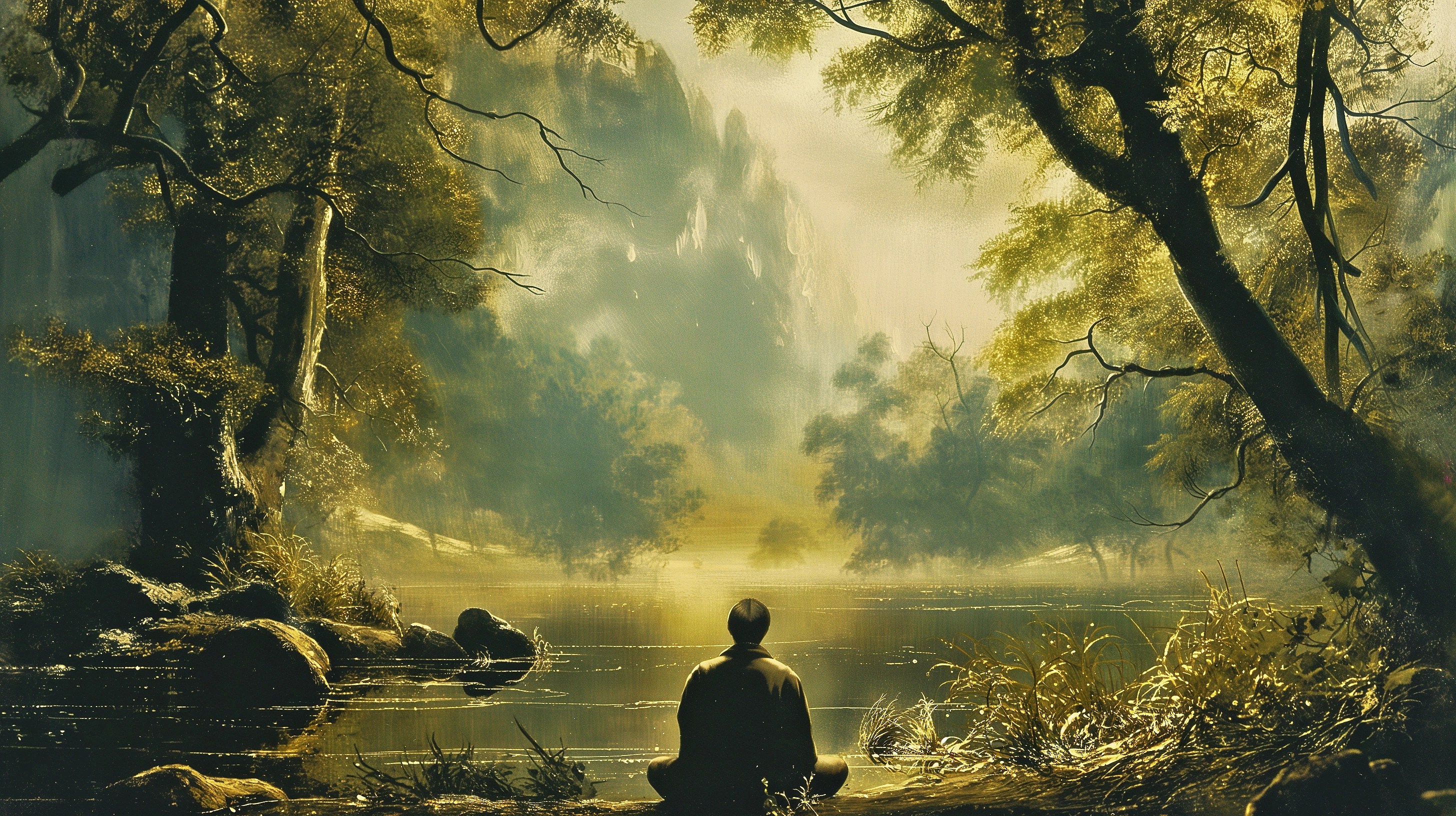
You might glimpse it in a forest trail glowing with morning light.
You might sense it in the deep stillness of meditation, or in the laughter of a friend who sees you fully.
You might feel it in moments of awe, when the boundaries between “you” and “everything else” dissolve.
You might see it looking back at you through the eyes of your child or grandchild.

Each of these is a doorway into the same mystery.

Spiritual satisfaction doesn’t come from subscribing to the right belief, but from cultivating awareness. And as our consciousness grows, so does our compassion, our sense of unity, and our capacity for joy. We begin to live not from fear, but from connection.

Companions on the Road

Our quest for meaning is not a solo expedition. We belong to a vast community of people asking similar questions, struggling with uncertainties, and finding revelations they never imagined. Each of our companions along the way carries a spark of the mystery we seek. When we share our stories, we participate in a sacred exchange. We remind each other that the search itself is holy.

Some of us find this connection through contemplative circles, mindfulness groups, or creative communities. Others of us find it through feeding the hungry, tending the earth, or comforting the lonely.

Wherever we practice love, spirit is present. As the timeless Persian poet, Rumi, once said, “In every religion there is love, yet love has no religion.”

Evolving Notions of the Divine

Words are simply pointers. This is a crucial realization. God, Tao, Source, Beloved, Mystery, Great Spirit are all terms intimating something we can never fully capture in language. The immensity of the cosmos and its origin are better experienced through awe. Over time, we find that the divine becomes less a being “out there” and more a living presence within and around everything. We come to see that spirituality is not about believing, but about being fully awake to the sacred dimension of everyday existence.

As our understanding expands, so does our compassion. We stop worrying about who’s right and who’s wrong in matters of faith. We start asking: What helps me love more deeply? What helps me live with gratitude? What helps me serve the wholeness of life?

The Great Thrills of the Journey

The spiritual journey beyond religion may begin with a sense of loss, but discoveries soon fill that void in myriad ways. Imagine:

  • The thrill of realizing that every sunrise, every act of kindness, every moment of awareness is a form of prayer.
  • The freedom of knowing that you no longer need to pretend certainty; that questions themselves are sacred.
  • The joy of feeling at home in the universe, even without a map.

Looking back, we see that we are not exiles. Instead, we have found a calling, an invitation to grow beyond the boundaries of old beliefs and into the spaciousness of wonder.

The Infinite Yes

If you find yourself wandering beyond the walls of religion, trust the journey. Follow the tug of your own curiosity. Keep your heart open to beauty, mystery, and love. The sacred has not abandoned you. It has simply changed its address, moving from the altar to the open sky, from the sermon to the beating of your own heart.

You are still on holy ground.

Heaven is Now: Adjust Your Vision, Find Balance – Conclusion

If you missed the first parts of this series, you can find them there: Part One, Part Two, Part Three, Part Four.

Conclusion

It should be clear now that this series is about experimenting with our sense of time to find more balance. Many of us, me included, can too easily live our days out of whack. Worry, regret, judgments of ourselves or others, and the unwillingness to surrender our illusion of control can get us off track.

Whatever the origin, we can do something about this suffering. We can develop mental tools and disciplines that lead us to more harmony. 

There are stories, especially in Eastern traditions, which feature spiritual masters who attained a final form of nirvana. Think of the myth of Buddha sitting beneath the Bo Tree. Weary of his endless experiments to achieve enlightenment, he sat down and reportedly said, “Let my skin and sinews and bones dry up, together with all the flesh and blood of my body! I welcome it! But I will not move from this spot until I have attained the supreme and final wisdom.” Throughout that night, enshrined in legend, he battled the final illusions that kept him ensnared.

I’m sure such transcendent victories exist. Their ripple effects are undeniable in history. However, in most of our lives the desire (and struggle) to awaken happens in the fray of daily living—while we’re working, caring for our family, or carving out leisure time from our schedules. This is why I resonate with a quote from the Alcoholics Anonymous Big Book: What we have is a daily reprieve contingent on the maintenance of our spiritual condition.

Reprieve may sound like a harsh word, meaning the postponement of punishment. But think about it. When our lives are out of balance, it punishes us physically, mentally, and emotionally. A liberating three-dimensional vision of time helps restore balance and release our self-punishment.

Also, the words “our spiritual condition” won’t resonate for some of you. Substitute a word or phrase of your choice. I’ve heard others use “a balanced state of mind,” “emotional equilibrium,” or “my connection to higher self.” Whatever works to bring more balance into your life!

I’m on the email list for Hay House publications, and I receive regular ads about their eBooks for sale. I mean no disrespect to the many authors, but it reminds me of a booklet I cowrote with my friend, Heiwa no Bushi, The Six Medicines of BodhiChristo. The introduction begins with these words.

     A friend and I were recently discussing our favorite inspirational books. He and I are co-explorers, coloring outside the lines of conventional spirituality, testing every truth in the laboratories of our own lives. We had a good belly laugh as we recited the steps, secrets, and keys touted by various writers. So many of these maxims are similar, recycled and refreshed to make them seem trendy.

     In reality, this is age-old wisdom transmitted to us by a myriad of cultures and teachers. The ancient Hebrews called it derek olam, the everlasting way inscribed in our genes since the beginning of time. It is dharma, Tao, the cosmic order, a river wending its way to the ocean and inviting us for a swim.

I hope you know that right now I’m laughing at myself for contributing yet another title to this endless stream of literature. Why do it? Because if there’s a chance that even one person receives some assistance in liberating his/her mind from these posts, it will have been eternally worthwhile.

Please know that I, like you, am a human being in progress. I work every day to get my reprieve, and I assure you, it does get easier!

I close with a string of greetings gleaned from various spiritual traditions around the world. I have used them in many of my books.

Namaste! God bless you! As-salamu alaykum!Mitákuye Oyás’iŋ! May the Force be with you! Keep on truckin’!

Heaven is Now: Adjust Your Vision, Find Balance – Part One

INTRODUCTION

We’ve all read something that awakened us. It might have been scripture from our faith tradition, a verse from a poem, or a quote from a philosopher. It recently happened to me when I came across these words from A Course in Miracles.

Heaven is here. There is nowhere else.
Heaven is now. There is no other time.

A simple thought, but it caught my breath, opening a window to the mystery of Time.

Most of us see the past, present, and future as a linear continuum. Somewhere on this imagined vector, we spend our brief allotment. Meanwhile, gurus, mentors, and motivational speakers have a clarion prescription. Live in the present! Bathe yourself in the here and now as a portal to liberation! Certainly, this is sage advice. Who will deny that we need to savor each moment?

But what if there’s a more holistic way to experience time, a means of harmony that is far more three-dimensional?

We’re all familiar with the concept of multiverses, especially in the movies. Perhaps we watched Dr. Strange as he flitted between alternate realities building to a climax. Or we tracked Michelle Yeoh in Everything Everywhere All at Once, shifting through parallel versions of herself to thwart an evil foe.

This notion of time isn’t confined to screenwriters. It actually has a long history. It’s called “Eternalism” or “Block Universe Theory.” It maintains that the past, present, and future exist concurrently—a cube of spacetime rather than a linear flow. An encyclopedia explains it this way.

Eternalism is a metaphysical view regarding the nature of time. It posits the equal existence of all times: the past, the present, and the future. Every event, from the big bang to the heat death of the universe, including our births and deaths, is equally real.

I don’t want to debate philosophy or science. I’m not here to champion a new certainty. In my previous life as a cleric, I grew weary of theologizing. So many words yet so little appreciation for mystery! I’m using eternalism as a metaphor to help free our minds and heal our souls. I’m challenging us to experiment with our notions of time, to tweak our consciousness for greater harmony and inner peace.

To use another metaphor, think of the “third eye” from dharmic traditions of the East. Hindus describe it as a mystical way of seeing, symbolically located on our brows. They believe that learning to view life in this third way brings startling clarity. These traditions don’t deny the interplay of opposites—light/dark, male/female, birth/death—they just know that clinging to one side or the other is what causes our suffering. As we begin to see beyond, or between, the dualistic chimeras that dominate our thinking, we get to the heart of life’s essential oneness. This is famously depicted in the yin/yang symbol of Taoism.

In his book The Naked Now: Learning to See as the Mystics See, Richard Rohr maintains that a third way of seeing is hardwired into our brains. He describes it so that westerners can more easily understand.

The idea of the third eye can seem foreign to both our culture and our experience, but in fact you are experiencing an image of the third eye at this very moment. Take a look around you. Even though your own two eyes clearly look at all things from two distinct angles, they connect…and create one image…This fact of physiology offers us a powerful metaphor for what we are talking about. The loss of the ‘third eye’ is at the basis of much of the shortsightedness and religious crises of the Western world… Lacking such wisdom, it is hard for churches, governments, and leaders to move beyond ego, the desire for control, and public posturing. Everything divides into dualistic oppositions like liberal vs. conservative, with vested interests pulling against one another.

Two angles, two opposites, two ways of viewing reality fused into a unified focus. Think of your third eye as a symbol for achieving balance and inner peace. As Rohr reminds us, our world desperately needs more harmony. Politicians snipe at each other from trenches on the partisan battlefield, ignoring their public charge to work together for common good. Religions pitch their versions of ultimate truth, often muddying our global need for tolerance.

Peace on a grander scale will only prevail when unity and love take root in each of us. You can’t legislate these qualities. They must arise from within. Until they do, we will continue the strife that screams from the annals of human history, destroying our planet.

Here’s a homier analogy.

Over the years, I spent many hours counseling couples who were trying to reconcile their parenting styles. I told them of a time when my wife and I lived in a mobile home, a structure without a firm foundation. Our bedroom was on the opposite side of the house from the laundry room. If the clothes in the washer were unevenly packed, the machine began to wobble and thump, jolting the entire structure. “Think of this concept in your marriage,” I said to these parents. “Unless you learn to balance the give and take of your methods, your family will quake with conflict. It begins at the core with concord in your relationship.”

This series is an invitation to balance. It’s a challenge to harmonize three areas of life common to all of us: 1) appreciation and anticipation; 2) knowledge and mystery; 3) action and surrender. I am ultimately filled with hope. I believe it’s possible to live firmly and joyfully in the present while holding a blend of these simultaneous realities in our consciousness.

Jesus said “The eye is the lamp of the body. So, if your eye is healthy, your whole body will be full of light.” In other words, how we view our lives within the context of time is critical. Our way of seeing will either obscure the true nature of reality, darkening our path, or it will reveal the luminous unity that lies at the heart of the universe, drawing us onward into the light.

Part Two will post on June 6th, 2025

Should You Take It Personally?

It was one of those conversations with a friend that I crave—wide-ranging, both intimate and global, drawing on our interests in literature, history, and current events. During the course of it, a philosophical question arose: “Should we take things personally?”

You may have an immediate answer but stay with the question for a moment.

In his popular book, The Four Agreements: A Practical Guide to Personal Freedom, Don Miguel Ruiz talks about the “domestication of humans.” From the moment we are born, he says, “outside” information is transferred to us internally, creating the “agreements” we make about ourselves and our place in the world. This transfusion comes through tribes, families, schools, and religions.

Given this maze of conflicting and often capricious viewpoints, Ruiz proposes the second of his four agreements. Don’t take anything personally. “Whatever you think,” he says, “and whatever you feel, I know is your problem and not my problem. It is the way you see the world. It is nothing personal, because you are dealing with yourself, not with me. Others are going to have their own opinion according to their belief system, so nothing they think about me is really about me, but it is about them.”

OK. There’s some truth here. How many of us have allowed our self-worth to be dragged through the muck of other people’s judgments? How many of us have allowed them to lease space in our heads, squandering our precious time and our unique destinies?

Wayne Dyer, a thinker I admired, steadfastly refused to take a side in conflicts, believing that the very act of aligning ourselves fuels the power of dualistic madness tearing our planet apart. He called us to stay centered in a place of unity and compassion for all of creation, including every single person who disagrees with us, even our enemies

Again, great value here. Many an enlightened spiritual teacher—among them the Buddha, Jesus, and Baháʼu’lláh—walked this higher plain in their teachings and actions.

But let’s go back to that conversation with my friend. Why? Because, to refute Ruiz, the decisions that people make, especially those in power, go far beyond just dealing with themselves. They affect all of us!

In our dialogue that morning, my friend and I turned to the current political scene, especially the rise of Christian Nationalism, that cult that misappropriates the teachings of Jesus and cloaks itself in American Exceptionalism. We lamented the erosion of a woman’s reproductive rights, the backlash against the LGBTQ population, the disregard for global warming, the demonization of immigrants and protestors, the undermining of public healthcare and education, and the threats leveled at social security.

Should we take this personally? Hell yes! Even if it causes some anger and angst? Hell yes! Read, really read, the background and content of Project 2025, a list of legislative and policy proposals that is ready to roll if Trump gets reelected.

Should we take the defeat of this agenda personally? Absolutely!

My friend is Jewish, and he recalled a famous poem by Martin Niemöller, a German theologian and Lutheran pastor during the rise of Nazism. It exists in many versions, but the one featured on the United States Holocaust Memorial reads: “First they came for the socialists, and I did not speak out – because I was not a socialist. Then they came for the trade unionists, and I did not speak out – because I was not a trade unionist. Then they came for the Jews, and I did not speak out – because I was not a Jew. Then they came for me – and there was no one left to speak for me.” For his opposition to the Nazis’ state control of churches, Niemöller was imprisoned in the Sachsenhausen and Dachau concentration camps from 1938 to 1945. He narrowly escaped execution.

It reminded me of words from Martin Luther King, Jr. that have informed my activism for decades. “In the end, we will remember not the words of our enemies, but the silence of our friends.”

Within the wider circle of my Christian friends, there’s a lot of talk about respecting the voices of those who disagree with us. Instead of red or blue, they champion the color purple. Listen; I agree that we need to reach across the boundaries of our differences. As Jesus so powerfully said, If you love only those who love you, what good is that? Even scoundrels do that much. If you are friendly only to your friends, how are you different from anyone else?” (Matthew 5:46-17a, Living Bible Translation). Can we champion the causes of justice nonviolently, opposing those who would erode our freedoms without disrespecting them? Harder, much harder, but yes!

However, if our efforts to be conciliatory cause us to muzzle ourselves and cease speaking truth to power, I object! If they lead us to accommodate the principles outlined in White Nationalist movements like Project 2025, I object!

I wholeheartedly support Kamala Harris as our next President of the United States. When I scroll through the many memes circulating around her candidacy, I love the one that says, “Rosa sat, so Ruby could walk, so Kamala could run.”

Did Rosa Parks take it personally when she was ordered to sit in the back of Montgomery, Alabama buses? Certainly! Did those who fought for school desegregation take it personally? Of course!

Parks once commented, “People have said over the years that the reason I did not give up my seat was because I was tired. I did not think of being physically tired. My feet were not hurting. I was tired in a different way. I was tired of seeing so many men treated as boys and not called by their proper names or titles. I was tired of seeing children and women mistreated and disrespected because of the color of their skin. I was tired of Jim Crow laws, of legally enforced racial segregation.”

Today, I am personally saying that I am sick and tired of Christian Nationalism and its idolatry. It’s not only an aberration; it’s a dangerous mutation. I will do everything in my sphere of influence to defeat those forces that seek to form a theocratic government in America.

And if you have made it to the end of this piece, I hope that you, too, will take this election and its repercussions PERSONALLY!

Rosa sat, so Ruby could walk, so Kamala could run!

Lessons Not Learned – a Review of “Postcard from Earth” at The Sphere in Las Vegas

(Spoiler alert. This post reveals the ending.)

The art of filmmaking affects us like no other medium. Combinations of sight, sound, and editing elicit responses similar to the wonder we experienced as children. Innovations continue to enhance these alternate realities with stunning clarity.

This is certainly true of Postcard from the Earth. If you’re a wonk about specs, here they are. The production employed 2000 crew members from around the world, shooting footage with an 18K resolution camera. The resulting film is half a petabyte in size and plays back at 60 frames per second. This means that viewers observe 32 gigabytes of data per second on the dome, nearly 2,000 gigabytes per minute.

During the opening moments, we see only a portion of the screen. This is it? I thought to myself. Not much different from IMAX, and with a much steeper admission fee! Then, at a pivotal point in the story, the sphere explodes visually as we sail over earth’s fields, mountains, oceans, volcanos, canyons, savannahs, and tundra.

It is mind-blowing!

Far less spectacular is the narrative arc. It begins as two space travelers, a man and woman, awaken from cryogenic sleep to the gentle female voice of an onboard computer. She urges them to return to consciousness gradually as they remember their home planet. She prods their recall by explaining the history of life on Earth, from single-cell organisms to humankind in the Anthropocene era. We are immersed in Edenic images that celebrate the splendor and diversity of our planet, from both micro and macro perspectives.

As the narrator moves to human beings, she details our search for meaning in holy places, our building of cities, our expanding technologies. We see the delightful faces of people from many tribes and cultures, their eyes reflecting our common humanity.

So far, so good. But then the images shift to a distressingly familiar theme—the degradation of our sphere through pollution, overpopulation, and the gouging of natural resources. We see strip mining, denuded forests, landfills whose mountains of refuse boggle the mind.

The narrator says that Earth, desperate to rid herself of our species, tries to “scape us off her back.” Violent storms sweep overhead, a grim reminder of the hurricanes, tornados, and wildfires caused by unchecked global warming.

But alas, says the narrator; Earth couldn’t cope. So, what do human beings do in the film? We leave our world. We board space stations that hover in the upper atmosphere, giving Earth a chance to heal. Then we go a step further, sending pairs of cosmonauts – an Adam and Eve – to other habitable planets throughout our galaxy. Their goal is to propagate new life. The film ends with our two awakened space travelers planting some kind of power source into the ground of their adopted desert home, emitting waves of greenery that ripple to the horizon.

Really? I had two visceral reactions.

The first was captured perfectly by a Google review. “There’s nothing like going to the gaudiest city in the world and entering the brightest building in the world, an electronic marvel costing north of $3 billion, and then getting lectured on how humans have ruined the pristine Earth. Beautiful images on the sphere surface for half of this 50 minute “film,” and then 25 minutes of lecturing us on how we should just leave the Earth. It reminded me of climate change activists who fly private jets across the world to tell us why we shouldn’t drive gas cars.”

Amen! I did a deep dive into how much electricity The Sphere uses at peak operation on a daily basis. 28 megawatts! That’s enough power for 21,000 homes!

My second reaction is philosophical. I believe that when we fail to learn necessary lessons, we repeat the tragedies that plague human history. Call it cause and effect or karma, but either way, you know it’s true! We see it in our personal lives; painfully repetitive behaviors that drag us down until we change. We see it in our collective lives as intolerance, war, and rampant consumerism fail to galvanize the collective willpower we need to save both Earth and each other.

Albert Einstein said it succinctly: “The only mistake in life is the lesson not learned.”

Here’s the rub. The two astronauts sent to create a new Eden have no memory of how human beings reversed their rapacious greed and domination of all that they saw. If you fast forwarded the history of the fictional planet on which they stand, I’m afraid you would see the same tragic consequences. As we say in Twelve Step groups, wherever you go, there you are.

Will we ever be better than this? Postcard from the Earth seems to say NO, and it does so by participating in the gross consumption it criticizes.

What if, instead, this bloated production had used its bully pulpit to call for solutions? What if it ended with scenes of humanity overcoming its divisions, joining hands and hearts, focusing its brainpower and resources on restoring this precious vessel sailing through the cosmos?

What a missed opportunity! What a reminder of lessons not learned!

Test Every Truth!

(Heiwa No Bushi is a Buddhist-Christian monk. He has degrees in philosophy and theology and received classical training in both Mahayana and Zen Buddhism. He places his teachings under the moniker “BodhiChristo” which means “enlightened Christ,” an amalgam of the two rich streams of Buddhism and Christianity. Here he gives some reflections on this journey, an excerpt from my book The Smile on a Dog: Retrieving a Faith That Matters, remastered and downloadable for FREE here).

This is my story, but I believe it reflects all our stories.

I grew up in south Florida, essentially a preacher’s kid because my grandmother was heavily involved in both the southern and primitive Baptist movements. She was so devoted that when people within her circles wanted to erect a building, she loaned them the money.

By the time I was six years old, my grandmother had become a minister in that church, but she struggled constantly against patriarchy. The congregation was so misogynistic that they wouldn’t allow her to be a regular preacher. However, she was a very clever bird. She decided that every time they gave her an opportunity to fill the pulpit, she would use her grandson to introduce her. It was a way of deflecting all the attention from her, and the result was that I became a phenomenal, entertaining bit of Sunday mornings! People came to hear my grandmother because this young boy really knew how “to lay it out there.”

All that time I worked with my grandmother, I saw the inconsistency between her church life and her home life. At church she was outwardly “righteous,” but at home she would speak in ways normally prohibited. I thought it was hypocritical, but she quoted the Apostle Paul from I Corinthians: “I have become all things to all people so that by all possible means I might save some.”

As grandma’s ministry grew, I began to feel a calling to attend seminary. I received my training and then, in my early 20s, I traveled overseas with the military. It was a time of hands-on experience, what I call “tacit education.” It challenged me to look at the deeper and wider aspects of life on our planet. I encountered many other faiths, not only seeing their beautiful richness, but their many parallels, especially the “golden rule.”

In my experiences as a Christian, I had not encountered a real moral teaching about how to treat our planet, especially “lesser creatures.” As a lover of the earth, I found a much greater connection to creation through other religions, especially Buddhism and its tremendous emphasis on caring for all living things. Jainism also intrigued me. It insisted on not naming “God,” believing there is no particular god outside of ourselves.

These religions lifted up a type of humanity that many circles of Christianity seemed to usurp and ignore. They spoke volumes of higher learning to me, and it seemed to me that Christianity did not stand up in the court of reality. For instance, where in Christian scripture was the insistence on an intimate relationship with all living things that I found so beautiful in Buddhism?

Then I thought of the parable Jesus told of seeking out the one lost lamb. He was saying to the majority, “You hold on tight, I’m going to get the one that matters.” This began to bring out what I call the “more mature” interpretation of Christ that I am trying to live out today.

In my teachings, I emphasize that there are three types of knowledge.

  • Explicit knowledge that comes to us from textbooks, manuals, Sunday school lessons taught as literal. This is a form of cultural programming, even indoctrination.
  • Codified knowledge which is the design of the society around us—from traffic signs to laws to the licenses we need to practice our professions. All this is meant to make sure that we follow the rules and remain in compliance with the status quo.
  • Tacit knowledge which we gain firsthand in the laboratories of our own lives. It can’t just be told to us; we must experience it and adapt it to reality of our own understandings.

The bottom line is that we must test any truth for ourselves! Examine it in the light of our minds, hearts, consciences, and personal experience. I feel religious institutions, especially the Christian church, should be some of the most unregulated organizations in our society. They should always call us to the high adventure of exploring a fuller spiritual life.

On this adventure, I remain a lifelong learner, carrying on something my grandmother taught me long ago. “Go beyond what educational systems teach you,” she said.

Take on the world. Tacitly hold it, experience it, live it and understand it!