The Human Rights Champion You’ve (Probably) Never Heard of

In my decades as a cleric, I heard the stories of people from many walks of life. Sometimes their memories opened portals to dramatic moments in history, like this one from a homeless man who came to my office early one morning. He smelled of alcohol and had slept in his car all night. I still salute him!

Lately, I’ve been thinking about Ernestine (Ernie) Glossbrenner and the short time our lives intersected. Ernie was a member of First Presbyterian Church, Alice, Texas, where I served for a season. She was well-known in the community, not only for her years of teaching in local schools, but for her eight terms (1977-1993) as a Texas State Representative. In that role, she was an advocate for lower income families, abortion rights, the ERA, worker safety, and education reform.

Ernie was suffering severe health problems by the time we met, coping only through the assistance of her companion. Still, when I visited her, she enlivened our wonderful conversations. We shared our commonality as Democrats in a deeply red region of Texas, our universalist view of religion, and our love of literature.

In her final days, Ernie required regular dialysis at a facility in Corpus Christi. Her companion called me one day and said that Ernie would like me to bring communion to her during one of those treatments. I gladly packed up my kit and drove to that city on the Gulf.

The room at the facility was sterile and smelled of antiseptic. A number of patients were simultaneously receiving therapy, most of them staring blankly at the ceiling. Ernie looked up at me, smiled weakly, and nodded. She was near the end; we both knew it. Her voice was a hoarse whisper and her skin ashen-colored. As we partook of the bread and the cup, I reminded her of the untold number of witnesses who gathered with us in that sacramental moment.

When we had finished, I held her hand. “Ernie, thank you for your years of service to so many people. You have left a rich legacy. When you look back over your career, is there an accomplishment that gives you special satisfaction?”

I was surprised at how quickly and decisively she answered, her voice suddenly rising above a whisper and hinting at her lifetime of boldness.

“Legislation to banish the short-handled hoe,” she said.

I confess that later I had to educate myself with some online research. Here’s the summary.

Part of the United Farm Workers’ movement in the late 1960s and early ‘70s was a call to ban the short-handled hoe used by braceros working in the fields. Called el cortito or el brazo del diablo, it was only 18-24 inches long, requiring laborers to bend over or work on their knees. This often led to lifelong back deformities, beginning even with children. The tool was also a clear means of oppression, because if someone took a break and stood up, field foremen would immediately notice and order them back to work.

In their book The Fight in the Fields: Cesar Chavez and the Farmworkers Movement, Susan Ferriss and Ricardo Sandoval say, “(El Cortito) was the most potent symbol of all that was wrong with farm work in California.”

Thank God, this devil’s arm was finally banned in California in 1975, the first state to enact such legislation. When the movement spread to Texas, Ernie was cosponsor of a bill to do the same.

Ernie died with specific instructions for her memorial gathering, including a mariachi band that was to stand in the balcony of our church and play De Colores. People packed the sanctuary that day, and as I walked down the aisle, I carried a long-handled hoe, lifting it above my head with both arms to signify the beginning of the service. Numerous politicians and educators gave eulogies – testimony to Ernie’s wide-ranging influence.

It was truly a celebration of life. But it was more than that. It was a call to all of us to care about the lives of every person. Like this woman, this champion, who had empathy for every migrant worker bending low in a furrow.

As I heard these final lyrics of De Colores, I whispered my own “thank you” to Ernie for her example of service to others.

And this love
This great love of all the colors
Is very special to me

Three Verses, Eternal Light

Whether it’s verses from your religious tradition, or memes from public figures, proof texting is precarious. We all see it: social media flooded with words out of context, warped by prejudice and politics.

Still, there are times when ancient wisdom jibes EXACTLY with both its origin and the present moment, shedding eternal light. Here’s a case in point, but first some background.

My parents grew up during the Great Depression with clear scripts for their futures. Get married, settle down, work hard, have kids. They labored tirelessly, my father as a financial wizard, my mother as a capable homemaker. Eventually, Dad became CFO of a large, publicly traded company, quite a feat for a boy raised on a Wisconsin farm.

In their later years, my parents built two trophy homes, filling them with expensive decorations. My mother had become a part-time antique dealer, purchasing items she claimed she would resell. Instead, she hoarded them. They seemed to multiply like ferrets on fertility drugs. The garages, closets, and drawers were jammed with acquisitions, and every room was decorated to the point of clutter. Mom was no fan of feng shui.

When they finally sold one of those homes, I helped clear a two story “carriage house,” watching as local nonprofits carted away truckloads of items for two days.

Fast forward to now. Mom and Dad currently live together in a group home for the elderly in Las Vegas, Nevada. It was a tough transition, but they seem content to be with each other as they approach their 74th anniversary. That’s right, 74 years!

I’ve taken many trips to visit them, handle their affairs, and monitor their care. This included the task of tending to their empty home, something that became so impractical that my brother and I convinced them to put the house on the market.

Which brings me to those promised verses.

One afternoon, I took our 33-year-old realtor to visit my parents and get the papers signed. He’s a Filipino guy with amazing energy, a great knowledge of the market, and a flair with technology. He also dresses like a fashion plate, drives an expensive car, and participates in the World Series of Poker. He embodies much of the glitz of Vegas culture. All that said, he’s very personable, and I like him immensely.

As we sat around a small table, the finality of the decision weighed on Mom’s countenance. Dad was also nodding, but with more resignation

“It’s the end of an era,” Mom said with a sigh. “Tell me again what you plan to do with all my collections.”

We’d gone over this numerous times, a sign of her failing memory.

“We will disperse the items you earmarked for family members,” I said gently and patiently. “Then we’ll have an estate sale when the home goes into escrow. The items that remain will be moved to a consignment store.”

She nodded and sighed again. “So many things, so many memories…”

At the center of the table was a Bible my parents use for their morning devotions. I opened it and turned to Matthew 5:19-21 – words of Jesus collected in what we call the Sermon on the Mount. I noticed the realtor listening intently.

“I know it’s hard,” I said, “but you and Dad have had more years to enjoy your accomplishments than the average person. And because your faith is so important to you, listen to these words.”

Do not store up for yourselves treasures on earth, where moth and rust consume and where thieves break in and steal; but store up for yourselves treasures in heaven, where neither moth nor rust consumes and where thieves do not break in and steal. For where your treasure is, there your heart will be also.

I put down the Bible and looked at all three of them.

“When he said heaven, Jesus didn’t just mean some reality after death. He meant our quality of life on earth. Part of this is to treasure the love we have for each other. Think of what a blessing you both have, Mom and Dad. You’re still together after 74 years! You can still treasure each other in whatever time you have left.”

They were both nodding. Then they took each other’s hands and leaned in for a long kiss. In my mind’s eye, I saw their wedding picture, their young faces beaming with hope for their future.

Listen. I don’t care if you’ve never darkened the door of a church or read a single word of scripture from any religious source. Surely you see the wisdom of what Jesus said 2,000 years ago. Surely you know that material possessions and the weight of caring for them can warp our values and waste our precious time. All our stuff will end up in the landfill of time. Guaranteed.

Instead, we can revel in the unencumbered joy of the present moment. We can relish the give and take of affection with our loved ones. We can stand in awe under the Milky Way, or breathe the freshness of an ocean breeze, soaking in the free of gift of nature’s beauty. We can enjoy this Presence we often call God as it uplifts and energizes us.

When we left the house that day, the realtor turned to me.

“Watching your parents and hearing those words made it so clear,” he said. “I only have my mother and grandmother nearby, but I’m going to go visit both of them this afternoon. Thank you!”

He spontaneously reached over and gave me a hug.

Then he walked away in his expensive suit, got into his pricey Tesla, and drove off. I could see the opulent skyline of Las Vegas casinos in the distance, those kitschy monuments to over-consumption.

I smiled and nodded. We’ll see, I thought. We’ll see…

Namaste to Gus Walz and my son, Kristoffer!

I paused at a stop sign near Sweetwater, Texas. To my left was a ramshackle mobile home, its porch sagging. Standing in the weedy front yard was a young girl dressed in faded jeans and a T-shirt. She looked at me, I looked at her, and I saw it.

While visiting the National Civil Rights Museum in Memphis, I peered into a display featuring the 1968 sanitation workers strike. A protester holding his “I Am a Man” sign stared at me from a photo across the years, and I saw it.

I was sitting in The Sphere of Las Vegas, surrounded by the stunning visuals of its film A Postcard from Earth. At one point, the screen filled with faces from a mind-boggling array of tribes across our planet. As their eyes gazed down at us from the dome, I saw it.

What is “it?” I think you know. Conscious or not, you see it every day. It’s that life force within each of us that gleams through our eyes. It’s that insistent power that grows our hair and nails even as we sleep, fueling our autonomic systems while we dream. It’s the stuff of stars and galaxies, the warp and weave of every ecosystem, the energy that ties us together. If we allow ourselves to experience it more fully in the eyes of another, it can be transcendent.

It is surely sacred, captured in the Sanskrit greeting namaste, meaning “I bow to the divine in you.” Western theologies call it the imago Dei, the stamp of God’s presence in each of us. But you don’t have to ascribe to a religion or belief system to marvel at this mystery in which we live and breathe and have our being. You can simply experience its revelation!

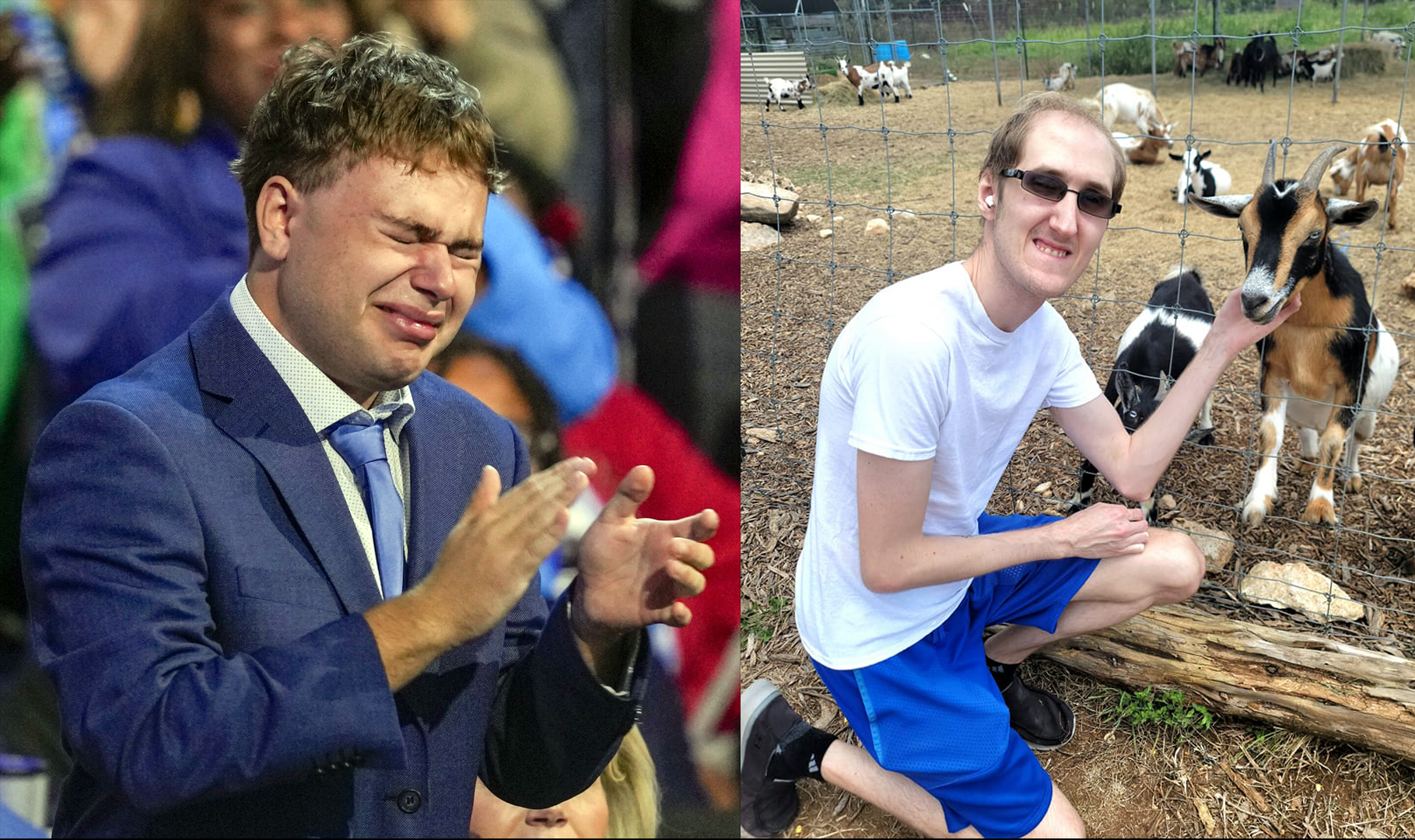
Which brings me to Gus Walz. When he cried at the Democratic National Convention, exclaiming “that’s my father!” with overflowing pride, I felt it. Later, when he smiled at the camera with the rest of his family, I saw it, as did millions of other people. We celebrated his humanity, our humanity, embracing him exactly as he is with his neurodivergent reality.

But in America, bullying has become an art form. Egged on by the former Bully-in-Chief, some of the cruelest practitioners are right-wing media darlings, and their reactions to Gus were lamentable. Here are some of the first comments posted through social media by these mean-spirited influencers.

  • Conservative columnist and right-wing provocateur Ann Coulter scorned Gus’s tears. “Talk about weird,” she wrote on X.
  • Mike Crispi, a Trump supporter and podcaster from New Jersey, mocked Walz’s “stupid crying son” on X and added, “You raised your kid to be a puffy beta male. Congrats.”
  • Alec Lace, a Trump fan who hosts a podcast about fatherhood, said, “Get that kid a tampon already,” an apparent reference to a Minnesota state law that Walz signed as governor that requires schools to provide free menstrual supplies to students.
  • The Milwaukee Journal Sentinel reported that Jay Weber, a conservative Milwaukee radio host, said, “If the Walzs (sic) represent today’s American man, this country is screwed: ‘Meet my son, Gus. He’s a blubbering baby boy. His mother and I are very proud’.”

Which brings me to my son, Kristoffer, now 27, an intellectually disabled young man whom I dearly love. Our journey in raising him has profoundly humanized my wife and me over the years. I wrote about this process in a feature article called A Medal for Two.

If you look into Kristoffer’s eyes, you will certainly notice his disability. But if you look with the heart and soul of a compassionate human being, you will also see the imago Dei.

During the furor about Gus Walz, there was a flurry of social media memes that divided our country into two camps—those who responded to this young man with love, and those who derided both him and his family.

Between these fractious poles, I believe there’s a more nuanced continuum of understanding. I see it in the reactions to Kristoffer when we’re out in public. Some are quizzical, his condition challenging their notions of normal. Some look with pity. Some react with what I call unctuous grace, a condescending smile and words for this “lesser creature.” (You know that reaction: “Let’s be nice to the poor, unfortunate young man.”)

But I’m pleased to say that there are many others who don’t flinch, who show no discomfort, who simply look steadily into Kristoffer’s eyes, encountering his life force with their own, a clear give and take of love, what Martin Buber called an I-Thou response. Bless them all!

I want to close with a troubling question. Can the imago Dei become so obscured in another person that we don’t recognize it in their eyes? Instead, do we see inwardly focused narcissism, smoldering contempt, even evil impulses that speak of a different reality?

You can wrestle with that question on your own, but my personal answer is two-fold. First, I believe that our eyes are indeed the windows to our soul, and that some souls become warped by the choices they make. Second, I will never stop trying to find some vestige of goodness beyond all that mutation.

Meanwhile, back to the overriding reason I am sharing these words. Let’s go full circle to the sanitation workers strike in Memphis, 1968. Martin Luther King, Jr. went to the city to join the protest, giving his famous I’ve Been to the Mountaintop speech a day before his assassination. That remarkable human being who called us to live in Beloved Community, once said, “Every human life is a reflection of divinity, and… every act of injustice mars and defaces the image of God in man.”

So, I say namaste to Gus Walz and my son, Kristoffer Van Tatenhove!

Should You Take It Personally?

It was one of those conversations with a friend that I crave—wide-ranging, both intimate and global, drawing on our interests in literature, history, and current events. During the course of it, a philosophical question arose: “Should we take things personally?”

You may have an immediate answer but stay with the question for a moment.

In his popular book, The Four Agreements: A Practical Guide to Personal Freedom, Don Miguel Ruiz talks about the “domestication of humans.” From the moment we are born, he says, “outside” information is transferred to us internally, creating the “agreements” we make about ourselves and our place in the world. This transfusion comes through tribes, families, schools, and religions.

Given this maze of conflicting and often capricious viewpoints, Ruiz proposes the second of his four agreements. Don’t take anything personally. “Whatever you think,” he says, “and whatever you feel, I know is your problem and not my problem. It is the way you see the world. It is nothing personal, because you are dealing with yourself, not with me. Others are going to have their own opinion according to their belief system, so nothing they think about me is really about me, but it is about them.”

OK. There’s some truth here. How many of us have allowed our self-worth to be dragged through the muck of other people’s judgments? How many of us have allowed them to lease space in our heads, squandering our precious time and our unique destinies?

Wayne Dyer, a thinker I admired, steadfastly refused to take a side in conflicts, believing that the very act of aligning ourselves fuels the power of dualistic madness tearing our planet apart. He called us to stay centered in a place of unity and compassion for all of creation, including every single person who disagrees with us, even our enemies

Again, great value here. Many an enlightened spiritual teacher—among them the Buddha, Jesus, and Baháʼu’lláh—walked this higher plain in their teachings and actions.

But let’s go back to that conversation with my friend. Why? Because, to refute Ruiz, the decisions that people make, especially those in power, go far beyond just dealing with themselves. They affect all of us!

In our dialogue that morning, my friend and I turned to the current political scene, especially the rise of Christian Nationalism, that cult that misappropriates the teachings of Jesus and cloaks itself in American Exceptionalism. We lamented the erosion of a woman’s reproductive rights, the backlash against the LGBTQ population, the disregard for global warming, the demonization of immigrants and protestors, the undermining of public healthcare and education, and the threats leveled at social security.

Should we take this personally? Hell yes! Even if it causes some anger and angst? Hell yes! Read, really read, the background and content of Project 2025, a list of legislative and policy proposals that is ready to roll if Trump gets reelected.

Should we take the defeat of this agenda personally? Absolutely!

My friend is Jewish, and he recalled a famous poem by Martin Niemöller, a German theologian and Lutheran pastor during the rise of Nazism. It exists in many versions, but the one featured on the United States Holocaust Memorial reads: “First they came for the socialists, and I did not speak out – because I was not a socialist. Then they came for the trade unionists, and I did not speak out – because I was not a trade unionist. Then they came for the Jews, and I did not speak out – because I was not a Jew. Then they came for me – and there was no one left to speak for me.” For his opposition to the Nazis’ state control of churches, Niemöller was imprisoned in the Sachsenhausen and Dachau concentration camps from 1938 to 1945. He narrowly escaped execution.

It reminded me of words from Martin Luther King, Jr. that have informed my activism for decades. “In the end, we will remember not the words of our enemies, but the silence of our friends.”

Within the wider circle of my Christian friends, there’s a lot of talk about respecting the voices of those who disagree with us. Instead of red or blue, they champion the color purple. Listen; I agree that we need to reach across the boundaries of our differences. As Jesus so powerfully said, “If you love only those who love you, what good is that? Even scoundrels do that much. If you are friendly only to your friends, how are you different from anyone else?” (Matthew 5:46-17a, Living Bible Translation). Can we champion the causes of justice nonviolently, opposing those who would erode our freedoms without disrespecting them? Harder, much harder, but yes!

However, if our efforts to be conciliatory cause us to muzzle ourselves and cease speaking truth to power, I object! If they lead us to accommodate the principles outlined in White Nationalist movements like Project 2025, I object!

I wholeheartedly support Kamala Harris as our next President of the United States. When I scroll through the many memes circulating around her candidacy, I love the one that says, “Rosa sat, so Ruby could walk, so Kamala could run.”

Did Rosa Parks take it personally when she was ordered to sit in the back of Montgomery, Alabama buses? Certainly! Did those who fought for school desegregation take it personally? Of course!

Parks once commented, “People have said over the years that the reason I did not give up my seat was because I was tired. I did not think of being physically tired. My feet were not hurting. I was tired in a different way. I was tired of seeing so many men treated as boys and not called by their proper names or titles. I was tired of seeing children and women mistreated and disrespected because of the color of their skin. I was tired of Jim Crow laws, of legally enforced racial segregation.”

Today, I am personally saying that I am sick and tired of Christian Nationalism and its idolatry. It’s not only an aberration; it’s a dangerous mutation. I will do everything in my sphere of influence to defeat those forces that seek to form a theocratic government in America.

And if you have made it to the end of this piece, I hope that you, too, will take this election and its repercussions PERSONALLY!

Rosa sat, so Ruby could walk, so Kamala could run!

Lessons Not Learned – a Review of “Postcard from Earth” at The Sphere in Las Vegas

(Spoiler alert. This post reveals the ending.)

The art of filmmaking affects us like no other medium. Combinations of sight, sound, and editing elicit responses similar to the wonder we experienced as children. Innovations continue to enhance these alternate realities with stunning clarity.

This is certainly true of Postcard from the Earth. If you’re a wonk about specs, here they are. The production employed 2000 crew members from around the world, shooting footage with an 18K resolution camera. The resulting film is half a petabyte in size and plays back at 60 frames per second. This means that viewers observe 32 gigabytes of data per second on the dome, nearly 2,000 gigabytes per minute.

During the opening moments, we see only a portion of the screen. This is it? I thought to myself. Not much different from IMAX, and with a much steeper admission fee! Then, at a pivotal point in the story, the sphere explodes visually as we sail over earth’s fields, mountains, oceans, volcanos, canyons, savannahs, and tundra.

It is mind-blowing!

Far less spectacular is the narrative arc. It begins as two space travelers, a man and woman, awaken from cryogenic sleep to the gentle female voice of an onboard computer. She urges them to return to consciousness gradually as they remember their home planet. She prods their recall by explaining the history of life on Earth, from single-cell organisms to humankind in the Anthropocene era. We are immersed in Edenic images that celebrate the splendor and diversity of our planet, from both micro and macro perspectives.

As the narrator moves to human beings, she details our search for meaning in holy places, our building of cities, our expanding technologies. We see the delightful faces of people from many tribes and cultures, their eyes reflecting our common humanity.

So far, so good. But then the images shift to a distressingly familiar theme—the degradation of our sphere through pollution, overpopulation, and the gouging of natural resources. We see strip mining, denuded forests, landfills whose mountains of refuse boggle the mind.

The narrator says that Earth, desperate to rid herself of our species, tries to “scape us off her back.” Violent storms sweep overhead, a grim reminder of the hurricanes, tornados, and wildfires caused by unchecked global warming.

But alas, says the narrator; Earth couldn’t cope. So, what do human beings do in the film? We leave our world. We board space stations that hover in the upper atmosphere, giving Earth a chance to heal. Then we go a step further, sending pairs of cosmonauts – an Adam and Eve – to other habitable planets throughout our galaxy. Their goal is to propagate new life. The film ends with our two awakened space travelers planting some kind of power source into the ground of their adopted desert home, emitting waves of greenery that ripple to the horizon.

Really? I had two visceral reactions.

The first was captured perfectly by a Google review. “There’s nothing like going to the gaudiest city in the world and entering the brightest building in the world, an electronic marvel costing north of $3 billion, and then getting lectured on how humans have ruined the pristine Earth. Beautiful images on the sphere surface for half of this 50 minute “film,” and then 25 minutes of lecturing us on how we should just leave the Earth. It reminded me of climate change activists who fly private jets across the world to tell us why we shouldn’t drive gas cars.”

Amen! I did a deep dive into how much electricity The Sphere uses at peak operation on a daily basis. 28 megawatts! That’s enough power for 21,000 homes!

My second reaction is philosophical. I believe that when we fail to learn necessary lessons, we repeat the tragedies that plague human history. Call it cause and effect or karma, but either way, you know it’s true! We see it in our personal lives; painfully repetitive behaviors that drag us down until we change. We see it in our collective lives as intolerance, war, and rampant consumerism fail to galvanize the collective willpower we need to save both Earth and each other.

Albert Einstein said it succinctly: “The only mistake in life is the lesson not learned.”

Here’s the rub. The two astronauts sent to create a new Eden have no memory of how human beings reversed their rapacious greed and domination of all that they saw. If you fast forwarded the history of the fictional planet on which they stand, I’m afraid you would see the same tragic consequences. As we say in Twelve Step groups, wherever you go, there you are.

Will we ever be better than this? Postcard from the Earth seems to say NO, and it does so by participating in the gross consumption it criticizes.

What if, instead, this bloated production had used its bully pulpit to call for solutions? What if it ended with scenes of humanity overcoming its divisions, joining hands and hearts, focusing its brainpower and resources on restoring this precious vessel sailing through the cosmos?

What a missed opportunity! What a reminder of lessons not learned!

Will You Speak Their Names with Me?

After the words of committal. After the plaintive playing of taps or the drone of receding bagpipes. After the folding of flags and the scattering of petals. After the tears and sighs and final thup thup of loam on caskets. Even after everyone had gone, I – conductor of countless graveside services – would remain. And I would wander among the tombstones, the monuments, the shade trees and new mown grass, losing myself in the preternatural stillness.

Today, retired from my years as a cleric, I still frequent cemeteries on my travels. The historic presence of death is a tonic, a prophylactic against apathy, a memento mori in names and dates chiseled on stone. I always thought these reminders of mortality were the primary reason I felt drawn to these places. But recently, I realized there’s another motive that inspires me.

Quite simply, these moments deepen my compassion for humanity, lifting the veil of cynicism that can so easily shroud my feelings about our species. It reminds me that we all grieve, and that our grief could bind us if we let it. Because, in the end, despite our warring madness, our endless divisiveness, our greed, our envy, and our competition, we share the same destiny: the soil from which we arose. This is a common theme of poets, but do we really feel it in our bones on any given day?

As my eyes scan the dates and epitaphs of people who passed before us, I am especially moved by the markers commemorating children. So many of them! Their years cut short before they experienced the rites of passage common to human life. I imagine the visceral agony of their mothers and fathers. We have a word for children who have lost their parents. They are orphans. We have words for men and women who have lost their spouses. They are widows and widowers. Yet we have no moniker for parents who lose their children. It is too unnatural. Unspeakable.

And yet so many children are dying, even as you read these words! Lost in the murderous alleyways of Tegucigalpa, buried in the rubble of Gaza, or blown apart by shrapnel in Ukraine. Others, still alive, walking alongside their mothers in refugee caravans, or languishing in poorly monitored foster care, or living by their wits – with an estimated 100 million others – in ghettos around the world. Street urchins. Unseen, thrown away, forgotten.

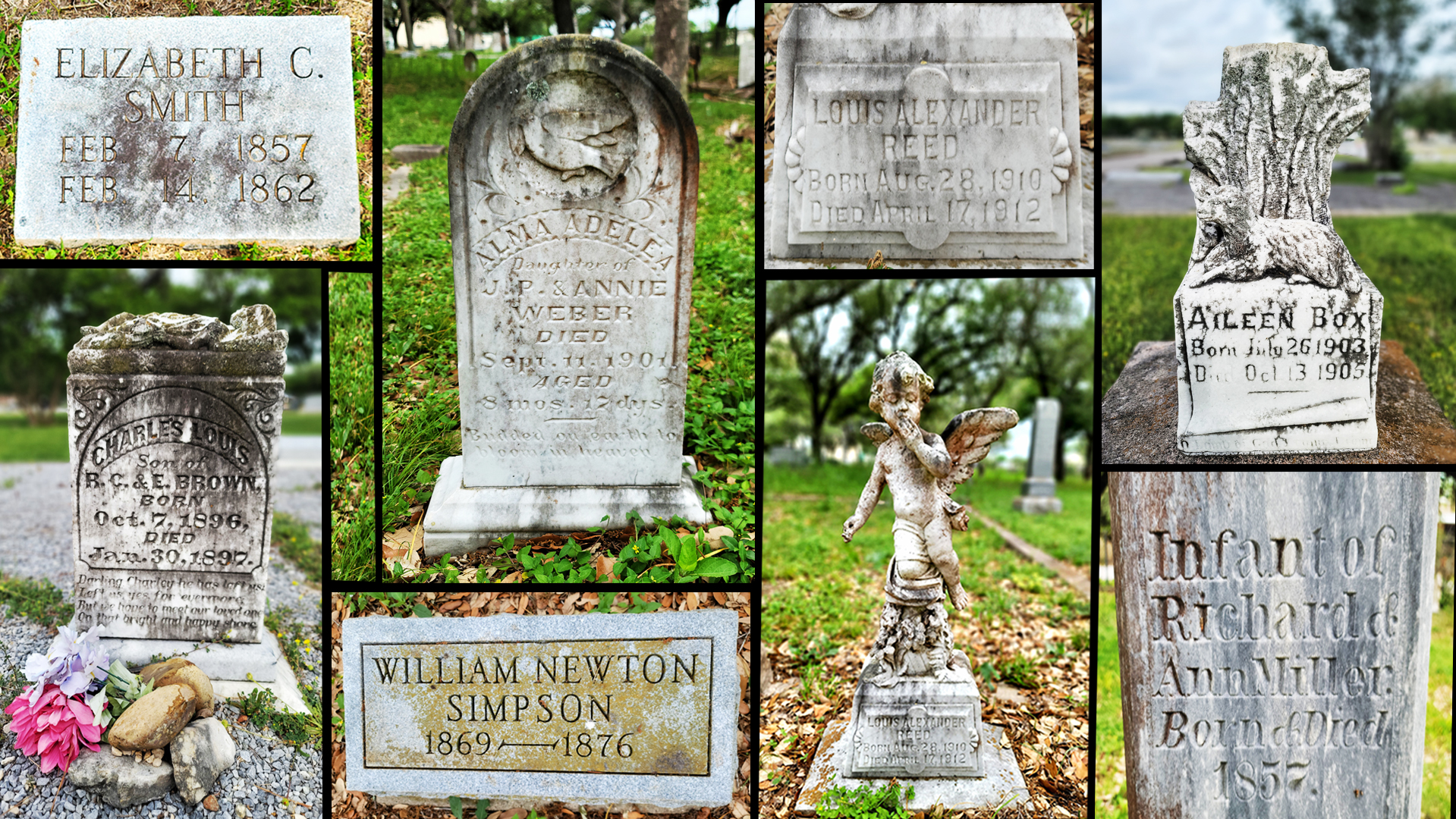
So, where am I going with this post? Well, I want to ask you a favor. I fashioned this collage from grave makers I recently found in the Lockhart Cemetery of Cuero, Texas, and the Oak Hill Cemetery of Goliad, Texas. They represent only a portion of the young ones interred at these sites.

Will you speak, out loud, one of more of their names and the dates they lived? Here they are:

  • Elizabeth C. Smith, born February 7, 1857; died February 14, 1862.
  • Charles Louis Brown, born October 7, 1896; died January 30, 1897.
  • Alma Adelea Smith, died on September 11, 1901, age 8 months and 17 days.
  • William Newton Simpson, born 1869; died 1876.
  • Louis Alexander Reed, born August 28, 1910; died April 17, 1912.
  • Aileen Box, born July 26, 1903; died October 13, 1905.
  • Unnamed infant of Richard and Ann Miller, born and died in 1857.

Speaking the names of the dead (known as necronyms) is taboo in some cultures, shrouded in superstition about the afterlife. However, in my hometown of San Antonio, there is a different attitude, summed up in the yearly Dia de los Muertos celebrations. Families build altars to lost loved ones, then encourage us to not only speak their names, but to view objects and photos that elicit their presence. The celebration also binds us with the living, calling us to treasure whatever precious days we are given with them.

So, if you have conjured the presences of Elizabeth, Charles, Alma, William, Aileen, or the unnamed child of the Millers, my hope and prayer is twofold. May you commit yourself once again to the protection of children everywhere on this planet, no matter their nationality or race. And may you breathe the air of this day with an uncanny gratitude for every loved one that graces your life.

Namaste.

The Overview Effect

(Nationalism, religion, political ideologies, greed, and naked power grabs continue to fracture the human race, pitting us against each with tragic consequences. It leads me to share this chapter from my 2014 book entitled Invitation to The Overview, downloadable for free at this link.)

In my childhood family, what we called the “space race” was personal. I grew up in the 1960s in southern California, my father in charge of financial controls for the Apollo module. He consorted with famous astronauts and legends like Werner Von Braun. When it came time for “take your son to work day,” I got a chance to scramble through a mock-up of that small cone-shaped capsule designed to withstand both fiery reentries and violent splashdowns in the oceans of earth.

I remember the excitement in our home when a Saturn V was ready to launch a new mission from Cape Canaveral. Dad would rouse us from bed like we were about to embark on a dream vacation. He would lead us into the family living room where an early generation color TV sat on its throne. There we could see the rocket, aimed for the cosmos, steam billowing from beneath, its tip crowned with the Apollo. Dad would stalk around that screen with more intensity than a Brazilian soccer fan, the clock announcing T minus 4 hours, then 3, then 1, then the final dramatic countdown and that glorious, thunderous liftoff into the sky.

In retrospect, I know that our efforts to reach that lifeless chunk of rock were as motivated by competition as they were by scientific wonder. It was an expression of US pride, an extension of the longstanding Cold War. No Russian was going to conquer the moon before us! I’m also sadly aware of the military agendas that attended our forays into space, resulting in Strangelovian plans years later to deploy a “near space” defense system. Our land and sub-based nukes were apparently not enough, even though they represented enough doomsday power to demolish every major city on earth. We thought we needed missiles in orbit, polluting space with hardware and cancerous hatred. Thank God that plan never came to fruition.

Still, when Neil Armstrong took his immortal first step onto the lunar surface, it was a moment of wonder, a celebration of the imagination and possibilities of humankind. It taught us about our potential.

But there is an even more enduring lesson from our ventures into the beyond. It is called the The Overview Effect, a term first coined by Frank White, who explored them in his 1987 book, The Overview Effect — Space Exploration and Human Evolution in 1987. It is that moment when we turn and see our planet suspended in the vastness of space. For everyone who experiences it, this vantage point is life changing. It transforms their perspectives on Earth and humankind’s place upon it.

Here are some quotes from astronauts about their overview.

When we look down at the earth from space, we see this amazing, indescribably beautiful planet. It looks like a living, breathing organism. But it also, at the same time, looks extremely fragile. – Ron Garan, USA

Before I flew I was already aware of how small and vulnerable our planet is; but only when I saw it from space, in all its ineffable beauty and fragility, did I realize that humankind’s most urgent task is to cherish and preserve it for future generations. – Sigmund Jähn, German Democratic Republic

For those who have seen the Earth from space, and for the hundreds and perhaps thousands more who will, the experience most certainly changes your perspective. The things that we share in our world are far more valuable than those which divide us. – Donald Williams, USA

My first view – a panorama of brilliant deep blue ocean, shot with shades of green and gray and white – was of atolls and clouds. Close to the window I could see that this Pacific scene in motion was rimmed by the great curved limb of the Earth. It had a thin halo of blue held close, and beyond, black space. I held my breath, but something was missing – I felt strangely unfulfilled. Here was a tremendous visual spectacle, but viewed in silence. There was no grand musical accompaniment; no triumphant, inspired sonata or symphony. Each one of us must write the music of this sphere for ourselves. – Charles Walker, USA

Looking outward to the blackness of space, sprinkled with the glory of a universe of lights, I saw majesty – but no welcome. Below was a welcoming planet. There, contained in the thin, moving, incredibly fragile shell of the biosphere is everything that is dear to you, all the human drama and comedy. That’s where life is; that’s where all the good stuff is. – Loren Acton, USA

The Earth was small, light blue, and so touchingly alone, our home that must be defended like a holy relic. The Earth was absolutely round. I believe I never knew what the word round meant until I saw Earth from space. – Aleksei Leonov, USSR

The sun truly comes up like thunder and sets just as fast. Each sunrise and sunset lasts only a few seconds. But in that time you see at least eight different bands of color come and go, from a brilliant red to the brightest and deepest blue. And you see sixteen sunrises and sixteen sunsets every day you’re in space. No sunrise or sunset is ever the same. – Joseph Allen, USA

The Earth reminded us of a Christmas tree ornament hanging in the blackness of space. As we got farther and farther away it diminished in size. Finally it shrank to the size of a marble, the most beautiful marble you can imagine. That beautiful, warm, living object looked so fragile, so delicate, that if you touched it with a finger it would crumble and fall apart. Seeing this has to change a man, has to make a man appreciate the creation of God and the love of God. – James Irwin, USA

Suddenly, from behind the rim of the moon, in long, slow-motion moments of immense majesty, there emerges a sparkling blue and white jewel, a light, delicate sky-blue sphere laced with slowly swirling veils of white, rising gradually like a small pearl in a thick sea of black mystery. It takes more than a moment to fully realize this is Earth…home. My view of our planet was a glimpse of divinity. – Edgar Mitchell, USA

A Chinese tale tells of some men sent to harm a young girl who, upon seeing her beauty, become her protectors rather than her violators. That’s how I felt seeing the Earth for the first time. I could not help but love and cherish her. – Taylor Wang, China/USA

What if, like these astronauts, we internalized this overview, tucking it like a pearl of great price into our hearts and minds? What if it caused us to have a fundamental, life-changing paradigm shift? What if national boundaries remained for governmental purposes, but we saw them from the global vantage point of our human family? What if the current conflicts that divide us were eclipsed by our critical need to create planetary tolerance, to galvanize our collective will and protect this pale blue vessel sailing in space?

This leads me to the primary questions of this book. Is your religion, your faith tradition, or your life philosophy contributing to these universal causes? Is it compelling you to find unity, commonality, and peaceful dialogue with others, no matter how alien their faith or lifestyle seems to you? Or is it promoting exclusivity and privilege, erecting walls, fueling ancient hostilities? Is it setting you apart?

As you answer these questions for yourself, consider the glimpses of Universalism in section three—visions shared from the hearts, minds, and souls of human beings who looked beyond the veil of conventionality. The Overview was—and still is—central to their existence. We need more of their breed.

The More You Pause, the More You Will Progress

27 seconds. That’s how long the average person stands before a work of art in a museum. Similar to our addictive scrolling through social media, we hurriedly shift to the next image, the next sensation.

27 seconds to experience creations that artists crafted painstakingly with their hearts and souls.

Years ago, I trained to be an educational tour guide at the fabulous Getty Museum in Los Angeles. My personal mission was to slow people down and challenge them to immerse themselves more fully. I even developed a packet that focused on four paintings, asking questions that required thorough concentration and written responses. People told me later that those four images burned vividly in their memories. They carried them away in deeper vaults of consciousness.

The truest test of a teacher’s advice is how we model it in our own lives. I confess that over the years, especially in the busy itineraries of my travels, I too often let my attention skip like a rock rather than sink into the fathoms.

That’s why I sorely needed a placard I saw on a recent trip to Portugal. It hangs in the Capela dos Ossos (Chapel of Bones), Evora, Portugal, a building that stands as an overwhelming memento mori. Franciscan monks decorated it with skulls and other bones of 5,000 people exhumed from local cemeteries in the 1500s. Here are the words on that wall (exactly as printed), attributed to António da Ascenção, a local parish priest of the time.

Where are you going in such a hurry, traveller?
Stop…do not proceed any further.
You have no greater concern,
Then this one: that on which you focus your sight.

Recall how many have passed from this world,
Reflect on your similar end,
There is good reason to reflect
If only all did the same.

Ponder, you so influenced by fate,
Among the many concerns of the world,
So little do you reflect on death;

If by chance you glance at this place,
Stop … For the sake of your journey,
The more you pause, the more you will progress.

Perhaps these truths hit me harder because my firstborn son, Pieter, was recently diagnosed with Stage Four melanoma at age 41. Or perhaps it’s because of tending to my aged parents in their final days. Or maybe it’s simply my own advancing years. As poet Andrew Marvel famously said, but at my back I always hear/Time’s winged chariot hurrying near.

Whatever the antecedent, the admonition in Evora caused me to slow down and savor our moments in Portugal, a trip I shared with my precious wife, Donna. Experiences like these.

  • Standing on the cliffs of Cabo da Roca, the westernmost point of Europe. It was cloudy, a stiff wind in my face, the sea angry with whitecaps. I felt in my bones what courage it would have taken for a 15th century mariner to set sail into that vast unknown, what they called the Dark Ocean, most likely the end of the world. I looked down at the rocks below and a tinge of vertigo sparked up my spine.
  • Sitting in the Catedral of Evora as their mellifluous choir practiced, letting my eyes drift slowly over the splendor of the chancel, the altar, the stained-glass windows, and the vaulted ceiling with its elaborate paintings. It was ethereal.
  • Pausing in the park of the Palace de Pena in Sintra as an incoming storm violently swayed the tops of fifty-foot cypress trees. The rushing wind drew me upwards towards the clouds, and the trees seemed as sentient as Tolkien’s Ents.
  • Conversing with an Uber driver who grew up in the country near Serra da Estrela, the highest mountain range in Continental Portugal. His English was good, and he wanted to practice, so he told me about one of his favorite local recipes: stewed pork cheeks. He waxed eloquent about the texture of the meat, then said, “In fact, I bought some last night, and I can’t wait to cook them.” “So,” I replied, “it’s fresh in your mind and in your refrigerator.” His eyes met mine in the rear-view mirror and we both laughed from our bellies.
  • Listening to a tram conductor in Lisbon’s Alfama describe the operation of his vehicle. He showed us various brakes, the motor under the floorboard, and a container of sand used to sift onto the tracks for better traction. When he finished, I said, “Driving this trolley is an art!” He clearly appreciated my words, because he stood straighter, smiled broadly, and proudly said, “Yes, it truly is!”
  • Hanging out near dusk with hundreds of alfacinhas (residents of Lisbon) where the old stone ship ramp descends into the Tagus River along the Praca do Comercio, Lisbon’s great harbor-facing plaza. Children laughed. Lovers kissed. An old man drew on his cigarette as a young woman played her guitar, the lilting notes lifting into the sky where gulls wheeled in the twilight. A public place to enjoy not only your city, but the company of other human beings, a phenomenon too rare in the US.

More than 27 seconds. Much, much more. And a lesson that I hope will continue to live not only in my life, but also in yours. Let it guide you into the fullness of experiences surrounding you this very moment.

The more you pause, the more you will progress.

Chase Your Dreams!

(I met Darci Tretter and her sister, Emily, at Lokahi, the communal living compound on the island of Maui. Both of them grew up in a loving family that taught traditional Christian values and practices. When those values no longer spoke personal truth to them, they had the courage to follow their own stars. In many ways, the following words from Darci encapsulate the call to freedom at the heart of my book, The Smile on a Dog: Retrieving a Faith That Matters, remastered and downloadable here for FREE).

My life today is a unique fairy tale, quite different than I imagined when I was a child. Sitting here on my back deck overlooking the Pacific Ocean at sunset, coconut trees waving in the breeze and the sound of children giggling and playing, is a dream come true. A dream I didn’t even know I had.

I grew up with loving parents in a wonderful home, but I felt a lot of anxiety as a kid. Anxiety about school, church, and the soccer games in which I competed. We lived in a sweet little neighborhood, and I spent a lot of time outdoors. I felt a strong connection with the wooded area behind our house, so I spent hours by a babbling brook that had a mysterious, magical appeal. It sparkled with a sense of freedom that matched the freedom within me. A sense of freedom that over time grew dull and dim, eventually stuffed so far away that I had forgotten it existed.

So, at 25 years old, I walked away from my life as I knew it. I left my job as a social worker living in the city. I sold most of my belongings and drove out West. Something was calling me, something I could no longer ignore. It was the call of freedom.

From where I sit now, decades away from that enchanted little girl in the woods, I believe our society has evolved (or devolved) to diminish freedom. Imagine if we all followed the deepest calling of our souls. Would we allow ourselves to be cooped up in an office all day? Or sit in rush hour traffic? Or spend only two days a week with our families and the rest working? I have come to realize that the conventional trajectory of so many folks might have an allure of freedom, but in reality, it’s a life chained to materialism and starved for fulfillment. Fancy cars, designer clothes, and that condo on the beach sparkle with illusory joy, but do they bring us any closer to love, truth, or our deepest selves?

Finding the courage to step outside of the norm was the biggest obstacle between me and my dreams. This was something I had never done before. Even though I always wanted to shine my true colors, I was afraid of what others might think. I played it small and quiet to avoid judgment, but I had a mediocre life, feeling safe but empty. I believe the first breakthrough happened for me when I ended an uneventful relationship. This was something I held on to for so long, thinking it would change, but it finally fell loose, leaving me light and free.

This had a domino effect; I suddenly had ample time to focus on myself. I dove heart first into books, practices, and events that fed my soul. Then, when I moved to the West Coast, I began to find my soul family. I traveled around to music festivals and gatherings that had a common theme of spiritual growth and self-development. Eventually, I made an impromptu trip to Maui, where I landed in a small, intentional community focused on spiritual development using sacred plant medicines.

During the five years I lived there, I went deep into physical cleansing and emotional healing. I woke before the sun to practice kundalini yoga. I fasted on coconuts and cleansed my liver. I sat in ceremonies with ancient-plant teachers to illuminate the truth within my soul and clear my spiritual lens. Something inside me merged with the natural elements around me. I became highly sensitive and intuitive. Perhaps I had always carried these gifts, but they had gone undeveloped. I was able to manifest anything I desired into my reality: financial wealth, a beautiful home by the sea, vibrant health, and eventually my partner with whom I now have three beautiful children.

I believe we all have the capacity to make our wildest dreams come true. It takes courage to step beyond our edges and trust that life will meet us there. It requires shucking off the baggage we carry and freeing ourselves from inhibition.

The freedom we chased as children is our birthright. We simply need to claim it!

The Gifts of Our Earth

(I met Brad Dodson and his family while pastoring a large church in Fort Worth, Texas. We had a natural affinity and spent many hours discussing faith, our families, our hopes for the future. Brad’s grandfather was a lumberman in the East Texas pine forests, passing on his love for the natural world to his grandson. Brad shares this passion with us, an excerpt from my book The Smile on a Dog: Retrieving a Faith That Matters, remastered and downloadable for FREE here).

I have hunted, fished, hiked, climbed, skied, paddled, and camped across the years. Nature has been a constant element in my life.

I have also been blessed with companions who pursued these adventures alongside me. One, a childhood friend, became my primary partner each year during late summer and early fall as we hunted migrating doves. We spent countless afternoons sitting below majestic live oak trees, waiting for the birds to come. They would arrive, and we would strive for our limits. But regardless of the outcome, we never missed our true aim: spending time outdoors with someone you appreciate. The smell of the grass, the sound of the retrievers as they bring back the birds, the feel of the last sunlight on our cheeks—it is all etched in my memory. So is the sound of my friend’s voice and the smile across his lips and eyes as he also delighted in those days.

My friend died unexpectedly in our late 30s. As I grieved for him, I found I had no desire to spend time outdoors without him. Instead, I turned my life towards work and remained that way for six years. My father would also leave us during that time. Each year grew more frustrating than the last and I began to question life in ways both large and small.

I became active in my church and found some purpose there, but something was always missing. At a weekend youth retreat one spring in the country, I was standing outside cooking hotdogs and burgers. Suddenly, I heard the call of a male turkey. Almost immediately, a second tom joined him vocally. I went inside, got a few of the kids, and brought them outside. I called the two turkeys to our cabin, feeling alive in a way I hadn’t for years.

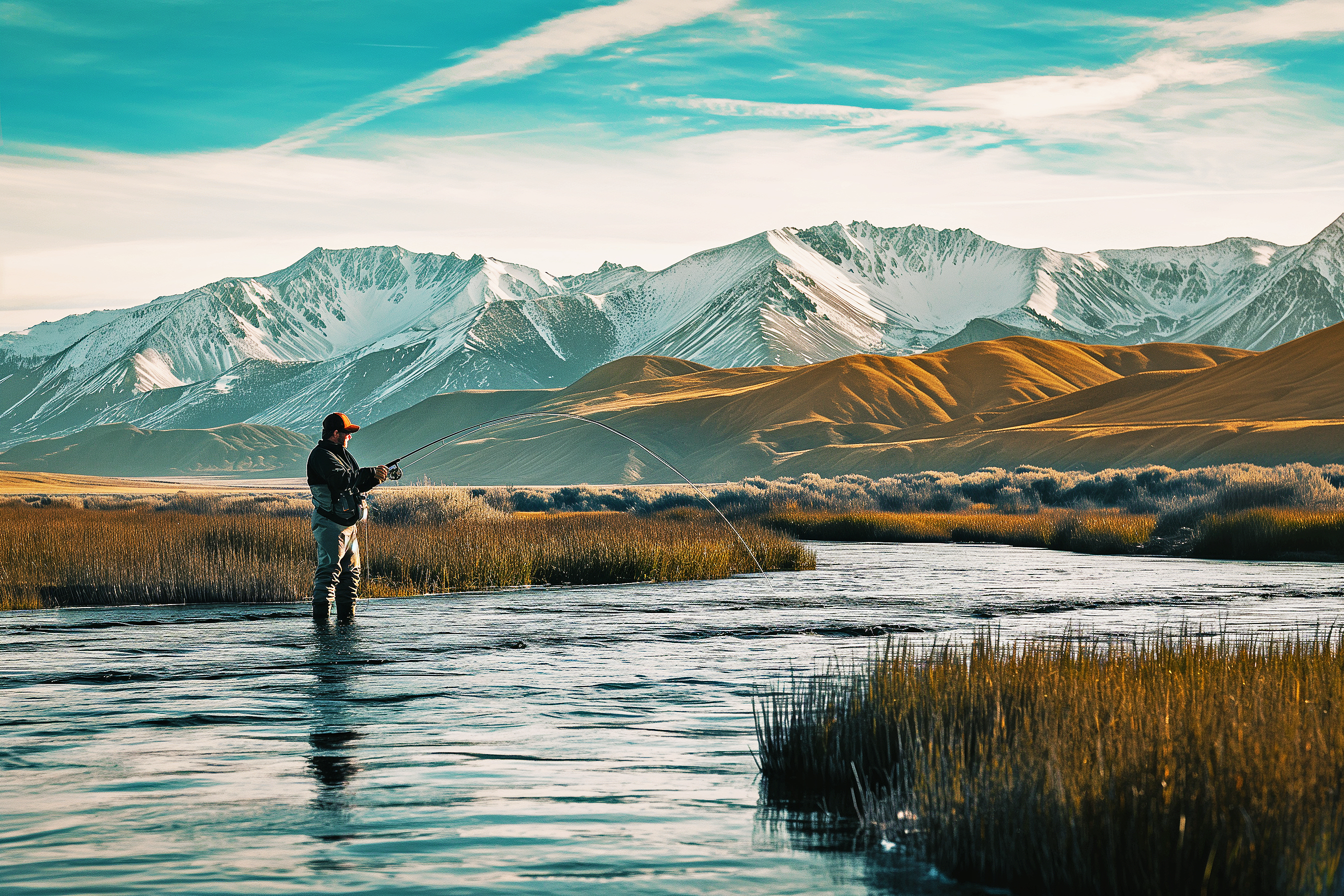
Shortly after that, I went to a river to try fishing again. In a dark pool that fed into a small waterfall below a canopy of trees, a rainbow trout took my presentation. The pull of the line as it darted across the pool gave me a smile. It was my first rainbow trout. When I held that fish in my hands, preparing to let it go back into the water, it transformed me. Its muscular energy and desire to swim away were powerful. It was the most alive thing I had ever felt. I fished the remainder of that evening and all the next day, slowly letting my grief dissolve. In the years since, I have not stopped. I have traveled and camped across thousands of remote miles in pursuit of trout.

Fly fishing brought me back to nature. It did more than that; it brought me back to God. Although I was active in my church, I had become numb to what God has created for us on this planet, its flora and fauna that surround us every day. I had neglected to notice the beauty. That fish and those turkeys brought it back into focus and renewed my perspective.

I have come to appreciate that the natural world is God’s earthly gift to us. I have experienced this in so many ways. Watching geese skim the water in flight, then settle next to me as I wade-fished a fog-covered river in early morning North Carolina. Having a beaver swim between my legs while casting in the waters of Wyoming. Sharing five minutes with my wife in the Sea of Cortez as hundreds of dolphins chasing tuna swam past our kayak. Or simply standing outside my workplace and delighting as a juvenile mockingbird imitated my whistled tunes. These and many other experiences have shown me repeatedly how wonderful God’s love is to have created such beauty, song, light, and motion for us to enjoy.

As a young boy, I watched a lone wolf with my grandfather early one winter morning. “That may be the last wolf you will ever see,” he said. Many years later, sitting around a fire with a dear friend next to our raft in Western Alaska, we watched in silent awe as a lone wolf loped casually down the rocky beach just across the river from us. He paid us no mind. In that place, so remote and seldom visited, we were simply part of the environment. We could hear his call many hours later.

As with all the moments I have had in nature since that first trout, I smiled and thanked God for the gift.