Meet the Personal Guru(s) You Already Have!

incan woman newestOther people teach us who we are. Their attitudes to us are the mirror in which we learn to see ourselves…Alan Watts

I have a guru living under my roof. He’s seventeen years old, his intellectual and emotional growth forever diminished by a glitch in his chromosomes.

We use the term “special needs” for people who don’t match our developmental norms. Kristoffer definitely fits this category. He requires a lot of reassurance. He calls for frequent re-directing when he becomes stubborn and obstinate. Obvious tasks need to be spelled out in painstaking detail.

And this is why he’s my guru.  He teaches me patience and tolerance on a daily basis. He affirms the worth of every human being according to God, not the hierarchical delusion of our society. Without knowing it, he requires me to live much more fully in the present than I ever have before.

Do you know that you have at least one guru already present in your life? It can be…

  •  A friend or lover whose habits and character traits don’t ever seem to change, no matter how many times you point them out. He or she is teaching you to desist from the insanity of trying to alter someone else’s behavior.
  • An ex-spouse who continues to “play games” around issues of money, child rearing, etc. He or she is teaching you how to take the high road as a role model, to be the change you want to see.
  • Children whose Meyers-Briggs types are radically different from your own, grating on your nerves and view of reality. They are teaching you tolerance and how to bridge the gap to “otherness.”
  • Parents who will never “get” how they affected your life in the past, or continue to do so now. They are teaching you the liberation of forgiveness. They are helping you break generational curses.
  • Acquaintances whose “fundamentalist” views are  like scraping fingernails on your mental chalkboard. They are teaching you how to rid your own faith or philosophy of narrowness and rigidity.
  • Fill in the name of your own guru _________________________.

In these blogs, I’ve been honest about my own recovery in working The 12 Steps. There’s a basic truth to this program: when we are angry, resentful, or fearful in ANY relationship, it’s a reflection of what WE need to change, not them. People who irritate us the most are often mirror reflections of the defects that need pruning in our own lives. It is so freeing to realize this. It allows us to move from blame to affirmation, victimhood to freedom, self-centeredness to self-awareness. It makes every day an adventure towards wholeness, love, and unity.

Sure, sometimes we need to say goodbye to people. Sometime we need to set boundaries. It does us no good to stay in relationships that perpetually tear us down.

Meanwhile, many gurus remain in our lives. I’m sure you have at least one. Will we embrace the lessons they have to teach us?

My Son by a Different Mother

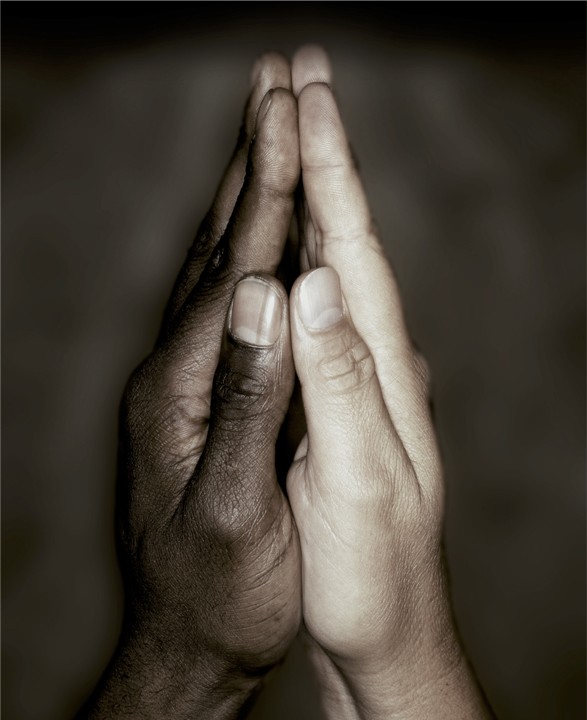
I was visiting an orphanage in Africa, a place where children afflicted with AIDS had found sanctuary from their troubled circumstances. They now partook of food, shelter, medicine, and most all, love. From toddlers to teens, they welcomed me black-hand-white-hand-prayingwith smiles and physical warmth. I’m an indiscriminate hugger, one who enjoys embracing others. These little ambassadors gave me my fill.

As the facility’s director and I shared lunch, we discovered a serendipitous truth: we were born the same year of radically different tribes, but on opposite sides of the globe. Our paths couldn’t have been more divergent. I grew up in relative privilege; she struggled in poverty. But the Creator of both our races led us to serve others.

Our conversation grew more vulnerable. We discussed our families, our triumphs and losses. We talked of our current trials. Inevitably, I shared my long struggle with alcoholism. It turned out that she, too, had suffered seismic effects from this reality. Both her husband and her youngest son were actively addicted.

She looked at me and said, “Would you be willing to talk to my boy?”

“Of course,” I said, humbled by the open door.

I met him the next day. He was in his 20s – the same age as one of my sons – and the disease was already trouncing him. His desperation stirred my heartfelt empathy.

Since he still understood alcoholism as a weakness of will, I asked basic questions. Had he developed tolerance? Yes. Once he started, did he find it nearly impossible to stop? Yes. Had he progressed to the point of blackouts? Yes, he answered, instinctively rubbing a scar on his head, evidence of a lost night that ended in violence.

I shared my journey. I urged him to seek treatment. I found an AA meeting in that city, which he attended the following day.

In the Gospel of Luke, we read “The Healing of the 10 Lepers” (17:11-19). Jesus is traveling along the border of Samaria, like walking the fault line between Palestine and Israel. He encounters a group of lepers that includes both Samaritans and Israelites. The classic scholar, William Barclay, said a beautiful thing about this scene.

If flood water surges over a piece of country and the wild animals gather for safety on some little bit of higher ground, you will find standing peacefully together animals who are natural enemies who at any other time would do their best to kill each other. Shouldn’t it be the same for all of us in our common need for God, seeking the high ground of his presence?

12 Step participants realize a fundamental truth. The condition that brings us to our knees is no respecter of race, creed, or educational level. We share a common adversity, common dreams, and we find strength in our fellowship with God and others.

Great Creator, help us ALL learn this truth about our human condition! Strip away overlays of color, caste and culture, and every one of us craves meaning in this short life. We long for love, we face death and deal with tragedy. Amnesia over our underlying unity is the bitterest root of conflict.

The day I left, I stood on the airport tarmac as jet engines idled. My new friend was there to say goodbye.

“I wish you didn’t have to leave,” he said.

We embraced, holding each other for a long time. I whispered, “We can both get better with the help of God and others.”

As my plane rolled away, I waved through the window at my son by a different mother.

Longing for a New Blockbuster

My brother talked me into seeing Jurassic World. It was a lavish waste of time and money, a theme park ride to banality. Even more annoying were the trailers for summer blockbusters, most of them raucous with explosions, guns, the trademark struggle191093412_3ac766a9ea between villains and heroes.

Good vs. evil, rehashed ad nauseam. A friend summed it up perfectly after viewing Jackson’s final installment of the Hobbit trilogy. “I’m battle weary,” was his numb response.

Will human beings evolve beyond war as our defining narrative? Can we imagine a time when our species is not pitted against itself? Can we tell new stories of peace?

In my opinion: not as long as our spiritual myths describe conflict as the very nature of reality.

A Facebook acquaintance posted these words recently: The ancient battle between the Prince of Darkness and Yahweh is won one soul at a time.

Really? THIS is reality? An endless battlefield? A deadly chess match with opposing sides defined not only by “religion,” but nationalism, race, ideology, tribal and gang affiliation?

Any student of history or current events might cynically answer “Yup, that’s about right. Welcome to the nature of humanity – past, present, and for any foreseeable future.”

OK. Maybe it’s like Jesus once said: “The poor you will always have with you.” A variation: “War will always be a reality.”

I know there are times when we must defend ourselves. Meanwhile, I value new narratives, no matter how quickly scoffers dismiss them. There are powerful examples in Buddhist and Christian teachings.

In Buddhism, outward evil is no objective reality. It’s a projection of our internal struggles, our clinging to egoism and control. These self and culture-centered values are as ubiquitous as the air we breathe. They are extremely difficult to unlearn. But it’s possible. And until we let go of our false selves, we overlay our inner “demons” onto the world around us.

Christianity unmistakably describes evil as a real force, separate from our Creator. But it lifts up a radical way to overcome. It is the non-violence of Jesus on the cross, what Gandhi called satyagraha, the inner rhythm that drove Martin Luther, King Jr.’s campaigns.

One of the tragic ironies of history is Christian nations that glorify their military. How can they forget John’s feverish vision recorded in Revelation? At the end of time, what do we find on the throne? Not an eagle or lion, not a hydrogen bomb or weaponized robot. No…a slain lamb, an eternal symbol of nonviolence most Christians will never truly claim.

In Hebrew scripture, we find the longing for a new narrative in lofty words from Isaiah: They will beat their swords into plowshares, and their spears into pruning hooks; nation will not lift up sword against nation, neither will they learn war anymore.

Believing this would never happen, poet Robinson Jeffers wrote these lines.

I remember the farther
Future, and the last man dying
Without succession under the confident eyes of the stars.
It was only a moment’s accident,
The race that plagued us, the world resumes the old lonely immortal
Splendor…

Which future will we choose? I’m longing for a new narrative, a new blockbuster…

Going Beyond 15 Seconds

When we talk about understanding, surely it takes place only when the mind listens completely – the mind being your heart, your nerves, your ears- when you give your whole attention to it. – Jiddu Krishnamurti

Trends that went viral last week are forgotten today. Twitter follows rise and fall with more volatility than the stock market. We swipe the screens of our phones and tablets with itchy fingers and dwindling attention spans.

We carry this diminished awareness everywhere. Consider a visit to a museum. Numerous surveys say that we spend an average of 15 seconds engaged with each piece. This was even true of people who visited the Louvre and stood before Da Vinci’s iconic Mona Lisa.

I was once a trained educator at The Getty Museum outside L.A. I designed a unique outing to that splendid place. I gave each visitor a packet and asked them to concentrate on four particular paintings. In addition to learning that piece’s history, they responded by writing their thoughts and feelings. They would stand at least five minutes at each station – still a short encounter, but 20 times the norm.

Last Sunday I visited the San Antonio Art Museum and practiced this immersion. The image on the right is called Picking Cotton (1929, Jose Arpa y Perea). I stood before it, absorbing light and color. I could almost feel the heat of south Texas. I Picking Cotton 2pondered the rough hands and daily labor of migrant workers, especially the boy in the foreground, his future mapped out in front of him. I appreciated the way Arpa y Perea has no central figure, causing our eyes to scan every corner of his canvas.

My point? This image, more than most others I saw that day, remains imprinted in my mind. And I realize again that the pace and technological gadgets of our world conspire to fracture our attention spans, our awareness of the world’s beauty.

I have a friend, Kara Root, who is the pastor of Lake Nokomis Presbyterian Church in Minneapolis. She and her congregation have an enriching spiritual discipline. They meet for Sunday worship only twice a month. On the other two weekends they have a Saturday evening meal and meditation. Its purpose is to prepare each participant for Sunday Sabbath, a time to unplug from labor and customary preoccupation. A time to absorb life as human beings, not human doings.

Kara and her friends report so many ways they have increased their attention to nature, human relationships, the patterns of their own minds and hearts. They realize the truth of this quote by Eugene Peterson: If you keep the Sabbath, you start to see creation not as somewhere to get away from your ordinary life, but a place to frame an attentiveness to your life.

As we walk our life paths today, let’s go beyond 15 seconds. Let’s become more aware of the sky, the trees, the precious loved ones God has placed in our lives. Let’s see them – really see them – so that the gift of their presence touches us deeply.

Outside Looking In

collage copyBut I’m on the outside, and I’m looking in. – Staind

There are many ways to judge intelligence: book learning, street smarts, wisdom gained through trial and error, compassion deepened by struggles with tragedy and loss.

The longer I live, there is one measurement that becomes more precious: the ability to stand outside ourselves and see how we affect the world around us. Why? A number of reasons. Steeped in familial and cultural biases, we find it hard to walk in the shoes of another. Our own ego needs for safety, control, and affection often dominate our motives.

Can we stand on the outside and look in with a fresh perspective? Consider how this applies to religious beliefs and practices.

In a recent issue of National Geographic is a story about kumaris in the Nepalese Hindu communities surrounding Katmandu. These are pre-pubescent girls believed to be incarnations of Chandi, a Hindu goddess. Once chosen, they live a rarified life, dressed in red garments, adorned with special cosmetics. Their feet must never touch the ground. People from the community come to worship them and have prayer requests granted.

Families campaign to present their children for this honor – like a spiritual beauty pageant – even though it presents financial hardship. When the girls have their first menstruation, they lose their throne, a change so jarring that there are counseling programs to help them debrief. The demotion from goddess to mere mortal is traumatic.

To me, this seems so bizarre. Its objectifying of children appears harmful. I understand the basic theology – that we must learn to see divinity in all people – but does it have to take such an extreme form of ritualistic practice?

However, I’m outside looking in. I must remember this. I feel the same way about other religious traditions: Joseph Smith’s “discovery” of golden plates in Palmyra, elephantine statues of Ganesha staring down from altars, the reverence of Koranic words as if they are written in fire.

Let me share something that has been extremely liberating: to stand outside the Christian tradition and see the strangeness of its traditions and cultural blinders. I think of a virgin birth; miracles like walking on water; a sacrament that says “Take and eat, this is my body,” “Take and drink, this is my blood;” the anointing of leaders who are Zionist, homophobic, and misogynistic; any martyr’s insistence that there is only one way to “heaven.”

During my final years as a pastor, I worked around these oddities, emphasizing the underlying message of grace. I tried to communicate that all icons, symbols, and rituals are simply pointers to other realities. Hopefully, no matter what paradigm we live within, these realities are peace, unity, and reconciliation.

Isn’t this healthy for all of us – to stand on the outside and look in?

A Cautionary Tale

Here’s a cautionary parable. At first glance, it might sound preposterous, inapplicable to your life. But stay with the thread…

On his life’s journey, a man finds himself in a long hallway. At the far end are two doors. One has a sign above it that reads, “Serenity.” A sign over the other says, “Conflict.”

The man walks to the end of the corridor and opens the door marked “Conflict.” Inside it is a sentry with a baseball bat who immediately strikes him across the back. It is excruciatingly painful!

The man retreats into the hallway and looks at both the doors. Without hesitation he chooses “Conflict,” and once again his assailant whacks his backside, adding deeper bruises.

His eyes watering, the man recoils into the corridor. Through tearful vision he sees the two signs, drawn once again to “Conflict.” This time the thump on his back brings him to his knees.

He crawls back to the beginning, gets to his feet and surveys his choices. Taking a resolute breath, steeling himself for another round, he opens the door to “Conflict” yet again.

This time his bat-wielding attacker is gone. The man sees another winding hallway stretching out in front of him. He quickly sets off to find his punisher.

He is never seen again.

Who would choose conflict, punishment, or futility day after day? Many of us! We worry, we try to control issues beyond our ken, and we seek to shape the behavior of others. We resent people we believe have hurt us. We hold onto un-forgiveness. We live in the future, imagining better circumstances, missing the breathtaking beauty of NOW.

On other, often unconscious levels, we incessantly choose to maintain our egos. We insist on defining ourselves by accomplishment, the approval of our others, or the status of position and wealth. We engage in contentious dialogues about “important issues,” so relieved that our personal viewpoint is righteous.

Sure, the kickback from these thought patterns and behaviors may not feel like a bat stinging our backsides. But seen from the viewpoint of eternity, we are repeatedly, insanely, turning the doorknob to conflict.

If you think you would never purposefully choose such a life, think about this: what do you need to do today so that you do not murder TIME, your most precious and vital gift?

Mindfulness takes practice. I leave you with this quote from L.M. Browning.

The divine is in the present and you must be present to experience it. When you vacate the present and recede into your mind, allowing worries or work to remove you from the moment, you leave the plain upon which the divine dwells.

When you are constantly under the anesthetic of digital distraction, you withdraw; you are no longer conscious, and therefore are in no fit state to commune with the sacred.

If you wish to hear the answers you seek, you must be present to hear them. If you wish to partake in the insights there to be known, you must be present to receive them. If you wish to know the divine, you must be present to meet it. …you must be present.”

Monarch of the Gravestone

beautiful_Monarch_butterfly_by_butterfly_babe13During years as a pastor and hospice chaplain, I tended to people in their final hours. When death is imminent, we drop those pretenses that mute the colors of our lives, sharing the vulnerability of our common humanity. We joined in memories of family, travels, rites of passage. We focused on the need for reconciliation. We brought children and grandchildren to the bedside for final blessings. We prayed for the dissolution of lingering fears and regrets as the door to the unknown began swinging open.

There are good deaths and bad deaths. I don’t just mean the timing. I mean the state of the individual’s mind and spirit at the time of passing, the emotional and spiritual inheritance they leave with friends and family members. Sadly, too many people I buried left a troubled legacy. Undue forgiveness and healing remained in the wake of their passing. At their memorial services, we celebrated the incomprehensible love of God, but we were painfully aware that this grace did not transform the person during his/her brief life.

Why? Because they stubbornly clung to their character defects. They fueled them with rationalizations, grudges, resentments. They adopted the lie that “this is just the way I roll,” or “I’m never going to change.” The devils they knew seemed safer than those beyond the edge of change. They feared true freedom, so they exchanged that birthright for a life in chains.

I remember a sunny afternoon at a cemetery in Fort Worth, Texas. I had just presided at the graveside service of a man who died a bad death. He was chronically angry. His controlling expectations of his family were smothering. He never gave unconditional love to others because he never experienced it in his own soul

The gathering around the casket was small. Strains of Eleanor Rigby haunted me. I shared some words of comfort and hope, trying not to sound obligatory. After the final prayer, people dispersed before the lowering of the casket. I remained, standing in the shade of a nearby tree.

As the box descended into the ground, one worker brought a tractor for the back fill. Two others with shovels smoothed the space and replaced the strip of sod. They bantered as if they were working on a stretch of country road. Can’t blame them. But after all the vagaries, passions, hopes and dreams of a human life, the moment seemed ignominious. Ashes to ashes, dust to dust.

The men dispersed, leaving the gleaming headstone behind. I lingered. It was one of those exquisite spring days that stir deep awareness: light breeze whispering in trees, birds singing with ecstatic abandon, shadows rippling across the manicured lawn.

I took a deep breath and said a quiet prayer. God, you know my worries and fears better than I do. Please help me be free. Please help me live each day in the center of your love for me and my love for others.

Just at that moment a magnificent monarch butterfly fluttered down and settled on the headstone, unfurling its fragile wings in the sunlight. Time stood still. I took a deep breath. Then the beautiful creature took wing to other adventures.

I smiled and walked slowly back to my car.

On Behalf of a Grateful Nation

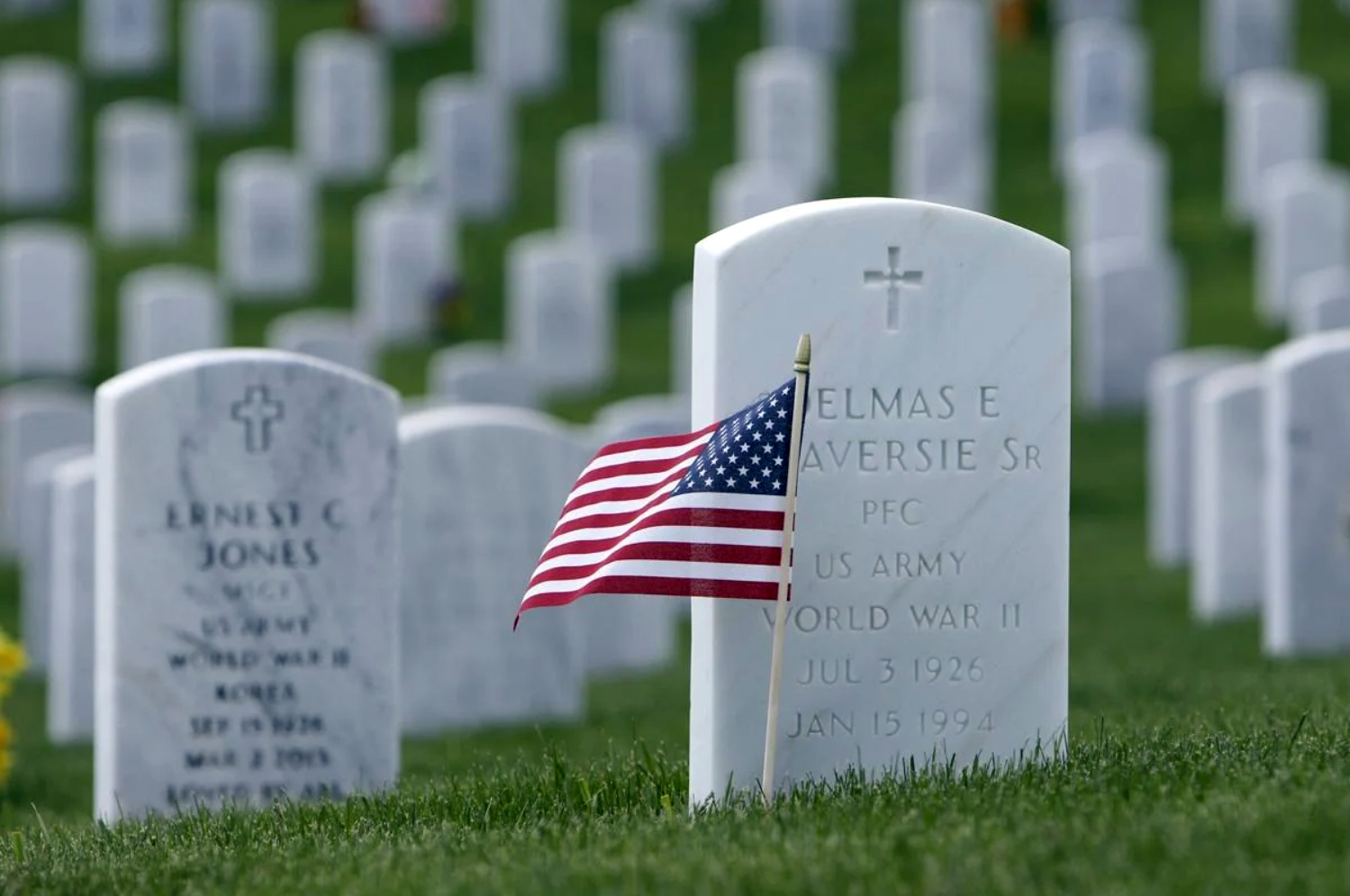
As Memorial Day approaches each year, I treasure a moment I spent with a veteran named Bill who bared his soul to me.

I was serving as an army chaplain, Pastor of the Main Protestant Chapel at Fort Jackson, South Carolina. For our mission outreach, we adopted the nearby VA hospital in Columbia. Twice a month we visited and spent time with veterans who were there for treatment. Often it was the only human contact they had outside the staff.

One particular Sunday, we split up to cover as much ground as possible. I made my way down a long, antiseptic hallway to a room in the furthest reaches of the facility. That’s where I met Bill, alone in his room under dim fluorescent light.

I introduced myself and asked about his circumstances. He said very little, almost suspicious, simply reciting his serious complications from diabetes. We sat in silence for a few moments. When I didn’t leave, he looked at me differently, sizing me up. As I asked him where and how he had served, he focused on the chaplain’s cross pinned to my lapel. I’ll never know what prompted him to break the seal on his memories, but he did so with sudden intensity.

Bill was a survivor of Omaha Beach, part of our country’s infamous D-Day invasion of Normandy. As a history buff, I had read accounts of that heroic onslaught, tens of thousands of our troops released from amphibious transports to face Nazi machine gun nests entrenched in the bluffs. I had seen the grainy black and white photos. Some years later, I watched Spielberg’s Saving Private Ryan, listening as others gasped in horror at how vivid the invasion seemed on the silver screen.

But even that cinematic realism would not compare to what I heard from Bill. He described the palpable fear in the landing boat, the friends standing next to him who were crossing themselves and mumbling prayers, the spatter of machine guns, the screams, the surf, the clanging metal of the ship’s gates opening, and then that rush through the waves towards the sand and their destiny. He remembered being dug into a small dune at the rear of the beach, turning his head and scanning the shoreline, the utter devastation and bodies laid to waste, wondering just for a moment if God would truly use this suicide mission to turn the tide of evil in a country far from his homeland.

The memories came out in a torrent. We were suspended in history. I don’t know if he had ever shared those haunting scenes before. When he was through with words, he looked over at me, eyes watering, face open and vulnerable. My own emotions welled up inside of me as I placed my hand on his shoulder.

“On behalf of a grateful nation, Bill, I can’t thank you enough for your bravery and service.”

He placed his hand over mine, two Americans, two human beings, connecting across a sea of time and experience.

“Chaplain Van,” he said, “will you pray with me?”

I did.

Parents, Pass the Torch!

(Reprinted from 52: Weekly Readings for Your Journey by Krin Van Tatenhove)

We all have favorite teachers who taught us more than subject material; they imparted lessons about life. Yet parents remain our earliest, most impactful tutors. Their words and actions mold our outlooks from infancy.

Clearly, this can be positive or negative. In decades of working with people, I have seen both kinds of parental legacies. Learning to claim the best (and leave the rest) from our families is a healing journey many of us have taken. Some of us still need to.

On this Mother’s Day, I recall a host of memories about my Mom. Our relationship hasn’t been easy. Thankfully, over time, we discovered the grace born of our faith. This faith has been my mother’s greatest gift to me, a priceless heirloom. Let me share a memory that highlights her influence.

My childhood neighborhood swarmed with kids, evidence of the Baby Boom. Like typical children, we often took sides and fought with each other. One day the conflict moved from taunts and posturing to rock throwing and BB guns. On the other side, I could see one of my “enemies.” His name was Gentry and he was a Goliath, heads taller than the rest of us. He was also mean as a snake, channeling anger from a troubled family.

Under a bright sun, we lined up in two gangs and advanced toward each other like fronts in a medieval battle. When fists started flying, Gentry singled me out. He had a board with rusted nails that he hurled like a lance. It struck my head, leaving a gash that gushed freely down my neck and onto my shirt.

The sight of so much blood drained the fight from us. We halted and scrambled back to our homes.

That night, my stitched head wrapped in Ace bandages, I lay under the sheets. My mother came to my bedside for prayer, a ritual she kept with all her children.

“We have something special to pray for tonight, don’t we?” she asked.

“We sure do,” I replied. “That God would take the pain from my head.”

“That’s not what I’m thinking,” she said. “We should pray for Gentry, that God would take the hatred from his heart.”

I felt resentful. Why pray for that jerk? He was the guilty one. He was my enemy.

But as I thought about the daily dysfunction he endured in his family – the lack of a love I took for granted – my resent morphed to compassion. My mother waited silently, hoping this would take root in my heart. Finally, I took her hand and we prayed for Gentry and his kin.

One of the core teachings of Jesus is to love our enemies. Do not return evil for evil, but pray for those who persecute you. That night my mother illustrated one of the greatest elements of the faith she was passing on to me. I carry that torch to this day.

Mothers and fathers, your influence is incalculable! Raise your children with love and encouragement. Most importantly, pass on your faith in God who calls us to a higher plain.

And Mom, if you read this, I can’t thank you enough!


Life Beyond Dogma

Dogma: a system of principles or tenets concerning faith, morals, behavior…

A couple days ago I drove a neighbor to pick up his car at the shop. I love this guy; we frequently exchange favors. He’s a squared-away individual, very active in his conservative Christian church. In Texas, ya’ll that can be dang far to the right.

Our conversation turned towards religion, and as he discovered my Universalist leanings, he suddenly felt compelled to

confess his creed. The points are familiar.

  • God created us “good.”
  • We fell into sin through Adam and Eve.
  • No amount of ritual sacrifice could appease God’s wrath over our rebellion.
  • So God sent “his” son Jesus, an unblemished lamb, to pay the price for our transgressions.
  • Only those who believe in Jesus will enter “heaven.”
  • This is all made clear through the Bible, the infallible word of God.

What struck me was his rhythm, his cadence. He was marching to his chosen drummer. I listened quietly, and rather than deride the simple rigidity of his stance, I recalled the countless Sundays I presided over worship services as a Presbyterian pastor. Our liturgy contains a section called “Affirmation of Faith.” It’s a time to recite, in unison, one of the classic confessions of Christianity. In my tradition this means

a selection ranging from The Apostle’s Creed to what we call The Brief Statement of Faith.

Every Sunday, grooving our brains with familiar dogma, imbedding it ever deeper in our consciousness. It harkens back to God’s supposed command to the Israelites: Fix these words of mine in your hearts and minds; tie them as symbols on your hands and bind them on your foreheads. Teach them to your children, talking about them when you sit at home and when you walk along the road, when you lie down and when you get up. Write them on the doorframes of your houses and on your gates…Deuteronomy 11:18-20

I know the importance of oral tradition. I realize that a modicum of socialization is necessary to keep order. I think it’s important to recall – even recite – both the triumphs and failures of history, learning from both. And I see how the best of corporate confession can point people towards acts of mercy and justice.

But I’m looking for life beyond creeds. I seek an experience of the infinite that is ever freer of the human grids we impose upon it. I want to taste freedom and openness to life as it is – TODAY. I want to relish Mystery without defaulting to dogma.

Joseph Campbell once said, Every religion is true one way or another. It is true when understood metaphorically. But when it gets stuck in its own metaphors, interpreting them as facts, then you are in trouble.

 Anais Nin said it more bluntly, When we blindly adopt a religion, a political system, a literary dogma, we become automatons.

There is a rich, purposeful life beyond dogma. You know it. I know it. Let’s embrace it together and discover more fully what it means to be human in the vastness of what surrounds us.