Bill’s Miraculous Conversion

Many of us remember the cultural hysteria that surrounded the discovery and spread of HIV/AIDS in the 1980s. Despite scientific evidence that the virus could only be passed through semen or blood, many people panicked. Those who contracted the disease became pariahs, what Time magazine dubbed a “new class of untouchables,” a prejudice that hampered their medical treatment.

Adding theological insult to injury, intolerant groups of Christians spread the notion that AIDS was a plague visited upon gay people and drug users for their sins. They dared to say such things while cloaking themselves in Christ’s teachings, an aberration that still exists in America.

I was serving a large urban church at the time. One of our vocal members (call him Bill for anonymity’s sake) embraced and espoused this theory of divine retribution. He proof-texted the Old Testament story of Sodom and Gomorrah, claiming that God destroyed those cities because of homosexuality rather than inhospitality.

Meanwhile, I knew that HIV/AIDS had touched many people in our congregation through their friends and relatives, but they were reticent to publicly ask for compassion. They feared the stigma rippling through our society.

I talked to these folks and asked a question. Would they be willing to join others in a “coming out” evening, a public forum to share their experiences in solidarity? It would be a chance to counter destructive stereotypes, appealing for greater understanding.

I was warmly surprised by how many agreed to participate. Among them was a nurse who had adopted a baby born with the virus.

On that night, the church was full. Even the unfounded scare of contracting the virus couldn’t keep people away. There was a bit of sensationalism, even titillation, about the way we had advertised the event, and I was fine with that if it stimulated new awareness.

One by one, members stood and shared their personal stories. Some admitted having to unlearn their own fears and prejudice; others spoke of their unrestrained  love for family members and friends who needed them during a time of crisis.

When the nurse spoke of how she had connected with her adopted daughter, Chloe, it was especially moving. The agency she dealt with could not find a suitable parent. Who would want to take a child with HIV into their home given the fear of contagion and the prognosis of a tragically short life?

Chloe was with her, and as she spoke the toddler got down off her mother’s knee and began to wander along the center aisle of the church. I noticed Bill in a pew near the front, his eyes locked on the girl, his posture stiffening. When she came alongside him, she stopped and looked up at him. Then she did something I will never forget. She crawled on his lap.

Bill’s body lurched. You could tell he wanted to stand, knock Chloe of his knees and run for the hills. But then she rested her hands on his shoulders and squared her face to his, their noses nearly touching.

Most people in the assembly were aware of Bill and his prejudiced views. A hush came over all of us. How would he react? Would he create a scene that would forever mar the harmonious tone of our event?

Then something happened that we least expected. Call it a grace-filled moment of conversion. Bill wrapped his arms around Chloe and gave her the warmest of embraces. There was a collective sigh of relief and some people even clapped.

Fast forward. Bill became a lead deacon in our congregation. He was a changed person, a man on a mission. Our church had an unused manse on our property and Bill led a movement to get it certified as the only approved daycare facility in our city for children born with HIV. He helped form a ministry that provided hours of respite care for men whose companions were suffering the end stages of AIDS. Our deacons would relieve them for a few hours so that they could run errands, get some air, decompress.

One of the last times I saw Bill was at one of these homes. I had come to say a prayer with a young man who was in his final hours. I saw Bill from behind as he was leaning over the bed. He was helping to change the sheets, getting his hands dirty in the real and compassionate work of loving another human being.

He turned and said, “Hi, Pastor Krin. I’m glad to see you.”

“Not as glad as I am to see you, Bill,” I replied.

Every Story Matters

(I once wrote a weekly column for a newspaper in South Texas, collected in the book 52: Weekly Readings for Your Journey. My outlook and writing have changed a lot since those days, but I often recall this installment published on Veteran’s Day. It reminds us that every person has a story, and that some of these stories are from veterans who were caught in the tragic crossfires of history.)

For years, CBS ran a program called Everybody Has a Story. Host Steve Hartman threw a dart at a U.S. map, flew to that city, flipped open a phone book, put his finger down and called that household. If the individuals were willing, he highlighted their life stories which were often poignant. Then, before leaving, he asked the participant to throw a dart at the map to pinpoint his next destination.

There was a marvelous truth in this seeming randomness! It showed two things. First, the struggles and victories of being human are something we all share, no matter our age, race, or background. Second, our stories matter, especially when someone truly listens.

However, listening is a dying art. We fixate on TVs, computers, smart phones. Wired with sound bite mentalities, we wish people would just get to the point. We formulate responses before others finish speaking, cutting our attentiveness to zero.

Paul Tillich famously said, “The first duty of love is to listen.” In our raucous world, people long for someone to hear them. Our open ears and hearts provide an oasis of acceptance, and as we practice this art, we find that the benefits are reciprocal. Our worlds expand in astonishing ways. Here’s an example from my own life.

One day a short man with a warm, tooth-missing smile came to the front office of the church and asked to speak to the pastor (me). His dark skin was deeply weathered by the elements. He let me know that he was homeless, sleeping in his car, and he wondered if I could help him with lodging and food. When I agreed, he said, “Thank you, sir!”

That’s when I saw the military bearing in his shoulders and heard the respect in his voice.

“Are you a veteran?”

“Yes, sir. I served in Desert Storm with the First Mechanized Infantry.”

What followed was a gripping story, a painful page of American history, and it was my privilege to hear every word.

Raised in New Jersey, William Milburn inherited his family’s long tradition of joining the United States Army. He enlisted in the National Guard after high school, and when he got laid off from a factory job, he chose to go active duty. Eventually he was transferred to Fort Bliss, Texas, assigned to the First Armored Division.

In August of 1990, William was a frontline tank gunner when the U.S. invaded Iraq. As he recalled those awful hours, I could hear the roaring jets and the deep booms as William locked on to distant Iraqi targets and destroyed them. His traumatic memories still open fresh wounds.

“We saw trucks, jeeps and tanks with mangled, blackened bodies. The smell of death is horrible, pastor. I was a soldier, but as a Christian, any loss of life is terrible. I remember looking at one body draped from a jeep and thinking ‘man, that guy had a family.’ What was his story? It was war. I did my duty. But it was still so sad, and those images still haunt me.”

William received bronze stars for his valor. I thanked him for his service, then helped him find the lodging and food he needed for that night. I also invited him to contact me anytime, day or night, if he needed a listening ear. If found out later that William had gotten back on his fee, working hard as a certified nursing assistant, enjoying life with a new girlfriend.

Today, think of this as you shop, work, or travel. Every person you see has a story, and often the people we pass over the quickest have the most mind-blowing tales of all. A homeless veteran taught me this lesson.

All I had to do was listen.

Journey to the Center of the Earth

A massive sinkhole opens beneath the La Brea Tar Pits in Los Angeles. Buildings, freeways, and screaming people plummet through a time portal. They land 10,000 years in the past, where saber-toothed cats, dire wolves, and giant ground sloths are just a few of the surprises (and dangers!) they face.

Such is the premise of a new NBC drama called La Brea. I thought of it as I stood with others on the rim above Canyon Lake Gorge, a geologic wonder of Texas carved out by flooding along the Guadalupe River in 2002. 34 inches of rain fell in two days, setting off a torrent that sliced open the ground below the spillway, exposing limestone and fossils over 100 million years old.

Our guide points out some dinosaur tracks. An acrocanthosaurus,one of the largest predators to ever stalk the earth, once stood on this spot, perhaps scanning the terrain for prey.

Then we begin our descent, first to Area 51, a landscape strewn with square boulders that seem hewn from extinct quarries. Robert Rodriguez used this setting for his Predators movie.

“Bend down and gather a handful of sand,” says our guide. “Tell me what you see.”

I do so. Instead of sand, I find scores of tiny shells nestled in my palm!

“Those are remnants of an organism called Orbitolina Texana.,” she says with a smile. “You are standing on an ancient cretaceous seabed.”

Amazing! And it only gets better! We continue downwards to see exposed fault lines of the Edwards Plateau, remnants of collapsed caves, a waterfall, even a lagoon. In one  area, we examine scores of fossilized shellfish, including ancient sea urchins. It truly feels like a journey to the center of the earth (thank you, H.G. Wells, for the phrase!).

Then it strikes me that my fellow Master Naturalists are always penetrating deeper into the world, revealing its beauty and intricacy. On countless occasions, they have schooled me about the flora, fauna, and geology that surround us. I store their numbers on my phone. When I see an unfamiliar plant, insect, reptile, or bird, I capture an image or sound and text it to my peers. Their responses often include not only common and scientific names, but amazing facts about that species’ place in the ecosystem.

I’m currently writing a book about the influence of camps and conference centers, including their role as portals to nature. At Camp Gilmont in Northeast Texas, I spoke to Marie Nelson, Director of their Outdoor School for children. She reminisced about a naturalist and educator named Sarah Monk, one of their long-term volunteers. “Walks with Sarah” were a privilege, and when Sarah died, Marie wrote a tribute which I excerpt here. It stands as a tribute to all naturalist teachers.

Wake me early to see the dew on the spider web before it disappears.
Take me quietly down a trail into the woods and introduce me to the wonder.
Sit with me as a gentle breeze cascades through the forest like a waterfall.
Draw my attention to the flowers clothed in all of their radiance.
Take me by the lake to watch turtles bob to the surface for air.
Hold a dragonfly nymph as I study its special adaptations for survival.
Quiet me as a red-tailed hawk goes swooping overhead looking for its prey.
Show me the view to the west as the sun sets in vibrant purpose, orange, and pink.
Then watch with me as the veil of darkness blankets the earth.
Listen as the sounds of night surround us.
Open the classroom of nature all around me
and teach me how to study the gift of Creation.

Back to that day in the Canyon Lake Gorge. One of the attendees turns to me and says, “This is one of the most beautiful places in Texas!”

I smile and nod, even as my mind flashes to other exquisite environs: Palo Duro Canyon; the lush heart of the Big Thicket; Spicewood Springs and Gorman Falls at Colorado Bend State Park; crystalline depths at the Aquareena, headwaters of the San Marcos River; shorebirds cavorting in the wetlands of Matagorda Bay; scenic gems like the Chisos and Santa Elena Canyon at Big Bend; ancient rock art of the White Shaman Preserve, perched above the confluence of the Pecos and Rio Grande Rivers.

So many breathtaking wonders in this state I love! So many places where we can journey to the center of the earth!

You can connect with me through my website here, Facebook here, or Instagram here

Loving Wastefully

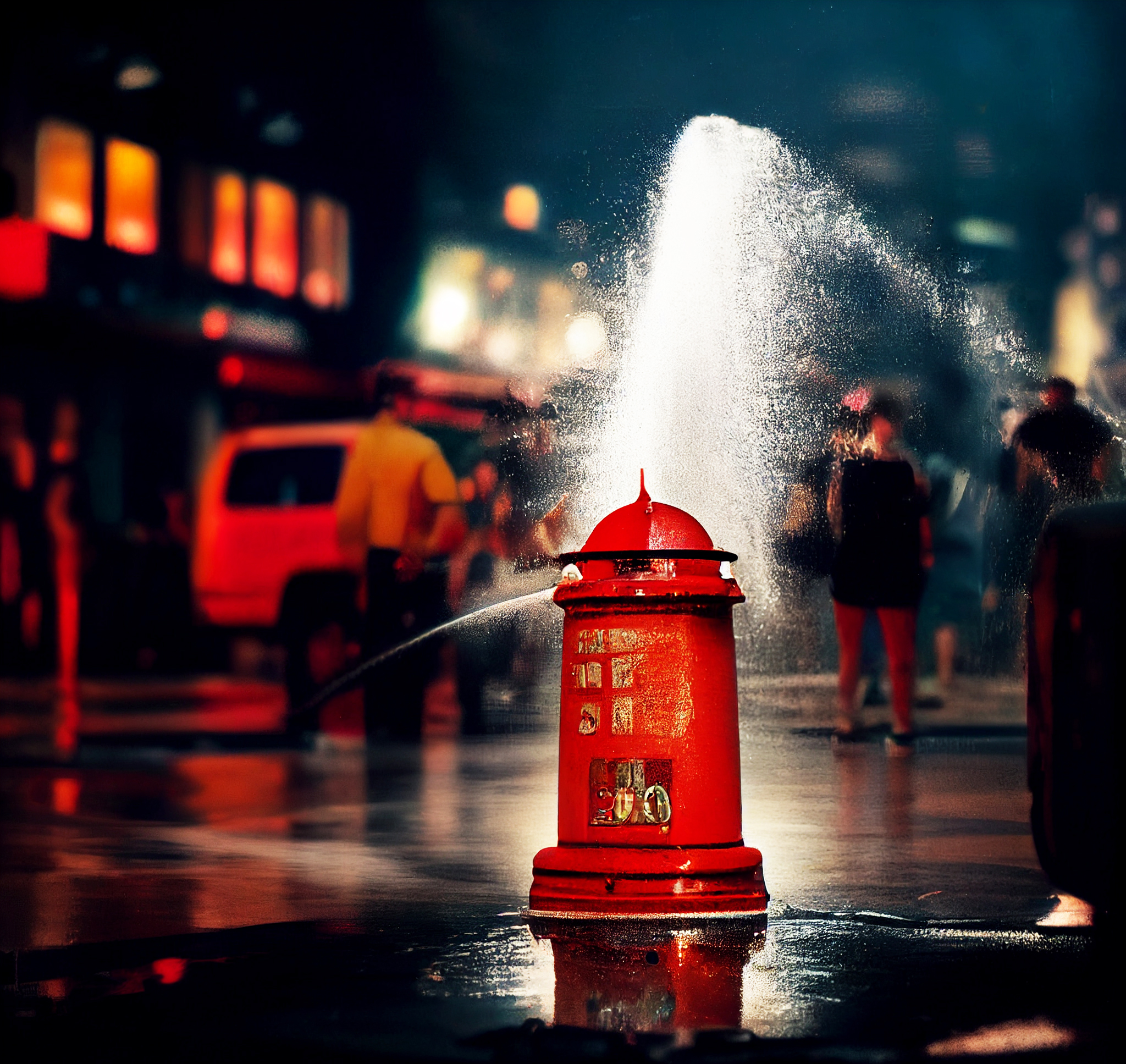
Imagine an inner-city neighborhood on a sweltering summer day. A long draught has baked the pavement and buildings, coating them with dust. Suddenly, an enterprising resident devises a way to turn on one of the fire hydrants. It gushes into the street, attracting people of all ages who gather to splash and play. It’s like a Ganges River party in the middle of concrete canyons!

A man cries out, “You’re wasting water!” and a woman exclaims, “Exactly! Come and enjoy it with us!”

I’m reminded of a well-loved quote from John Shelby Spong who died in 2021.

“If the word “God” can be identified with the Source of Love that flows through the universe, always enhancing life…then the only way we can worship that which we call God is by loving wastefully. Wasteful love never stops to ask whether love is due or deserved. One simply gives it away. The more we can give love away, the more that which is ultimate, real and holy will be visible in us.”

As a friend of mine says, “Love wastefully. Turn on both spigots and let it run until the soil is good and muddy, until there is a pool that forms where others can be refreshed.”

An early hymn in the Christian tradition is the Old 100th. Praise God from who all blessings flow. No matter our concept of a higher power, surely our calling is to let these blessings flow through us until we become conduits of love and grace!

Obviously, for this to happen, we must overcome any attitudes of heart and mind that cause us to restrict our flow, siphoning down the blessings poured so freely into us.

Jesus addressed one of these primary restrictors. “Do not judge, so that you may not be judged. For with the judgment you make you will be judged, and the measure you give will be the measure you get.” (Matthew 7:1-2)

Let’s be real. We all judge others. We justify ourselves by saying I’m just discerning, or I’m speaking truth to power, or I’m fighting the good fight.

There is a necessary place for discernment. But every one of us – no matter our politics, theology, or morals – can see how judgement erodes our common humanity. Even with noble intentions, we can easily foment division.

Judgment seems hard-wired into our human psyches. I imagine Cro-Magnon tribes already judging who among them was more beautiful, more athletic, and who they needed to hate enough for violence. From time immemorial, we have certainly inherited the “sins” of previous generations. Just dip your mind into the news streams of any given day. They literally reek of judgment.

Go even further. Think of how many people project this human proclivity for judgment onto their anthropomorphic images of God. Some point to this very passage from Matthew in Christian scripture, settling on the words “you will be judged.” Jesus himself had to break these shackles of judgement, his life culminating in a crescendo of forgiveness even for his tormentors as he cried out, “It is finished!”

This teaching recorded in Matthew is not about crime and punishment, sin and retribution. It is an invitation to light and freedom. It is pure genius.

When Jesus says, the measure you give will be the measure you receive, think of it this way. If our Creator has placed within us a wellspring of love, an inner fountain to refresh every moment, then our judgments restrict the flow of this love not only for others, but for our own experience of joy!

To use a contemporary analogy, consider our ubiquitous smartphones, attached like appendages every waking hour. They exist within a bandwidth. When we judge others, we limit our ability to stream love from the Source, narrowing our experience from 5G to 4G to 3G to E. Finally, beyond the Edge is a life with no sustaining awareness of connection to our Creator. Some people would call that hell.

Jesus implores us to experience a fuller measure of love that suffuses our lives. To use the image of water again, think of the words he spoke to a Samaritan woman at the Well of Jacob, recorded in the Christian Gospel of John. “The water that I will give will become a spring gushing up to eternal life.”

As John Shelby Spong said, when we let this water flow through us to others, even wastefully, what is “real and holy will be visible in us.”

Amen.

A Part, Not Apart

On one of our American Road Trips, my wife and I visited the Pink Palace Museum in Memphis, where we watched an Omnimax film called The Great Barrier Reef. Told through the eyes of Jemma Craig who grew up on a barrier island, it’s an urgent appeal to preserve this 1,400-mile ecological treasure.

As I sat there, it happened numerous times—those moments of wonder while immersed in our natural world, even when transmitted through celluloid.

  • Tens of thousands of green sea turtles gathering at their largest rookery, Raine Island. They migrate up to 1600 miles to reach the exact beach of their birth. How do they do it? By relying on Earth’s magnetic fields. Each part of a coastline has its own magnetic signature, which the animals remember and later use as an internal compass. Awesome!
  • Pictures of endangered giant manta rays swimming together, some of them as big as 23 feet wide and weighing 6,600 lbs. Awesome!
  •  The reef’s many species of coral simultaneously releasing their mixture of eggs and sperm into the sea, as numerous as stars in the night sky. Awesome!

Like so many of you, I am drawn to nature because of its perfect intricacy, its reminder to just BE rather than DO, to humbly experience my place in the web of life. As a friend of mine says, this is what “stiches him into the fabric of the universe.”

These moments resonate from deep in my childhood. I remember walking on a hillside covered in wild mustard so tall it reached my forehead. I laid on my back and looked up through blossoms teeming with bees and butterflies, a sky of sailing clouds beyond them. The veil between observer and observed vanished.

I once read a compilation of Jiddu Krishnamurti’s writings that remains with me. He spoke of how our perception causes us to stand apart from the world rather than experience harmony within it. This disconnection is at the root of our cancerous treatment of the environment—bending it, shaping it, paving it to fit the contours of “progress.”

Krishnamurti’s words can seem odd to Western minds that are riddled with binary thinking. “There is no division between the world and you,” he said. “You are the world.” The key, he said, is in how we perceive, summed in these words.

“Can you see with your eyes the tree as a whole? Do you understand my question? Can you see anything totally, or are you always seeing partially? Are so we caught up in our own network of problems, our own desires, our own urges of pleasure and pain that we never look around, never watch the moon? Watch it. Watch with all your eyes and ears, your sense of smell—watch. Look as though you are looking for the first time. If you can do this, that tree, that bush, that blade of grass you are seeing for the first time. Then you can see your teacher, your mother and father, your brother and sister, for the first time. There is an extraordinary feeling about that: the wonder, the strangeness, the miracle of a fresh morning that has never been before, never will be.”

As a Master Naturalist in Texas, United States, I join my fellow volunteers in passing on our knowledge of the natural world. We can catalogue flora and fauna; we can name those forces that shape the landscape and atmosphere. All this science surely deepens our appreciation of the planet. But perhaps the most vital thing we impart is to see our world through the perspective of harmony, a vision that instills a desire to cherish, protect, and nurture the gift of Earth.

There is so much dire evidence about the decline of our environment. We see it everywhere. On the very morning I originally posted this blog, the U.N. issued a new warning about the escalation of climate change.

Yet, I cling to the hope that more and more of us can be the change we want to see.

We can be a part, not apart.

You? No Comparison!

If you truly don’t give a damn about what others think of you, congratulations! If you are so at home in your own skin that nothing causes you to seek external worth, rock on!

If, instead, you are like many of us who battle with bouts of self-doubt, read on…

Certain liberating truths, like the encapsulated in the tile of this post, need frequent reiteration. We must plant our feet repeatedly on the same foundational wisdom. Why? Because so much of the world’s messaging conspires to undermine us. The sheer load and volume of this external bullshit is staggering!

Grading systems, balancing sheets, images of what is beautiful, popular, or successful. Skin colors and sexual orientations held up as normative. Scripts for living—indoctrination under countless disguises—passed on to us as proper roadmaps by our tribes and families. Religious dogma that demands allegiance. Internet news-streams, predatory to our browsing, a bombardment of polarizing headlines. Be very afraid! It’s time to take sides! Social media casting its desirability web of likes and follows.

When we internalize even small pieces of this external coding, it can lead to fits of self-effacement. Tabula rasa becomes tabula inscripta.

Sure, benchmarks of excellence can inspire us to better our lives. What I’m talking about is when those standards create a sense of lacking that sours our enjoyment of NOW!

As I write these words, countless individuals are evaluating their lives by metrics that are ultimately superficial. I see this clearly in the life of a good friend. Listening to him with compassion helps me in my own struggles.

He’s a remarkable person—gifted with intelligence, awareness, creativity, a sense of adventure that guides him to remote places and experience. He has a devoted wife, children, and grandchildren. I often think of him as a Renaissance person.

And yet, at regular intervals, he finds his mental health unraveling. We have talked for hours about it and eventually it boils down to a single word…

Comparison.

He begins, like many of us, to measure himself against others—internalized notions of where he “should be” at this point in his life. He’s embarrassed to admit that some of it is tied to financial gain. At other times, it’s about how much impact his life’s work has had. On deeper levels, it reaches spiritual dimensions as he wonders why others seem more liberated.

He knows the standard advice. He knows how to make gratitude lists, enumerating the people and accomplishments that give his life value. But even in that process, he begins to contrast himself with others less fortunate. It’s the pernicious flip side; using comparison to create a sense of superiority.

Comparison. Or, to use that old-fashioned word from the Ten Commandments, covetousness in all its ugly forms, those cravings for external validation.

As I said earlier, some truths need frequent reiteration. Like this one I have distilled from the wisdom of ages. Share a version of it with your children, your students, your coworkers and neighbors. Hell, shout if from the rooftops! 

You are one of a kind, a divine creation, as unique as the whorls on your fingertips. Your particular experience and history are yours alone and can lead you to the fulfillment you seek. Follow your own path! Seize your own destiny! As Emerson wisely said, “To be yourself in a world that is constantly trying to make you something else is the greatest accomplishment.”

Back to those talks with my friend. I do my best to help him reclaim his sacred identity and settle into the present with a thankfulness that overflows.

And often, after our talks, a sobering thought enters my mind.

I imagine us on our death beds. No matter how many people surround us in those moments, we will ultimately make that transition alone. And if our lives really do pass before our eyes, we will see clearly the absurdity of EVER wasting a precious moment in unhealthy comparison to others?

Please. Hear it again.

You? No comparison!

The More Things Change…

Like many of us, I’m drawn to abandoned places. That’s why I’m sitting here on the only remaining wall of a ruined living room in South Texas. A great stone fireplace towers above me and I wonder, “What voices once filled this space? What dramas played out against this backdrop…”

*                           *                           *

As we recently watched a commercial about the new F-150 Lightning—Ford’s first all-electric truck—I commented to my wife, “What a fascinating time to be alive!”

Isn’t that true for every generation, especially given the rapid evolution of technology?

My father shares his memory of the day his family first received electricity. They were living on a farm in Wisconsin during America’s Great Depression. A truck rumbled down their dirt road, unrolling a thick black cable, then fastened it to a central pole near the barn. My grandfather had placed a floodlight at the top, and when he turned on the power, my father still exclaims, “It was magic!” His parents allowed him and his brothers to stay up late, joining the fireflies as they cavorted in the artificial light on that late summer evening.

My father went on to a storied career, part of it as a key component of the Apollo program in the 1960s. Think of it: from rudimentary electricity to a man on the moon! And this dizzying evolution continues! Today, my dad holds a million times more computing power in his smartphone than all the computers that guided our first lunar missions.

The same accelerated technology is evident in the arc of my own life. Phones are a perfect example, as are “word-processing” options. I remember when IBM first released its Correcting Selectric II typewriter. I was enthralled. With a push of a button, I could go back to the typo, erase it with a special tape, then proceed with my manuscript. I was liberated from Liquid Paper! As a writer, I felt I had leaped a century ahead.

Think of your own life and the examples of monumental change. Project your thoughts forward and imagine what’s in store for our children and grandchildren, especially as artificial intelligence and the metaverse become realities.

Yet, despite all these “advances,” have human beings really changed that much? Don’t we nurture the same hopes, dreams and desires in our hearts? Aren’t there deep ties of love and grief that still bind us together across generations and millennia? Don’t we all experience the wonder of this life and gasp at its brevity? How can ancient spiritual teachers and holy texts still speak to our deepest longings unless our essential humanity has always cried out for the same answers?

As I said in one of my poems, The Dust

and the air we breathe could be remnants from Caesar’s last gasp
or the final exhalation of Christ.
And the constellations that grace deep space
are the same seen by Cleopatra
and slaves in Confederate fields
and our ancestors from Olduvai Gorge
when they lifted their faces to the heavens.

Back to that moment in the forsaken living room…

I know this is part of what attracts us to these abandoned places. The whispers of lives from bygone eras. The knowledge that even the passage of time cannot completely severe our ties with those who have gone before us.

In an uncanny way, it’s a type of communion, something we can all feel if we settle into the ruins of history. And maybe, just maybe, it will increase our compassion for the living who still surround us.

Because, after all, the more things change, the more they stay the same…

The Six Medicines of BodhiChristo

A friend and I were recently discussing our favorite inspirational books. He and I are co-explorers, coloring outside the lines of conventional spirituality, testing every truth in the laboratories of our own lives. We had a good belly laugh as we recited the steps, secrets, and keys touted by various writers. So many of these maxims are similar, recycled and refreshed to make them seem trendy.

In reality, this is age-old wisdom transmitted to us by a myriad of cultures and teachers. The ancient Hebrews called it derek olam, the everlasting way inscribed in our genes since the beginning of time. It is dharma, Tao, the cosmic order, a river wending its way to the ocean and inviting us for a swim.

So, it begs a question. If most of us have already heard this ageless advice, why are we still bound by our struggles, worries, and disappointments? Why are we still suffering, longing for the freedom and joy that is our birthright?

This brings us to the key word of this volume we offer as a free download. Medicine. The practices covered in this book, The Six Medicines of BodhiChristo, can bring new vigor and liberty. Guaranteed! Daily doses, taken with great intentionality, make all the difference. And the beauty is that these truths are accessible to every person who is willing to examine human existence more fully. This is not the rarified possession of holy men and women. It is our common inheritance, as readily available as the oxygen we breathe.

It is our desire to help all of us absorb this medicine more fully, to let it dissolve the suffering that so easily weighs us down.

Experiencing Mortality Together

No respecter of class, color, education, or experience…

People recovering from addiction are familiar with this phrase. We have intimate knowledge that our disease affects people from all walks of life, regardless of economic status, racial heritage, political stance, or sexual orientation. We gather in our diversity to face the challenge of restoration, releasing our pride and division to embrace new strength together. Many a time, as I’ve stood in the closing circle of a Twelve Step meeting reciting The Lord’s Prayer, I have felt an overwhelming communion of humanness.

I recall some words from the classic Bible scholar, William Barclay, in his commentary on the Gospel of Luke. He was analyzing the famous story of the ten lepers who implore Jesus for healing, a mixed-race group of wandering sufferers. Most sermons on the passage focus on the rarity of gratitude, the fact that only one leper returned to thank Jesus for healing him. Barclay uncovers another aspect.

“Here is a great law of life. A common misfortune had broken down racial and national barriers. In the common tragedy of their leprosy, these men had forgotten they were Jews and Samaritans and remembered only that they were men in need. If a flood surges over a piece of country and the wild animals congregate for safety on some little bit of higher ground, you will find standing peacefully together animals that are natural enemies and at any other time would do their best to kill each other. Surely one of the things which should draw all people together is their common need of God.”

Yes, a great law of life! And it applies not only to facing calamities like the COVID-19 pandemic that recently swept over our planet. Our common humanity spans the entire breadth of our shared experience: birth, childhood, the pangs of adolescence, the stirrings of love, the bonds of family and friendship. Laughter, tears, and longings. Asking big questions; getting mired in minutia. The inexorable forces of time and aging.

All these, yes, but also our endless warring and division. Our tribalism that continues to fracture humankind and the planet itself. As anthropologist Lawrence Keeley said in this book War Before Civilization: The Myth of the Peaceful Savage, “Our common humanity, viewed realistically, can be as much a source of despair as hope.”

Given this duality, I will always choose hope. I will continue to pray that someday we will rise up, shake off our primordial animosities, and embrace a unity that transcends divisions. I wrote about this plea in my book, Invitation to The Overview.

Many of you reading these words have echoed the same question. When will we fully awaken to our shared journey on this fragile vessel called Earth?

Throughout three decades as a pastor, I ministered to people through all the vicissitudes of life. Aging and death were part of my daily rounds, especially when I worked as a Hospice chaplain.

But as we all know, firsthand experience with loved ones is often the most poignant reminder of life’s brevity.

On April 13, 2021, I flew to Las Vegas to be with my mother on her 89th birthday. The day after I arrived, she took a fall that fractured her hip. I’m grateful I was there to help her and my father, and every day as I spent time in her hospital room, we discussed memories from our past.

She spoke of holding me on her lap while sitting on the stoop of their apartment in Seattle, Washington, awaiting my dad’s return from graduate school. Our eyes met, and the passage of time was so compressed that it took my breath away. I saw in her face that foreshadow of what awaits us all.

Later that evening, a friend of my parents from their church sent a simple message of encouragement: “May God’s comfort be with both of you as we experience morality together.”

I couldn’t have said it better.

We. Are. Experiencing. Mortality. Together.

Let’s join hands and hearts to support each other with love and grace!

The Smile on a Dog: Retrieving a Faith That Matters

Here is a link to download a free PDF copy, easily importable into your Kindle device or other e-reader.

I relish hearing the stories of others on their spiritual journeys. For this project, I invited 20 people to share personal experiences from the laboratories of their lives. These are moving and diverse testaments to the overall thesis of this book. Each chapter includes their testimonies under the heading Las Historias de la Gente. If you read only their words and none of mine, this effort will be worthwhile. I thank them for their contributions!

In the stories of others, you will find language and concepts that differ from yours. Some may seem too expansive or “out there.” Others may seem parochial. Please suspend your judgment. Practice tolerance. Give yourself to each person’s journey with a measure of grace. Look for the underlying pattern of liberation. Celebrate with them!

This book arises from a time and place in history shaded primarily by Judeo-Christian teachings. Thus, many of the stories are about emerging from a particular compression of culture. Obviously, it would be different if I were writing from an Asian or Middle Eastern setting. This is why I urge you to see the pattern in each story, not just the details.

Namaste! God bless you! As-salamu alaykum! Mitakuye oyasin! May the Force be with you! Keep on truckin’! LOL!