Not THAT Great Commission: This One

People seem to need mandates, marching orders, clear commands that fuel theirUntitled-1 missions. No shades of gray; just tell me what I’m supposed to do!
Many Christians, both historically and today, point to the Great Commission as their decree for evangelizing others into their faith. The verses are found in Matthew, chapter 28:18-20, Jesus’s final post-resurrection words to his disciples in that Gospel.

“All authority in heaven and on earth has been given to me. Go therefore and make disciples of all nations, baptizing them in the name of the Father and of the Son and of the Holy Spirit, and teaching them to obey everything that I have commanded you. And remember, I am with you always, to the end of the age.” (NRSV)

It’s the ultimate manifest destiny, given by a God/Man who claims all authority, emphasizing baptism and obedience to commands.

There’s just one problem. I, along with many scholars, don’t believe Jesus ever said these words. Do the research yourself, but even if you don’t go down that rabbit hole, consider this. Why would a first-century carpenter who taught in simple parables suddenly lapse into the exact Trinitarian formula used by the Roman Church as it co-opted the People of the Way?

In the name of the Father and of the Son and of the Holy Spirit? In nomine Patris et Filii et Spiritus Sancti?

Really? I don’t think so. This is a scribal interpolation, an addition to early manuscripts that justified the expansion of Christendom. And where did that lead? Surely to much beauty and goodness, but also to untold misery. Ask those who suffered the Inquisitor’s tortures. Ask indigenous peoples stripped of their dignity and lives. Witness the wholesale plunder of riches and land under the banner of a cross. Witness the unholy alliances between kings and pontiffs. Look at the flag-waving aberration called American Evangelicalism. I know…it’s a litany we’ve all heard. It is nonetheless true.

Clearly, this regrettable legacy lives on today. I recently took a trip to meet church leaders in two African countries, and I heard it repeatedly. Their reason for expanding their mission, their evangelical touchstone, is the Great Commission. I cringed, because I also heard its corollary: “WE have the truth, not other faiths, and WE have an eternal obligation to share the ONLY way.”

God in a box. Anthropomorphism running rampant. Religion trumping unity.

Personally, I adhere to a different commission. Not a mind-calcifying mandate, but a lodestar for living. It stems not only from the world-overturning teachings of Jesus, but other enlightened human beings. It includes these qualities but is always evolving.

  • A desire to love what we call God/Presence/Creator, and to love others as I love myself.
  • A striving for life in the Spirit rather than a grasping of material things.
  • A compassion that empties itself in service.
  • A forgiveness that defies logic.
  • A heart that longs to hear—and eyes that long to see—the often forgotten, silenced peoples of this world.
  • A vision of unity that transcends religion, race, and national identity.

Though I often stumble, I’m trying to live from this vision more fully every day. I believe it opens the portal to a place Jesus called the Kingdom of God, a new way of being human.

Grace and peace to you on your journeys, my friends!

A Memorial Day Tale to Remember

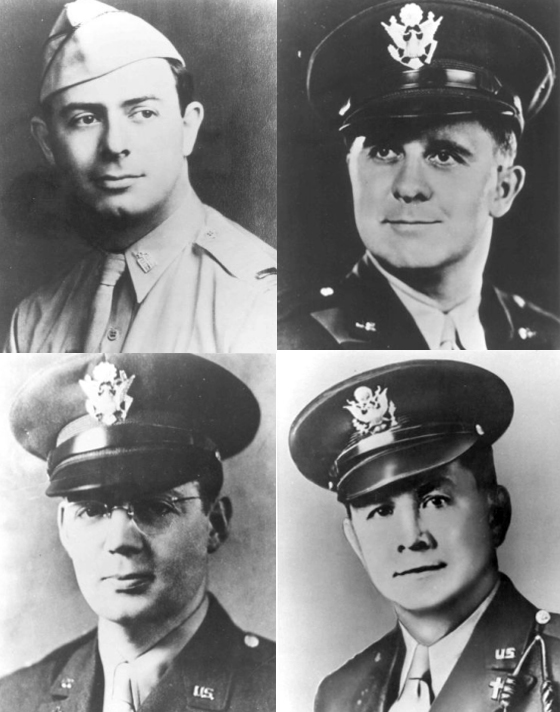
In a former life that seems light years away, I served as an Army Chaplain at Fort 4 chapsJackson, South Carolina. My duties included weekly preaching to recruits in a World War Two chapel that housed the beginnings of the U.S. Army Chaplain Corps Museum.

That’s where I first heard of George Fox, Alexander Goode, John Washington, and Clark Poling. Theirs are not household names, but on this Memorial Day 2018, let’s recall them with gratitude.

Even if you know the story, it’s worth remembering.

On the evening of February 2, 1943, the U.S.A.T Dorchester—a cruise liner converted to an Army transport ship—was carrying 902 service men, merchant seamen, and civilian workers across icy waters from Newfoundland to a base in Greenland. Shortly after midnight, the German submarine U-223 spotted the Dorchester through its periscope and fired three torpedoes. One strike was deadly: mid-ship, starboard side, far below the water line. The Dorchester’s fate was sealed.

Scores of men died instantly or were seriously wounded. For those that remained, chaos reigned. As they staggered to the deck, bracing themselves in an arctic wind, many panicked, throwing themselves into the frigid water rather than lifeboats.

That’s when four chaplains began ministering in the midst of tragedy: George Fox (Methodist), Alexander Goode (Jewish), John Washington (Roman Catholic), and Clark Poling (Dutch Reformed). They calmed the frightened, tended to the wounded, and guided the disoriented to safety. As they distributed life jackets from a locker on deck, the supply ran out. Calmly, each of them took off their own preservers and gave them to others.

Survivors recalled their last image of the four men. They were standing at the railing on the slanting deck, arms locked together, still offering prayers and words of courage as the ship sank to an icy grave.

One survivor, John Ladd, said, “It was the finest thing I have seen or hope to see this side of heaven.”

Ultimately, the deaths of these chaplains are no more meaningful than the legions of unknown soldiers who lost their lives in conflict. Their heroism, remembered in chilling detail, has no more eternal value than anonymous acts of bravery lost in the sweep of death, never to be told.

Still, there is so much here that brings hope to our souls: love, self-sacrifice, and a vision of humanity than transcends divisions of religion, class, or race.

Memorial Day should never be a glorying in the death of our troops. It is meant as a deep and sober reminder of the higher values for which they died. It calls us to embody in our own lives these words from Abraham Lincoln in his second inaugural address: “With malice toward none; with charity for all; with firmness in the right, as God gives us to see the right, let us strive…to achieve and cherish a just, and a lasting peace, among ourselves, and with all nations.”

The sinking of the Dorchester cost the lives of 672 men. On January 18, 1961, President Eisenhower awarded the posthumous Special Medal for Heroism to each of the chaplains. Stringent guidelines for the Medal of Honor, requiring “heroism under fire,” prohibited that award, but the medals these families received were meant to have the same weight.

Today, as we remember men and women who died in the tragedy of human warfare, let us include George Fox, Alexander Goode, John Washington, and Clark Poling.

Semper fidelis


A Rose for Baby Haab

Call me morbid, but I find it enlivening to stroll through graveyards. I remember a day when my wife and I drove down a remote road in Hardin County, Texas, to the Holland Cemetery, a lovingly preserved sanctuary. Surrounded by lush grass and a canopy of live oaks—cardinals singing in their branches—I came upon a rain-stained headstone.

But first…

I know I’m not the only one afflicted by a certain dis-ease. I have been blessed with abundance on so many levels: a loving family; more than adequate food and shelter; decent health; creative outlets that engage my mind, heart, and soul. 

Yet I still find myself ungrateful at times, restless in spirit. Succumbing to a culture where enough is never enough, I allow myself to become a spiritual casualty.

The simplest life-changing truths will lie inert in our lives unless we live into their power. I fully know that ingratitude—like fear, worry, and resentment—is a slayer of inner peace, a murderer of time. From a Buddhist perspective, these states of mind are the epitome of suffering, and they are self-induced. We can immaturely point to external factors as the source of our complaints, but we are the ones who choose our responses. There’s no passing the buck.

To rouse myself from this stupor, I have adopted a discipline that spans history. In medieval Christianity, it was called memento mori; in Buddhism, maranasati or lojong; in Islam, Tadhkirat al-Mawt. It is the core of every Dia de los Muertos celebration.

Remember death. Internalize life’s brevity and you can awaken to its present magnificence. Your hands, clenched so tightly around illusory problems, will begin to relax and let go.

A while back, I visited the San Antonio Art Museum to see an exhibit called San Antonio 1718, Art from Viceregal Mexico. It was a collection from that period of Spanish colonialism and included many oil paintings of idealized clergy and noble people. Clutched in many of their hands are memento moris, small replicas of skulls to remind them of death.

I have objects like these in my office, gathered during my service as a pastor, three decades when I was the one people turned to for comfort during times of loss.

  • There’s the box given to me by a heroin addict. She found it while dumpster diving and could not, in good conscience, throw it back into the refuse. Its label reads: Cremated remains of Baby Bridget Spell, age 0, Date of Death, 9-20-88.
  • There’s a rubber wristband that says, “Help me help the next Hugo Tale-Yax,” a tribute to a 31-year-old homeless Guatemalan immigrant, a Good Samaritan stabbed while helping a woman avoid a mugging. He bled out on a street in Queens, New York, while dozens of pedestrians passed by.
  • There’s the small picture of 13-year-old Tony Matrulo, who died in a freak go-cart accident just months after I baptized him.

Back to that day in the Holland Cemetery, which has given a new memento mori. It’s a photo of a headstone that says: Infant Child of Mr. & Mrs. A. G. Haab, Born and Died, January 2, 1920, Only sleeping…

Unnamed child of God, knitted together in your mother’s womb, you never knew the seasons of this life. You never loved, laughed or grieved. You never smelled a flower or lifted your face to the sunlight. You never wrestled with the questions of existence. Your epitaph cries out to each of us: Remember death, and through its portal savor each moment!

I laid a rose at the headstone of baby Haab, then walked from the Holland Cemetery.

A cloud raced across the sun…

The Gunshots that Changed a Church (and Its Pastor!)

September, 2017. A typically busy morning on the campus of Divine Redeemer

Una Mesa Para La Gente, a mural of inclusive community partially painted by youth from Divine Redeemer

Presbyterian Church, San Antonio (DR), a congregation that has ministered to one of the poorest neighborhoods of its city for 100 years.

Pastor Rob Mueller and a church elder were clearing a stump to make way for a donated trailer. On the sidewalk, scores of people stood in line to receive a weekly donation of food.

Suddenly, kitty corner to all of them, shots rang out in the front yard of a home notorious for drug dealing. A gang leader from a nearby housing project fell dead with 15 bullet wounds. His assailant fled. All of it in broad daylight at 11 a.m.

“I had listened to neighbors’ descriptions of other shooting incidents,” says Mueller. “I had talked with youth about the pressure to join gangs. But when I became a witness to murder, something flipped in me.  I could no longer stay on the sidelines.  I had to figure out how to stop this.”

Mueller began to converse more intentionally with the church’s neighbors about drug trafficking in their midst. These residents knew the players—what they sold, when they sold it, and who was buying. But they hadn’t spoken up for fear of reprisal.

Experience is the greatest teacher. As Mueller thought about the statement he had given the police, fearful questions crept into his own mind and heart. What if the gang members returned to ambush him late at night as he left the church? What if they targeted the congregation in a coordinated attack?

Listening to their community has been a mainstay of DR’s ministry, but this was a new and gut-wrenching level of awareness. “I empathized with the fear that my neighbors feel all the time!” says Mueller.And yet we knew we had to find a solution together.”

The church and its neighbors agreed on a goal of shutting down a handful of known drug-dealing homes nearby. They began a process of engagement with local authorities. What they discovered was an array of resources they didn’t know existed. This was especially true with the city police department, which provided support through its San Antonio Fear Free Environment program, as well as two experts whose community organizing influence has helped other neighborhoods plagued by similar violence.

Together, DR and its neighbors have learned what it takes to build a case for change, not only marshaling available resources, but truly coming together as a community of witness. They are now in the process of vigilance, watching and cataloging the evidence they need to move forward. Their strategy is to collect information via neighbors, channel it through the church to protect them, and then slowly and deliberately, one by one, remove drug dealers from their area.

As for the murder? The victim, a young African-American man, becomes a grim statistic. According to detectives, the perpetrator fled to Mexico and may never be apprehended.

Yet the legacy of their violent altercation will live on in a positive, unexpected way. A sense of hope is rising in the neighborhood around DR. They are feeling their united strength, dreaming of a future when community children will not have to resist appeals to buy or sell drugs. A future when they will be free from bullying.

“We have finally begun to feel the power we actually have to transform what we previously considered an impenetrable force of evil,” says Mueller. “We now believe that together we can turn the tide from death to life.”

Slaying the Two Goliaths

Did he write the words himself? Or did he borrow them from another source?

Some are still concerned with these questions, but this much is true. In 1943, during some of the darkest days of WWII, Reinhold Niebuhr – pastor, theologian, seminary professor – concluded his sermon at a church in Heath, Massachusetts with these words. “God give us grace to accept with serenity the things that cannot be changed, courage to change the things that should be changed, and the wisdom to distinguish the one from the other.”

Slightly altered…forever immortalized…this became The Serenity Prayer, one of the most recognized petitions on our planet. Some have called it the perfect prayer. 

Learning to live by the truths of Niebuhr’s prayer requires daily mindfulness. We especially need courage to change our thinking about the two greatest killers of our serenity: fear and resentment.

Meet the two Goliaths that threaten to undo us.

FEAR. Call it by any name – including worry or anxiety – it is still a form of insanity so many of us indulge. It can be anxieties about our health, families, finances, or any other phantom from the future. These fears range from irritants nibbling at the fringe of our consciousness to full-blown obsessions. If we are the ones who shoulder responsibility in any arena – family, home, work – we often justify our stress with the adage that “it’s a dirty job, but somebody has to do it!”

“Worry” comes from the Old English wyrgan, meaning “to strangle.” Could it be any clearer? The abundant flow of life, fully streaming in this moment, choked and syphoned to a miserable dribble.

There’s a simple but eternal sentence spoken by Jesus in what we call his Sermon on the Mount. “Which one of you by worrying can add a single hour to your life?” The genius is in that word “hour.” Not years, months, even days. Our futile anxiety cannot add a single hour! As Jesus said, “Let those who have ears really hear!”

RESENTMENT. Call it by any name – anger or unforgiveness – it infuses our world with poison. “Resentment” comes from the Latin sentire, meaning “to feel.” So, at its root, resentment means to re-feel or re-experience negative emotions from a prior wound. That injury may have come from a very real transgression against us. It may simply be self-scarring from our prideful egos. It may be self-incrimination for chances we have missed and mistakes we have made. Whatever the content of our re-feeling, the result is cancerous.

HERE’S THE REASON FOR THIS POST. We must find ways to slay these two Goliaths on a daily basis. If you think of life (I hope you do!) as learning to treasure every day, our fullness of existence depends on this.

The recovery community that meets around our globe has some pithy words for all of us as we seek to free ourselves. One phrase from AA is particularly powerful. “What we have is a daily reprieve based on the maintenance of our spiritual condition.” How do we claim this liberty? DISCIPLINE! Mental, physical, and spiritual practices that help us banish fear and resentment. There are so many! Find one that works for you, like:

  • Meditation that allows this blessed moment to cleanse us.
  • Daily gratitude, both for past evidence of our Creator’s faithfulness, as well as for the abundance of good things this new day has to offer.
  • A crisp walk surrounded by the beauty of nature, glimpsing eternity and our humble place within it.
  • An act of love that transforms our self-indulgence into a blessing for others.
  • Forgiving and asking for forgiveness.

Do you have a discipline? If not, please find one. I am a man who squandered far too many years on fear and resentment. Let’s whisper this prayer together on our daily journeys…

“God grant me the serenity to accept the things I cannot change, the courage to change the things I can, and the wisdom to know the difference.”

Super Bowl Ad a Warning?

That damn Ram ad! Using some of MLK, Jr.’s most inspiring words about selflessness—borrowedRAM, MLK from Jesus—for promoting trucks “built to serve.”

I was immediately offended. And I wasn’t the only one. Angry tweets circled the globe.

“Black people can’t kneel and play football but MLK should be used to sell trucks during the Super Bowl? Unbelievable.” –  writer and comedian Akilah Hughes.

“MLK who died striking with workers decrying militarism & imperial war makers – used to sell shiny trucks with marching soldiers – corporate America NBC NFL should be ashamed.” -actor John Cusack

There were other shameless examples during the Super Bowl.

  • Toyota vaunting interfaith understanding by piling Christian, Buddhist, Jewish and Muslim clerics into one of their cars.
  • Monster headphones like a “Savior” that will turn your world from B&W to Technicolor.
  • Budweiser truly caring about clean water supplies in developing nations.
  • Hyundai so deeply concerned about victims of cancer.

Folks, this is nothing new.

27 years ago, in his book Wake Up, America, Tony Campolo warned of this trend—the selling of goods that supposedly satisfy our deepest needs. He mentioned ads that promised spiritual fulfillment, like one shot from an aerial view, panning across a throng of people gathered on a hill. They represent all races and colors of the world, joining hands and singing in a unity this planet has never seen. Was it a symbol of the Kingdom of God? Was it a call for racial reconciliation? No, it was a commercial for the Pepsi Generation. Similar soda ads ran during Super Bowl LII.

Corporate encroachment like this is so insidious. Campolo put it this way. “In our TV ads, it is as though the ecstasy of spirit experienced by a Saint Theresa or a St. Francis can be reduced to the gratification coming from a particular car, and the kind of love that Christ compared to His love for His church can be expressed by buying the right kind of wristwatch ‘for that special person in your life.’ In all this media hype, things are sold to us on the basis that our deepest emotional and psychological needs will be met by having the right consumer goods.”

The ultimate result of these ads is the tragic reverse of their promises. Materialism causes a decay of spiritual contentment. It increases our alienation from God and each other. Jesus knew this. It is why he said, “Do not store up for yourselves treasures on earth, where moth and rust consume and where thieves break in and steal; but store up for yourselves treasures in heaven, where neither moth nor rust consumes and where thieves do not break in and steal. For where your treasure is, there your heart will be also.” – Matthew 6:19-21

Maybe we really are living in that “inverted totalitarianism” that Chris Hedges, Pulitzer Prize winning journalist and Presbyterian minister has pointed to for years. In his book, Days of Destruction, Days of Revolt, written with Joe Sacco, he defines the term as “a system where corporations have corrupted and subverted democracy, and where economics trumps politics. Every natural resource and living being is commodified and exploited to the point of collapse, as the citizenry is lulled and manipulated into surrendering their liberties and their participation in government through excess consumerism and sensationalism.”

Wake up, America!

My Faith Boiled down to One Word

Excuse my simplicity, but this is what I believe.

After all the clashing of religious truths, after the endless verbiage of theologians, and at the end of every spiritual quest, there are three immortal words spoken by the Apostle John: “God is love.”

26993637_1752941528069796_2062889683675727005_n

Could it really be this simple? Yes! Love. But what kind of love? We see romantic love,  love of Self, love of money, love of power, love of our own family, tribe, or political party at the exclusion of others. In February, a month equated with love, it behooves us to recall some words from the New Testament, that collection of writings that rise like a hymn of God’s love sung to all of us.

The first were spoken by Jesus, part of the accumulated sayings we call The Sermon on the Mount. I have chosen Eugene Peterson’s The Message version because of its bold freshness.

       You’re familiar with the old written law, “Love your friend,” and its unwritten companion, “Hate your enemy.” I’m challenging that. I’m telling you to love your enemies. Let them bring out the best in you, not the worst. When someone gives you a hard time, respond with the energies of prayer, for then you are working out of your true selves, your God-created selves. This is what God does. He gives his best—the sun to warm and the rain to nourish—to everyone, regardless: the good and bad, the nice and nasty. If all you do is love the lovable, do you expect a bonus? Anybody can do that. If you simply say hello to those who greet you, do you expect a medal? Any run-of-the-mill sinner does that.
           In a word, what I’m saying is, Grow up. You’re kingdom subjects. Now live like it. Live out your God-created identity. Live generously and graciously toward others, the way God lives toward you.” – Matthew 5:43-48

The second selection is from the Apostle Paul, a man who “breathed hatred” towards Jesus’ followers, then had a conversion so dramatic that he climbed what I call the Everest of Love. From that lofty vantage point, he wrote the timeless words of I Corinthians 13, a Himalayan peak of world literature. Here are a few of its verses, again from The Messageso applicable to our lives today!

     If I speak with human eloquence and angelic ecstasy but don’t love, I’m nothing but the creaking of a rusty gate.  If I speak God’s Word with power, revealing all his mysteries and making everything plain as day, and if I have faith that says to a mountain, “Jump,” and it jumps, but I don’t love, I’m nothing. If I give everything I own to the poor and even go to the stake to be burned as a martyr, but I don’t love, I’ve gotten nowhere. So, no matter what I say, what I believe, and what I do, I’m bankrupt without love.
      Love never gives up. Love cares more for others than for self. Love doesn’t want what it doesn’t have. Love doesn’t strut, doesn’t have a swelled head, doesn’t force itself on others, isn’t always “Me first,” doesn’t fly off the handle, doesn’t keep score of the sins of others, doesn’t revel when others grovel. Love takes pleasure in the flowering of truth, puts up with anything, trusts God always, always looks for the best. Love never looks back, but keeps going to the end.

I pray that the depth and quality of our love for all people will grow, not only this month of February 2018, but throughout our allotted days. God is love and love is our highest calling.

Danger or Opportunity? You Decide…

A jailhouse tattoo on the forearm of a San Quentin inmate: that’s when I first saw theChineseSymbol word. We were in a visiting room, seated under harsh fluorescent light as I interviewed him for an article.

“What does that mean?” I asked.

“It’s the Chinese character for crisis,” he said, “but it’s made up of two symbols, one meaning danger, the other opportunity.”

“Why did you put it there?” I asked.

His smile said, I was hoping you’d ask.

“Because the events that led to my incarceration, along with the danger in a place like this, actually gave me the opportunity to turn my life around.”

Since then I’ve learned that this translation of  危机, wēijī, is incorrect. But the cultural trope remains, especially in America, popularized in speeches by John F. Kennedy, Condoleeza Rice, Al Gore, and scores of motivational speakers.

On New Year’s Eve, 2017, I thought of wēijī as a loved one said to me, “Krin, I want to talk with you about my crisis of faith.”

Nothing stirs me more than discussing spiritual matters. These are messages from the deepest fronts of our Selves, struggles that reflect the essence of why we are created. I was all ears.

She told me that she is increasingly skeptical of her traditional Christianity. It began with simple questions about other religions. How could she claim that hers was the only valid path, especially when she saw that happenstance of birth and culture clearly mold our beliefs?

Her thinking crystallized after she saw The Book of Mormon. She considered the fantasies of that faith: a soothsayer translating golden plates, Jesus appearing to Mesoamericans after his resurrection, a lost tribe of Israel that flourished in North America but left no shred of archaeological evidence.

“How can people believe such bizarre events?” she said with a laugh. “Then I thought about my own tradition with Jesus: a virgin birth, miracles like walking on water, the supposed need for blood shedding, resurrection from the dead.”

When I asked why she used the word crisis, she talked about the shifting ground beneath her feet, the potential judgement of others, her anxiety about the future. Would faith remain in any form at all?

When she was finished, I recalled some words from the late James Fowler: “When we are grasped by the vision of a center of value and power more luminous, more inclusive and truer than that to which we are devoted, we initially experience the new as the enemy or the slayer—that which destroys our ‘god.’”

Then I shared my journey, one human being to another. I talked about my grasp of Fowler’s Stages of Faith, especially the movement from 3 to 4. It’s a time to emerge from the spoon-fed acculturation of family and nation. A time to step outside our boxes and see the beauty of other beliefs. A time of both/and, not either/or. A time of release from the creeds and doctrines that too often calcify our brains and spiritual development. A time to join the pilgrimage of all people in our common humanity. This is the ancient way mentioned in Psalm 139:24 of the Hebrews.

“I deeply admire your courage,” I told her. “And I believe that what you label a crisis is actually a beautiful opportunity. It’s a calling to experience the universal love that lights the path of all our journeys. Let’s keep talking. I, and countless others, are with you!”

On the cusp of a new year, what a joy to be part of this birthing!


Blowin’ in the Christmas Wind

Keith blew in with a cold front three days before Christmas, already seated on the front1297630843288_ORIGINAL steps of our church as I got to work. His clothes were filthy and threadbare, and the face that peered out from beneath a hooded sweatshirt was reddened by more than wind. Body odor and booze fumes tore at my nostrils.

“Can I help you?” I asked.

“I was wondering if you could spare a few dollars,” he said.

“I don’t give out cash,” I answered. “I’m not judging you, but people drink up the money as soon as I give it to them.”

“Yeah, I do drink some beer,” he said with a smile.

I smiled back.

“How about I take you to get something to eat?”

“No thanks. I already had one of those breakfast burritos at McDonald’s.”

“How long have you been homeless?”

“Many, many years.”

“If you want, “I said, “I can get you a room at the Rescue Mission. They’re a great outfit, and I know the people in charge. They’ll help you get settled, find work, make a new start.”

“No thanks. I prefer to be on the road.”

“OK. Is there anything else I can do to help you?”

“Actually, I could use some new shoes and a coat.”

What an understatement! His black tennis shoes were soleless and his flimsy sweatshirt was no buffer to the cold.

“Tell you what,” I said, “Let me take you to the Trash and Treasure Resale store and we’ll see what we can do.”

Friends, never underestimate how the simplest of gifts can make a difference in someone else’s life! Truly one person’s trash can be another person’s treasure. I took Keith to the store, an ecumenical ministry in our town, praying silently they would have what he needed. My prayers were answered. On the shoe shelf was a sturdy set of leather Skechers, his size, barely used. And there on the rack hung a beautiful wool coat with quilted lining and an over-sized hood.

I held out the coat with a flourish, mimicking a sales clerk at Men’s Wearhouse.

“Here you go, sir,” I said. “This looks like just your style.”

He laughed and slipped into it, playing his part. Perfect fit.

“I really appreciate your help,” he said.

“No problem,” I replied. “Are you sure you don’t want me to get you a room at the Mission? They’ll help you in ways that I’m not able to.”

“I’m sure. I think I’ll just head down to Kingsville. I once spent a Christmas there. Can’t even remember what year.”

“You’re determined to do the Forest Gump thing, eh? Just keep walking and walking?”

“Guess so.”

We exited to the back alley. You could feel the coming front in the cold, sharp wind. I shivered, imagining how Keith would fare during the night. He thanked me again as we shook hands. Then he strolled off down the alley, resplendent in his new shoes and coat.

Just before he rounded the corner, he stopped, lifted his arms and shouted “Merry Christmas, everyone!”

You’re Thankful for THAT?

Everyone agrees that thankfulness is a banner of victorious living. We elevate gratitude into-the-light21to a cardinal virtue, especially at this time of year, our voices rising in song: “Give thanks with a grateful heart!” and “Come, ye thankful people come!”

If we count our blessings instead of sheep (kudos, Irving Berlin), most of us begin with obvious gifts: food, shelter, loved ones. It’s like stepping up Maslow’s ladder of need, relishing the view from each rung. We may even do so with a prayerful awareness that these basic needs are lacking in the lives of others. A colleague of mine, Rev. Traci Smith, calls this Gratitude 101.

I, too, am thankful for this surface abundance in my life. Yet, on this Thanksgiving 2017, I am grateful for treasures born of deeper struggles.

I love this quote from Anthon St. Maarten (an unlikely reference). “If we never experience the chill of a dark winter, it is very unlikely that we will ever cherish the warmth of a bright summer’s day. Nothing stimulates our appetite for the simple joys of life more than the starvation caused by sadness or desperation. In order to complete our amazing life journey successfully, it is vital that we turn each and every dark tear into a pearl of wisdom, and find the blessing in every curse.”

Today, I hold two of these pearls—these blessings—in my hands. Jesus would call them pearls of great price.

One represents my recovery from alcoholism. Early on, as I attended meetings and absorbed the wisdom of others, I heard a phrase that startled me: “My name is ________, and I’m a grateful alcoholic.” What?! You’re grateful for a disease that causes blackouts, ravaged relationships, poisoned bodies, the suffering of incarceration and rehab? How could those two words—grateful and alcoholic—be spoken in the same breath? Now I know. The Twelve Steps brought me to my knees, offered rebirth through surrender, and today I am eternally grateful for a path that leads to serenity.

The other symbolizes my journey in parenting a special needs son. It requires herculean doses of patience, a quality that was never my forte. But today I am abundantly grateful, not only for this daily character shaping, but for the privilege to see life through Kristoffer’s eyes, to affirm forever the dignity and worth of every human being in the Kingdom of God.

Last month, I shared a classic of Christian literature at a men’s breakfast: Corrie Ten Boom’s story of the fleas in Barracks 8 at Ravensbruck, a Nazi concentration camp for women. Corrie and her sister, Betsy, were imprisoned for harboring Jews. Betsy taught her sister to be thankful even for the fleas that infested their cramped and filthy quarters. Why? You can read the story and its stinger ending here.

What I didn’t share with those men, but do so now, are some of Betsy’s final words before she died in that squalid prison. They shout to me across the decades.

“We must tell people what we have learned here. We must tell them that there is no pit so deep that God is not deeper still. They will listen to us, Corrie, because we have been here.”

I ask you a question, my friends. When you count your blessings, are there some that would cause people to say “You’re thankful for THAT?”

I hope so.