I paused at a stop sign near Sweetwater, Texas. To my left was a ramshackle mobile home, its porch sagging. Standing in the weedy front yard was a young girl dressed in faded jeans and a T-shirt. She looked at me, I looked at her, and I saw it.
While visiting the National Civil Rights Museum in Memphis, I peered into a display featuring the 1968 sanitation workers strike. A protester holding his “I Am a Man” sign stared at me from a photo across the years, and I saw it.
I was sitting in The Sphere of Las Vegas, surrounded by the stunning visuals of its film A Postcard from Earth. At one point, the screen filled with faces from a mind-boggling array of tribes across our planet. As their eyes gazed down at us from the dome, I saw it.
What is “it?” I think you know. Conscious or not, you see it every day. It’s that life force within each of us that gleams through our eyes. It’s that insistent power that grows our hair and nails even as we sleep, fueling our autonomic systems while we dream. It’s the stuff of stars and galaxies, the warp and weave of every ecosystem, the energy that ties us together. If we allow ourselves to experience it more fully in the eyes of another, it can be transcendent.
It is surely sacred, captured in the Sanskrit greeting namaste, meaning “I bow to the divine in you.” Western theologies call it the imago Dei, the stamp of God’s presence in each of us. But you don’t have to ascribe to a religion or belief system to marvel at this mystery in which we live and breathe and have our being. You can simply experience its revelation!
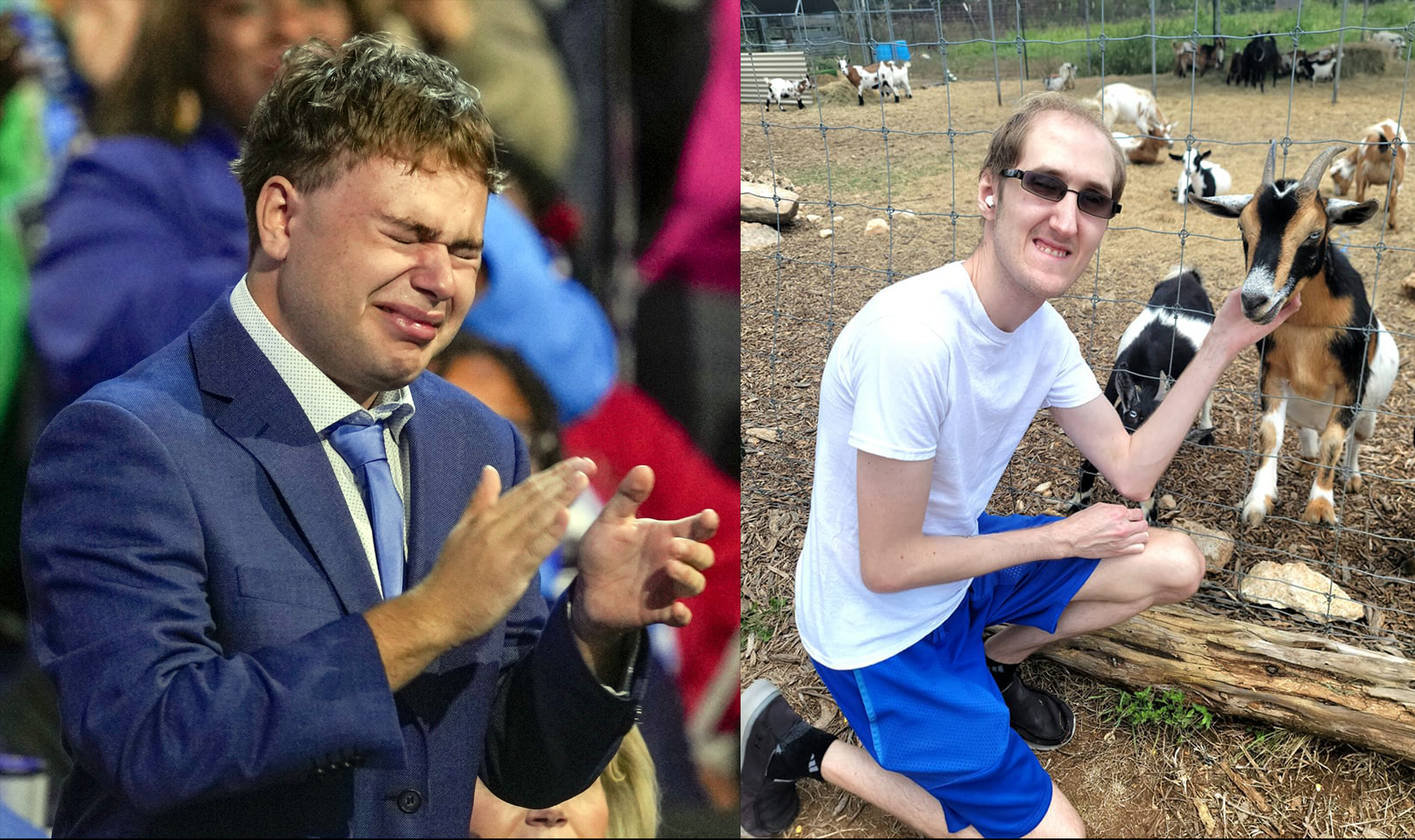
Which brings me to Gus Walz. When he cried at the Democratic National Convention, exclaiming “that’s my father!” with overflowing pride, I felt it. Later, when he smiled at the camera with the rest of his family, I saw it, as did millions of other people. We celebrated his humanity, our humanity, embracing him exactly as he is with his neurodivergent reality.
But in America, bullying has become an art form. Egged on by the former Bully-in-Chief, some of the cruelest practitioners are right-wing media darlings, and their reactions to Gus were lamentable. Here are some of the first comments posted through social media by these mean-spirited influencers.
- Conservative columnist and right-wing provocateur Ann Coulter scorned Gus’s tears. “Talk about weird,” she wrote on X.
- Mike Crispi, a Trump supporter and podcaster from New Jersey, mocked Walz’s “stupid crying son” on X and added, “You raised your kid to be a puffy beta male. Congrats.”
- Alec Lace, a Trump fan who hosts a podcast about fatherhood, said, “Get that kid a tampon already,” an apparent reference to a Minnesota state law that Walz signed as governor that requires schools to provide free menstrual supplies to students.
- The Milwaukee Journal Sentinel reported that Jay Weber, a conservative Milwaukee radio host, said, “If the Walzs (sic) represent today’s American man, this country is screwed: ‘Meet my son, Gus. He’s a blubbering baby boy. His mother and I are very proud’.”
Which brings me to my son, Kristoffer, now 27, an intellectually disabled young man whom I dearly love. Our journey in raising him has profoundly humanized my wife and me over the years. I wrote about this process in a feature article called A Medal for Two.
If you look into Kristoffer’s eyes, you will certainly notice his disability. But if you look with the heart and soul of a compassionate human being, you will also see the imago Dei.
During the furor about Gus Walz, there was a flurry of social media memes that divided our country into two camps—those who responded to this young man with love, and those who derided both him and his family.
Between these fractious poles, I believe there’s a more nuanced continuum of understanding. I see it in the reactions to Kristoffer when we’re out in public. Some are quizzical, his condition challenging their notions of normal. Some look with pity. Some react with what I call unctuous grace, a condescending smile and words for this “lesser creature.” (You know that reaction: “Let’s be nice to the poor, unfortunate young man.”)
But I’m pleased to say that there are many others who don’t flinch, who show no discomfort, who simply look steadily into Kristoffer’s eyes, encountering his life force with their own, a clear give and take of love, what Martin Buber called an I-Thou response. Bless them all!
I want to close with a troubling question. Can the imago Dei become so obscured in another person that we don’t recognize it in their eyes? Instead, do we see inwardly focused narcissism, smoldering contempt, even evil impulses that speak of a different reality?
You can wrestle with that question on your own, but my personal answer is two-fold. First, I believe that our eyes are indeed the windows to our soul, and that some souls become warped by the choices they make. Second, I will never stop trying to find some vestige of goodness beyond all that mutation.
Meanwhile, back to the overriding reason I am sharing these words. Let’s go full circle to the sanitation workers strike in Memphis, 1968. Martin Luther King, Jr. went to the city to join the protest, giving his famous I’ve Been to the Mountaintop speech a day before his assassination. That remarkable human being who called us to live in Beloved Community, once said, “Every human life is a reflection of divinity, and… every act of injustice mars and defaces the image of God in man.”
So, I say namaste to Gus Walz and my son, Kristoffer Van Tatenhove!
 Krin Van Tatenhove - Words & Images
Amen