The Necessity of Wildness

(Click here to download my expanded compilation of text and photos called The Necessity of Wildness. Best viewed as a two-page spread in Adobe Acrobat)

John Muir once said that “wildness is a necessity.” I agree, and it’s a truth that stands as an indictment of our current society. We live in a culture that multiplies distractions. We confuse convenience with meaning. We mistake consumer goods for necessities. Against the backdrop of this noise, wild places call to us—not as optional luxuries, but as lifelines to our truest selves. This call has echoed through my life since childhood, sometimes quietly, sometimes like an alarm.

I grew up in the Los Angeles Basin, a hazy expanse of freeways, stucco homes, and constant motion. In those early years, before the Clean Air Act of 1970 curbed the worst pollution, Smog Alerts were frequent. Our teachers sometimes kept us indoors for recess, because the outside air literally burned our lungs.

My childhood could easily have been devoid of natural beauty. But my father, at the considerable sacrifice of commuting long hours, insisted on something different. He moved us to an area of the Los Angeles Basin that still held remnants of old Southern California: chapparal covered hills, orange and avocado orchards, creeks running through ravines.

My brothers and I roamed those hills as if they were our personal kingdom. We named special places, caught lizards and toads, and wandered stream beds that smelled deeply of loam. I can close my eyes even now and see the silhouette of a great horned owl gliding over our house at twilight, taking its place in the eucalyptus trees that bordered our property. I remember falling over backwards, not to make a snow angel, but to carve an outline of my body in a field of tall wild mustard, gazing at the blue sky above, listening to the buzz of pollinating bees.

As I grew older, Boy Scouting deepened my relationship with wildness. Our troop hiked the John Muir Trail, rafted the Colorado River, and camped in the Mojave Desert surrounded by Joshua trees. I began to understand Muir’s belief that these places were “fountains of life.” I felt that fountain rising in me. Still, as adulthood encroached with work, ambition, and responsibilities, I sometimes forgot to return to the source.

Years later, emerging from one of the most difficult periods of my life, a spiritual guide got my attention. “As you piece together this new beginning,” he told me, “reserve time alone in nature. This isn’t just nostalgia about your childhood. It’s a portal to the serenity your soul is seeking.” That simple truth rang like a bell. I listened. Since then, immersing myself in nature is no longer a casual hobby; it is woven into my schedule as an essential practice. If I neglect it, I feel the restlessness immediately, a tug from the wild reminding me of what I’ve forgotten.

Once I’m there, these three necessities impress themselves on my soul.

The Necessity of Stillness

Stillness in nature is not the absence of sound. Anyone who has walked in a forest knows its constant music. Stillness is the presence of something deeper, a rootedness. Nature invites us into this realm, and if we let it work its magic, it loosens the grip that multitasking and digital overload exert on our spirits.

I once took a group of inner-city boys from Los Angeles on a backpacking trip into the San Gorgonio Wilderness. It required days of preparation just to get them ready. We had to borrow gear, teach some basic skills, and coax parental signatures from families who had rarely ventured beyond their barrios.

On the trail, the boys kept up a steady stream of macho joking until I stopped them with a challenge. “For the next half hour,” I said, “let’s walk like the Serrano People, the earliest inhabitants of this area. No talking. Just listen.”

They were skeptical, but they fell silent to indulge me. Almost immediately, the forest honored our reverence. Soft wind whispered through the Ponderosa pines. Scrub jays chattered nearby. We saw a family of mule deer browsing in the undergrowth.

Then, a rabbit emerged on the trail ahead. I held up my hand and we paused. Suddenly—almost mythic in its timing—a huge red-tailed hawk swooped down, seized the hare, and lifted it into the sky. We could hear the flapping of its strong wings.

The boys gasped. These hardened kids who had seen too much violence and too little beauty now stood in awe of something vast, powerful, and humbling. In their eyes I saw something I will never forget. Wonder. Pure, undiluted wonder.

The Necessity of Wonder

Wonder expands us. It loosens the grip of our egos, reminding us that we are a small but precious part of a vast, intricate universe. Though I’ve often shown the Hubble Telescope’s eXtreme Deep Field photo to illustrate this point, it’s far better to experience it firsthand. Find a dark sky preserve and lie on your back beneath the Milky Way. Let your eyes drift across the heavens, realizing that some of the “stars” above you are entire galaxies, each holding billions of suns.

So often, when our minds stretch, our spirits follow.

And wonder isn’t reserved for the cosmic. It pulses through ordinary experiences when we pay attention: the scent of creosote after desert rain, the echo of thunder over a plateau, the iridescent shimmer of a dragonfly’s wings. I once awoke in a bamboo hut on Maui to a series of booming sounds. Only later did I learn that it was humpback whales, joyfully slapping their tails in the dark waters of the bay. Wonder like that stays with you, a quiet ember you can relight repeatedly.

The Necessity of Gratitude

If we stay with it, wonder evolves naturally into gratitude, one of the most stabilizing forces in human life. Meister Eckhart once said, “If the only prayer you ever said was ‘thank you,’ that would suffice.”

Gratitude opens our eyes not only to the gifts we receive but to the responsibility these gifts confer upon us. When we understand that wildness is a necessity, we feel compelled to protect it, to become stewards of the land and advocates for species that cannot speak for themselves.

This can begin simply with recycling, conserving energy, or planting a pollinator garden. And for some of us, it goes much further. As a Texas Master Naturalist, I have seen ordinary people become extraordinary guardians of the earth. They clean the rivers, remove invasive plant species, and help restore native trees and prairies. They remind me of my own responsibility to help protect the fragile web of life.

Returning to the Wild

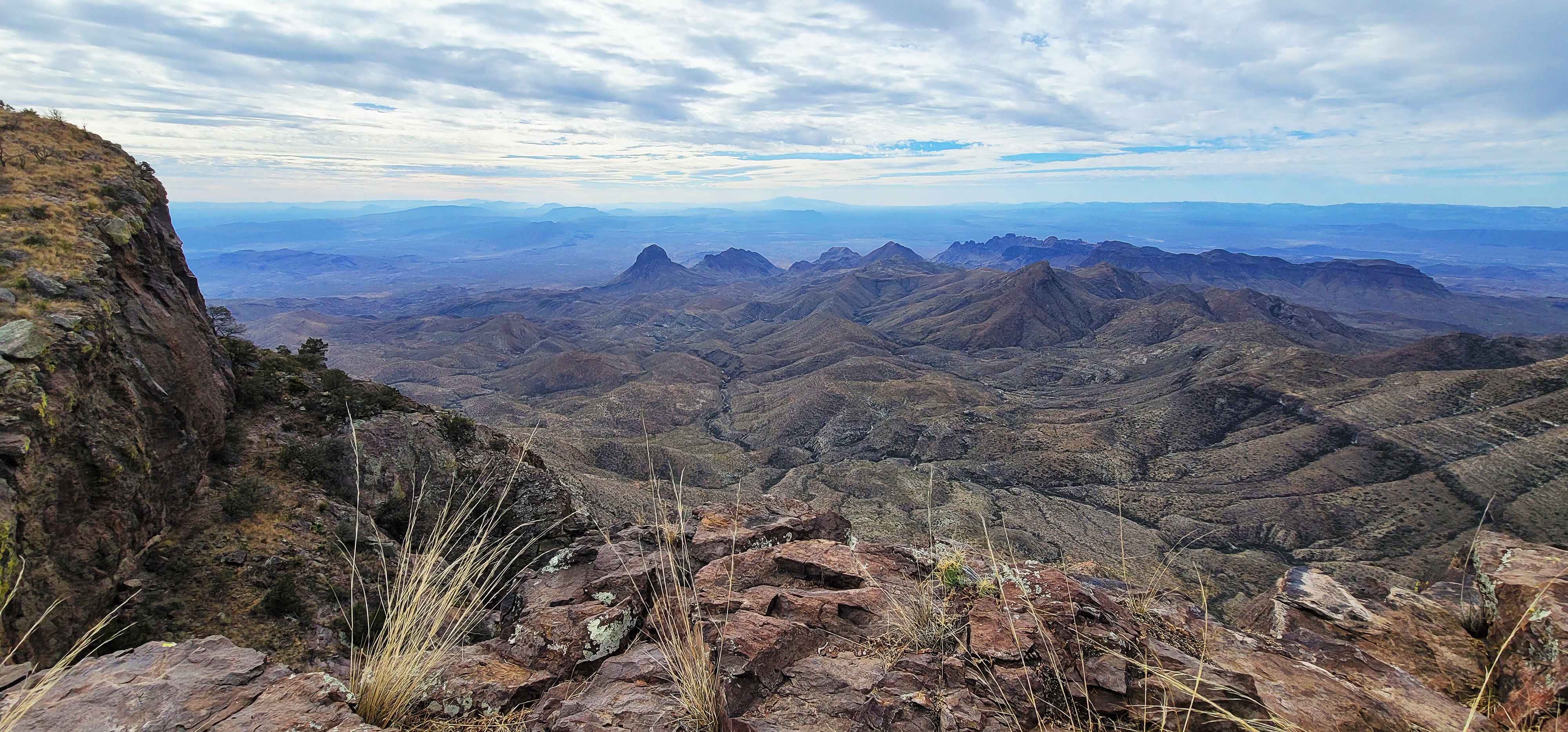
A few years ago, on the Pinnacles Trail in Big Bend National Park, I sat beside some ancient rock spires. The noise of modern life, engrained in my chattering thoughts, faded away. Technology, politics, identity, worry, all of it dissolved in the beauty of that place. What remained was a profound stillness. It was an epiphany, both humbling and energizing, connecting me not only with the earth, but with all human beings who have transcended their conditioning and embraced the natural world.

And so, I will always return to the trail, because Muir was right: wildness is not optional. It is a necessity for stillness, for wonder, for gratitude, and ultimately, for becoming whole.

Happy trails to all of you!

The More You Pause, the More You Will Progress

27 seconds. That’s how long the average person stands before a work of art in a museum. Similar to our addictive scrolling through social media, we hurriedly shift to the next image, the next sensation.

27 seconds to experience creations that artists crafted painstakingly with their hearts and souls.

Years ago, I trained to be an educational tour guide at the fabulous Getty Museum in Los Angeles. My personal mission was to slow people down and challenge them to immerse themselves more fully. I even developed a packet that focused on four paintings, asking questions that required thorough concentration and written responses. People told me later that those four images burned vividly in their memories. They carried them away in deeper vaults of consciousness.

The truest test of a teacher’s advice is how we model it in our own lives. I confess that over the years, especially in the busy itineraries of my travels, I too often let my attention skip like a rock rather than sink into the fathoms.

That’s why I sorely needed a placard I saw on a recent trip to Portugal. It hangs in the Capela dos Ossos (Chapel of Bones), Evora, Portugal, a building that stands as an overwhelming memento mori. Franciscan monks decorated it with skulls and other bones of 5,000 people exhumed from local cemeteries in the 1500s. Here are the words on that wall (exactly as printed), attributed to António da Ascenção, a local parish priest of the time.

Where are you going in such a hurry, traveller?
Stop…do not proceed any further.
You have no greater concern,
Then this one: that on which you focus your sight.

Recall how many have passed from this world,
Reflect on your similar end,
There is good reason to reflect
If only all did the same.

Ponder, you so influenced by fate,
Among the many concerns of the world,
So little do you reflect on death;

If by chance you glance at this place,
Stop … For the sake of your journey,
The more you pause, the more you will progress.

Perhaps these truths hit me harder because my firstborn son, Pieter, was recently diagnosed with Stage Four melanoma at age 41. Or perhaps it’s because of tending to my aged parents in their final days. Or maybe it’s simply my own advancing years. As poet Andrew Marvel famously said, but at my back I always hear/Time’s winged chariot hurrying near.

Whatever the antecedent, the admonition in Evora caused me to slow down and savor our moments in Portugal, a trip I shared with my precious wife, Donna. Experiences like these.

  • Standing on the cliffs of Cabo da Roca, the westernmost point of Europe. It was cloudy, a stiff wind in my face, the sea angry with whitecaps. I felt in my bones what courage it would have taken for a 15th century mariner to set sail into that vast unknown, what they called the Dark Ocean, most likely the end of the world. I looked down at the rocks below and a tinge of vertigo sparked up my spine.
  • Sitting in the Catedral of Evora as their mellifluous choir practiced, letting my eyes drift slowly over the splendor of the chancel, the altar, the stained-glass windows, and the vaulted ceiling with its elaborate paintings. It was ethereal.
  • Pausing in the park of the Palace de Pena in Sintra as an incoming storm violently swayed the tops of fifty-foot cypress trees. The rushing wind drew me upwards towards the clouds, and the trees seemed as sentient as Tolkien’s Ents.
  • Conversing with an Uber driver who grew up in the country near Serra da Estrela, the highest mountain range in Continental Portugal. His English was good, and he wanted to practice, so he told me about one of his favorite local recipes: stewed pork cheeks. He waxed eloquent about the texture of the meat, then said, “In fact, I bought some last night, and I can’t wait to cook them.” “So,” I replied, “it’s fresh in your mind and in your refrigerator.” His eyes met mine in the rear-view mirror and we both laughed from our bellies.
  • Listening to a tram conductor in Lisbon’s Alfama describe the operation of his vehicle. He showed us various brakes, the motor under the floorboard, and a container of sand used to sift onto the tracks for better traction. When he finished, I said, “Driving this trolley is an art!” He clearly appreciated my words, because he stood straighter, smiled broadly, and proudly said, “Yes, it truly is!”
  • Hanging out near dusk with hundreds of alfacinhas (residents of Lisbon) where the old stone ship ramp descends into the Tagus River along the Praca do Comercio, Lisbon’s great harbor-facing plaza. Children laughed. Lovers kissed. An old man drew on his cigarette as a young woman played her guitar, the lilting notes lifting into the sky where gulls wheeled in the twilight. A public place to enjoy not only your city, but the company of other human beings, a phenomenon too rare in the US.

More than 27 seconds. Much, much more. And a lesson that I hope will continue to live not only in my life, but also in yours. Let it guide you into the fullness of experiences surrounding you this very moment.

The more you pause, the more you will progress.

Sky Church

(Steve Nootenboom comes closest to a Renaissance person of anyone I know. He is a filmmaker, painter, master carpenter, sailor, rock climber, and hang glider. I first met him when he and his family visited a church I pastored in north Los Angeles County. We soon became lifelong friends. I have always admired his dedication to a simple, nomadic way of life. With very few possessions to tie them down, he and his wife travel in a bus whose interior Steve designed to be amazingly livable. Our conversations about art, creativity, and the spiritual life can last for hours. I asked him to share his amazing perspective on how hang gliding has become a spiritual discipline for him. This is one of the stories from my book The Smile on a Dog: Retrieving a Faith That Matters, remastered and downloadable for free at this link.)

In 1977, I had my first hang gliding flight. I will never forget the moment my feet left the ground and I felt completely free of the earth and its cares. I was hooked!

Every time I launch my glider, I get the same sensation as that first time I flew. I feel so connected to God when I am flying that I have nicknamed the sport “Sky Church.” I tell people that I have to fly up in the sky to find God.

Hang-gliding requires intense focus in the moment—shutting out cares, events, worries, and the 10,000 things mentioned in Taoism. When you are flying, you are looking for the invisible, such as hot air rising in “thermals.” Some of the indications of a thermal are the smell of sage brush rising in the desert air, or the smell of French fries when you’re over a city. When you get in a thermal, you circle around in that tube of ascending hot air and it can send you soaring at up to 5,000 feet per minute. You also keep your eyes on those local pilots, the birds. They know right where to go!

My glider is about 70 pounds, and I can easily carry it on my shoulders. My flights average about two and a half hours. Some have been at 18,000 feet with a small oxygen tank tied to my harness. I have soared for over six hours at a time, crossing more than 150 miles of bleak desert with no motor, simply searching for and trusting the lift of air currents.

The concentration required for these flights focuses and clears my mind. I can hear instructions from God about what to do in business or my marriage, and I get strong impressions of what the future holds outside my scope of knowledge.

Here is an example of Creation speaking to me during a flight.

I was traveling through Montana with my hang glider tied on my truck top. I found a high ridge facing the prevailing wind. I launched and soared for about two hours down the wooded backbone of this beautiful slope. I found myself getting very low and finally began to sink in a canyon with no way out. My first instinct was terror. Then something I believe to be God cut through my fearful thoughts and I felt hope and peace in spite of seeing myself crashing into giant pine trees. Just then, a red-tailed hawk came strafing under my wing and I knew I needed to follow him. I followed him into a deeper part of the canyon where all logic would say DON’T GO! At the end of that box canyon, the hawk started to circle, a clear indication of a thermal. He and I did a sky dance together, around and around, until I was 1,000 feet safely above the ridge again.

I continue to attend my “Sky Church,” sometimes as much as twice a week. After every flight, I feel rejuvenated with a clear perspective and a new direction. I have often said to non-pilots that a two-hour flight hanging in the Presence is equivalent to a two-week vacation. Although I find similar connections to God in prayer and meditation, there is still something special for me about soaring above my troubles below. It certainly takes faith in your glider, your abilities, and God to just run off a mountain with some Dacron and aluminum strapped to your back.

But I am a believer that faith honors God, and God always honors faith.