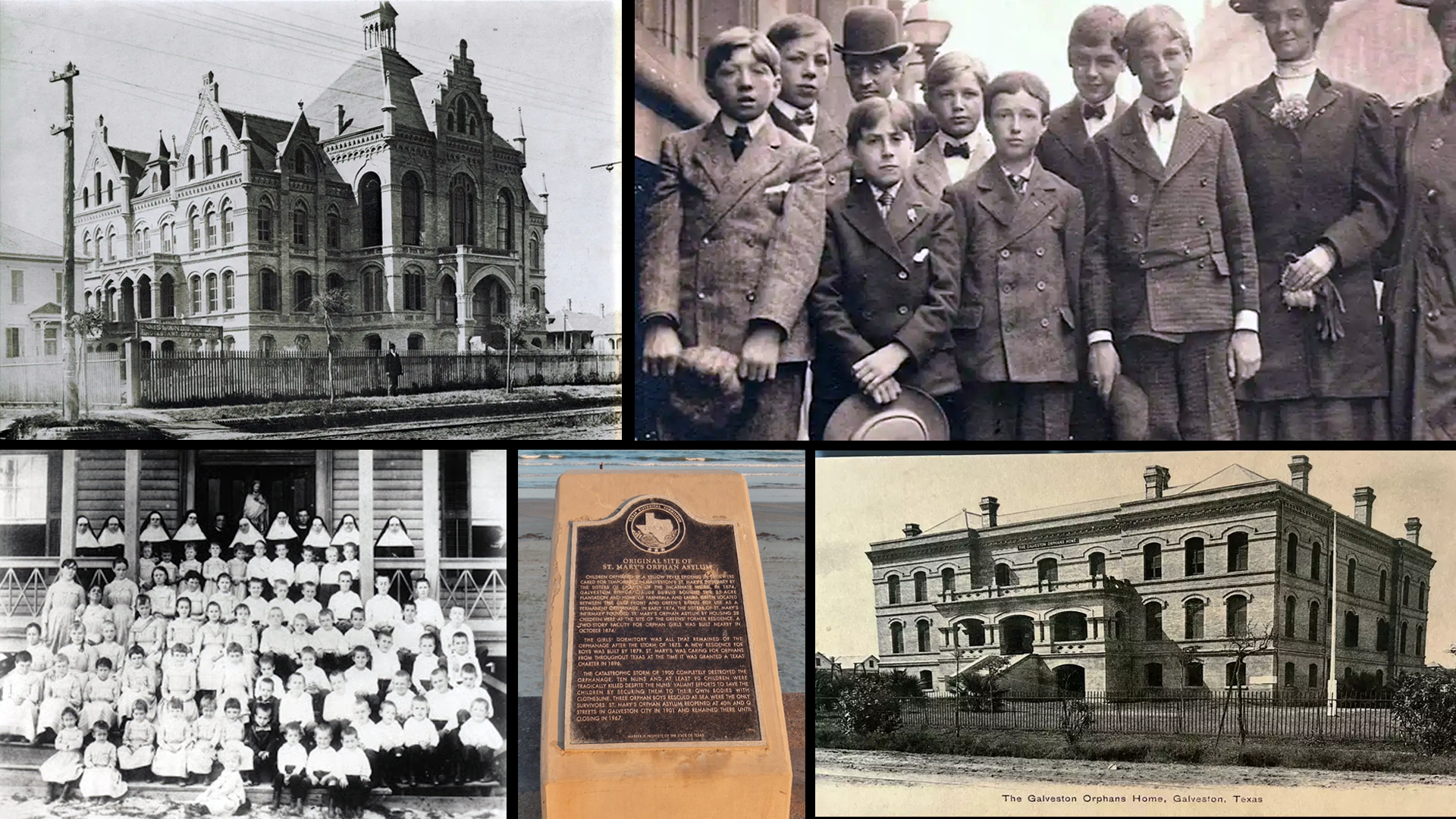
Between 1854 and 1929, “orphan trains” transported 200,000 children from crowded Eastern cities to foster homes in the rural Midwest that were short on farming labor.
The train pulled into Oakridge, Indiana, its whistle shrieking. Twelve-year-old Billy McCrae pressed his face to the soot-streaked window, wondering if this would be his final stop. He clutched his satchel containing the only things he had left from his life in New York: a frayed photograph of his mother and a tin whistle his father gave him before deserting him. That last abandonment had drained the spunk from Billy. It was why he hadn’t resisted the aid workers. Any future was better than what he had.
Now he was one of dozens of children packed into this orphan train. They came from tenement alleys and city gutters, plucked by well-meaning reformers and shipped west to find “good Christian homes.” The theory sounded noble, but Billy had heard a few stories of those adopted by folks who saw them as free labor, not family. He hoped he could avoid that fate.
The station was nothing more than a wooden platform next to a dirt road. Dust hung in the summer air. A couple dozen townspeople stood waiting, their faces carved by sun and hard labor. The representative from the Children’s Aid Society herded the children off the train and had them stand in line for inspection. Billy watched as a tall, scruffy man in overalls approached him. At his side was a woman in a high-necked dress who looked like she hadn’t smiled in twenty years. They introduced themselves as the Culvers.
“Strong arms on this one,” Mr. Culver said, gripping Billy’s shoulder like a butcher examining a side of beef. “He’ll do.”
Billy said nothing. He knew better.
___
The Culver farm was three miles outside town, a ramshackle house surrounded by fields and a red barn that listed slightly to one side. Billy was quickly assimilated. His chores began before dawn and ended after sunset. He fed pigs, mucked stalls, and hauled water. He weeded rows of corn and beans, scrubbed floors, and chopped wood until his hands blistered and bled.
“You work, you eat,” Mrs. Culver had said the first night, sliding a plate of dry cornbread and boiled beans across the table. “You complain, you don’t.”
There were no schoolbooks and no kind words. Only work and silence, broken by the occasional barked order or smack of a belt. Billy slept on an old mattress in the hayloft with a worn blanket and mice for company. He tried not to cry, but when he did, he muffled it with the crook of his elbow so no one could hear.
This was the outcome he had dreaded. Those awful stories he’d heard were now his reality, and soon he began to think about running away. But where would he go? He knew nothing about his part of the country, and the land stretched on forever.
On Sundays, the Culvers took him to church. His mother had taught him that Christianity was meant to instill charity. Not in the Culvers. Their attendance wasn’t out of faith but for the sake of their reputation. When it came to Billy, the townsfolk saw a quiet, well-behaved boy and nodded their approval. No one asked questions. No one noticed the bruises under his sleeves or the strap marks on his back. No one sensed the disdain he harbored towards the Culvers and their hypocrisy.
Billy tried to find scraps of comfort where he could. In the face of a neighboring girl who smiled at him during church. In the farm dog that nuzzled his hand. In the orange streaks of sunset behind the barn. In the brief moments of stillness before sleep.
___
Time passed. Seasons shifted. Billy grew taller and stronger, his hands calloused, his shoulders broadened. But inside, he still felt small and alone. The nights were the hardest. When the wind whistled through the slats of the barn, he would pull out the photograph of his mother, now creased and faded. He remembered her final days before she succumbed to yellow fever. His father, unwilling to cope, withdrew into alcohol, spending so much time away that Billy learned to fend for himself. Sometimes he took out the tin whistle, but he never dared to play it. Sound carried on the northern plains.
One night, a storm rolled across the fields, shaking the barn to its bones. Billy huddled in the hayloft, listening to the thunder and trying to remember what his mother’s voice sounded like. The next morning, after the rain cleared, he saw that one of the fences had fallen. Mr. Culver sent him out with nails, a hammer, and no breakfast.
While repairing the slats, Billy overheard Mr. Culver talking with a neighbor.
“That boy’s worth three hired hands,” the man said.
“And I ain’t paid him a dime,” Culver said with a laugh. “By all rights, he oughta be thanking me.”
That night, lying in the hay, Billy made his decision. He was done thanking people for his chains.
___
He waited a week, watching and listening. He learned when the Culvers slept and when the trains passed through Oakridge. He hid bread crusts and an old canteen. Then, on a humid August night under a half-moon, he crept from the barn like a shadow. He carried nothing but his satchel and a heart full of steely determination.
He moved through the cornfields, ears tuned to every cricket and rustle. Then he followed the dirt road into town, keeping to the tree line. When he got to the depot, it was silent, but soon a freight train approached, its cars rumbling.
He ran with all his strength, reaching the last car as it began to lurch forward. He jumped and caught the ladder, his feet dangling for a terrifying moment before he scrambled up and pulled himself inside.
He collapsed on the floor of the empty boxcar, chest heaving, eyes stinging from the wind and relief. He didn’t know where the train was going. He didn’t care. It wasn’t Oakridge. It wasn’t the Culvers.
It was away.
___
One train, then others. They carried Billy across wide rivers, dusty towns, and golden hills. He learned to hide when the crew came by, to forage from crates and beg at stops when he dared. He met other hobos—men with lined faces and stories in their eyes. Some offered him food. Others tried to take what little he had. He learned quickly to stay alert, to move on, to trust sparingly.
One day in Nebraska, he jumped off a train to avoid a railyard inspector and spent the night under a bridge. There, he met a boy about his age named Leo, also an orphan, who had run from a textile mill in St. Louis. He was thin with dark hair, his eyes filled with a weariness beyond his age. They shared stolen apples and tales of the road.
“You think it gets better?” Leo asked.
Billy shrugged. “It has to.”
“Well,” said Leo, “you have more hope than I do.”
They traveled together for a while, helping each other dodge authorities and sharing small victories—a warm meal here, a safe camp there. But one morning, in a chaotic jump onto a moving train, they were separated. Billy waited at the next town, but Leo never arrived. That was the last he saw of him.
In the railyards of Denver, Billy met an old man named Tom who shared a can of beans and a quiet fire.
“You runnin’ from somethin’ or to somethin’, boy?” Tom asked.
Billy looked into the flames, stung by the reality of his life. “Both, I guess.”
Tom nodded like he understood, then handed Billy a pocketknife with a smooth wooden handle. “You’ll need this more than I do.”
Billy carried it from then on. He continued to follow the tracks westward, toward the promise of ocean air. Toward California.
___
In the Sierra Nevada foothills, Billy found work with a crew clearing trees for the railroads. The foreman didn’t ask questions, just handed him an axe and pointed. The work was hard, but the pay was real. He stayed for months, saving every coin he could, eating like a wolf and sleeping under the stars.
He grew stronger, appearing much older than his age. He learned more about reading and writing from a retired teacher who wandered into camp and exchanged lessons for stories from the men. He claimed he was writing a book. Billy seized the opportunity, soaking up every word, every page.
One night by firelight, he wrote a simple letter to his mother, imagining that somehow she could read it. But he knew it was really for him; he just needed to say the words.
“Dear Mama, I’m okay. It’s been a long time and New York seems so far away. But I still have your picture and I remember your voice. I’ve changed a lot. I’ve seen so much of this country and I’m not afraid anymore. I hope I make you proud. Love, Billy.”
Eventually, he reached Los Angeles, then hitched rides north along the coast. The Pacific Ocean fascinated him, stretching out so wild and blue and endless. He stood on a cliff near Monterey, wind in his hair, and felt something shift inside him. Not peace, not yet. But something close.
He got a job unloading ships at the docks, then as a stable hand outside of Salinas. Determined not to be like the Culvers, he gave a part of his wages to a local church that assisted runaway children, hoping to offer other boys a fighting chance.
He still had the tin whistle. One foggy morning, standing on a beach near Salinas, he played it for the gulls and waves. No melody, just notes that were raw, imperfect, and free.
He was no longer a name on a train ledger. He was no longer the boy from Oakridge. He was Billy McCrae. A survivor who still had dreams for his future. The long road west had brought him to himself. And he wasn’t done yet.
Epilogue
Billy took a job at a sprawling horse ranch outside of Watsonville run by a widow named Miss Adelaide. The property had been in her family for generations. She had sharp eyes and a no-nonsense business style, but she was fair, and she didn’t pry into his past. She taught him to ride, to care for horses, to mend saddles and read the weather by the clouds. She treated him as if he truly mattered. Over time, she became like his lost mother, sharing her wisdom and love. He felt undeserving of her attention, but he allowed it to heal places deep inside him. Under the influence of her warmth, he grew into a young man.
Miss Adelaide had a grandson named Jasper who visited regularly. He was curious and full of wild ideas, and he and Billy became fast friends. They would often sit on a nearby bluff and talk about opening a ranch of their own one day.
“We could do it,” said Jasper. “I know we could.”
Billy would smile tolerantly. “It’s a nice dream.”
In the evenings, after chores were done, Billy relaxed on the bunkhouse porch, sipping cold lemonade, listening to the thrum of cicadas. The nightmares that had plagued him for so long were almost gone, like the scars on his back that had faded into his sun-darkened skin.
In the autumn, Miss Adelaide handed Billy a large envelope.
“What’s this?” he asked.
“Your usual wages and something else,” she said. “You’ve earned more than pay, Billy. You’ve earned a future.”
Inside was a deed to a plot of land inland, not far from Miss Adelaide’s ranch. Billy stared at it, blinking in disbelief.
“Stay here as long as you wish, Billy. But meanwhile get started on your dream. Maybe Jasper will join you. Grow something that’s yours.”
Billy nodded, overwhelmed with emotion. He did something he had never done before, reaching over to hug Miss Adelaide. She didn’t resist but simply patted him on the back.
He’d come so far. And there was still a long way to go.