The Necessity of Wildness

(Click here to download my expanded compilation of text and photos called The Necessity of Wildness. Best viewed as a two-page spread in Adobe Acrobat)

John Muir once said that “wildness is a necessity.” I agree, and it’s a truth that stands as an indictment of our current society. We live in a culture that multiplies distractions. We confuse convenience with meaning. We mistake consumer goods for necessities. Against the backdrop of this noise, wild places call to us—not as optional luxuries, but as lifelines to our truest selves. This call has echoed through my life since childhood, sometimes quietly, sometimes like an alarm.

I grew up in the Los Angeles Basin, a hazy expanse of freeways, stucco homes, and constant motion. In those early years, before the Clean Air Act of 1970 curbed the worst pollution, Smog Alerts were frequent. Our teachers sometimes kept us indoors for recess, because the outside air literally burned our lungs.

My childhood could easily have been devoid of natural beauty. But my father, at the considerable sacrifice of commuting long hours, insisted on something different. He moved us to an area of the Los Angeles Basin that still held remnants of old Southern California: chapparal covered hills, orange and avocado orchards, creeks running through ravines.

My brothers and I roamed those hills as if they were our personal kingdom. We named special places, caught lizards and toads, and wandered stream beds that smelled deeply of loam. I can close my eyes even now and see the silhouette of a great horned owl gliding over our house at twilight, taking its place in the eucalyptus trees that bordered our property. I remember falling over backwards, not to make a snow angel, but to carve an outline of my body in a field of tall wild mustard, gazing at the blue sky above, listening to the buzz of pollinating bees.

As I grew older, Boy Scouting deepened my relationship with wildness. Our troop hiked the John Muir Trail, rafted the Colorado River, and camped in the Mojave Desert surrounded by Joshua trees. I began to understand Muir’s belief that these places were “fountains of life.” I felt that fountain rising in me. Still, as adulthood encroached with work, ambition, and responsibilities, I sometimes forgot to return to the source.

Years later, emerging from one of the most difficult periods of my life, a spiritual guide got my attention. “As you piece together this new beginning,” he told me, “reserve time alone in nature. This isn’t just nostalgia about your childhood. It’s a portal to the serenity your soul is seeking.” That simple truth rang like a bell. I listened. Since then, immersing myself in nature is no longer a casual hobby; it is woven into my schedule as an essential practice. If I neglect it, I feel the restlessness immediately, a tug from the wild reminding me of what I’ve forgotten.

Once I’m there, these three necessities impress themselves on my soul.

The Necessity of Stillness

Stillness in nature is not the absence of sound. Anyone who has walked in a forest knows its constant music. Stillness is the presence of something deeper, a rootedness. Nature invites us into this realm, and if we let it work its magic, it loosens the grip that multitasking and digital overload exert on our spirits.

I once took a group of inner-city boys from Los Angeles on a backpacking trip into the San Gorgonio Wilderness. It required days of preparation just to get them ready. We had to borrow gear, teach some basic skills, and coax parental signatures from families who had rarely ventured beyond their barrios.

On the trail, the boys kept up a steady stream of macho joking until I stopped them with a challenge. “For the next half hour,” I said, “let’s walk like the Serrano People, the earliest inhabitants of this area. No talking. Just listen.”

They were skeptical, but they fell silent to indulge me. Almost immediately, the forest honored our reverence. Soft wind whispered through the Ponderosa pines. Scrub jays chattered nearby. We saw a family of mule deer browsing in the undergrowth.

Then, a rabbit emerged on the trail ahead. I held up my hand and we paused. Suddenly—almost mythic in its timing—a huge red-tailed hawk swooped down, seized the hare, and lifted it into the sky. We could hear the flapping of its strong wings.

The boys gasped. These hardened kids who had seen too much violence and too little beauty now stood in awe of something vast, powerful, and humbling. In their eyes I saw something I will never forget. Wonder. Pure, undiluted wonder.

The Necessity of Wonder

Wonder expands us. It loosens the grip of our egos, reminding us that we are a small but precious part of a vast, intricate universe. Though I’ve often shown the Hubble Telescope’s eXtreme Deep Field photo to illustrate this point, it’s far better to experience it firsthand. Find a dark sky preserve and lie on your back beneath the Milky Way. Let your eyes drift across the heavens, realizing that some of the “stars” above you are entire galaxies, each holding billions of suns.

So often, when our minds stretch, our spirits follow.

And wonder isn’t reserved for the cosmic. It pulses through ordinary experiences when we pay attention: the scent of creosote after desert rain, the echo of thunder over a plateau, the iridescent shimmer of a dragonfly’s wings. I once awoke in a bamboo hut on Maui to a series of booming sounds. Only later did I learn that it was humpback whales, joyfully slapping their tails in the dark waters of the bay. Wonder like that stays with you, a quiet ember you can relight repeatedly.

The Necessity of Gratitude

If we stay with it, wonder evolves naturally into gratitude, one of the most stabilizing forces in human life. Meister Eckhart once said, “If the only prayer you ever said was ‘thank you,’ that would suffice.”

Gratitude opens our eyes not only to the gifts we receive but to the responsibility these gifts confer upon us. When we understand that wildness is a necessity, we feel compelled to protect it, to become stewards of the land and advocates for species that cannot speak for themselves.

This can begin simply with recycling, conserving energy, or planting a pollinator garden. And for some of us, it goes much further. As a Texas Master Naturalist, I have seen ordinary people become extraordinary guardians of the earth. They clean the rivers, remove invasive plant species, and help restore native trees and prairies. They remind me of my own responsibility to help protect the fragile web of life.

Returning to the Wild

A few years ago, on the Pinnacles Trail in Big Bend National Park, I sat beside some ancient rock spires. The noise of modern life, engrained in my chattering thoughts, faded away. Technology, politics, identity, worry, all of it dissolved in the beauty of that place. What remained was a profound stillness. It was an epiphany, both humbling and energizing, connecting me not only with the earth, but with all human beings who have transcended their conditioning and embraced the natural world.

And so, I will always return to the trail, because Muir was right: wildness is not optional. It is a necessity for stillness, for wonder, for gratitude, and ultimately, for becoming whole.

Happy trails to all of you!

High Country Hozho

Flagstaff, Arizona
In beauty, it is restored in beauty. – a Navajo proverb.

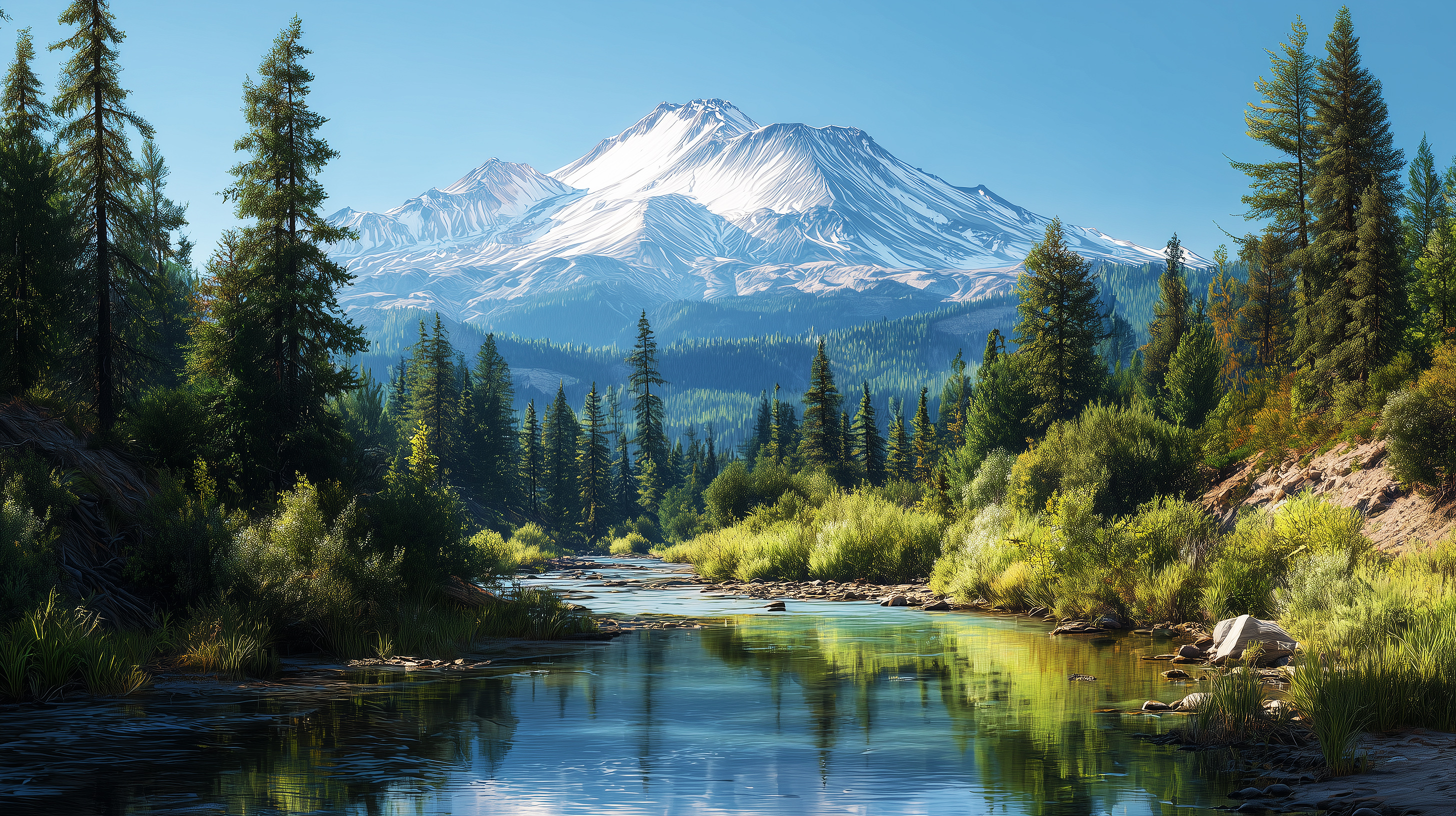
Through the diner’s window, I could see Humphrey’s Peak in the distance. Rising to 12,633 feet, it’s the crown of the San Francisco Volcanic Field, some of North America’s most ancient geology. Andrew A. Humphreys was a Civil War General, so I prefer the Hopi title for the mountain, Aaloosaktukwi, meaning “its summit never melts.”

It was now August and the snowpack was thin, clearing passage to the top on a popular trail. I planned to hike there the next morning.

I sipped my coffee and waited for the breakfast burrito recommended on Yelp. The place was popular, with most of the tables filled, a clatter of dishes and conversation. The smell of bacon and biscuits filled the air.

Two months earlier, my wife, Liz, had seen my restlessness and sour mood. She’d endured my complaints about politics, the economy, and the inept administration at the high school where I taught. FUBAR, I muttered too often. I was out of whack, even more so than usual, and a deeper level of angst was seeping into my dreams at night. Finally, my grumbling was too much for Liz.

“Why don’t you use your summer break to get out of here,” she said. “You’ve always wanted to hit the road like the Jacks. What better time to do it?”

By Jacks she meant Kerouac and Reacher, two wanderers—one real, one fictional—that had always intrigued me. Liz knew that I lived vicariously through too many literary characters, reluctant to act on my own desires. She was laying down a gauntlet.

“You wouldn’t mind holding down the fort?” I asked. We’re childless, so that meant caring for our dog and cat.

She smiled and winked. “Mind? I’d be relieved to get rid of your moping for a while.”

We both laughed and I made my decision. With very little foreplaning, I took our old Nissan Sentra and left our home in Fresno, California. Driving isn’t romantic like hitchhiking, or using trains and buses, but I still let the road guide me. No set route, traveling at whim. I’d been to over a dozen states and seen some remarkable things. Now I was heading home.

But I still felt restless and out of balance, not what I expected after my mobile version of a walkabout. I feared this would be my default mood, and the thought of returning to work gave me claustrophobia. Liz deserved more. My students deserved more.

The server, a young Latina with multiple piercings and a bright smile. brought my breakfast and refilled my coffee. My eyes kept returning to the peak, imagining the next day’s trek, when I had that sense that someone was watching me. I turned towards the dining counter, its swivel chairs lined with customers. There was a tall man wearing jeans, boots, and a Carhartt shirt, his long black hair in a ponytail. He looked to be in his mid-20s, certainly Native American, with high cheekbones and large, slightly almond-shaped eyes. He smiled at me as he slipped off his stool and made his way to my table, coffee cup in hand.

“I hope I’m not being rude,” he said, “but I notice how you keep looking to the mountains.”

Conversations with strangers had been some high points of my travels. “You’re not being rude at all. I’m just thinking about my hike up Humphreys tomorrow morning. I’m looking forward to it.”

He nodded. “It’s a great climb. I was up there a couple weeks ago, something I wanted to do before going home. Now I’ve been to the top of all four sacred mountains.”

“Four?”

“Yes. Mount Blanca to the east. Mount Taylor to the south. Mount Hesperus to the north, and these San Francisco Peaks to the west.

He gestured first through the window, then to the empty seat across from me. “Mind if I join you?”

“Not at all. I’d love the company.”

He settled in and placed his cup on the table.

“My name’s Thomas,” he said, reaching his hand across the table to shake mine.

“Phil,” I responded, returning his strong grip. “You mentioned going home. Where’s that?”

“Shiprock. My family has roots that date back centuries.”

“So, obviously you’re Navajo.”

“Navajo alone,” he said with a wry smile.

“What does that mean?”

 “That both sides of my family have never intermarried with other tribes or races. At least that’s what we claim. It’s a huge point of pride, especially for my mother’s clan. Navajo snobs”

He laughed. “How about you? Where are you from?”

“Fresno, California. I’ve been wandering around the country for a couple months, but I’m heading back. I’m a teacher, so I had a summer break. I’d always imagined taking an unstructured trip.”

He nodded and sipped his coffee. “I’m thinking about teaching, but in a different way. I just graduated from Northern Arizona University with a degree in anthropology. I’d like to be a cultural interpreter, hopefully with the National Park Service.”

“Sounds like a great goal.”

He studied me for a few seconds. “I’m curious. Was all your wandering what you imagined it would be?”

His question felt like a tipping point. How much would I share with a stranger? I decided to let it all out.

“There’s an old saying, ‘wherever you go, there you are.’ I started this trek because I felt unbalanced. I had let so much of the conflict in our country get inside me. I felt powerless and insignificant, despite my wife’s love. I know it sounds self-entered, but it was even hard to sleep at night. I thought that getting away for this time would help clear my head.”

 “But it didn’t?”

“Not really. And now that I’m headed home, I have this depressing feeling that I’ll just pick up where I left off.”

He didn’t say anything. We sat in silence as he turned his eyes to the distant peak. I began to wonder if I’d been too intimate, but I just waited. The breakfast crowd was thinning, with people leaving and cars pulling out of the parking lot.

Finally, he turned his eyes back to me. “Do you know the Navajo word hozho?”

“Vaguely.”

“It’s hard to translate, especially for Western minds. The closest bilagáana words would be balance or harmony. Our right relationship with nature, our community, and our inner selves. You could say it’s the quality that Navajos hold most sacred.”

 I shook my head ruefully. “Harmony is rare in our world. I don’t see it anywhere, and it doesn’t help that I doom scroll too much on the web.”

He chuckled. “I hear you. I can get wrapped up in it also, especially when I return home. There are so many challenges on the reservation and our people have such a painful history in relationship to this country. I have a sister who works as a nurse in one of our medical clinics. She keeps urging me to stay on the res and work to better our conditions, but I don’t think it’s my path. To be honest, I’m searching for a clearer direction.”

I appreciated his candor. “I always encourage my students to find their own calling. The pressure to adopt scripts from our family and society is damn strong.”

He nodded. “That’s another reason I’m going home. To meet with my grandfather. He’s an old sheep farmer but also one of the most respected medicine men on the res. Growing up, whenever he could see I was troubled, he insisted on helping me return to the old ways. Sometimes a sweat, sometimes a sing ceremony, sometimes just a reminder to say my daily prayers.”

“Did it work?”

“Usually,” he said with that wry smile again.

He reached into his pocket and pulled out what looked like a business card. “Anyway, I need to get on the road. Can I leave this with you?”

He handed it to me. “You probably know this famous prayer, the Blessing Way, but I find it helpful when I’m feeling restless or disturbed. I designed these to share with others I meet. A small piece of my culture.”

The printing on the card was embossed, set against an image of a sunrise. It read, With beauty before me I walk, with beauty behind me I walk, with beauty beneath me I walk, with beauty above me I walk, with beauty all around me I walk.

I’d heard the words before, but not for a long time. “Thank you. I’ll remember these few moments we shared.”

He stood and reached to shake my hand. “So will I. I’ll be thinking about you on the trail tomorrow. You’ll probably be near the summit as I pull into Shiprock.”

Then he nodded and left. Through the window, I saw him get into an older Dodge pickup and merge onto the highway. I smiled and turned my gaze once again to the mountains.

________

I left the trailhead at dawn under a clear blue sky, determined to reach the top and return before the weather changed. Afternoon thunderstorms were always a threat, and I didn’t want to be exposed on the peak.

The trail took me through shimmering aspen groves and meadows laced with lupine and columbine. Butterflies drifted among the flowers like blossoms with wings. The air was redolent with the smell of the soil, the grasses, and the trees, an intoxicating mix. At one switchback, just a few feet from the trail, a partridge eyed me with curiosity.

Mid-morning, I broke from the timber line and climbed the craggy volcanic stones of the final ascent, like mounting the stairs of an ancient temple jumbled by earthquakes. To my right, snow still clung to the slope. Swifts arrowed overhead, trapping alpine insects with precision.

The view from the summit was breathtaking. On the northwestern horizon was the rim of the Grand Canyon, carved over eons of time. To the northeast were the mesas of the Hopis who historically believed this peak is where kachinas live, the blessed bringers of rain.

The wind was brisk, buffeting my face. I’m not sure how long I stood there drinking in the vistas, but slowly, thoughts of returning to the workaday schedule of my life began to crowd my mind, like traffic noise or conversation from a distant room that suddenly got louder. I pushed it away, thinking of my brief encounter with Thomas and the prayer he’d left with me.

I took a deep breath and surveyed the splendid view ahead of me. I turned my head to an equally magnificent panorama behind me. I looked beneath me at the multicolored volcanic stones, remnants of primordial eruptions. Then I lifted my eyes to the blue dome of the sky.

Beauty. All around me. Embracing me and moving through me, dissolving resistance to its presence. Time never really stands still, but it surely felt like it as I stood there for moments, for eternity, with only the wind in my ears and the sound of my own breathing.

When I finally began my descent, it was a pivot beyond words, a personal kenshō, and as I fell into my hiking cadence, I thought of some words from a review of Kerouac’s Dharma Bums: “In the end, you won’t remember the time you spent working in the office or mowing your lawn. Climb that goddamn mountain.”

I started laughing so hard that some other hikers approaching me on the trail were startled.

“Having a good time?” one of them asked with a bemused smile.

“The time of my life,” I responded.

Heaven is Now: Adjust Your Vision, Find Balance – Part Two

If you missed Part One of this series, here is the link.

The Harmony of Appreciation and Anticipation

This early part of the 21st century, like most junctures in human history, showcases the worst of our failures. Nations reverting to xenophobia, scapegoating immigrants. Chasms widening between classes. Wars continuing to rage. Ecosystems groaning under the weight of unsustainable consumption. Despite its tiny duration, the Anthropocene era is exceedingly destructive.

I cannot live without hope. It’s like oxygen for my soul. I maintain that there’s another trend, another golden strand of our evolution, an awareness dawning across our globe. I see people awakening. People recognizing our crucial need to embody love and tolerance. People realizing that our driven consumerism, stoked by discontent and covetousness, is ultimately hollow, even poisonous. May all of us emerge from our societal illusions as soon as possible!

Part of this trend is the popularity of what we call mindfulness, championed by talk show hosts, celebrities, and scores of books. There are even phone apps like Calm that help us reside more fully here and now. It conjures hope that the liberation of our minds will lead to the freedom of our hearts and spirits.

As I’ve stated, I propose some additions to our mindfulness—a fusion of differing realities that impinge on our consciousness daily. Let’s do this first with appreciation (no regrets) and joyful anticipation (no fears).

Appreciation

Of Our Genetic Makeup: An entire industry now exists for the analysis of our DNA. We pay a sum, send in an organic sample, then learn the root percentages of our ancestry. On TV, we hear people sharing the surprises that awaited them: unique forebears, some of them famous; awareness of ethnic mixtures; ties to new tribes and traditions.

Hopefully, this celebration of our roots leads to another gift: accepting and loving the literal shape of who we are.

There’s a tragic truth that permeates human history. We have discriminated against each other based on skin color, height, weight, facial features, and body shapes that pass as beautiful. In some cultures, these notions of physical appearance have taken a bizarre turn.

While on a trip to Belize, I learned of a cruel way that the Mayans shaped the looks of male children destined to be leaders. They placed an apparatus between their eyes to induce them to become crossed, and then affixed slats of wood against their foreheads, gradually tightening the fasteners so that their craniums slanted upward. Why would they cause such pain to an innocent child? Because a slightly cross-eyed man with a sloped skull was their depiction of god-like physical attributes.

The Padaung people of southeast Asia consider long necks among women an attractive trait. Girls as young as age two are fitted with neck rings that artificially stretch the length between the clavicle and the chin. The rings increase with age until a grown woman may have as many as 20 or more. They endure painful chafing their entire lives and cannot remove these coils without the risk of neck collapse. All in the name of beauty!

A more familiar example was foot binding in China, the brutal practice of breaking and tightly binding the feet of young girls to change their shape and size. Feet conformed in this way became “lotus feet,” touted as a mark of feminine beauty, but in reality, a relegation to servitude. It led to great pain, limited motion, and lifelong disabilities. It wasn’t until 1949 that China officially outlawed this savage, sexist practice.

These examples seem extreme, but Western culture promotes its own brand of desirable traits. Publishers plaster their magazines with images of those considered beautiful and desirable, often “photoshopped” to mask any blemishes. Traditionally, these were skinny, almost waif-like icons of femininity. I celebrate that recently we are seeing more “full-bodied” appearances, but the underlying message is often the same. Our culture objectifies others and us, a lack of appreciation and acceptance of our natural physicality.

Beneath this harmful veneer are countless individuals who internalize these notions of beauty. They weigh themselves on this scale and decide they are lacking, leading to self-doubt, even depression.  You can see this clearly in recent statistics. Demand for cosmetic surgery continues to grow in America, with the industry expected to gross 254 billion by 2033.1 Another study shows that between 2000 and 2018, eating disorders doubled worldwide.2 And the lunacy continues. In my hometown of San Antonio, there are billboards along the freeway that promise fuller lips, shapely buttocks, and larger breasts. One of these cosmetic surgeons is known as El Frutero, the Fruit Seller, implying that he can turn women into luscious edibles.

 I’m the father of a disabled adult son. Over the years, his peers have included those with Down Syndrome and other genetic markers giving them physical characteristics far outside our cultural notions of beauty. I’ve had the glorious privilege of involvement with Special Olympics, a celebration of accepting ourselves for who we are. There’s a powerful moment seared in my memory. A young man with cerebral palsy was participating in the 100-meter dash at the state finals in Texas. I was in the stands with hundreds of spectators. The palsied competitor couldn’t actually run, just walk in a jerky manner. He soon fell to last place, moving at one fourth the speed of other competitors. Those of us in the bleachers rose to our feet, cheering him on. You would have thought we were applauding Usain Bolt, and the crescendo of our support as he crossed the finish line is something I will always cherish.

In one of my speaking engagements, I pointed to a large easel draped in white cloth. “In a moment,” I said, “I will unveil the face of the most beautiful woman in the world.” I paused, letting those words sink in. “I mean it. This is not just my opinion, but the result of numerous international polls. So, are you ready? Do you want to see her?” Hundreds of heads nodded in unison, men showing the most eagerness. I walked to the easel and pulled away the cloth with a flourish, revealing the craggy face of Anjezë Gonxhe Bojaxhiu, known to the world as Saint Teresa of Calcutta. A woman who, by any world standard of physical beauty, was not even in the ballpark, but whose inner beauty of spirit shone through her eyes to everyone who knew her.

Imagine if we learned to see others in way that is untainted by the judgements society injects into us. In one of my short stories, The Sanctuary, two of the characters are chatting at a farmer’s market. They discover a common interest in people watching. Let’s eavesdrop on their conversation.

“This may sound strange,” said Dona, “but I’ve been experimenting with my perspective, especially in public places. When I watch, I try to observe how my mind responds. Am I reacting to people as types? You know, cataloguing skin colors, body shapes, clothing choices, tones of voice. Or can I just see each person, really see them? Does that make sense?”
John smiled. “It does. It’s hard, isn’t it, to just be in the moment and let go of the constant chatter and judgements? I remember reading a powerful piece by Krishnamurti to that effect. The line I recall is this, ‘The ability to observe without evaluating is the highest form of intelligence.’”

Try applying this higher intelligence more regularly to others. When you see them, think “What a beautiful human being!” Then practice the same acceptance with yourself if you ever look in the mirror. Appreciate your genetic characteristics! This is your only physical form for this life’s journey. As we learn to love others and ourselves with all of our attributes, especially those the world considers imperfect, we discover a more radiant love!

Appreciation of Our Family Influence. There is nature (our genes) and there is nurture, the influence of family, teachers, and other key people who raise us. Learning to appreciate their effects on us—both positive and negative—is key to developing this third eye that sees a harmonious balance of life’s realities.

If you come from a family that consistently affirmed you, helping you accept your uniqueness and make the most of it, I hope you feel blessed. If, instead, you come from a dysfunctional home, a nuclear system that left you with scars of heart and mind, I understand. Believe me! I know this firsthand, and sometimes it seems near impossible to release our grievances about the past.

Here is where I’m hopeful once again. I sincerely believe that each of us can arrive at inner serenity if we put in the spiritual work. This requires deep forgiveness and acceptance, a state of mind in which we no longer need affirmation from those who should have freely given it to us. It’s the liberation found in the well-known prayer attributed to St. Francis, “O Divine Master, grant that I may not so much seek to be consoled as to console; to be understood as to understand; to be loved as to love.”

Consider the concept of filial piety taught by Confucius in the 5th century B.C. It calls for respecting our ancestors and current family members, beginning with our parents. According to Confucius, this is the mortar that holds societies together. To use another image, it’s the sinews that connect the body of humanity. Without it, there is chaos.

I’m not saying we should submit to unjust authority. There are times when we need to raise our fists in protest. There are times when we need to withdraw from the reach of those who would continue to hurt us, even our family members.

Yet there is still great wisdom in what Confucius taught, echoed in the Jewish commandment, “Love your father and mother, so that it may be well with you, and you may live long on the earth.” When we learn to love our elders, breaking loose of resentments into the pure air of forgiveness and acceptance, our world becomes steadier on its axis. We are then freer to exercise our own uniqueness.

How will we know when we have reached this level of maturity? When our memories of toxic events become healed, no longer releasing radioactivity into our lives. I’ve always loved these words from Lewis B. Smedes, one of the most profound writers on forgiveness.

“Forgiving does not erase the bitter past. A healed memory is not a deleted memory. Instead, forgiving what we cannot forget creates a new way to remember. We change the memory of our past into a hope for our future.”

I once counseled a man who demonstrated this healing principle in action.

He had every legitimate reason to hate his upbringing. His whole family system was addicted—his father to work, his mother to alcohol, a brother to drugs. With an absent male figure and a female influence that was domineering and unpredictable, he had no port in a storm. He drifted into addiction himself, making one misguided decision after another.

In recovery, his mind began to clear. He learned the concepts of surrender, transparency, forgiveness, and serving others. He began to practice what Twelve Steppers call a “daily inventory,” a growing awareness of the thought patterns that still held him in bondage.

What cropped up repeatedly was the residual pain and anger attached to his family. He knew that without letting go of this turmoil, he couldn’t experience true sobriety. But how was he to do that? People gave him loads of advice and most of it sounded like trite slogans that never penetrated his spirit.

Then he internalized another essential part of appreciation…

Appreciation of Our Suffering and Struggle: Participants in Twelve Step fellowships often hear startling words. Someone says, “My name is ‘so and so’ and I’m a grateful addict/alcoholic.” Then they often share their painful history: blackouts, health problems, jail time, repeated stints in rehab, or the overwhelming despair that led to thoughts of suicide. If they have plumbed the depths of recovery, they also see the suffering they caused for everyone around them—relatives, neighbors, coworkers, even innocent bystanders in the community.

Who would be grateful for a disease that led to these consequences? Answer: someone who realizes a profound and liberating truth: every experience in our lives, no matter how painful, can promote spiritual maturity, even joy, if we learn the lessons offered.

Despite what you may think, this isn’t a rare occurrence. You will find it among people of all races, ages, occupations, and educational levels who have done the work to liberate themselves. Let them bring you hope!

Every one of us can look back and dwell on mistakes we’ve made, loves we’ve lost, or chances we missed. Regret can become a self-defeating trance that traps us in the hamster-wheel repetitions of our minds. Or, we can cling to our blame of family members, friends, or associates who carelessly or intentionally wounded us. We nurse those grudges as if we are watering one of the plants in Little Shop of Horrors.

Instead, if we calmly affirm the lessons we have learned from each and every one of these struggles, our third eye begins to open and gives us clarity.

Thankfully, the man I mentioned broke through to the liberating insights he needed. As he prepared to make amends to those he had harmed through his addiction, he realized that he also needed to forgive himself for the pain he had caused. He connected with the saving power of grace, and he knew that he needed to extend this quality to others who had harmed him. It was far from easy, but over time, he transformed his memories into serenity for the present and hope for the future. He recently said this to me: “It’s amazing. It never thought I would reach this point in my life. I am completely in my own skin. I wouldn’t want to have any other history. I wouldn’t want to be any other place. I wouldn’t want to be any other person.”

Think again of the Tao symbol in which the dark portion contains a point of light, and the light portion contains a point of darkness. This is a perfect depiction of living in a middle path when it comes to our suffering and struggle. In the dark we can discover points of illumination. In the light, we are aware of our own flaws so that we never succumb to arrogance. It’s a beautiful way of being!

Now let’s turn from appreciation to anticipation.

Joyful Anticipation

In a previous book of mine—Consider the Lilies: Five Ways to Stop Worrying and Enjoy the Kingdom of God—I wrote the following.

Our English word “worry” comes from the Old English wyrgan, meaning “to strangle.” How fitting, for this is exactly what worry does to us! It grabs us by the neck and chokes away the vitality from our lives. Worry steals our peace, weakens our potential, and sours our closest relationships. Just when it seems we have pried away its strangling tentacles, it throws out others we never knew were there.

Worry is fear rooted in negative anticipation. Fueled by unhealed moments from our past or the constant barrage of negativity that flows from the world around us, we anticipate, even imagine, the worst. But despite our fight or flight genetics, there’s a more peaceful reality, a pearl of great price imbedded in our innermost nature. It’s the knowledge that we are immersed in a benign Presence that we alternately call God, Higher Power, Spirit, or Tao. Surrendering to this Mystery can fill us with a sense of wellbeing that erases our expectation of calamity.

Unlike the past and its concrete images stored in our memory, the future is yet unexplored. This is why I use the words joyful anticipation.

At this point, some of you may strongly object. Based on your assessment of your past and all the dark cards you think you’ve been dealt, you’re cynical about what lies ahead. Fatalism clouds your vision. There’s no harmony in your perspective, only dread.

I invite you to think in another way. No matter how difficult your past has been, you survived. You grew stronger and hopefully a bit wiser from your experience. Let that realization help you believe that your future, no matter what happens, will work to enrich your life.

Recently, in one of my Twelve Step meetings, I heard a poignant story. A woman chronicled her descent into addiction and alcoholism, her version of a downward spiral that, in one form or another, was common to all of us. When she had lost everything—her children, her job, and most of her health—her family had her committed to a psychiatric institution. She remembered sitting in the back seat of her brother’s car, looking out at the foreboding building through her window, overcome by despair.

Fast forward ten years. The woman embraced the treatment offered to her like a floating mast after a shipwreck. She began to trust others. She began to treat herself with love and grace. She resurrected her lifelong dream of returning to school and pursuing a career in nursing. On a proud day, she received her diploma. Then, after graduation, she worked for a temp company that provided skilled care to a number of hospitals in her hometown.

This brought her, once again, to the parking lot of the very place she had received treatment. She looked out at the buildings that had inspired such dread, now seeing them from a vastly different perspective. She tried to describe something she said was indescribable—the feeling of her new life, a person with purpose, remembering the shell of herself that had been on death’s doorstep that day her brother delivered her. She began to cry, struggling for words, but to each of us who were listening, she couldn’t have been more eloquent. Our tears flowed with hers. Her story was a living parable, a shining example of one of the promises in the Big Book of Alcoholics Anonymous: We will suddenly realize that God is doing for us what we could not do for ourselves.

If you wince at the word God, think of it another way. The Universe has your back. You are not destined for disaster. There is love, grace, and fulfillment in your future, so joyfully anticipate it.

Inspirational writer, Alan Cohen, sums up some of the thoughts in this chapter in his book A Course in Miracles Made Easy: Mastering the Journey from Fear to Love.

The future you expect is a projection of your beliefs about the past…When you change your thoughts about the past, you change your thoughts about the future, and thus you create a better future…If you regard yourself and life through the lens of fear, guilt, and mistrust, you will expect a morbid future. If you regard yourself and life through the lens of love, innocence, and faith, you will expect a bright future.

Practice

Take time today to practice the suggestions in this chapter. Sit for some moments and be grateful for the physical form you’ve been given, the family that birthed you into this world, and every single struggle that has taught you lessons of strength and maturity. Bring this appreciation into the present. Then anticipate that every day from here on forward—no matter what you may face—the Presence upholding you will ultimately guide you, teach you, and bring you peace.

Here are some affirmations you can speak out loud.

  1. I celebrate my physical body exactly as it is, knowing I am created as a one-of-a-kind miracle.
  2. Despite any pain from my past, I choose to affirm the family and ancestral roots that gave birth to my unique existence. I seek to forgive any ills done to me, no matter how difficult they may be.
  3. I affirm that every trial I survived has imparted knowledge and power that I can use to live more fully.
  4. I anticipate the future with joy, knowing that I can never be separated from the loving Presence that surrounds me and upholds me.

            As you fuse these aspects of appreciation and joyful anticipation into this present moment, remember this:

Heaven is here. There is nowhere else.
Heaven is now. There is no other time.

Part Three will post on June 11
Lessons Not Learned – a Review of “Postcard from Earth” at The Sphere in Las Vegas

(Spoiler alert. This post reveals the ending.)

The art of filmmaking affects us like no other medium. Combinations of sight, sound, and editing elicit responses similar to the wonder we experienced as children. Innovations continue to enhance these alternate realities with stunning clarity.

This is certainly true of Postcard from the Earth. If you’re a wonk about specs, here they are. The production employed 2000 crew members from around the world, shooting footage with an 18K resolution camera. The resulting film is half a petabyte in size and plays back at 60 frames per second. This means that viewers observe 32 gigabytes of data per second on the dome, nearly 2,000 gigabytes per minute.

During the opening moments, we see only a portion of the screen. This is it? I thought to myself. Not much different from IMAX, and with a much steeper admission fee! Then, at a pivotal point in the story, the sphere explodes visually as we sail over earth’s fields, mountains, oceans, volcanos, canyons, savannahs, and tundra.

It is mind-blowing!

Far less spectacular is the narrative arc. It begins as two space travelers, a man and woman, awaken from cryogenic sleep to the gentle female voice of an onboard computer. She urges them to return to consciousness gradually as they remember their home planet. She prods their recall by explaining the history of life on Earth, from single-cell organisms to humankind in the Anthropocene era. We are immersed in Edenic images that celebrate the splendor and diversity of our planet, from both micro and macro perspectives.

As the narrator moves to human beings, she details our search for meaning in holy places, our building of cities, our expanding technologies. We see the delightful faces of people from many tribes and cultures, their eyes reflecting our common humanity.

So far, so good. But then the images shift to a distressingly familiar theme—the degradation of our sphere through pollution, overpopulation, and the gouging of natural resources. We see strip mining, denuded forests, landfills whose mountains of refuse boggle the mind.

The narrator says that Earth, desperate to rid herself of our species, tries to “scape us off her back.” Violent storms sweep overhead, a grim reminder of the hurricanes, tornados, and wildfires caused by unchecked global warming.

But alas, says the narrator; Earth couldn’t cope. So, what do human beings do in the film? We leave our world. We board space stations that hover in the upper atmosphere, giving Earth a chance to heal. Then we go a step further, sending pairs of cosmonauts – an Adam and Eve – to other habitable planets throughout our galaxy. Their goal is to propagate new life. The film ends with our two awakened space travelers planting some kind of power source into the ground of their adopted desert home, emitting waves of greenery that ripple to the horizon.

Really? I had two visceral reactions.

The first was captured perfectly by a Google review. “There’s nothing like going to the gaudiest city in the world and entering the brightest building in the world, an electronic marvel costing north of $3 billion, and then getting lectured on how humans have ruined the pristine Earth. Beautiful images on the sphere surface for half of this 50 minute “film,” and then 25 minutes of lecturing us on how we should just leave the Earth. It reminded me of climate change activists who fly private jets across the world to tell us why we shouldn’t drive gas cars.”

Amen! I did a deep dive into how much electricity The Sphere uses at peak operation on a daily basis. 28 megawatts! That’s enough power for 21,000 homes!

My second reaction is philosophical. I believe that when we fail to learn necessary lessons, we repeat the tragedies that plague human history. Call it cause and effect or karma, but either way, you know it’s true! We see it in our personal lives; painfully repetitive behaviors that drag us down until we change. We see it in our collective lives as intolerance, war, and rampant consumerism fail to galvanize the collective willpower we need to save both Earth and each other.

Albert Einstein said it succinctly: “The only mistake in life is the lesson not learned.”

Here’s the rub. The two astronauts sent to create a new Eden have no memory of how human beings reversed their rapacious greed and domination of all that they saw. If you fast forwarded the history of the fictional planet on which they stand, I’m afraid you would see the same tragic consequences. As we say in Twelve Step groups, wherever you go, there you are.

Will we ever be better than this? Postcard from the Earth seems to say NO, and it does so by participating in the gross consumption it criticizes.

What if, instead, this bloated production had used its bully pulpit to call for solutions? What if it ended with scenes of humanity overcoming its divisions, joining hands and hearts, focusing its brainpower and resources on restoring this precious vessel sailing through the cosmos?

What a missed opportunity! What a reminder of lessons not learned!

Chase Your Dreams!

(I met Darci Tretter and her sister, Emily, at Lokahi, the communal living compound on the island of Maui. Both of them grew up in a loving family that taught traditional Christian values and practices. When those values no longer spoke personal truth to them, they had the courage to follow their own stars. In many ways, the following words from Darci encapsulate the call to freedom at the heart of my book, The Smile on a Dog: Retrieving a Faith That Matters, remastered and downloadable here for FREE).

My life today is a unique fairy tale, quite different than I imagined when I was a child. Sitting here on my back deck overlooking the Pacific Ocean at sunset, coconut trees waving in the breeze and the sound of children giggling and playing, is a dream come true. A dream I didn’t even know I had.

I grew up with loving parents in a wonderful home, but I felt a lot of anxiety as a kid. Anxiety about school, church, and the soccer games in which I competed. We lived in a sweet little neighborhood, and I spent a lot of time outdoors. I felt a strong connection with the wooded area behind our house, so I spent hours by a babbling brook that had a mysterious, magical appeal. It sparkled with a sense of freedom that matched the freedom within me. A sense of freedom that over time grew dull and dim, eventually stuffed so far away that I had forgotten it existed.

So, at 25 years old, I walked away from my life as I knew it. I left my job as a social worker living in the city. I sold most of my belongings and drove out West. Something was calling me, something I could no longer ignore. It was the call of freedom.

From where I sit now, decades away from that enchanted little girl in the woods, I believe our society has evolved (or devolved) to diminish freedom. Imagine if we all followed the deepest calling of our souls. Would we allow ourselves to be cooped up in an office all day? Or sit in rush hour traffic? Or spend only two days a week with our families and the rest working? I have come to realize that the conventional trajectory of so many folks might have an allure of freedom, but in reality, it’s a life chained to materialism and starved for fulfillment. Fancy cars, designer clothes, and that condo on the beach sparkle with illusory joy, but do they bring us any closer to love, truth, or our deepest selves?

Finding the courage to step outside of the norm was the biggest obstacle between me and my dreams. This was something I had never done before. Even though I always wanted to shine my true colors, I was afraid of what others might think. I played it small and quiet to avoid judgment, but I had a mediocre life, feeling safe but empty. I believe the first breakthrough happened for me when I ended an uneventful relationship. This was something I held on to for so long, thinking it would change, but it finally fell loose, leaving me light and free.

This had a domino effect; I suddenly had ample time to focus on myself. I dove heart first into books, practices, and events that fed my soul. Then, when I moved to the West Coast, I began to find my soul family. I traveled around to music festivals and gatherings that had a common theme of spiritual growth and self-development. Eventually, I made an impromptu trip to Maui, where I landed in a small, intentional community focused on spiritual development using sacred plant medicines.

During the five years I lived there, I went deep into physical cleansing and emotional healing. I woke before the sun to practice kundalini yoga. I fasted on coconuts and cleansed my liver. I sat in ceremonies with ancient-plant teachers to illuminate the truth within my soul and clear my spiritual lens. Something inside me merged with the natural elements around me. I became highly sensitive and intuitive. Perhaps I had always carried these gifts, but they had gone undeveloped. I was able to manifest anything I desired into my reality: financial wealth, a beautiful home by the sea, vibrant health, and eventually my partner with whom I now have three beautiful children.

I believe we all have the capacity to make our wildest dreams come true. It takes courage to step beyond our edges and trust that life will meet us there. It requires shucking off the baggage we carry and freeing ourselves from inhibition.

The freedom we chased as children is our birthright. We simply need to claim it!