Living a Grateful Life

We all love slogans, whether they’re plastered on T-shirts, coffee mugs, or roadside billboards. But when it comes to self-help slogans, I find them frustrating. They seem glib: easy to say, hard to practice. There are times when I’m obsessing on a problem and pull up behind a car whose bumper sticker proclaims, “Let Go and Let God.” I feel like shouting out the window, “Easy for you to say!”

Wayne Dyer once coined a catchy slogan: Have an attitude of gratitude. Christians have their own version, penned by the Apostle Paul as he sat in a Roman prison: “Rejoice in the Lord always; again, I say rejoice!”

That’s good counsel, but not easy to follow. Normal life stressors are hard enough, and then we have seasons with a deluge of difficulties. A friend of mine once said: “People say God will never give you more than you can handle. Lately, I’ve wanted to scream at God, ‘You flatter me!'”

How can we learn to be more grateful? For the next few weeks I will share a practice that has helped me immensely. It all hinges on three words: IN A MOMENT. We will explore each moment in three ways – entering, accepting, praising.

Entering the Moment
Clearly, one of the arts of existence is to savor every second. So many of us live in two eternities over which we have no control – the past and the future. Meanwhile, the streaming beauty of the present slips past unexplored and unappreciated.

Jesus spoke to this in his Sermon on the Mount. “Which one of you by worrying can add a single moment to your life?” Having tended to countless individuals at their deathbeds, I can say this with certainty. In the end, we will not remember the daily worries that drained our vitality. Only two things will matter at that juncture: our relationships with God and the people who graced our lives.

These relationships begin right now, so entering each moment is crucial. In his book entitled “Spontaneous Happiness,” Andrew Weil calls this mindfulness training, his primary tip on how to find more joy.

We don’t need to be masters of meditation to do this. Consider Brother Lawrence, an illiterate, barefooted monk from the 1600s. He was the cook at a monastery in Paris, constantly serving his superiors. But in that kitchen he endeavored to experience God. Over time, the simple power of his faith drew people of all walks of life to his side. He once said, “For me, the time of business does not differ from the time of prayer. In the noise and clatter of my kitchen, with several persons simultaneously calling for different things, I possess God in as great tranquility as if I were on my knees.”

How will you fill the moments of this week? Driving your vehicle; sitting at a desk; working in the fields; tending to spouses, children, or animals; cooking, cleaning, shopping? Whatever your task, enter the moment as fully as possible. Every day is a chance to practice mindfulness, to increase our conscious contact with God. Enter the moment, expecting to meet our Creator, and you will!

Celebrating All Saints (Graciously!)

Are you a saint? Have you known one? Hold those questions in mind.

I once led a bereavement group, a refuge for people traumatized by loss. Grief is the most painful and powerful set of human emotions, but this diverse group of folks discovered a sublime truth: sharing our stories helps us triumph on our difficult journeys. We began those weekly gatherings by reciting these words, “When someone we love becomes a memory, that memory becomes a treasure!”

All Saints Day and Dia de los Muertos are upon us. It’s a perfect time to pause and reflect on those we have lost, to cherish their legacies.

As we do, let’s remember the definition of “saint” in the Christian faith. Not many of us would claim this title. We reserve it for those who show moral purity, passionate love, or superhuman sacrifice. They are people of legends and icons. Their examples seem so removed from our mundane lives. We struggle with doubts and cravings, pride and prejudice. We cling to material things. No, we are not saints.

But this is the world’s viewpoint, not Heaven’s. God’s overriding value, still radiating through Christ, is GRACE. It’s a gift of loving acceptance that none of us deserve and none of us can earn. When we receive its life-changing power, we become part of the Communion of Saints.

There are no perfect people; we are ALL unfinished works of human art. This is true with even the most saintly in history. A careful scrutiny of their lives shows that they, too, wrestled with personal demons like the rest of us.

This is why grace offers a healing way to view those we’ve lost. It helps us embrace the totality of their heritage. We learn from their admirable traits and accept their faults with compassion. We gain wisdom from their failures as well as successes.

1358 miles from my home office is a quiet cul-de-sac at Forest Lawn Cemetery, Glendale, California. Many times I have parked at the curb, then walked across an expanse of mown grass to stand before two headstones placed side by side. They belong to my paternal grandparents. Three words, a final epitaph, are chiseled in granite across them: “Ambassadors for Christ.”

In many ways this describes my grandparents perfectly. Their faith directed their actions in visible ways. After the Watts Riots, a racial explosion in 1965, they walked with a multiethnic group through inner city Los Angeles, braving potential violence to witness for unity. They were quick to help underdogs throughout their life. They modeled prayer and devotion to Christian principles.

But their flaws were also apparent. My grandfather rarely showed physical warmth. My grandmother held on to bitterness towards people who wronged her. She was also a hypochondriac. You hesitated to get her started by asking, “How are you?”

Like all of us, my grandparents were a mix of goodness and error. But seen through the eyes of grace, they were saints. When I celebrate them this way, I feel God’s love more strongly.

So let’s remember ALL our saints, past and present. Let’s do so graciously!

Pass the torch of faith to the next generation!

We all have favorite teachers who taught us more than subject material; they imparted lessons about life. Yet parents remain our earliest, most impactful tutors. Their words and actions mold our outlooks from infancy.

Clearly, this can be positive or negative. In decades of working with people, I have seen both kinds of parental legacies. Learning to claim the best (and leave the rest) from our families is a healing journey many of us have taken. Some of us still need to.

This Mother’s Day I think of my Mom. Our relationship hasn’t been easy. Thankfully, over time, we have discovered the grace born of our faith in Jesus Christ. This faith has been my mother’s greatest gift to me, a priceless heirloom. Let me share a memory that highlights this.

My childhood neighborhood swarmed with kids, evidence of the Baby Boom. Like typical children, we often took sides and fought with each other. One day the conflict moved from taunts and posturing to rock throwing and BB guns. On the other side, I could see one of my “enemies.” His name was Gentry and he was a Goliath, heads taller than the rest of us. He was also mean as a snake, channeling anger from a troubled family.

Under a bright sun, we lined up in two gangs and advanced toward each other like fronts in a medieval battle. When fists started flying, Gentry singled me out. He had a board with rusted nails that he hurled like a lance. It struck my head, leaving a gash that gushed freely down my neck and onto my shirt.

The sight of so much blood drained the fight from us. We halted and scrambled back to our homes.

That night, my stitched head wrapped in Ace bandages, I lay under the sheets. My mother came to my bedside for prayer, a ritual she kept with all her children.

“We have something special to pray for tonight, don’t we?” she asked.

“We sure do,” I replied. “That God would take the pain from my head.”

“That’s not what I’m thinking,” she said. “We should pray for Gentry, that God would take the hatred from his heart.”

I felt resentful. Why pray for that jerk? He was the guilty one. He was my enemy.

But as I thought about the daily dysfunction he endured in his family—the lack of love I took for granted—my resent morphed to compassion. My mother waited silently, hoping this would take root in my heart. Finally, I took her hand and we prayed for Gentry and his family.

One of the core teachings of Jesus is to love our enemies. Do not return evil for evil, but pray for those who persecute you. That night my mother illustrated one of the greatest elements of the faith she was passing on to me. I carry that torch to this day.

Mothers and fathers, your influence is incalculable! Raise your children with love and encouragement. Most importantly, pass on your faith in God who calls us to a higher plain.

And Mom, if you read this, I can’t thank you enough!

Miracle in Cuzco

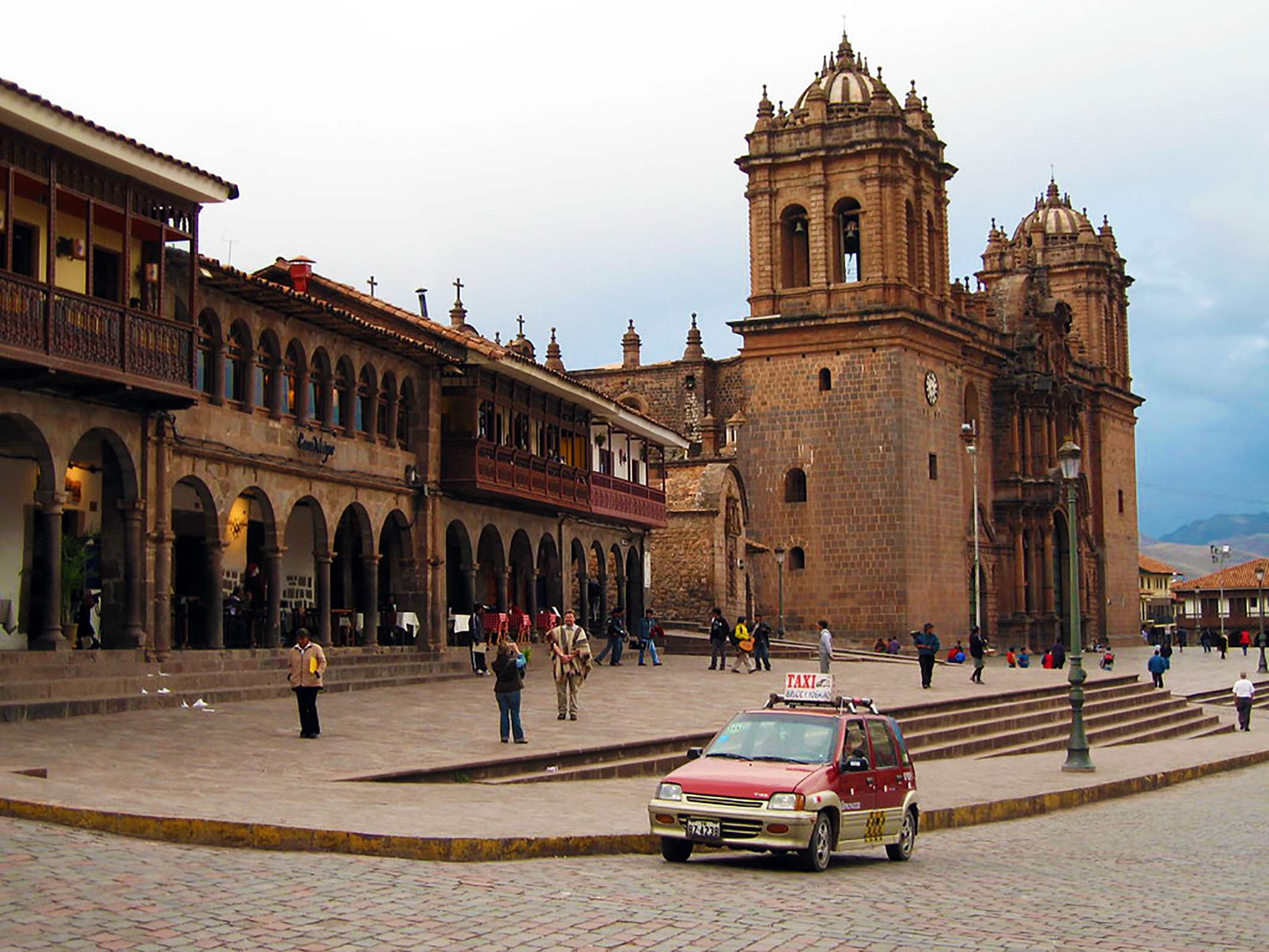
It’s mid-morning in the Plaza de Armas, Cuzco, Peru. Thin sunshine gilds the Cathedral of Santo Domingo, a monument to Spain’s colonial domination of the Incas. Pigeons coo, preen, and strut on nearby lawns. The mountain air is crisp and bracing, a tonic deep in my lungs.

My beautiful daughter, Hanna, stands in front of me, smiling. We have just concluded a week of travel, a torrid tour of Lima, Marcahuasi, the Sacred Valley, Machu Picchu. Hanna has been in country for a year, and because she’s an intrepid explorer, she guided me not only into the heart of Peru’s geography, but the heart of its people. Who else would have led me to share an evening cup of yerba with an Incan Shaman?

Now it’s time to say goodbye; my plane is at the airport. We embrace, and suddenly both of us are crying – warm, healing tears that flush out reservoirs of hurt so deep only God understood them.

“Dad,” says Hanna, “I never thought we would get to this point, not just father and daughter, but friends. I love you.”

“I love you, too.” I answer, “More than you know.”

It’s a long hug, one of those moments with power and longevity far beyond its duration, an experience that engenders the word eternal. I don’t want to leave, but finally we let go and I climb into a taxi idling at the curb.

As we pull away, I can see Hanna in the side-view mirror. She raises her arm to wave goodbye and shouts, “I have the best dad in the world!”

The taxi driver glances sideways at me and gives a thumbs-up sign.

Muy bueno,” he says.

Si,” I answer. “Muy bueno. Un sueno hecho realidad.”

A dream? Yes. And a hope and a prayer. You see, both Hanna and I know full-well I was not a model father. My addiction and restlessness blunted the other side of me – the man who tried, and often succeeded, in loving his family. Then came the seismic upheaval of divorce, painful to everyone involved.

For years I carried the shame of my failures, wondering if I would ever find relief. One day, my new wife, with her customary folk wisdom, said, “Krin, God has forgiven you. When are you going to forgive yourself?”

Gradually, I received the peace of my pardon, transmuted by grace. Sometime after that, Hanna came to visit, and during that stay she vented on me – pent up anger that had long needed daylight. I had been waiting and praying for that instant, a chance for new relationship.

I listened without defense, absorbing every syllable. When silence settled, I said, “Hanna, I am truly sorry for my mistakes. But I have learned to forgive myself, and I hope someday you will be able to do the same. Until, or IF that happens, just remember this: I will always love you more than life itself.”

Now do you see how that moment in Cuzco was a miracle?

Friends, if you are praying for healing in any relationship, let me tell you something I steadfastly believe. God can heal the deepest wounds. God can redeem the time of our lives, giving us precious new beginnings.

I am living in the center of this truth. Shalom!