The ONE THING I Learned in Church

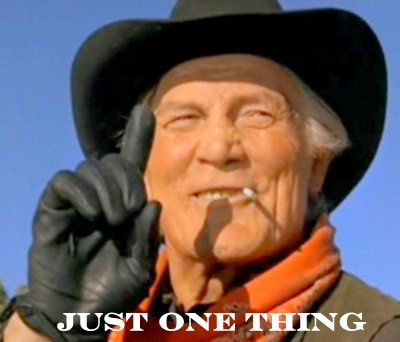
Before he earned his Oscar in the sequel, Curly (Jack Palance) lifted his finger in City Slickers and told Mitch, “One thing. Just one thing. You stick to that and everything else don’t mean shit.”curly

I imagine him saying to me, “Krin, what is the one thing you learned from decades of being in church?”

It wasn’t the existence of God. I found this in other faiths. My own spiritual experiments helped me intuit the all-encompassing presence of an “otherness.”

It wasn’t the importance of worship. I found this hiking at alpine heights, gazing into the Milky Way, opening my soul to sunrise at the ocean’s edge.

It wasn’t the story of Jesus; I found this in films and books on comparative religion.

It wasn’t a Golden Rule, the common sense of every human culture.

It wasn’t living in community. I found this in other civic organizations.

It wasn’t the Fruit of the Spirit, those admirable traits of character. I found them in the wisdom of many writers, artists, organizers, even the tenets of human potential movements.

It wasn’t love, since love springs from even the most depraved hearts.

No, it was something far more powerful. It was love with an earth-shattering twist. It was GRACE, a gift of love to the undeserving. Even now, I can track its presence in my life like a golden thread.

I remember sitting next to my parents in the Lutheran church of my childhood. It was a Good Friday service, shrouded in shadow. I was 12 years old. We saw Jesus kneeling in Gethsemane, crying out “Take this bitter cup!” We cringed at the bloody injustice meted out by powers of state and religion. We read of his mercy to a condemned criminal. And then, those immortal words rang out, uttered with his last breath, “Forgive them, for they know not what they do.”

And it struck my young mind like a bolt that he was willing to accept this sacrifice on my behalf. MY BEHALF. By that time, I was aware of my baser motives. I was struggling with my identity, filled with self-doubt and a sense of inadequacy.

And yet, on my behalf…

I don’t believe in substitutionary atonement. Jesus wasn’t a ransom paid, as if God required blood to balance some great Levitical scale of justice. To me, the cross cries out “Grace!” It’s a scandalous, counter-culture glimpse into the nature of Divine love. It is on our behalf because it is meant to be the Star of Bethlehem, ever guiding, ever instructing.

It led me to a calling and vocation. It compelled me to serve the unloved, those living not just in physical poverty, but in the impoverished notions of their worth based on society’s lies.

And when I stumbled, wrestling with self-centeredness, my demons and addictions, I heard the words Christ spoke to Paul during his own dark night, “My grace is sufficient for you. Because my power is made perfect in weakness.”

Grace. Often untested. Unpracticed. Impractical in a world of pyramids, politicians, and powder kegs.

But you know what? If all of us could live more fully by this one thing – GRACE – I’d agree with Curly. Nothing else would seem as important.

A Night in India I’ll Never Forget

As a visiting pastor, I was treated like royalty on a hectic itinerary. In the mountains surrounding Munnar, Kerala, we toured missions, homes, and congregations of the Church of South India.

This meant racing at breakneck speed, careening around corners while blasting our horn. It meant politely eating food prepared at each stop. Like a goose being stuffed for foie gras, I felt my body ballooning. I smiled with each swallow of curried delicacy.

I have NEVER experienced as much gracious hospitality as I did on that trip. Still, by the end of that day I was worn out physically, emotionally, mentally.

“Pastor,” my hosts announced, “we have a treat tonight! We will visit a home church for worship. They have prepared much food!”

Could I respectfully decline? Ravaged by jet lag, dizzy from our ride, food level dipsticked to my corneas, I just needed to sleep.

“Sounds wonderful,” I said. I’m so glad I did.

The church was in a poorer neighborhood of Munnar called The Colony, home to laborers who tend surrounding tea plantations. They traverse verdant hillsides, picking leaves for less than subsistence wages. Others haul rocks in baskets on their heads, repairing roads eroded by annual monsoons. Long hours under the blazing India sun.

We arrived at our destination – one room for a family of six. No lights, just dozens of flickering candles. Seated on straw mats were more people than I imagined could fit in that space. Their lustrous eyes and broad smiles welcomed me. My guide/interpreter was a younger pastor fluent in both English and Malayalam. We sat in spots at the head of the room.

After beautiful singing that lifted my soul, there was a Q&A time.

One woman asked why I had come. I replied, “To make new friends and see God’s love at work in the world.”

Another asked if I had ever experienced a miracle. I nodded and described my journey with a special needs son. I told them how doctors predicted he would never speak, and yet today he carries on conversations.

The room suddenly erupted in Malayalam, a Pentecostal torrent. People raised their hands and shook. It lasted a good five minutes. Finally, like an orchestra conductor, an older man stood and gestured for silence. They all settled down and gazed at me in the flickering candlelight.

“What was that about?” I whispered to my guide.

“Simple,” he said. “They were praising God that you have come to be with us, and that God has blessed your son.”

Tears filled my eyes. I pressed my hands together and said, “Namaste. Thank you so much for your hospitality.”

A woman sitting near me gently grasped my forearm, saying something in her native tongue. She was probably in her 30s, but her face, etched by hard labor, looked far older.

“She wants to know,” said my guide, “if you will carry their burdens with you when you return to the U.S.”

Had Peter felt that way when Jesus found him along the Sea of Galilee, saying, “Follow me.”

I swallowed and answered, “Yes.”

To this day, I struggle with my vow. Every time I serve someone hurting, or seek to remember the least, or advocate for justice rather than my own comfort, it all comes back to me…

…a night in India I will never forget.

NOLA Through the Lens of a Newbie

Years ago, I briefly passed through New Orleans on a cross country road trip. My first REAL visit was a couple months ago, smack dab in this 10th year after Katrina. I tried to absorb as much as possible; time was scarce. I will definitely return to this place Tennessee Williams smugly described: “America has only three cities: New York, San Francisco, and New Orleans. Everywhere else is Cleveland.”

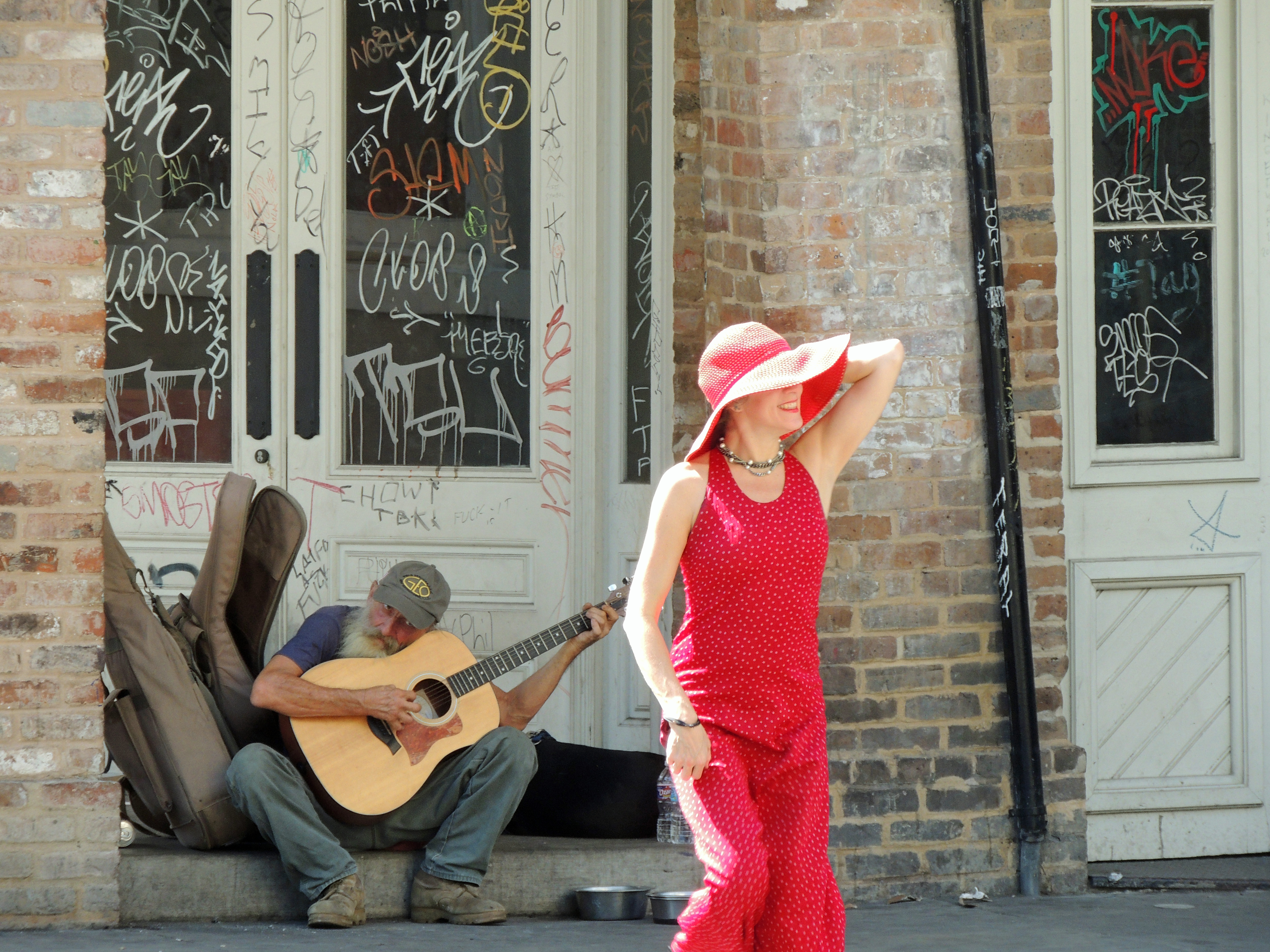
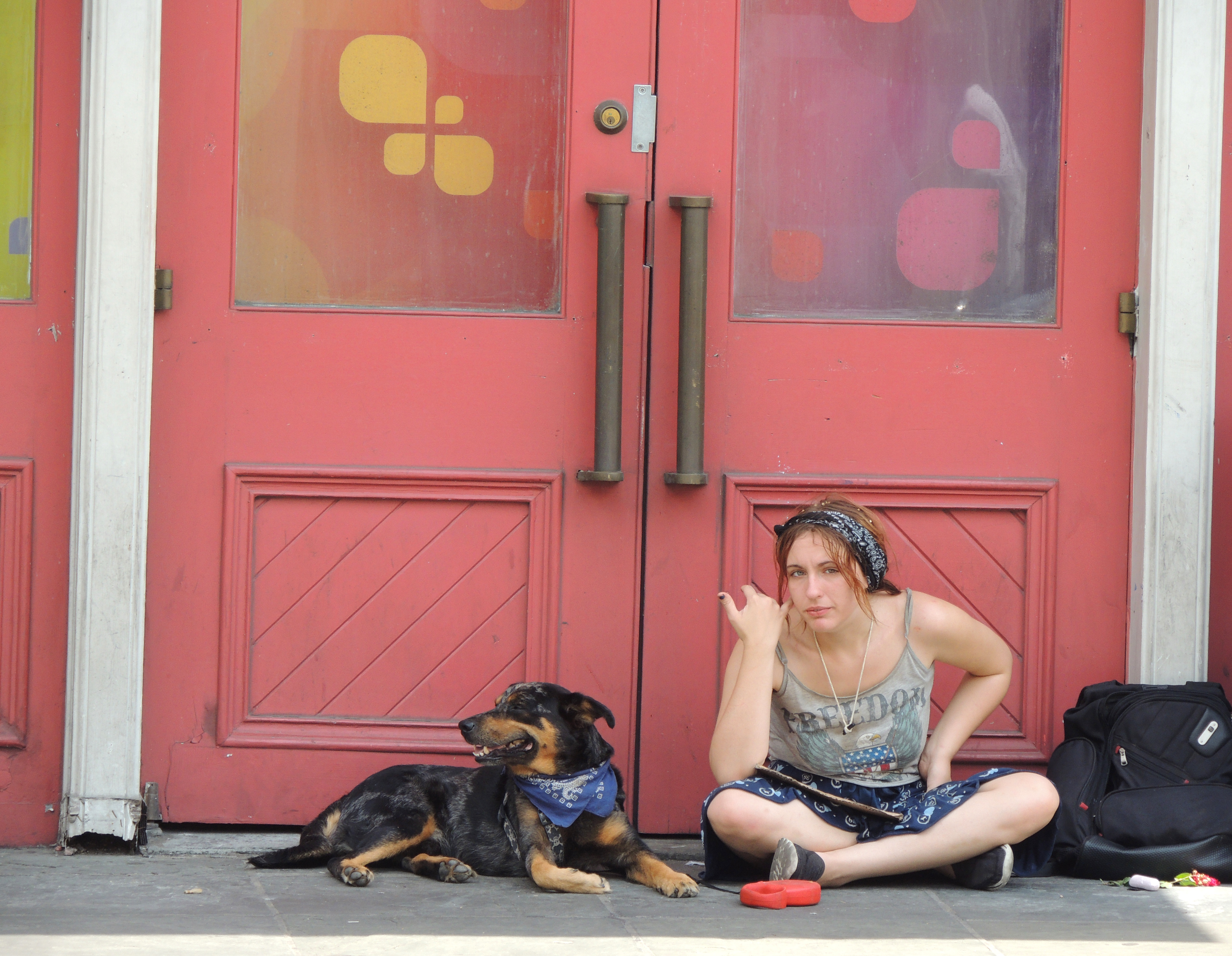
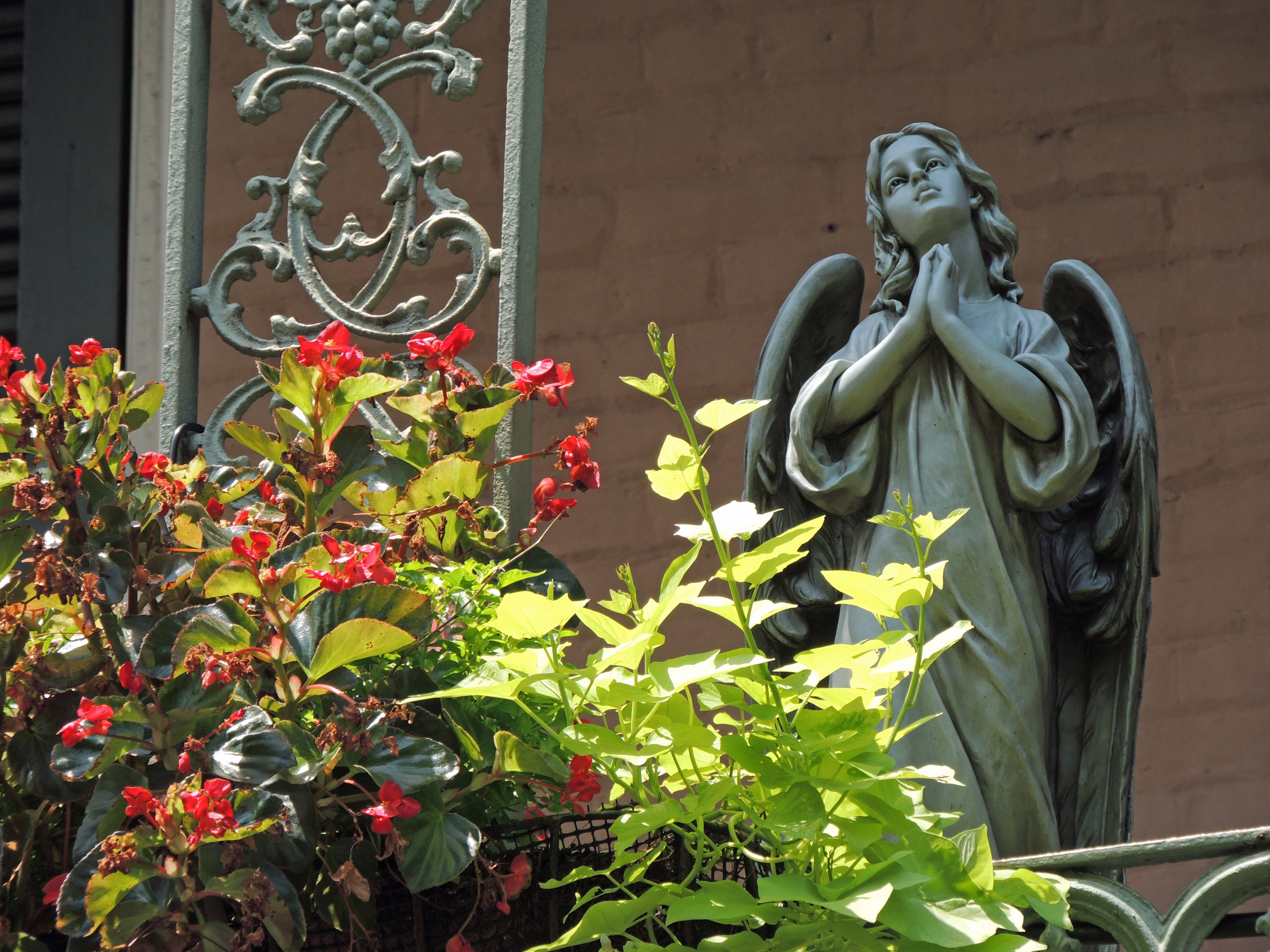
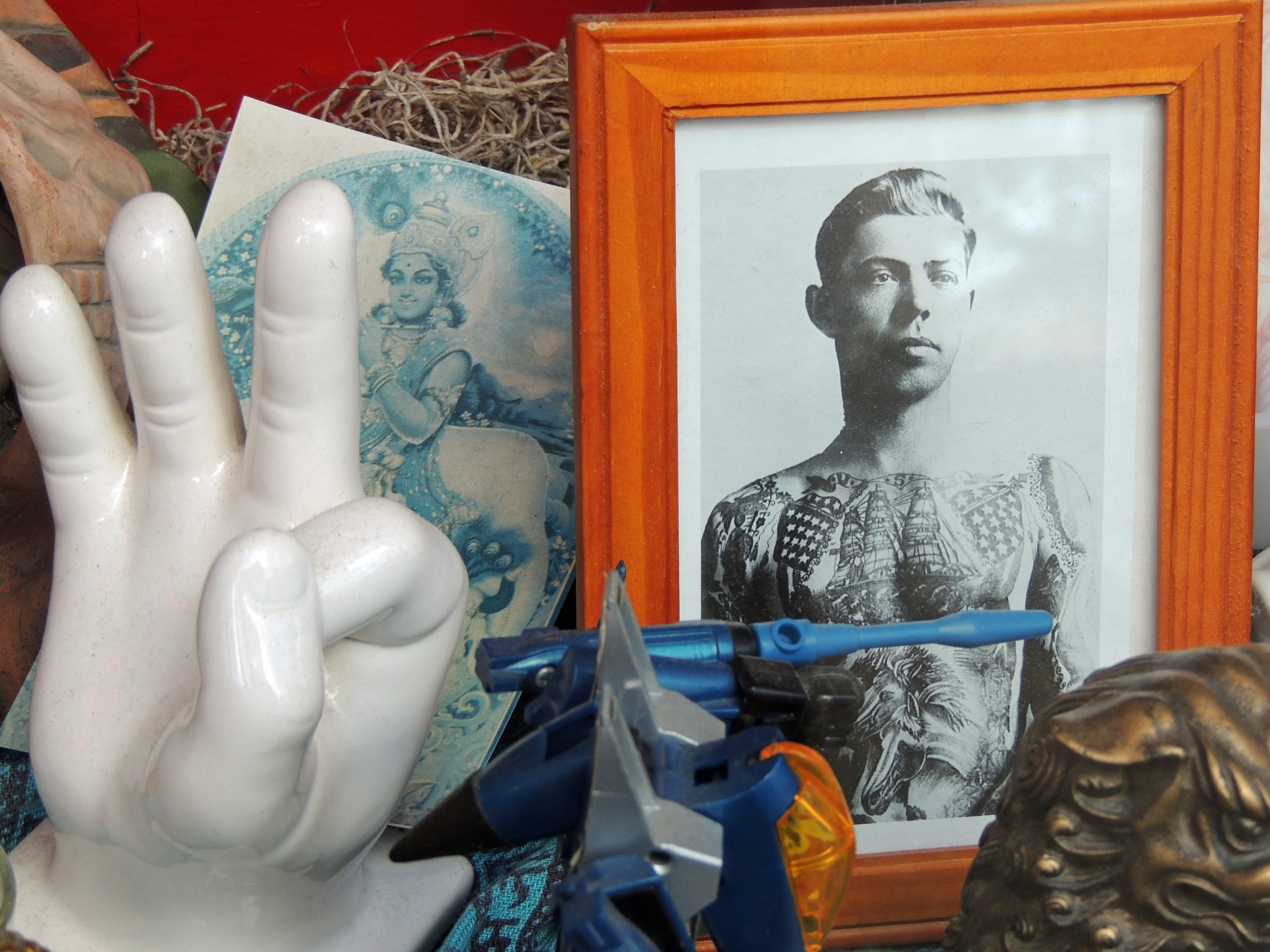
Still, a newbie to NOLA has fresh eyes. Here are share some photos from my trip. They are grouped in three batches.

  1. Metairie Cemetery and Lafayette Cemetery 1
  2. Images from the French Quarter
  3. Scenes from surrounding bayous, including Jean Lafitte National Historical Park

All images copyright 2015.

Metairie and Lafayette Cemetery 1

“The first thing you notice about New Orleans are the burying grounds – the cemeteries – and they’re a cold proposition, one of the best things there are here. Going by, you try to be as quiet as possible, better to let them sleep. Greek, Roman, sepulchres- palatial mausoleums made to order, phantomesque, signs and symbols of hidden decay – ghosts of women and men who have sinned and who’ve died and are now living in tombs. The past doesn’t pass away so quickly here. You could be dead for a long time” – Bob Dylan

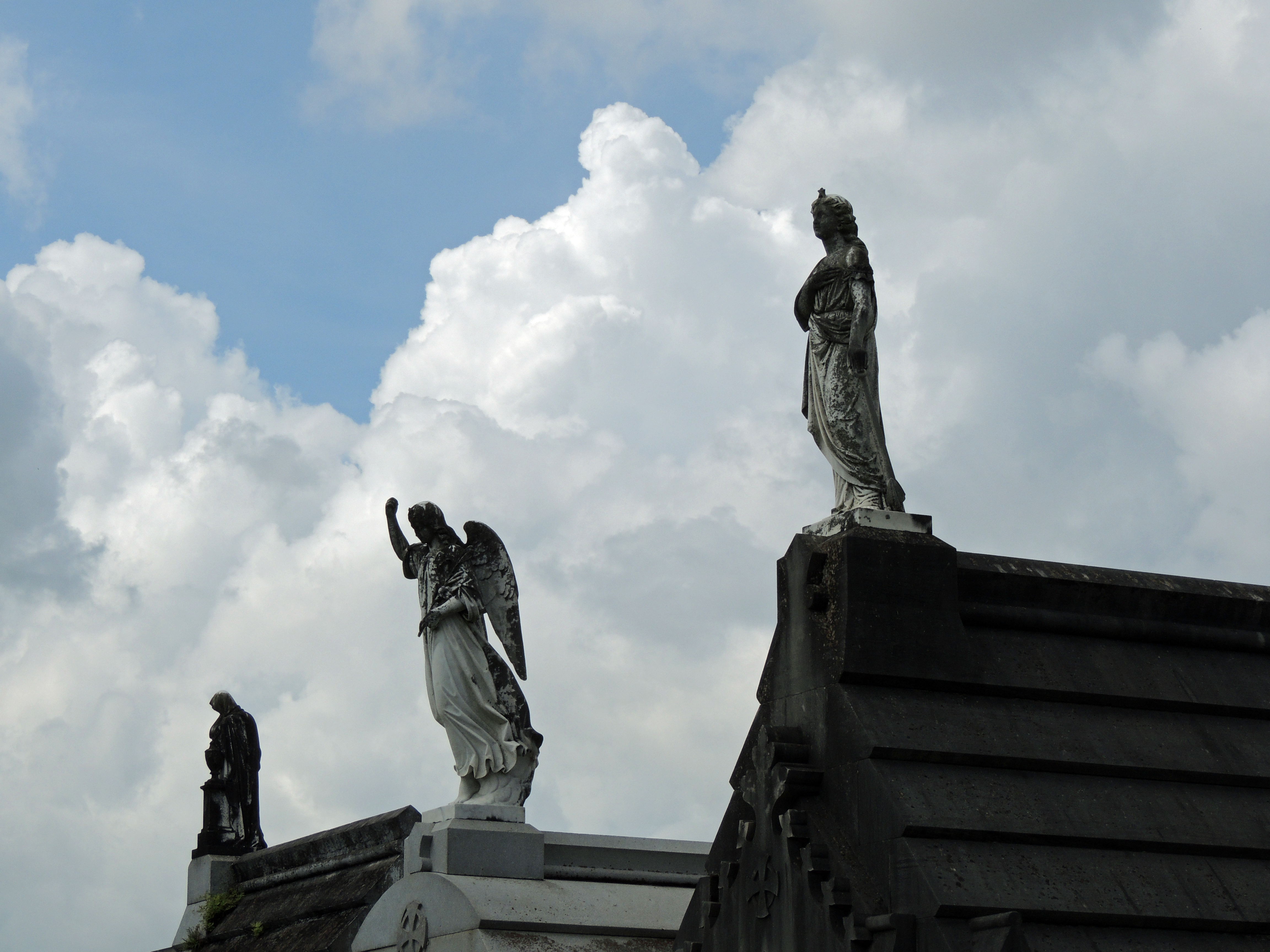
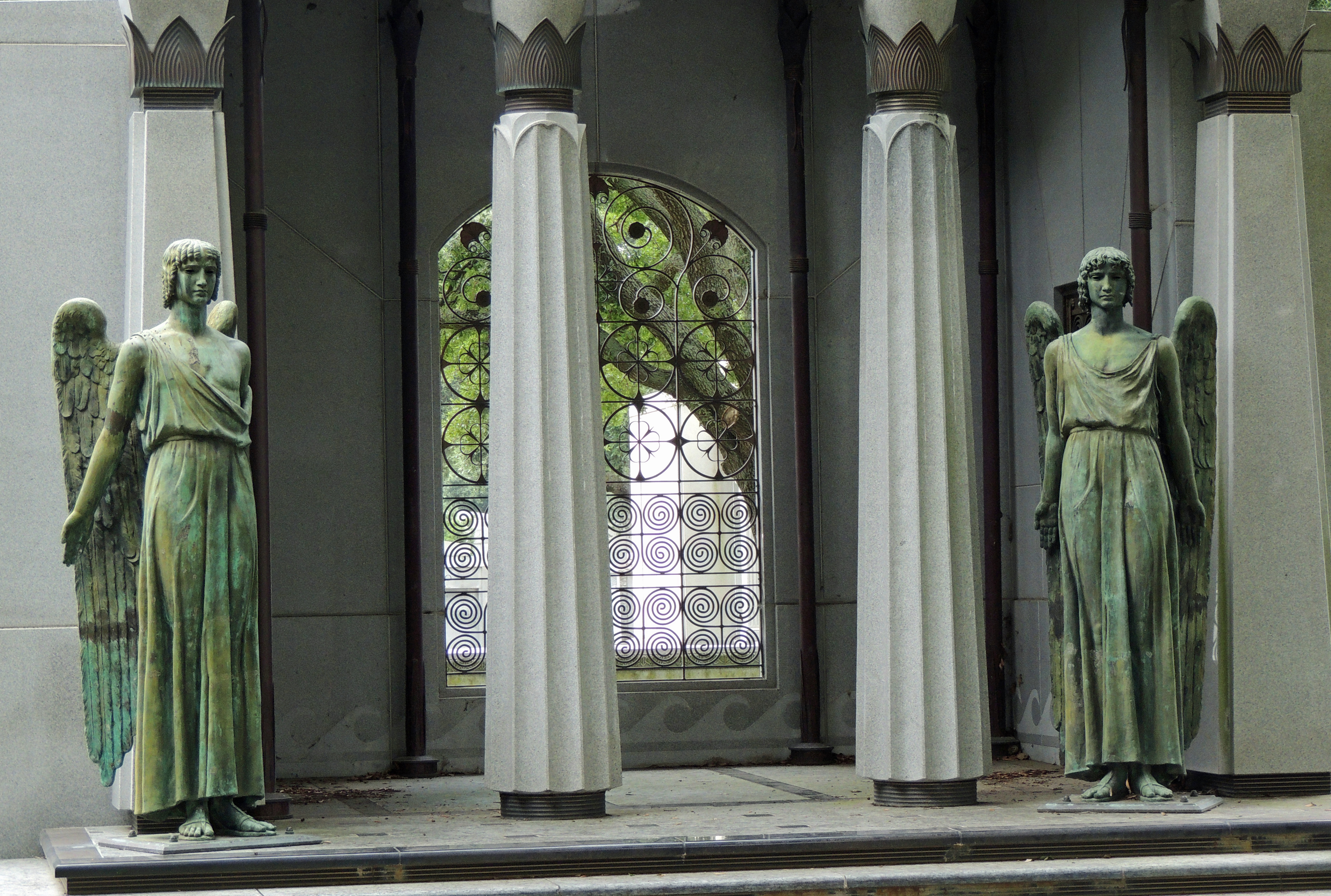
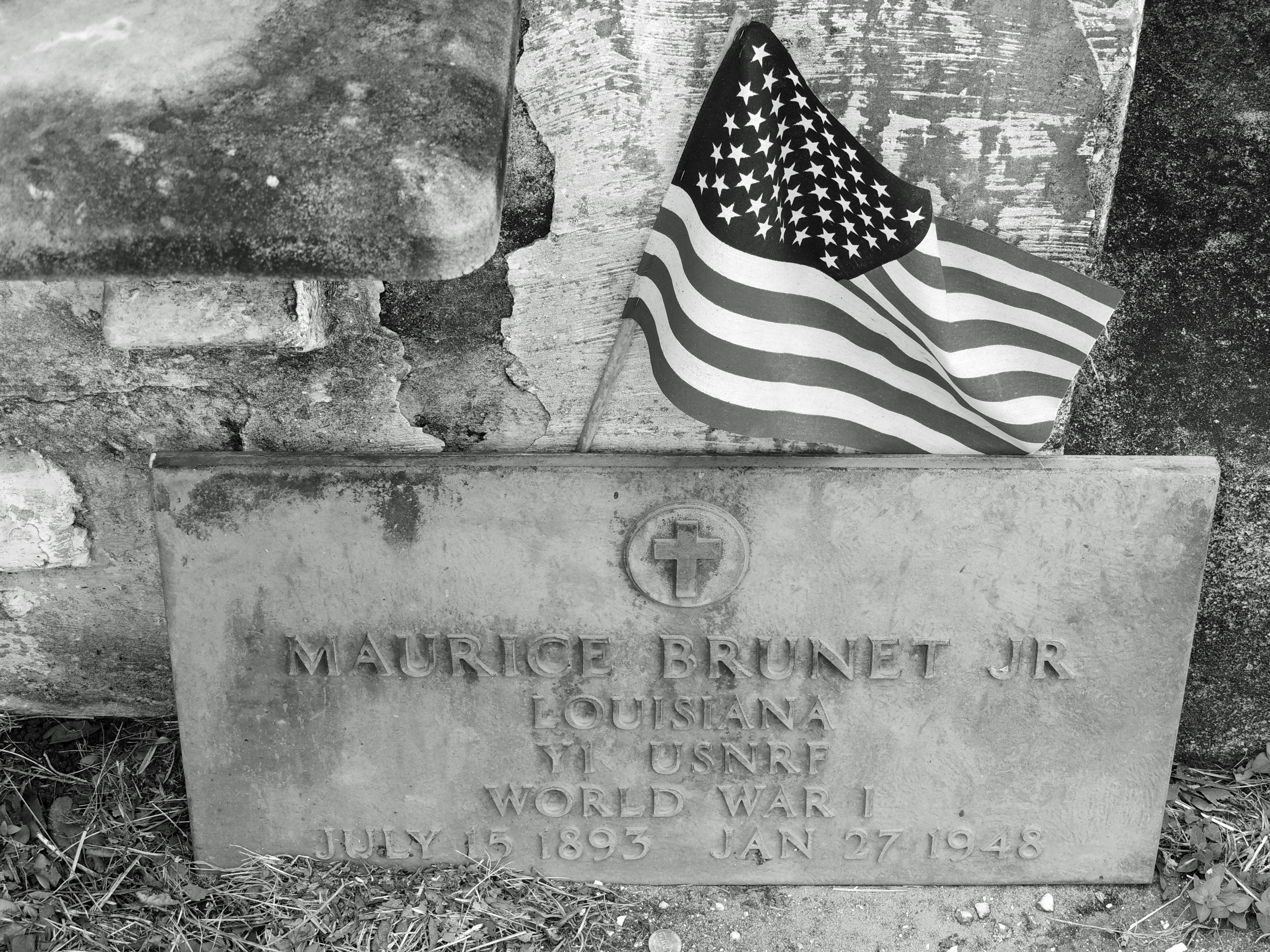
 NOLA Dead 1

NOLA Dead 2

NOLA Dead 3

NOLA Dead 4

NOLA Dead 5

The French Quarter

“Enormous oak trees towered over the boulevard, which boasted homes with fine woodwork, wraparound porches, and moss on the sidewalks. “There’s nothing like a house in New Orleans. Would you look at those balconies and columns?” He rolled his window down to take in the sounds of life in New Orleans.” ― Hunter Murphy, Imogene in New Orleans

FQ 1

FQ 2

FQ 3

FQ 4

FQ 5

FQ 6

FQ 7

FQ 8

Surrounding Wetlands

“I don’t like coming over here at night,” the girl said. “The bayou is scary in the dark, all manner of things running wild out there.”
― Samuel Snoek-Brown, Hagridden

NOLA Nature 1

NOLA Nature 6

NOLA Nature 3

NOLA Nature 4

NOLA Nature 2

NOLA Nature 5

3 Lessons I Learned from My Special Needs Son

Before I share these lessons, let’s be clear about something. We are ALL special needs people.

First, we are special, as unique as the whorls on our fingertips. It may be a worn adage, but it’s divinely true: there has never been another person just like you or me. Think back on the many people you’ve met in your life as a testament to this miracle.

Second, whether we are the Pope or a panhandler, have all have needs. We require food, water, shelter. We need human touch, love, and acceptance. On a more actualized plane, we have a need to exercise our deepest gifts and passions.

But obviously, there are those among us those whose needs are greater. Born with mental and/or physical limitations, they require specialized attention. My son, Kristoffer, is one of them. What the geneticists call a “chromosomal translocation” has capped his mental abilities and limited the horizons many of us take for granted. His mother and I will be his guardians until we die.

As father to a special-needs son, I often reflect on the lessons Kristoffer teaches me. Here are three that have changed me forever.

1) “Every Person Matters” is a lifestyle, not a slogan: I spent a 30-year career advocating for the marginalized, but my most pressing and immediate ministry was always at home. I have daily challenges to go beyond abstractions to concrete acts of compassion. This has benefited me as much as Kristoffer. As I invest my life in him, it humbles me, showing me the trivialities of my ego. I see more clearly our culture’s idolatry of success and notoriety. Kristoffer has taught me the path of downward mobility, the descent into humility’s wisdom. By celebrating how much his life matters, I have found new freedom.

2) Gentleness is everything: I reject any stereotypes of special needs people blithely living Edenic states of innocence. Kristoffer, like all human beings, has his moods, his ups and downs. He can be downright surly at times. And, at levels I may never fully realize, he’s aware of his condition. He sees how he compares to others. Because of this, gentleness is crucial. Even when I discipline, I try to temper it with mildness. Without that temperance, I undermine his fragile esteem. Recently he returned from a visit with his older brother. It had been a week when my tongue was sharper than usual. Kristoffer looked at me and said, “Keenan is so patient with me, Dad.” My heart melted. This world needs gentleness in all our relationships.

3) There is always a pathway through difficulty: Cynics will say this is a superficial meme that withers under scrutiny. How many people have experienced inexplicable tragedies that ended only in sorrow? Surely, I see this, yet my experience with Kristoffer has been different. His initial diagnosis was dismal. Doctors and specialists told us he might never communicate. From that ground zero, we have gone forward with prayer and trust, finding that our son defied the odds. He graduated from his version of high school, found a job for a while, and now volunteers at a place he loves. He has taken on his role in helping us maintain our household. We still dream that one day he will meet someone to be his partner in life outside our nuclear family. If I ever start to doubt that vision, I think of how far we have come, and I resolutely turn towards the future.

I believe these lessons are valuable for ALL of us, not just this thick-skulled father.

Namaste!

Poked by a Radio Preacher

I’m no fan of country music or radio preachers (blasphemy to some), and when I’m on the road in Texas, they hijack large spans of the FM bandwidth.

But life is full of surprises, eh?

A couple days ago, I was driving up the I35 corridor from San Antonio to Arlington. It’s been a week of family crises. Real ones. Painful ones. A stroke; a near fatal car crash. My trip was a mission of mercy. I was amped with more stress than I realized.

Flipping through the channels, I came upon a radio evangelist. The first words I heard were, “No one escapes the pressures and trials of life!”radio-dial

Poke

OK. I peeled my finger away from the seek button.

Too much American Christianity, said the preacher, is cloaked in a false garb of abundance, as if belief is a magical flak jacket deflecting life’s difficulties.

I said a quiet amen.

This lie, he continued, tells us that somehow we’re more acceptable to God and others when we “have it all together.” It spawns a cosmetic religion, one content to deal with surface issues rather than core elements of life.

Another quiet amen.

Then he unpacked a few verses from the Epistle of James: Consider it pure joy, my brothers and sisters, whenever you face trials of many kinds, because you know that the testing of your faith produces perseverance.

Joy comes from knowing a truth. We place our mercurial emotions – our fears and panics of the moment – under guidance of an overriding wisdom.

That truth is this – even the worst hardships can strengthen us. Too often we see this in retrospect, a blurry memory through the rearview mirrors of our frantic lives. But what if we embraced every trial – in the present – with knowledge that it hides a treasure?

I don’t know about you, but I value inner fortitude. I desire faith that can face life exactly as it is without running, hiding, or medicating. I cherish steadfastness of character.

And so on a Texas highway, I brought all the griefs of my week into sharp focus. I asked myself; “Krin, do you know, really know, not only that our Creator will help you find a way forward, but that this experience – right here, right now – will fortify your faith AND your value to others in this conflicted world?”

My answer was a heartfelt yes.

It was an open stretch of road. I hit cruise control and settled back in my seat. A few clouds fleeced the hot August sky. A vast expanse of sun- bleached pasture passed on my right, cattle browsing the stubble. I took a deep breath, one of those inhalations that descends to your soles.

Pure joy? No. But the weight of my circumstances began to lift, replaced by a growing sense of something else. I would call it peace gilded with a measure of happiness.

It wasn’t easy to maintain. I had to return to deep breathing, one mile marker after another.

But still…poked by a radio preacher, his theological bandwidth so narrow I would never consider tuning in on a regular basis…

Perfect.

We Hold the Key

The Sirius soundtrack for my gym workouts is a dizzying clash of styles and eras. The other day I heard OMI, Taylor Swift and Maroon Five, followed by a switch to Robin Trower, Jethro Tull, and Led Zeppelin.

In the middle of this time travel mix was the classic Youngbloods song, Get Together, with some of my all-time favorite lyrics: If you hear the song I sing, you will understand…listen. You hold the key to love and fear, all in your trembling hand. Just one key unlocks them both. It’s there at your command.

Depending on the focus of our faith, we may describe this key differently. For me, its name could surely be ACCEPTANCE.

I don’t mean passive submission. I mean the peaceful letting go that happens when we accept life on life’s terms, not as we would mold it. I mean the pressure we release when we “live and let live.” It is admirable to work for change, but our expectations of the way things SHOULD BE can lead to discontent, and ultimately, resentment.

There’s a saying in 12 Step groups that sums this up beautifully: expectations are resentments under construction. A passage in AA’s Big Book speaks to many of us.

When I am disturbed, it is because I find some person, place, thing, situation — some fact of my life — unacceptable to me, and I can find no serenity until I accept that person, place, thing, or situation as being exactly the way it is supposed to be at this moment…Unless I accept life completely on life’s terms, I cannot be happy. I need to concentrate not so much on what needs to be changed in the world as on what needs to be changed in me and in my attitudes.

What expectations are constructing resentments within you this moment?

• Do you expect your parents, your spouse, or your children to change their habits according to your pattern?
• Do you expect more recognition from others?
• Do you expect God to answer a prayer according to your demands and timeline?
• Do you think life owes you something?
• Have you not accepted yourself, or are you still brooding on what you are not, or what you don’t have?
• Are you mired in the longstanding grief that stems from not accepting a sorrowful event in your life?

Learning to curb our expectations does not mean depressive resignation. As the parent of a special needs son I must stay centered every day in the grace of acceptance. It’s not easy. I find help in the full version of this famous prayer by Reinhold Niebuhr.

God grant me the serenity
to accept the things I cannot change;
courage to change the things I can;
and wisdom to know the difference.
Living one day at a time;
Enjoying one moment at a time;
Accepting hardships as the pathway to peace;
Taking, as He did, this sinful world
as it is, not as I would have it;
Trusting that He will make all things right
if I surrender to His will;
That I may be reasonably happy in this life
and supremely happy with Him
Forever in the next.

When Do the Dead Die?

AIDS faceLast week I immersed myself in New Orleans’s French Quarter. Both the dead and living are palpable in the Crescent City. Decay and color exist side by side, even more evident 10 years after Katrina. Vestiges of that storm’s devastation still scar many neighborhoods.

I was walking down Frenchmen, a street marred with graffiti. Music and the odor of stale beer spilled from open bars. Tourists and locals strolled the sidewalk. One crew, covered in tattoos, included a young woman dressed only in shorts and pasties made from electrical tape. Her taunting smile spoke volumes.

We came to Washington Square Park. Originally named Founders Park, it sprang to life in the heart of its Creole neighborhood in the early 1800s. Now it bears the name of the Washington 141st Artillery Regiment, an active unit since the Mexican American War.

Tall oak trees lined the park’s perimeter. The humidity was smothering, no breeze lifting branches or drying my sweat. A young Latina mother sat on a bench, her toddler freed from his stroller, feeding bread chunks to strutting pigeons.

Ten yards from her, sprawled in shade near the wrought iron fence, was one of the homeless that frequent the park. He was stretched out like a corpse at the beginning of a TV crime drama. He didn’t seem to be breathing. A brother down? Concerned, I walked over and tapped his shoulder.

“Are you all right, man?”

Slowly he stirred, emerging not only from the fumes of booze, but from what we alcoholics call the “incomprehensible demoralization” of our disease when it’s active. He turned his face upwards.

“What?” he slurred.

“Are you OK?”

“Yeah, yeah. Thanks,” he said, rolling back to his sodden dreams.

A bit saddened, I moved further into the park. At its northern end is a unique art piece known simply as the New Orleans AIDS Memorial, a glass and steel sculpture by Tim Tate, dedicated in 2008. It features the cast faces of individuals affected by this disease that transformed our planet. Granite pavers leading up to it bear the names of loved ones lost

It’s haunting. The faces seem to be straining, still trying to break through to life and healing, their pain and struggle frozen in time. On a bronze pedestal at the base is a quote from Mexican writer Laura Esquivel: When do the dead die? When they are forgotten.

My mind panned through grave markers I’d just seen in Metairie Cemetery, one of New Orleans’ “cities of the dead.” More personally, I thought of departed friends and loved ones who graced my life too briefly: my schizophrenic uncle, Jerry; Tony, a neighborhood delinquent who died in a freak accident shortly after I baptized him; dear Henry who succumbed to alcohol; baby Laura, stricken by encephalitis before her third birthday. Others who died of cancer, heart attacks, overdoses, suicide, gang violence.

These precious people, and scores of others, press their faces against the glass membrane of my memory. I will not let their visages dissolve as long as I live.

When do the dead die? When they are forgotten.

Who do you remember today?

Standing on the Threshold

“Every new beginning comes from some other beginning’s end.” – Closing Time, by SemisonicJanus_fmt

One of the more engaging deities in the Roman pantheon was Janus. He was god of many things, primarily “beginnings” and “endings.” Depicted with two faces, he eternally gazed both backwards and forwards, reflecting on the past, envisioning the future. He was the patron of transitional portals – gates, doorways, passages.

We are always in the midst of life and death, openings and closings, hellos and goodbyes. As a pastor, there were times when I performed a holy trifecta: a baptism, a wedding, a funeral – all within 24 hours. The only word to describe it is “poignant.”

My parents got married on New Year’s Eve, 1950. On each anniversary, they share a practice. They review the previous year, celebrating successes, gleaning lessons from mistakes. Then they look ahead, dreaming new dreams, shaping a common vision. Finally, they share a prayer, another drink, and watch the televised ball drop on Times Square. This year, God willing, they will engage in this ritual for the 65th time.

The real lesson of this rite came in these words from my father. They caught me off guard, spoken by a man I had often viewed as preoccupied and absent.

“Our anniversary seems timeless, Krin. There will always be the past and there will always be the future. But standing firmly on the threshold is where life really happens. This is the moment we have.”

Is there a relationship you recently said goodbye to? Have you made a job transition or retired? Did you just graduate? Did you lose a loved one, that emptiness so painful in your heart?

Conversely, was there a birth in your family? Did you move to a new locale? Have you started a new business? Have you begun a new regimen to increase your health or spiritual wellbeing?

The mantra again…We are always in the midst of life and death, openings and closings, hellos and goodbyes. Imagine it this way: standing firmly on the threshold, one hand letting go of what has been, the other receiving what is to come. Take a deep, life-giving breath full of both release and anticipation.

Author C. JoyBell C. captures this sense of anticipation. “This is not the beginning of a new chapter in my life; this is the beginning of a new book! That first book is already closed, ended, and tossed into the seas; this new book is newly opened, has just begun! Look, it is the first page! And it is a beautiful one!”

Every new beginning comes from some other beginning’s end…

Grateful for the Rock in My Boot

If you sit in an AA or NA meeting, you’ll hear a common phrase: Hi, I’m ___________, and I’m a grateful addict/alcoholic.alpine-meadow

Gratitude is an admirable trait. Within the context of a 12 Step gathering, it has a potent highlight.

You hear dark stories of this disease called addiction. Blackouts, tragic accidents, broken relationships, imprisonment, fortunes gained and lost. A respected college professor who awakened in a piss-stained alleyway. A mother of three who lost her children for years. A young woman in a coma, struggling back to the light.

Grateful? Why? Surely because the disease is at bay, the downhill descent arrested by a new way of being. But the gratitude is more than a celebration of this miracle. It’s a bold statement, a candle held against the darkness, a sweet melody flung into the abyss.

I am free from regrets and bitterness! I am grateful for every trial, even this disease, because it awakened me to abundant life!

Katherine Mansfield, modernist writer, friend of D.H. Lawrence and Virginia Woolf, died of tuberculosis at age 34. She said, “Make it a rule to never regret. Regret is an appalling waste of energy; you can’t build on it; it’s only for wallowing.”

Many of us continue to unearth our regrets. These caustic, unreleased wounds, are self-fulfilling prophecies. They cause the same squandering of the present moment as their mental ancestors.

I digest the texts of many world religions. In Jewish scripture, I have always loved these words from the Prophet Habakkuk: Though the fig tree does not blossom, and no fruit is on the vines; though the produce of the olive fails, and the fields yield no food; though the flock is cut off from the fold, and there is no herd in the stalls, yet I will rejoice in the Lord

No regrets.

I remember a simple moment.

I was hiking above the timber line in an alpine meadow. Like many “peak baggers,” I was myopically intent on my objective, one of Colorado’s summits. I was moving at a quick pace, determined to ascend and descend on a tight time schedule.

That’s when I became aware of a small rock that had wiggled its way into my boot. Slightly irritating at first, it quickly became painful. What a nuisance! I stopped, exasperated by the pause, and sat on a boulder to untie my laces.

In my peripheral vision, I sensed movement. I lifted my eyes. I saw a soft breeze rippling across the meadow, stirring a riot of wildflowers, butterflies dancing above them. And then, from the tree line on the right, a small herd of elk emerged, led by a majestic buck.

I sat absolutely still, immersed in the present, the Shekinah. The elk began to lope across the landscape, poetry of motion, glossy flanks reflecting the sunlight, until they entered trees on the far side.

Thank God for that rock in my boot.

Third Eye Opening

ThirdEyeTwo recent movies focused on the untapped potential of the brain: Limitless and Lucy. Aided by drugs, protagonists unleashed the full power of their cerebrums.

Scientists have long debunked the notion that we only access 10 or 20 percent of our brains. We employ much wider portions on a daily basis. Still, numerous studies show that when we learn new skills or process novel thoughts, we make connections hitherto unformed.

Lately, I’ve been thinking about our corpus callosum. Here’s the Wikipedia definition: a wide bundle of neural fibers…at the longitudinal fissure. It connects the left and right cerebral hemispheres and facilitates inter-hemispheric communication

Most of us know the simplistic definitions of right brain/left brain. If we are “right brain dominant,” we are intuitive, creative, emotional. If we are “left brain dominant,” we are rational, focused on logic rather than spontaneity.

Dualism is not only part of our cerebral make up. It permeates the world around us, and can ultimately be destructive. Liberal vs. Conservative, Environmentalist vs. Capitalist, Faith vs. Skepticism, Christian vs. Humanist, Creationist vs. Evolutionist, East vs. West…I could go on.

The recent furor over gay marriage exposed the underbelly of either/or thinking. This is why I love a quote from Margaret Fuller: Male and female represent two sides of the great radical dualism. But in fact they are perpetually passing into one another. Fluid hardens to solid, solid rushes to fluid. There is no wholly masculine man, no purely feminine woman.

What if more of us learned to be “middle brain” dominant? What if we found ways to energize our corpus callosums, enabling inter-hemispheric communication until it dances from us in harmonizing ripple effects?

We wouldn’t be so quick to judge. We would build bridges rather than dig moats. We would listen compassionately to the familial and cultural origins of other people’s world views. We would discover more of what unites us. We would refrain from smugness on Facebook. We would draw lines of connection rather than lines in the sand.

Some Eastern traditions believe we have vestigial remnants of a third eye once attached to the pineal gland, which Descartes called “the principle seat of the soul.” There are meditations to enhance “third eye sight,” opening new levels of consciousness.

This notion isn’t confined to the East. Christian writer Richard Rohr has written about a “third way of seeing” as we develop “the mind of Christ.”

A few years ago, I wandered the streets of Munnar in Kerala, India. It’s a unique village where Christians, Muslims and Hindus live in harmony. Near an open air market I encountered a beautiful Hindu girl. Between her eyes was the bindi, that cosmetic red circle signifying the third eye.

Someone – perhaps her mother – had embellished it with lids and a pupil. Perhaps it was a maternal blessing: May my daughter see life in its totality. May she bring harmony to the lives of others.

In ways that still spur me on, all three of that girl’s eyes still haunt me.