In Defense of Perla

Early morning, a colonia on the outskirts of Reynosa, Mexico. Chilly winter air tinged with smoke from trash fires. The neighborhood is mostly shacks cobbled from old wood, tin, and cardboard. There is no running water; the city has promised electricity, but so far those pledges are hollow.

Most of the residents are migrants from Chiapas, lured to jobs in maquiladoras along la frontera. These are not squatters. They have purchased their tiny lots with a mortgage through Habitat para la Humanidad, and now they hope to build their dream homes: 500 square foot, cement block structures with 2 bedrooms, a living space, a kitchen, often housing large families. Latrines remain outside.
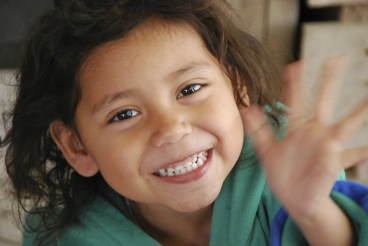
884274_avs-front-pic

Our crew of volunteers is inspecting construction sites. We will work alongside members of the community, a day of labor and fellowship, but first I have other tasks. Word has rippled through the dirt streets that a pastor is present, and I have received invitations to bless homes recently completed. One family asks me to pray for their newborn child.

I am glad to oblige, even though my bendiciones are clumsy mixtures of English and broken Spanish. It doesn’t matter. I have friends who translate, and my smile and eyes communicate more love than my words could ever convey.

One house after another, joining hands, lifting our hearts to God with petitions for abundance and safety. I receive many more blessings than I give, especially when I arrive to pray for the infant. Her home is a one-room shack where she lives with her parents and two siblings, walls of scrap plywood, a roof of rusted tin. Outside is a cooking fire, and they share a pit latrine with an adjacent family.

An old bench seat from a bus is near the front door, listing slightly, its surface torn to reveal the springs beneath. The parents ask me to sit as they bring their tiny daughter to me, only two weeks old.

Que preciosa,” I say. “Come se llama ella?”

Perla,” is the answer.

I cradle the girl in my arms, bundled in blankets. She is quiet, her dark eyes staring up at me, and though she will never remember this moment, it is sacramental for me.

I make the sign of the cross on her forehead. I pray for God’s guiding hand to be upon her and her family all their days, giving them strength, safety, and abundance for this new life they seek to establish.

Then I hold her against my chest for a moment, encircled by her family and smiling neighbors.

Our work that week was a triumph for all of us. Yes, we helped two structures rise from that neighborhood, but more importantly we joined our hearts across cultures, time, and space.

Months later, through my Habitat connections, I received a photograph and a brief note. Perla’s family was standing proudly in front of their new home, and the words said: “To Perla’s padrino. Muchas bendiciones.” To Perla’s godfather. Many blessings!

In over three decades of ministry, I have occasionally been asked what drives my passionate efforts for justice and peace. I could give answers complicated by theological jargon, socio-economic statistics, or political convictions, but my reasons are far simpler.

I act in defense of Perla and countless others I have met. I stand in unity with those struggling on the edge, joining hands in our one human family.

You see, Perla is also my daughter. She is your daughter as well.

 Selah!

Born Again?

There are people with stellar IQs who are short on common sense. People who exhibit genius within the narrow bandwidth of their expertise but lack any breadth of cultural literacy.

Conversely, there are human beings who will never be labeled brilliant by societal standards but who startle us with insights about life. I know this firsthand as father to a special-needs son. Kristoffer often voices simple nuggets of wisdom that awaken me to what is truly important.

I believe there is one definition of intelligence that is sorely needed in all of us. It is the ability to get outside ourselves and our given culture. The ability to see our reality in time and place, then respond (not react) to it with a fresh, objective perspective.

Sociologists say that when it comes to our cultures, we are like fish in water. We swim in the conditioning of our upbringing, our genetic makeup, our juncture in history. Often, we never rise above these determining factors. We never decide what to claim and what to reject, what to shed and what to make part of our flesh. Examples are rife in our world.

  • People who adopt the spoon-fed religion of their tribe or nation, then wield it as an exclusive truth that trumps the faith and beliefs of others. James Fowler, in his Stages of Faith, called this Stage Three—Synthetic-Conventional Faith—a closed mindset that prevents us from celebrating the mystery of spirituality in all its diversity.
  • People reared with a righteous sense of patriotism, an idolatry of their country’s identity and flag. American Exceptionalism is a tragic example, but history is replete with similar examples of dangerous nationalism.
  • People indoctrinated with racism, sexism, or homophobia who never rise about the fear that promotes their exclusion and hatred.
  • People whose skin color or class has afforded them a privilege that traffics, consciously or not, in systemic injustice.
  • People raised to put their trust and security in material things.
  • People trained to gauge their worth by the hollow standards of power and prestige.

In the Christian Gospel of John, Jesus has a clandestine meeting with the Jewish leader Nicodemus. He says to him, “Very truly, I tell you, no one can see the kingdom of God without being born from above.” (John 3:7) It’s a pity that these words have been coopted by Christian fundamentalists as being “born again,” a pat phrase that means conversion to their brand of Stage Three Christianity.

I see them as a deeper call to wake up, to be born outside the determinates of our lives, to recognize the timeless existence of Source’s liberating presence that permeates everything around us.

When this happens, the scales fall off our eyes in a kind of conversion experience. I believe we ALL need this transformation. It helps us evolve into citizens of the world, not just the territories of our genetic and cultural conditioning.

This is hard work. It begins with a sobering analysis of our own habitual thinking, our prejudices and privilege. It often requires repentance, amends, even restitution. But the resulting freedom is well worth the effort!

How did Jesus describe this freedom in that conversation with Nicodemus? “The wind blows where it chooses, and you hear the sound of it, but you do not know where it comes from or where it goes. So it is with everyone who is born of the Spirit.” In a mysterious and beautiful way, this is a powerful image of liberation.

Kristoffer recently said, “Dad, there will never be peace unless people change.”

Amen! I could phrase it another way. There will never be peace until more people are born again into the ENTIRE human family, not just their tribe or nation.

Are you next?