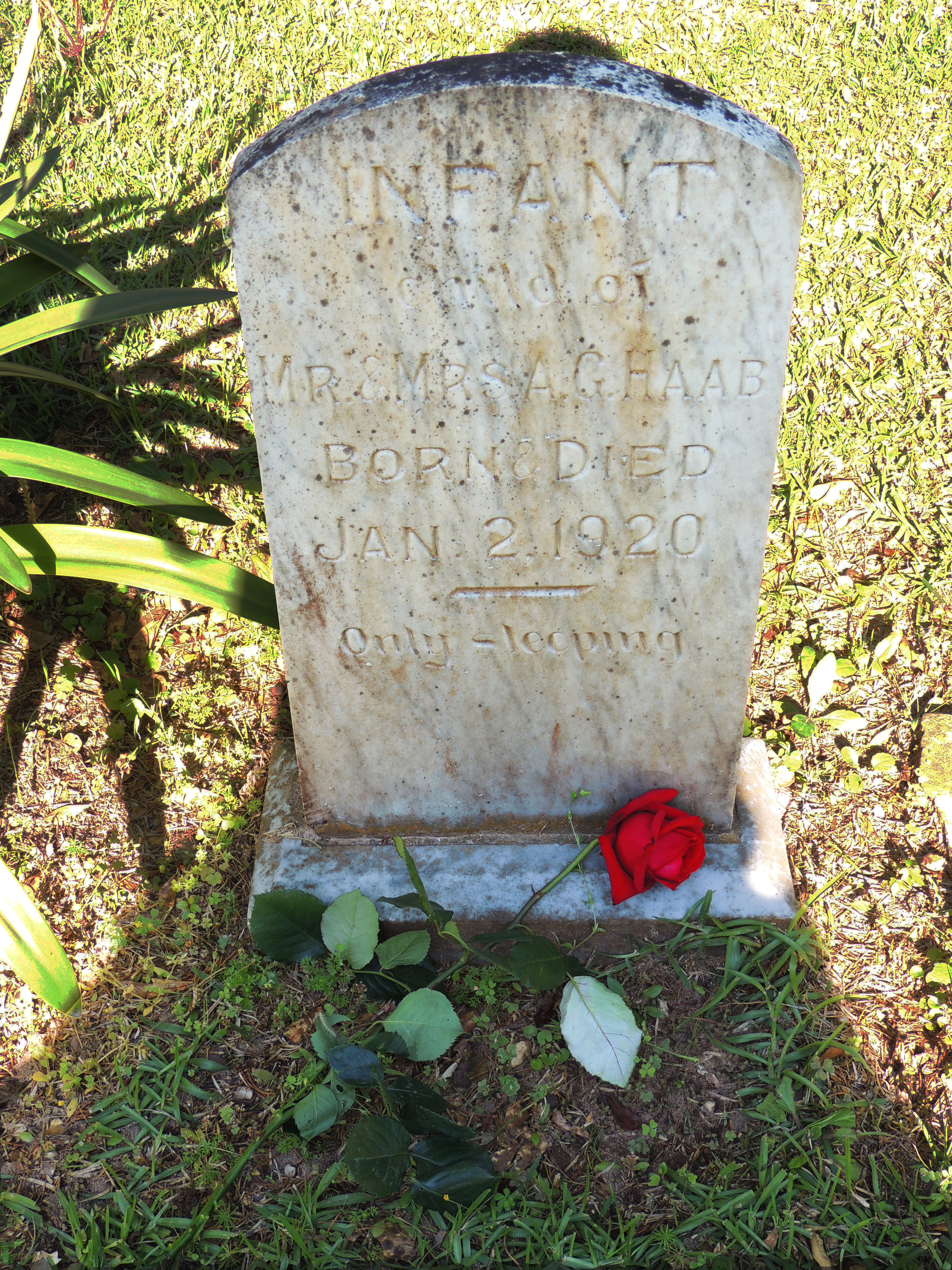
Call me morbid, but I find it enlivening to stroll through graveyards. I remember a day when my wife and I drove down a remote road in Hardin County, Texas, to the Holland Cemetery, a lovingly preserved sanctuary. Surrounded by lush grass and a canopy of live oaks—cardinals singing in their branches—I came upon a rain-stained headstone.
But first…
I know I’m not the only one afflicted by a certain dis-ease. I have been blessed with abundance on so many levels: a loving family; more than adequate food and shelter; decent health; creative outlets that engage my mind, heart, and soul.
Yet I still find myself ungrateful at times, restless in spirit. Succumbing to a culture where enough is never enough, I allow myself to become a spiritual casualty.
The simplest life-changing truths will lie inert in our lives unless we live into their power. I fully know that ingratitude—like fear, worry, and resentment—is a slayer of inner peace, a murderer of time. From a Buddhist perspective, these states of mind are the epitome of suffering, and they are self-induced. We can immaturely point to external factors as the source of our complaints, but we are the ones who choose our responses. There’s no passing the buck.
To rouse myself from this stupor, I have adopted a discipline that spans history. In medieval Christianity, it was called memento mori; in Buddhism, maranasati or lojong; in Islam, Tadhkirat al-Mawt. It is the core of every Dia de los Muertos celebration.
Remember death. Internalize life’s brevity and you can awaken to its present magnificence. Your hands, clenched so tightly around illusory problems, will begin to relax and let go.
A while back, I visited the San Antonio Art Museum to see an exhibit called San Antonio 1718, Art from Viceregal Mexico. It was a collection from that period of Spanish colonialism and included many oil paintings of idealized clergy and noble people. Clutched in many of their hands are memento moris, small replicas of skulls to remind them of death.
I have objects like these in my office, gathered during my service as a pastor, three decades when I was the one people turned to for comfort during times of loss.
- There’s the box given to me by a heroin addict. She found it while dumpster diving and could not, in good conscience, throw it back into the refuse. Its label reads: Cremated remains of Baby Bridget Spell, age 0, Date of Death, 9-20-88.
- There’s a rubber wristband that says, “Help me help the next Hugo Tale-Yax,” a tribute to a 31-year-old homeless Guatemalan immigrant, a Good Samaritan stabbed while helping a woman avoid a mugging. He bled out on a street in Queens, New York, while dozens of pedestrians passed by.
- There’s the small picture of 13-year-old Tony Matrulo, who died in a freak go-cart accident just months after I baptized him.
Back to that day in the Holland Cemetery, which has given a new memento mori. It’s a photo of a headstone that says: Infant Child of Mr. & Mrs. A. G. Haab, Born and Died, January 2, 1920, Only sleeping…
Unnamed child of God, knitted together in your mother’s womb, you never knew the seasons of this life. You never loved, laughed or grieved. You never smelled a flower or lifted your face to the sunlight. You never wrestled with the questions of existence. Your epitaph cries out to each of us: Remember death, and through its portal savor each moment!
I laid a rose at the headstone of baby Haab, then walked from the Holland Cemetery.
A cloud raced across the sun…
 Krin Van Tatenhove - Words & Images