From Ambition to Meaning: Reviewing Wayne Dyer’s “The Shift”

Years ago, if you tuned into a PBS pledge drive, you might have seen bestselling writer and lecturer Wayne Dyer sharing his teachings. His “Forever Wisdom of Wayne Dyer” became a popular series on that network.

Wayne died on August 30, 2015, at age 75. Personally, I admired him. Not all his thinking resonated with me, but he seemed sincere, trying to practice what he preached. So, when a friend suggested that I watch The Shift, a movie featuring Dyer and his teachings, I streamed it online.

The setting for the film is the beautiful Asilomar Conference Grounds on the northern California coast, a place I have had the good fortune to visit. The story follows various individuals as they near a turning point, or shift, in their lives: a young mother selflessly attending to the needs of her family, a filmmaker driven by his need for success, a wealthy couple at a dead-end in their relationship.

As a backdrop paradigm for the film, Dyer gives a simple outline for our human journeys that makes great sense.

Born as tabula rasas, we face immediate programming. The dominant forces of family, society, and religion teach our egos to evaluate our lives in three basic ways: 1) We are what we do; 2) We are we have; 3) We are what others think of us.

Who can deny that in both subtle and blatant ways, these are overriding themes in our culture?

Some of us, as we begin to see the hollow futility of these definitions, intuitively move towards a shift from ambition to meaning. This is found in our passions, our deepest desires, our true rather than false selves. Dyer called it a return to our divine identity, releasing ourselves more fully into the Tao of the present. He exhorts us to make the shift, adding some urgency by saying, “Don’t die with your music still in you.”

This shift isn’t contingent on our age. It comes earlier for some, later for others. And it’s not universal. Many will resist the freedom their spirits long for, going to their graves with their songs unsung. During my years as a pastor, I presided at hundreds of memorial services, and I can say this with certainty: the unexamined life often ends in regret.

The characters of the film (yes, it’s a bit Hallmark), embrace the shift in different ways. The harried mother who had always neglected her own needs, resurrects her passion for painting; the filmmaker, after facing rejection, begins to use his art for service rather than self-promotion; the couple, originally committed to having no children, welcomes pregnancy with a new sense of hope.

My wife, whose reading habits vary widely from mine, has said, “Self-help books and movies are a dime a dozen.” OK. I agree. And Dyer is a clearly an example of the syncretism we find in the human potential movement. He borrows from a variety of writers, psychologists, religious traditions, pasting them together and stamping them with his own tag lines.

So what? Superhero movies, crime dramas, pop singers, sports stars – these are all a dime a dozen and, in my estimation, far less meaningful.

If I’m going to read a novel by Robert Crais, George Pelecanos, or William Kent Krueger, I balance it with a book on self-exploration. If I’m going to watch Bosch, Breaking Bad or Longmire, I put a film like The Shift in my queue.

Why? It’s simple. I don’t want to die with my music still in me.
The ONE THING I Learned in Church

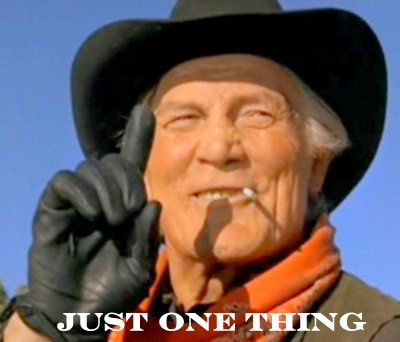
Before he earned his Oscar in the sequel, Curly (Jack Palance) lifted his finger in City Slickers and told Mitch, “One thing. Just one thing. You stick to that and everything else don’t mean shit.”curly

I imagine him saying to me, “Krin, what is the one thing you learned from decades of being in church?”

It wasn’t the existence of God. I found this in other faiths. My own spiritual experiments helped me intuit the all-encompassing presence of an “otherness.”

It wasn’t the importance of worship. I found this hiking at alpine heights, gazing into the Milky Way, opening my soul to sunrise at the ocean’s edge.

It wasn’t the story of Jesus; I found this in films and books on comparative religion.

It wasn’t a Golden Rule, the common sense of every human culture.

It wasn’t living in community. I found this in other civic organizations.

It wasn’t the Fruit of the Spirit, those admirable traits of character. I found them in the wisdom of many writers, artists, organizers, even the tenets of human potential movements.

It wasn’t love, since love springs from even the most depraved hearts.

No, it was something far more powerful. It was love with an earth-shattering twist. It was GRACE, a gift of love to the undeserving. Even now, I can track its presence in my life like a golden thread.

I remember sitting next to my parents in the Lutheran church of my childhood. It was a Good Friday service, shrouded in shadow. I was 12 years old. We saw Jesus kneeling in Gethsemane, crying out “Take this bitter cup!” We cringed at the bloody injustice meted out by powers of state and religion. We read of his mercy to a condemned criminal. And then, those immortal words rang out, uttered with his last breath, “Forgive them, for they know not what they do.”

And it struck my young mind like a bolt that he was willing to accept this sacrifice on my behalf. MY BEHALF. By that time, I was aware of my baser motives. I was struggling with my identity, filled with self-doubt and a sense of inadequacy.

And yet, on my behalf…

I don’t believe in substitutionary atonement. Jesus wasn’t a ransom paid, as if God required blood to balance some great Levitical scale of justice. To me, the cross cries out “Grace!” It’s a scandalous, counter-culture glimpse into the nature of Divine love. It is on our behalf because it is meant to be the Star of Bethlehem, ever guiding, ever instructing.

It led me to a calling and vocation. It compelled me to serve the unloved, those living not just in physical poverty, but in the impoverished notions of their worth based on society’s lies.

And when I stumbled, wrestling with self-centeredness, my demons and addictions, I heard the words Christ spoke to Paul during his own dark night, “My grace is sufficient for you. Because my power is made perfect in weakness.”

Grace. Often untested. Unpracticed. Impractical in a world of pyramids, politicians, and powder kegs.

But you know what? If all of us could live more fully by this one thing – GRACE – I’d agree with Curly. Nothing else would seem as important.

A Night in India I’ll Never Forget

As a visiting pastor, I was treated like royalty on a hectic itinerary. In the mountains surrounding Munnar, Kerala, we toured missions, homes, and congregations of the Church of South India.

This meant racing at breakneck speed, careening around corners while blasting our horn. It meant politely eating food prepared at each stop. Like a goose being stuffed for foie gras, I felt my body ballooning. I smiled with each swallow of curried delicacy.

I have NEVER experienced as much gracious hospitality as I did on that trip. Still, by the end of that day I was worn out physically, emotionally, mentally.

“Pastor,” my hosts announced, “we have a treat tonight! We will visit a home church for worship. They have prepared much food!”

Could I respectfully decline? Ravaged by jet lag, dizzy from our ride, food level dipsticked to my corneas, I just needed to sleep.

“Sounds wonderful,” I said. I’m so glad I did.

The church was in a poorer neighborhood of Munnar called The Colony, home to laborers who tend surrounding tea plantations. They traverse verdant hillsides, picking leaves for less than subsistence wages. Others haul rocks in baskets on their heads, repairing roads eroded by annual monsoons. Long hours under the blazing India sun.

We arrived at our destination – one room for a family of six. No lights, just dozens of flickering candles. Seated on straw mats were more people than I imagined could fit in that space. Their lustrous eyes and broad smiles welcomed me. My guide/interpreter was a younger pastor fluent in both English and Malayalam. We sat in spots at the head of the room.

After beautiful singing that lifted my soul, there was a Q&A time.

One woman asked why I had come. I replied, “To make new friends and see God’s love at work in the world.”

Another asked if I had ever experienced a miracle. I nodded and described my journey with a special needs son. I told them how doctors predicted he would never speak, and yet today he carries on conversations.

The room suddenly erupted in Malayalam, a Pentecostal torrent. People raised their hands and shook. It lasted a good five minutes. Finally, like an orchestra conductor, an older man stood and gestured for silence. They all settled down and gazed at me in the flickering candlelight.

“What was that about?” I whispered to my guide.

“Simple,” he said. “They were praising God that you have come to be with us, and that God has blessed your son.”

Tears filled my eyes. I pressed my hands together and said, “Namaste. Thank you so much for your hospitality.”

A woman sitting near me gently grasped my forearm, saying something in her native tongue. She was probably in her 30s, but her face, etched by hard labor, looked far older.

“She wants to know,” said my guide, “if you will carry their burdens with you when you return to the U.S.”

Had Peter felt that way when Jesus found him along the Sea of Galilee, saying, “Follow me.”

I swallowed and answered, “Yes.”

To this day, I struggle with my vow. Every time I serve someone hurting, or seek to remember the least, or advocate for justice rather than my own comfort, it all comes back to me…

…a night in India I will never forget.

NOLA Through the Lens of a Newbie

Years ago, I briefly passed through New Orleans on a cross country road trip. My first REAL visit was a couple months ago, smack dab in this 10th year after Katrina. I tried to absorb as much as possible; time was scarce. I will definitely return to this place Tennessee Williams smugly described: “America has only three cities: New York, San Francisco, and New Orleans. Everywhere else is Cleveland.”

Still, a newbie to NOLA has fresh eyes. Here are share some photos from my trip. They are grouped in three batches.

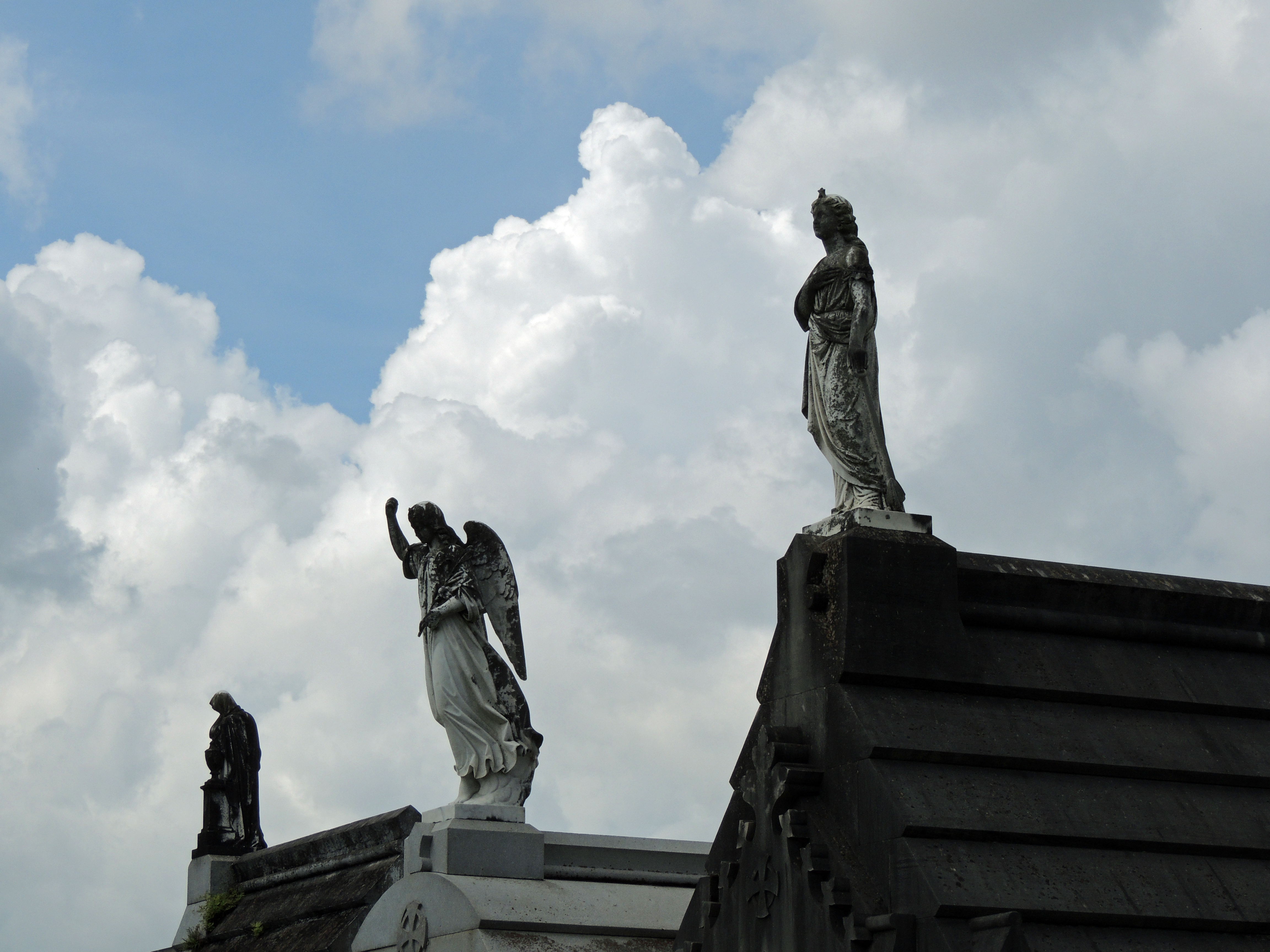
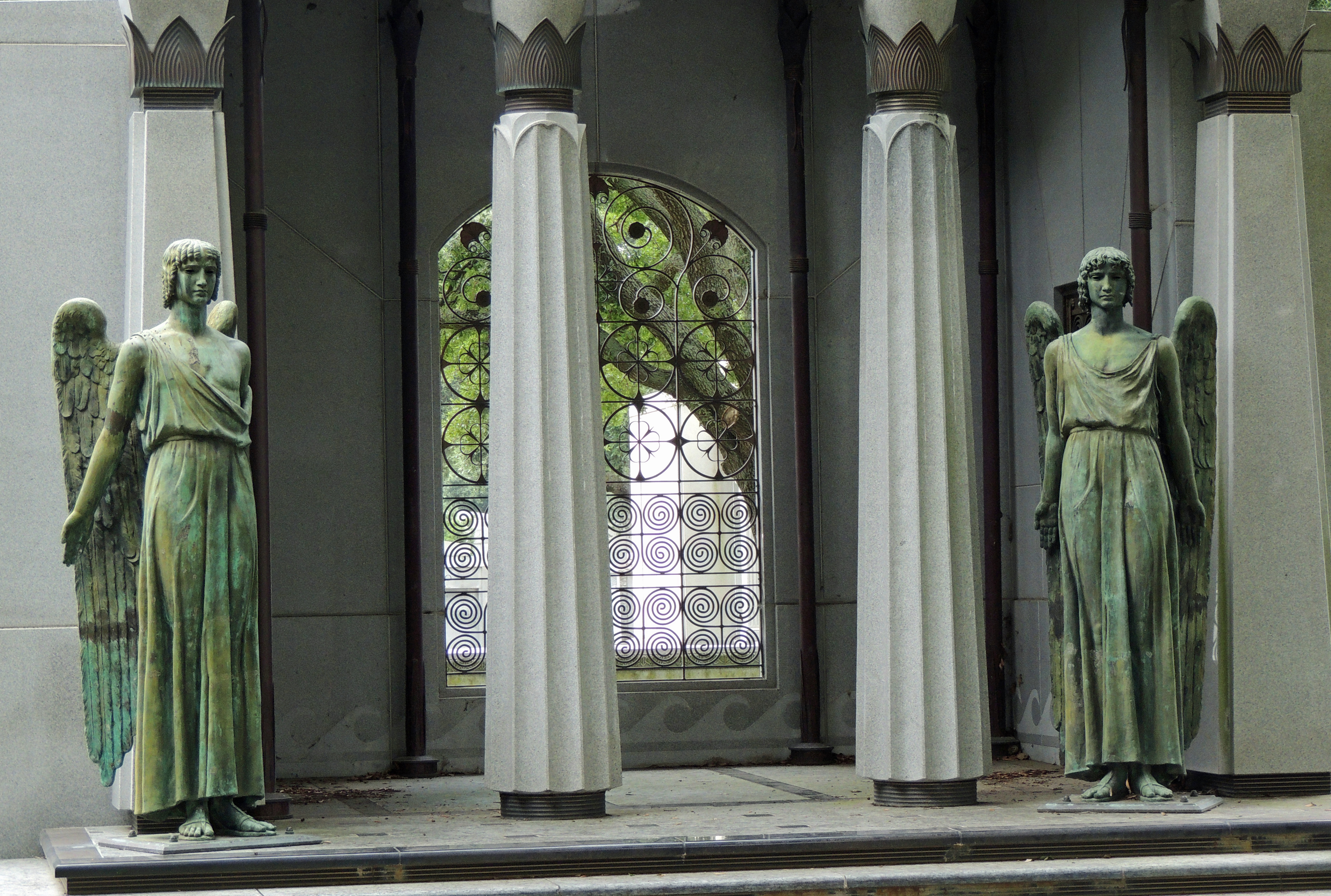
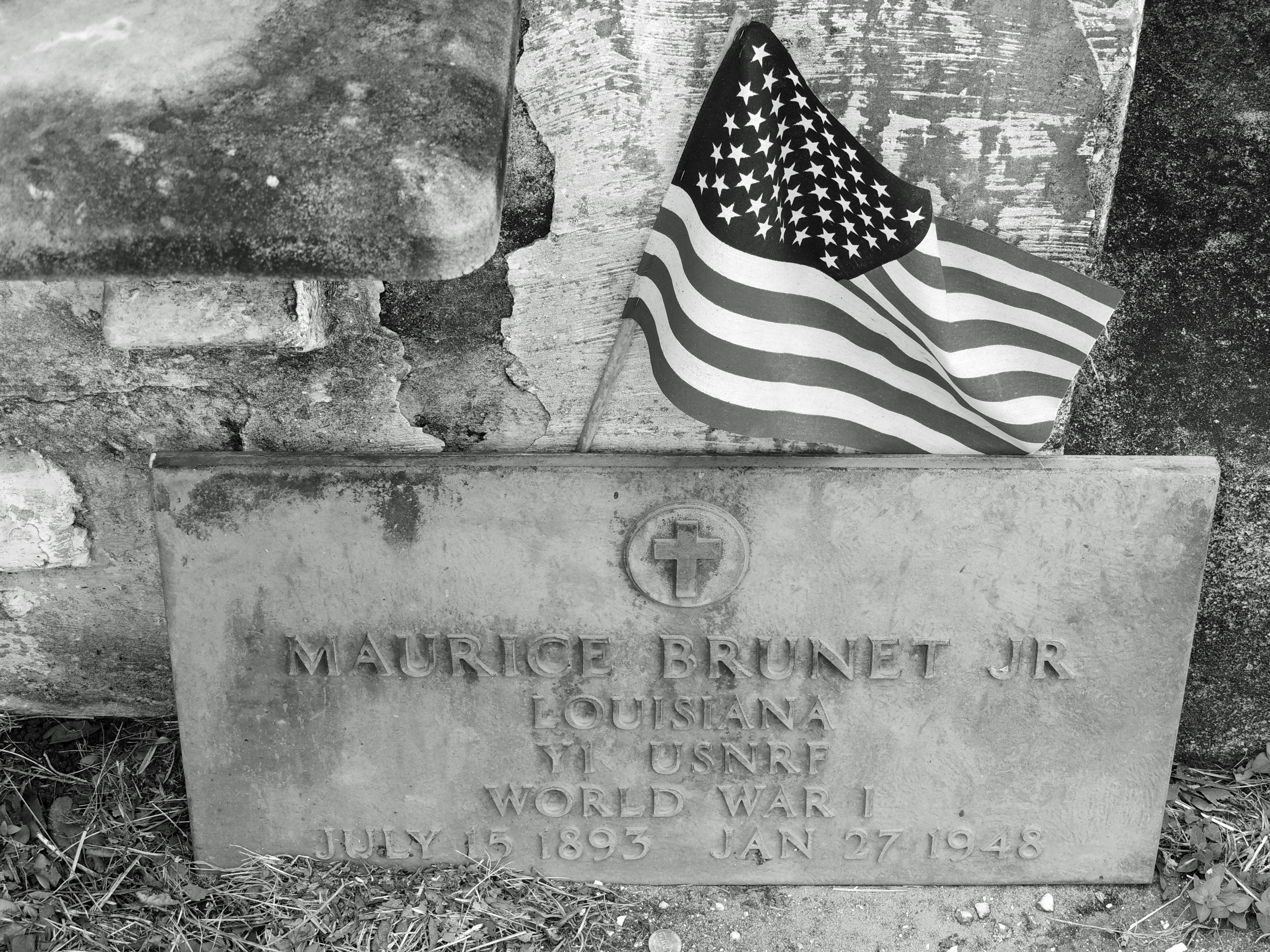
  1. Metairie Cemetery and Lafayette Cemetery 1
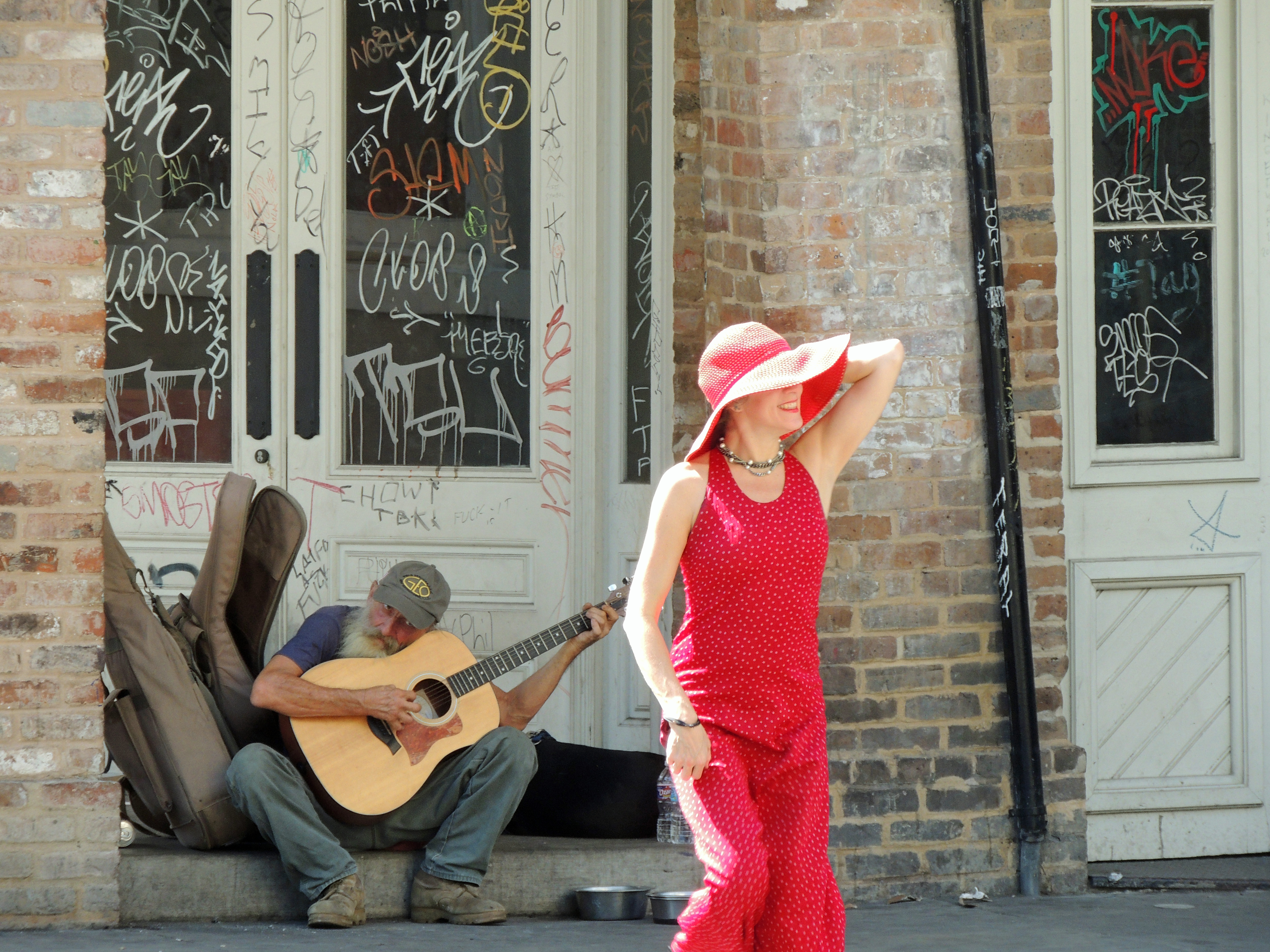
  2. Images from the French Quarter
  3. Scenes from surrounding bayous, including Jean Lafitte National Historical Park

All images copyright 2015.

Metairie and Lafayette Cemetery 1

“The first thing you notice about New Orleans are the burying grounds – the cemeteries – and they’re a cold proposition, one of the best things there are here. Going by, you try to be as quiet as possible, better to let them sleep. Greek, Roman, sepulchres- palatial mausoleums made to order, phantomesque, signs and symbols of hidden decay – ghosts of women and men who have sinned and who’ve died and are now living in tombs. The past doesn’t pass away so quickly here. You could be dead for a long time” – Bob Dylan

 NOLA Dead 1

NOLA Dead 2

NOLA Dead 3

NOLA Dead 4

NOLA Dead 5

The French Quarter

“Enormous oak trees towered over the boulevard, which boasted homes with fine woodwork, wraparound porches, and moss on the sidewalks. “There’s nothing like a house in New Orleans. Would you look at those balconies and columns?” He rolled his window down to take in the sounds of life in New Orleans.” ― Hunter Murphy, Imogene in New Orleans

FQ 1

FQ 2

FQ 3

FQ 4

FQ 5

FQ 6

FQ 7

FQ 8

Surrounding Wetlands

“I don’t like coming over here at night,” the girl said. “The bayou is scary in the dark, all manner of things running wild out there.”
― Samuel Snoek-Brown, Hagridden

NOLA Nature 1

NOLA Nature 6

NOLA Nature 3

NOLA Nature 4

NOLA Nature 2

NOLA Nature 5